Film & TV Locations

The Conjuring House: Behind the Veil of Its Legend

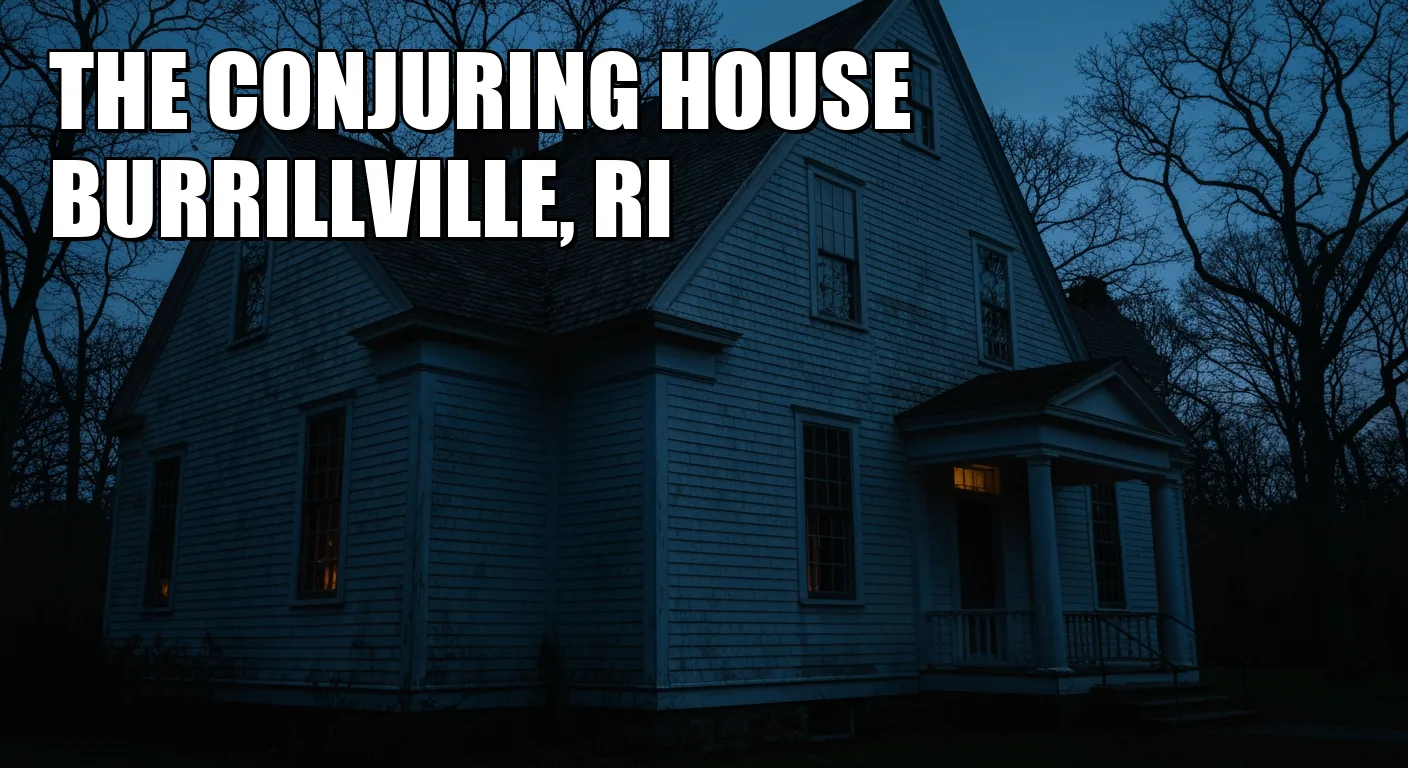
For years, the mere mention of the Conjuring House has sent shivers down spines, a place where the veil between worlds supposedly thins, and cinematic nightmares found their chilling real-world inspiration. As someone who’s tramped through countless historic sites, seeking not just the facts but the forgotten echoes, I can tell you that few places resonate with such raw, unsettling energy. Yet, unlike the perfectly preserved battlefields or meticulously restored colonial homes, the Conjuring House offers a unique kind of historical immersion—one that now hinges precariously on its very existence as a public site.

The Door's Shut: Unpacking the Conjuring House's Uncertain Future

Think you can just book a ghost hunt at the infamous Conjuring House whenever the spirit moves you? Consider this a stark dose of reality: the property, far from being a perpetually open portal to the spectral, is currently in a state of profound flux, not accepting new bookings. This isn't just a seasonal closure; it's a dramatic, ongoing saga that most tourist brochures conveniently omit. Owned by Jacqueline Nuñez, the house recently faced a very real, very mundane threat: foreclosure proceedings, with an auction dramatically slated for Halloween eve, October 31, 2025. But wait, the plot thickens, as it so often does with this particular house. Just weeks before the auction, on October 8, 2025, the Needham Bank—the original mortgagee, or lender—sold the underlying mortgage loan to an undisclosed buyer. This maneuver effectively canceled the impending auction, placing the property’s future into a state of bewildering limbo. So, while the identity of the new mortgage holder remains a mystery, one thing is crystal clear for anyone hoping to visit: the house's booking and operational status is definitively suspended. This isn't just a minor hiccup; it means the entire experience you might have envisioned, the overnight stays, the guided tours, are simply not happening right now. It's a critical piece of information that separates the truly informed traveler from the disappointed enthusiast arriving at a locked gate.

What Once Was: Glimpsing the "GHamping" Experience

Before its current, rather inconvenient, existential crisis, the Conjuring House offered a rather novel approach to paranormal tourism: "GHamping," a portmanteau of "ghost" and "camping." It was an inventive way to capitalize on the property's vast, purportedly haunted acreage, allowing visitors to spend the night without necessarily entering the infamous farmhouse itself. These experiences, typically available seasonally from June through October, offered eight distinct outdoor camping sites, each charmingly rated by a "Fright Factor" from 1 to 10. You could choose your level of potential terror, from the relatively mild "Abduction Chamber Tent" (Fright Factor 6) to the spine-tingling "Floating Regrets Tent" (Fright Factor 10), each accommodating 3-4 people at prices ranging from $300 to $400 per night. A typical GHamping experience involved a tightly orchestrated schedule: check-in at 5:00 PM, followed by a guided land tour between 6:00-6:30 PM, then the overnight investigation commencing at 7:00 PM. Quiet hours began at 10:00 PM, a pragmatic nod to local ordinances, and private investigations at your tent site were permitted from 1:00 AM until the 10:00 AM check-out. It sounds rather structured for a spontaneous ghost hunt, doesn't it? Crucially, there were strict rules: no children under 16, no alcohol or drugs (immediate expulsion if caught), no provoking spirits (as if one could avoid it there!), and certainly no firearms, fireworks, drones, or metal detectors. While this setup provided a unique opportunity to immerse oneself in the atmosphere, it also inevitably commercialized the fear, raising questions about authenticity versus curated thrills. Was it truly a chance to connect with the spectral, or merely a cleverly marketed camping trip in a famous, eerie locale? For now, that debate is moot, as the entire operation is on pause.

A Decade of Dread: The Perron Family's Unforgettable Ordeal

To understand the enduring mystique—and indeed, the marketability—of the Conjuring House, one must delve into the harrowing decade the Perron family endured within its walls. They arrived at the 200-acre Arnold Estate in January 1971, full of hope, only to find their dream home was already occupied by something ancient and malevolent. It began subtly, with the kind of perplexing household anomalies that initially allow for rationalization: brooms disappearing, random piles of dirt materializing on clean floors, the inexplicable sound of scraping against kettles with no visible cause. These were the mundane beginnings of an extraordinary terror, the gentle ripples before the tsunami. Soon, the activity escalated. The family's dog developed a profound aversion to the cellar hallway, refusing to walk near the door, its hackles raised in silent protest. Then, in 1973, Roger Perron, while making repairs to the heating unit, experienced a chilling encounter himself. He heard footsteps descending the cellar stairs, watched as the cellar door swung open on its own, and then observed a white, veil-like mist fold into the foyer—an apparition he later identified as an old woman who vanished when he confronted it. Carolyn Perron, the matriarch, suffered an even more brutal assault in the cellar, sustaining a kidney punch to her back that left a softball-sized bruise and caused her to vomit for two weeks, permanently cementing her refusal to ever return to that subterranean darkness. These weren't fleeting glimpses; these were physical attacks, deeply scarring and impossible to ignore. The middle bedroom upstairs became a notorious "hotspot" for activity. It was here that Carolyn awoke before dawn to witness the apparition of an old woman's head, neck crooked, over a gray dress, accompanied by a disembodied voice hissing, "Get out. Get out. I'll drive you out with death and gloom." This wasn't a one-off. A female entity, widely believed by investigators to be Bathsheba Sherman, persistently terrorized Carolyn around 5:15 AM, with manifestations growing increasingly horrifying, including the ghastly sight of a hand with the skin flayed off. The children weren't spared either. Cindy Perron, the youngest, was frequently targeted, dragged from her bed by an unseen hand and pulled down the stairs. She encountered a broken-necked figure whispering "come to me, little girl," and, most traumatically at age 14, suffered a violent drowning attempt in water so severe her sister Andrea omitted details from her chronicles; Cindy has taken only showers ever since. These accounts transcend simple ghost stories; they describe a sustained, pervasive campaign of terror that indelibly marked a family for life.

The Séance and Its Shadows: When Investigators Stirred the Pot

The Perron family's escalating torment eventually led them to seek help from the infamous paranormal investigators Ed and Lorraine Warren. Their investigation began on October 30, 1973, Halloween eve, setting the stage for one of the most dramatic and terrifying incidents associated with the house: the seance. Held in the dining room with the Warrens, a priest, a medium, and a film crew present, the event culminated in Carolyn Perron's apparent possession. This wasn't merely a dramatic performance; witnesses claimed Carolyn spoke in an unknown, "not of this world" language in a voice utterly unlike her own. She reportedly levitated from her chair and was thrown across the room. Andrea Perron, who secretly witnessed the terrifying spectacle at age 15, recounted hearing her mother's head strike the parlor floor, describing the experience as traumatizing enough to cause PTSD she carries to this day. The medium present collapsed unconscious on the table, while the priest was described as white with fear, trembling in the corner. The Warrens, after the harrowing event, departed, leaving Carolyn unconscious on the parlor floor, only returning later to ensure she had survived. The traumatic seance proved to be the breaking point for Roger Perron, who promptly expelled the Warrens from the house. Despite this, the family, bound by financial constraints, remained until 1980. Interestingly, all paranormal phenomena reportedly ceased immediately upon their departure, as if the entities were inextricably linked to the Perrons themselves.

Bathsheba's Ghost or Another Shadow? Challenging the Narrative

The pervasive narrative surrounding the Conjuring House often centers on the malevolent spirit of Bathsheba Sherman. Legend paints her as a sinister figure who lived on the property in the mid-1800s, accused of unimaginable acts, including involvement in a neighbor's child's death and even, sensationally, stabbing her own infant son with a sewing needle during a supposed satanic ritual. These stories are undoubtedly compelling, providing a tangible villain for the spectral drama. Yet, as an experienced observer of historical lore, I’ve learned to scrutinize these dramatic claims. Here's where the conventional wisdom begins to unravel: historical records reveal that Bathsheba Sherman actually died on May 25, 1885, a date that directly contradicts legends of her committing suicide in 1849. This significant discrepancy casts a long shadow over the entire Bathsheba narrative, suggesting a conflation of local folklore with a real historical figure. Even Andrea Perron herself, who lived through the horror, now questions whether the malevolent entity was truly Bathsheba. She theorizes it might instead have been the Arnold Estate's original matriarch, who reportedly hanged herself in the barn in 1797, a far more plausible, and equally tragic, origin for such deep-seated malevolence. This critical re-evaluation by someone so intimately connected to the events offers a rare, surprising insight, challenging visitors to look beyond the popular, simplified story and consider the true complexities of the property's haunted past. So, for now, the Conjuring House, a place steeped in unsettling history and cinematic fame, remains stubbornly closed, its fate shrouded in the mundane mysteries of finance and ownership. While the doors may be shut for physical visitors, the stories, the chilling accounts of the Perron family, and the ongoing debate over its resident spirits continue to echo. Perhaps, for now, the best way to "visit" this legendary location is through the detailed memoirs of those who lived there, allowing the mind to conjure its own terrors, unburdened by the complexities of booking an overnight stay or questioning the validity of a "Fright Factor" rating. The house, after all, has always been more about the unseen than the tangible, and its current inaccessibility only deepens that elusive, chilling allure.

Ultimate Guide to Visiting America's Most Haunted Properties: The Conjuring House Experience

Where is the Conjuring House located?
The famous Conjuring House is located at 1677 Round Top Road, Harrisville, Burrillville, Rhode Island, approximately 25 miles northwest of Providence. There's also Ed and Lorraine Warren's house at 30 Knollwood Street, Monroe, Connecticut, which features the Warren Occult Museum.
Can you visit the actual Conjuring house?
Yes, the Rhode Island property offers guided tours and paranormal investigation experiences for visitors with advance reservations. The Connecticut Warren House also opened for overnight stays starting November 1, 2025.
Is the real Conjuring house still open?
The Rhode Island property is currently transitioning ownership after a mystery buyer purchased it in early October 2025, canceling the scheduled Halloween foreclosure auction. Operating status and visiting information may be updated soon.
Can you book The Conjuring House?
Reservations are required to visit the Rhode Island property. Contact details and booking information are available through the official website, though current availability may be affected by recent ownership changes.
How much does it cost to rent the Conjuring House?
Previous pricing included daytime tours at $25 per adult, overnight investigations starting at $960-$1,280 per night, and seasonal camping experiences starting at $400. Current costs under new ownership should be confirmed before booking.
Can you still stay at the Conjuring House?
The Rhode Island property previously offered overnight paranormal investigations and camping experiences; current availability depends on the new owner's plans. The Connecticut Warren House is now accepting overnight reservations at $1,999 per night.
Which is the real Conjuring house?
The primary Conjuring house is the Perron family's farmhouse in Burrillville, Rhode Island, which inspired the 2013 movie. Ed and Lorraine Warren's actual home in Monroe, Connecticut, is also featured in Conjuring Universe films.
Who owns the real Conjuring house now?
The Rhode Island house is owned by a mystery buyer who purchased it in early October 2025, preventing the foreclosure auction. Ed and Lorraine Warren's Connecticut home was recently purchased by Matt Rife and Elton Castee.
Where is the 2nd Conjuring house located?
Ed and Lorraine Warren's house and occult museum is located at 30 Knollwood Street, Monroe, Connecticut, about 1.5 hours from the Rhode Island property.
What is the history of the Perron family haunting?
The Perron family moved to the Rhode Island farmhouse in January 1971 and experienced paranormal activity for approximately 10 years, including apparitions, poltergeist activity, and supernatural phenomena that prompted paranormal investigators Ed and Lorraine Warren to investigate the case.
What paranormal events occurred at the house?
Residents reported full-body apparitions, mysterious noises, cold spots, moving objects, foul odors, and violent incidents including family members being physically attacked and levitated by supernatural forces.
When is the best time to visit the Conjuring House?
The property is typically open year-round for tours and investigations, though paranormal activity is often reported as more active during autumn months and Halloween season. Contact the property for current seasonal availability.
What age restrictions apply to visiting?
Daytime tours were previously recommended for ages 7 and up, while overnight paranormal investigations are typically for older teenagers and adults. Age restrictions under new ownership should be confirmed directly with the property.
How long does a tour of the Conjuring House last?
Standard guided daytime tours typically last about one hour, providing historical context and information about paranormal phenomena reported at the property.
What's included in an overnight paranormal investigation?
Overnight experiences typically include an evening guided tour of the house followed by unsupervised paranormal investigation time, allowing guests to conduct their own ghost-hunting throughout the night (equipment not provided).
How many acres does the Conjuring House property include?
The property spans 8.5 acres of land surrounding the main 3-bedroom farmhouse, with various reported paranormal hotspots including the cellar, exterior grounds, and nearby woods.