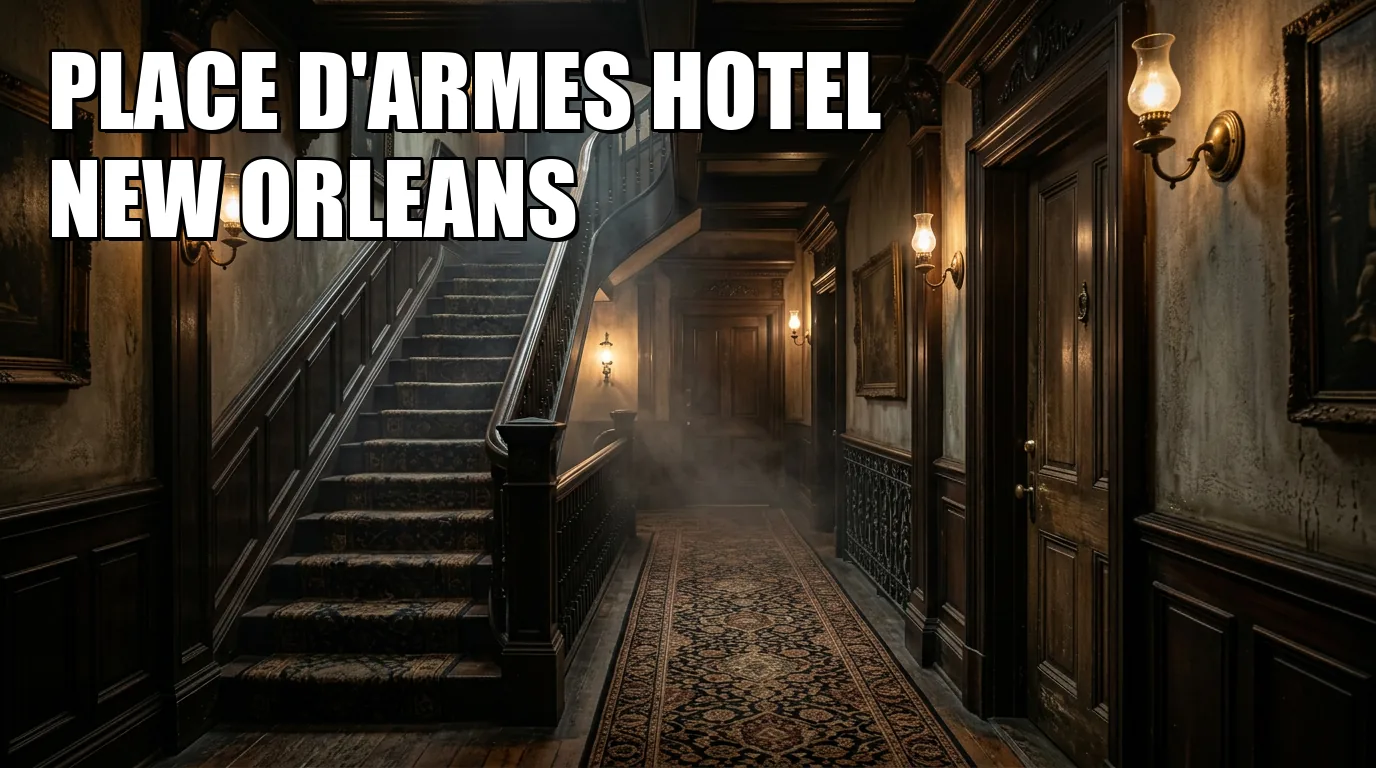
Place d'Armes is the New Orleans hotel to book when you want the French Quarter to feel close, historic, and walkable without sleeping on one of the louder strips that can make the neighborhood feel like a constant performance. Its real advantage is not a ghost story. It is the combination of a quiet St. Ann Street block, Jackson Square proximity, courtyards and pool space, and a room product that stays closer to old Quarter texture than to chain-hotel polish.
The practical frame: book Place d'Armes when you want to wake up inside the Quarter, prioritize Jackson Square and lower-Quarter walking, and can live without breakfast service or airport shuttle convenience. Skip it if you want full-service luxury or a large modern hotel plant.
4 PM / 11 AM official check-in and check-out times
$42 + tax current official overnight guest parking rate
10 AM to 10 PM current pool hours at the courtyard pool
What Place d'Armes Actually Does Better Than Most Quarter Hotels
The hotel’s own materials keep pointing to the same strength: location without chaos. Place d'Armes sits on the 600 block of St. Ann Street, near Jackson Square and the lower French Quarter, while still staying away from the most exhaustingly loud Bourbon Street positioning. The property pages also emphasize the restored eighteenth- and nineteenth-century buildings, tropical courtyards, fountains, and the pool. That tells you exactly what kind of stay this is supposed to be.
If you want New Orleans to feel atmospheric and walkable from the room outward, Place d'Armes makes a strong case. If you want a flagship bar scene in the hotel itself or a big-service luxury operation, the case is weaker.
Why It Feels Different From Monteleone or Bourbon Orleans
Monteleone is the classic Royal Street landmark with a stronger public-room identity and bigger symbolic weight. Bourbon Orleans is the Quarter hotel for people who want to be near Jackson Square but still feel the energy of a larger historic-hotel operation. Place d'Armes is smaller-scale and quieter. It is not trying to win on literary prestige, huge lobby culture, or on-site dining variety. It wins by making the lower Quarter feel easy to inhabit.
| If you care most about... | Place d'Armes is better when... | Another New Orleans stay is better when... |
| Quiet Quarter location | You want St. Ann Street, Jackson Square, and easy lower-Quarter wandering without the heaviest hotel-corridor feel. | You want Royal Street prestige, CBD access, or a louder, more social hotel identity. |
| Courtyard atmosphere | You want lush courtyards, fountains, and a pool to break up the street energy. | You care more about bars, restaurants, and larger hotel public rooms than courtyard relief. |
| Historic texture over full service | You are comfortable with a simpler service model if the Quarter atmosphere is right. | You want breakfast on site, room-heavy luxury, or the smoother logistics of a larger hotel. |
Rooms, Smoking Rules, and What the Stay Actually Includes
Place d'Armes uses a room mix that fits the building: one-bed rooms, two-queen rooms, and multiple room types including interior, deluxe, courtyard, balcony, and junior-suite options. The official room pages list basics like mini fridges, in-room safes, coffee makers, walk-in showers, and complimentary Wi-Fi rather than a long luxury amenity stack. That is a clue about the stay. This is a charming Quarter hotel, not an amenity arms race.
The FAQ is also clear that guest rooms and indoor public areas are smoke-free, with smoking allowed only on exterior balconies and outdoor public areas such as the courtyard. That is a practical difference for travelers who want a historic-feeling hotel but not indoor smoking drift.
Parking, Airport Strategy, and Who Should Drive
The parking and arrival logic are unusually explicit on the hotel’s own FAQ page. Guest automobile parking is currently listed at $42 plus tax per night. There is no airport shuttle. The hotel says taxi service from the airport is available at baggage claim at a $36 flat rate for one or two people, or $15 per person for larger groups.
That means Place d'Armes works best when you are comfortable using cab or rideshare from the airport and then leaving the car alone, or when you value being in the Quarter enough to accept valet cost. It is less compelling if cheap self-driving logistics are the main priority.
Pool, Breakfast, and the Daily Rhythm
One of the most useful bits on the official FAQ is also one of the least glamorous: the pool hours are 10:00 a.m. to 10:00 p.m., and the hotel does not provide breakfast. Instead, it offers 24-hour coffee and tea service in the guest lounge and in-room K-Cup-style amenities. That is the sort of thing that makes or breaks the right booking decision.
Place d'Armes is best for travelers who are happy to eat breakfast out, treat the Quarter as the dining room, and use the courtyard pool as a reset point between walking sessions. If your ideal hotel morning depends on on-site breakfast service, another property may fit better.
Who Should Book Place d'Armes?
Book it when you want a lower-Quarter stay, when Jackson Square matters more than a CBD address, and when the courtyards and calmer block matter more than getting a giant public-room hotel experience. It also suits travelers who want the French Quarter from the inside rather than as a quick taxi destination from elsewhere.
If you want a flagship historic hotel with heavier food-and-drink identity, Monteleone and Bourbon Orleans are usually stronger. If you want the quieter old-Quarter version of New Orleans from the room outward, Place d'Armes makes more sense.
Is Place d'Armes Worth It?
Yes, when your trip is really about inhabiting the Quarter rather than merely touring it. Place d'Armes is worth it for travelers who want courtyard relief, Jackson Square access, and a smaller-scale historic-hotel rhythm that stays tied to the neighborhood.
It is not the universal best New Orleans hotel. It is one of the cleanest answers for a quieter French Quarter stay, and that makes it much more useful than another generic ghost-hotel write-up.
The Cornerstone Brief
One historic place, once a week — what it is, why it matters, whether it's worth going. No filler, no paid placements.
Coming soon. Unsubscribe any time.