Dedham's Enduring Enigma: The Fairbanks House’s Unyielding Spirit
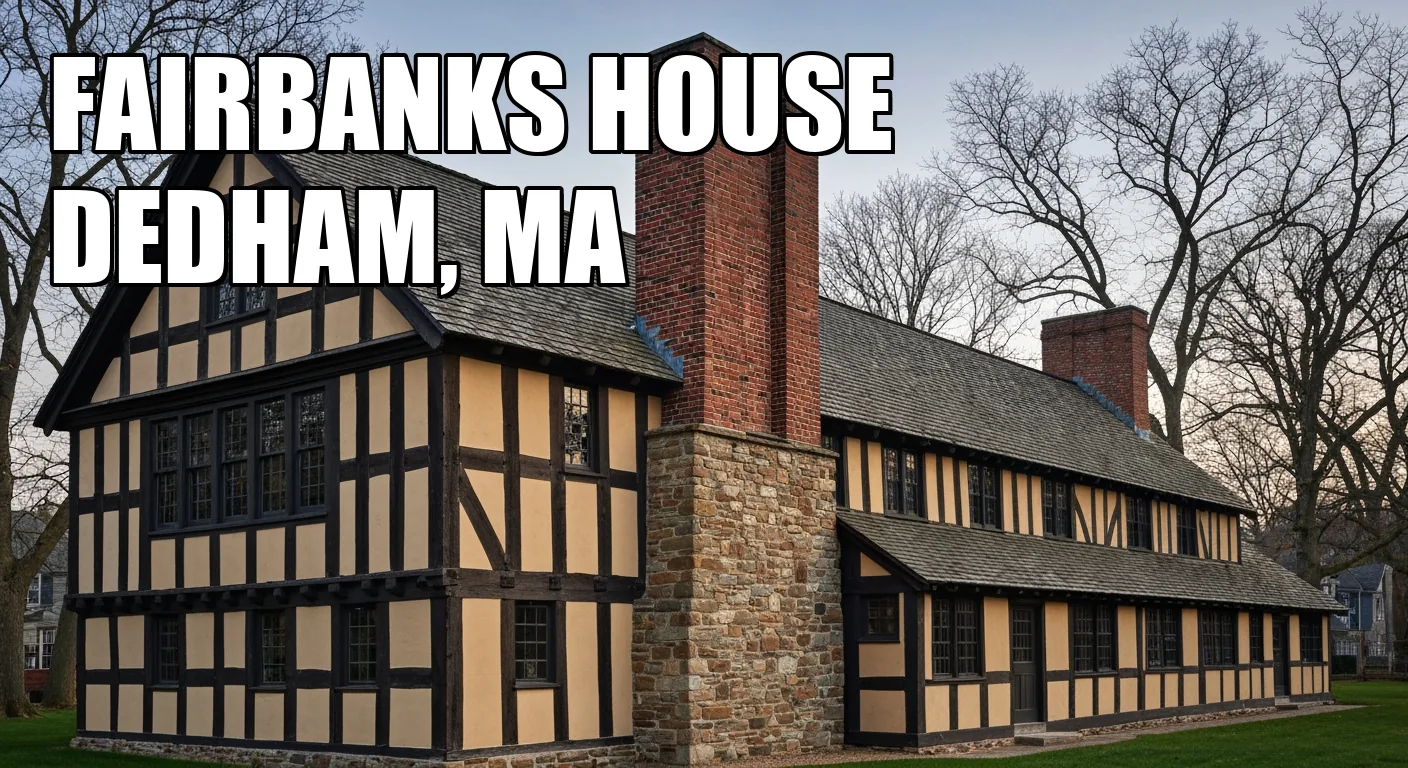
Imagine a home that has stood sentinel for almost four centuries, weathering countless blizzards, revolutions, and the relentless march of time. TheFairbanks House in Dedham, Massachusetts, isn't just old; it's practically an architectural marvel, verifiably the
oldest surviving timber-frame house in North America through dendrochronology – the science of dating wood by its tree rings. Its construction, primarily between 1637 and 1641, speaks volumes about the tenacity of its first prominent owner, Jonathan Fairbanks, a man clearly committed to permanence. When you run your hand over the wide oak clapboards on the front, or notice the slightly narrower ones on the west gable end, you're touching materials that have protected generations.
I remember my first visit, expecting a museum-like rigidity. Instead, the house feels almost alive, its massive central chimney bay anchoring a symmetrical hall-parlor plan. The framing, largely intact with original summer beams and wall boards, isn't just structural; it's a visible testament to seventeenth-century craftsmanship. What often gets overlooked in typical tours is the sheer labor involved in felling those trees, hewing the timbers, and raising the frame with hand tools. This wasn't merely building a house; it was an act of profound faith in a new settlement. Plan your visit for a weekday morning in late spring or early fall; you'll find smaller crowds, allowing you to truly absorb the quiet grandeur of this extraordinary place. Admission generally runs about $15-20 per adult, with ample on-site parking available, a rare luxury in historic town centers.
Topsfield's Testament: Unpacking the Parson Capen's Quirks
How many times have you heard that the prominent jetties on early colonial homes were for defensive purposes, offering a vantage point to pour hot oil on approaching foes? It's a romantic notion, often repeated, but a close examination of the 1683Parson Capen House in Topsfield, Massachusetts, quickly dispels this myth. Its stunning jetties, those pronounced overhangs on the front and sides, served a far more practical, if less dramatic, purpose: shielding people from rain. They were primarily decorative, yes, but also offered a bit of architectural elegance to the otherwise utilitarian Elizabethan style favored during this First Period.
Commissioned by Reverend Joseph Capen, this house is a delightful surprise, showcasing builders who were clearly thinking beyond mere shelter. The decorative pendants, or "pendills," carved by the builder, are a unique touch, hinting at an aesthetic aspiration rarely seen in such early homes. Inside, the four rooms, each with its own fireplace, give a palpable sense of colonial domesticity. The inscription on a summer beam in the parlor, "July 8, 1683," isn't just a date; it’s a direct link to the hands that built it, a personal touch that always moves me. Visiting in summer can be warm, as there’s no air conditioning, so dress light. Parking is usually free and accessible. This house isn't often overrun, making it a serene experience, typically costing around $10-15 for entry.
Ipswich's Layered Legacy: Decoding the John Whipple House's Expansion
Few structures tell a clearer story of a family's growth and changing fortunes than theJohn Whipple House in Ipswich, Massachusetts. What began as a modest single-cell house around 1677, anchored by a central chimney, underwent a significant transformation just over a decade later. In 1690, Major John Whipple, the son, added a substantial 24-foot eastern expansion, effectively doubling its size and scope. This wasn't just an addition; it was a statement.
The addition included a second façade gable and striking crossed summer beams, demonstrating an architectural ambition that reflects the growing prosperity of the Whipple family and Ipswich itself. Pay close attention to the east wall, where you’ll spot hewn overhangs adorned with substantial ogee moldings – a defining characteristic of the post-medieval Revival style that flourished in Ipswich from about 1680 to 1710. This house beautifully illustrates the evolving needs and tastes of colonial gentry, moving from bare necessity to a more nuanced sense of comfort and display. It's a less-trafficked site than some others, offering a more intimate viewing experience. Weekends are generally fine, and admission is typically under $15. Parking is usually available on nearby streets.
Salem's Steadfast Sentinel: The Pickering Family's Three Centuries of Occupancy
Imagine a home that has witnessed the infamous Witch Trials, the American Revolution, and two World Wars, all while remaining in the hands of a single family. ThePickering House in Salem, Massachusetts, built circa 1664 (dendrochronologically dated to Winter 1663/4), holds the remarkable distinction of being
America's oldest home continuously occupied by one family for over three centuries. This isn't just a factoid; it profoundly shapes the house's character, offering a sense of continuity that few other historic sites can match.
Inside, the double transverse summer beams and summer tie beams, supported by story posts, create a distinctive framing configuration typical of Salem. These exposed structural elements don't just hold the house up; they define its interior aesthetic, a raw, honest beauty. The house’s longevity within the Pickering lineage means you're seeing layers of history, not just a snapshot. While visiting Salem can often feel like navigating a theme park of "witchy" kitsch, the Pickering House stands as a quiet, dignified counterpoint, a true historical anchor. Navigating Salem's narrow streets and expensive parking (expect $10-20 for a few hours in a lot) requires patience, especially during peak season (October is famously crowded). Aim for a weekday outside of fall foliage season for a more relaxed visit; admission costs typically around $15-20.
The Witch House and Other Salem Narratives: A Closer Look at Corwin & Gedney
Salem, Massachusetts, is synonymous with its dark past, and theJonathan Corwin House, famously known as The Witch House, draws immense curiosity. But what many visitors miss is the architectural story beneath the sensational name. Built around 1675, initially by Nathaniel Davenport before Corwin's completion, it featured unusual elements for its time: steep gables, a large central chimney, and a projecting two-story entry porch. This design was quite forward-thinking. However, between 1746-1747, a significant architectural transformation occurred when the facade gables were removed and a gambrel roof was added over the entire frame. This alteration reflects a shift in style and practicality, showing how even these early homes adapted over time, often losing some of their original "First Period" character in the process.
Just down the street, the
Gedney House, dating to circa 1665, offers a stark contrast and a more authentic glimpse into seventeenth-century construction methods. This home, built by shipwright Eleazer Gedney, proudly displays its exposed framing, with visible wooden posts and beams secured by wooden pegs. It’s a masterclass in early joinery, a rare chance to truly see how these structures were assembled. What truly fascinated me on a recent visit was discovering three successive color schemes in the hall chamber, the earliest believed to be nearly contemporary with the original construction. This tiny detail is huge: it reveals that even these early settlers cared about aesthetics, not just survival. While the Witch House capitalizes on its macabre association (expect higher admission, around $10-15, and definite crowds), the Gedney House, often part of Historic New England's offerings, provides a quieter, deeper architectural dive, sometimes only open seasonally or by appointment. Always check their specific hours, as parking in this area of Salem is notoriously difficult; consider walking from a central garage.
Portsmouth's Pioneering Past: The Sherburne House's Fading Frame
Venturing north into New Hampshire, theSherburne House in Portsmouth presents another crucial piece of the colonial puzzle. Constructed in two phases between circa 1695 and 1702, it stands as
one of the last three wood-framed houses from the 1600s remaining in New Hampshire. This fact alone makes it a pilgrimage site for anyone serious about early American architecture. It embodies the transition from the raw, unadorned First Period to a slightly more refined early Georgian influence, even with its modest two-story, single-cell design.
What sets the Sherburne House apart, especially from its more purely functional predecessors, is the evidence of decorative elements on its timber framing. Unlike simpler contemporary structures, some more elaborate First Period homes, like this one, featured carved or painted designs on their visible wooden elements. This signals a growing desire for domestic beautification beyond basic utility, even in the relatively remote reaches of colonial New Hampshire. It’s a subtle but important detail, suggesting the burgeoning cultural aspirations of the colonists. The house is often part of the Strawbery Banke Museum complex; purchasing a general admission ticket (around $20-25) usually covers access to it and several other historic buildings. Strawbery Banke has dedicated parking, which is a major plus. Visiting in late spring or early fall ensures pleasant weather for exploring the entire museum grounds.
These seven houses, each a unique expression of its time and place, collectively paint a vivid picture of New England's architectural genesis. From the unyielding permanence of the Fairbanks House to the refined aspirations of the Sherburne House, they demonstrate how colonists expertly adapted English building traditions to their new environment. The steep roofs for snow, the massive central chimneys for warmth, and the sturdy timber-frame construction – these weren't merely choices; they were ingenious solutions that allowed these structures to stand for well over three centuries. They challenge our modern notions of rapid obsolescence, reminding us that quality craftsmanship and thoughtful design possess an enduring power. These aren't just relics; they're vital, breathing testaments to the skill, vision, and sheer grit of America's earliest builders. So, go, touch the timbers, feel the history, and look beyond the obvious. You might just find a story that changes your perspective.