There’s a certain thrill in standing exactly where a legendary character once did, even if that character exists only on screen. For aficionados of whip-cracking archaeology and daring escapes, the Indiana Jones series offers a particularly rich tapestry of real-world backdrops, many of them surprisingly close to home. While the iconic adventurer’s exploits often take him to exotic locales, from the ancient city of Petra to the jungles of Sri Lanka, a significant portion of the cinematic magic was conjured right here in the United States. Delving into these domestic filming sites reveals not just the artistry of filmmaking, but also the inherent grandeur of American landscapes, often overlooked in the rush to global adventure.
My own travels have taken me to countless historical and film-related spots, and what often strikes me isn't just the "what," but the "why." Why did a seasoned director like Spielberg choose a specific patch of desert in Utah, or a historic rail line in Colorado? What does a prestigious Ivy League campus offer to the visual narrative of academic intrigue? It’s these layers that transform a simple visit into a profound connection with the film, sometimes revealing truths far more interesting than the movie magic itself. Let's peel back those layers and explore the American landscapes that helped forge the legend of Indiana Jones.
Where the Legend Began: Utah’s Red Rock Grandeur
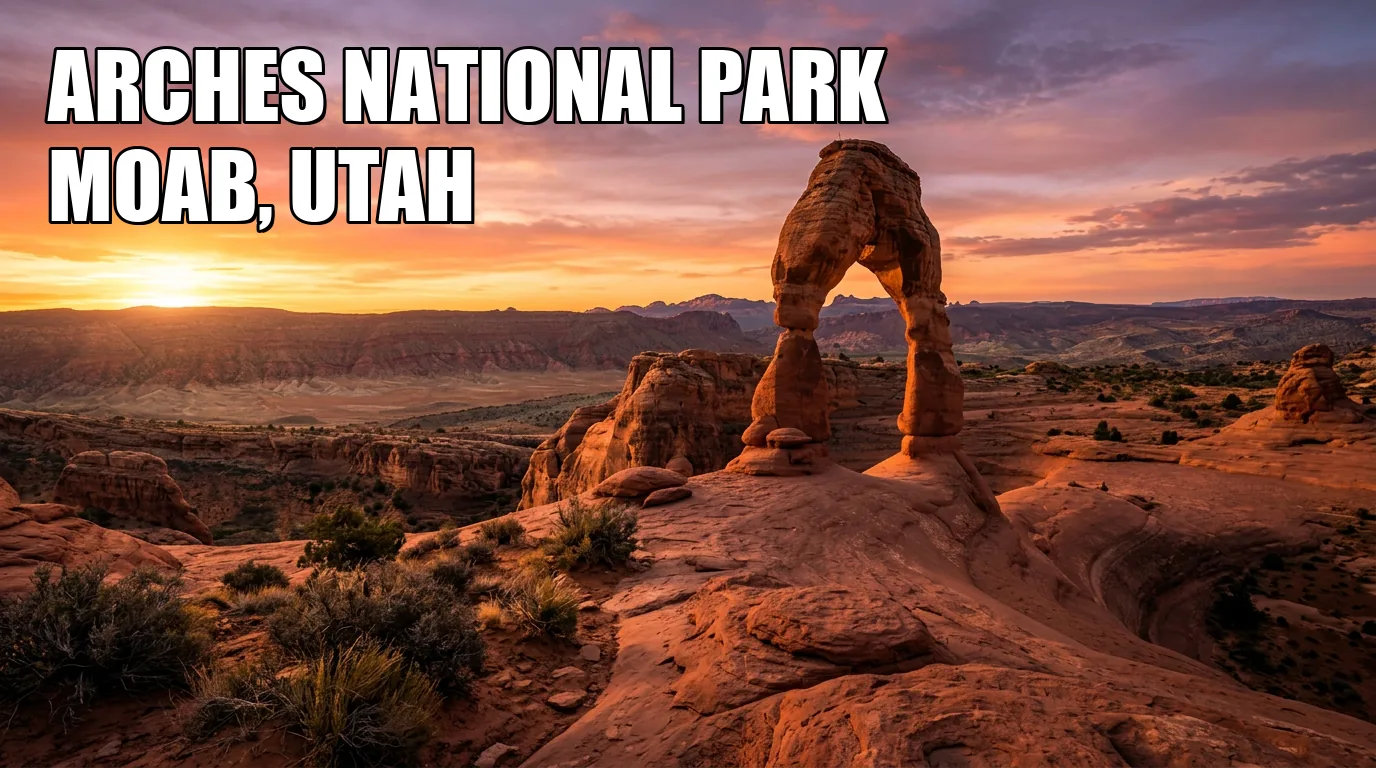
Any journey into the origins of Indiana Jones must begin, fittingly, with his own origin story in The Last Crusade. The opening prologue, featuring River Phoenix as the young, intrepid Indy, is pure cinematic gold, and much of it was captured against the breathtaking canvas of Arches National Park near Moab, Utah. Spielberg’s decision to use this particular location was brilliant; the monumental sandstone arches and towering fins, sculpted by millennia of wind and water, perfectly evoke a sense of ancient mystery and untamed wilderness, even in the modern era. You feel it in your bones the moment you drive into the park: this place *feels* like adventure.
The iconic scenes of young Indy racing across the desert, clambering through caves, and encountering grave robbers were filmed along the South Park Avenue corridor. Visitors can easily trace his footsteps, from the dramatic vista at Park Avenue Viewpoint (38°37'29.77"N 109°35'57.63"W, for those who appreciate precision) to the imposing Courthouse Towers just beyond. What struck me most on my first visit wasn't just the recognizable formations, but how utterly vast and indifferent the landscape is to human drama. It humbles you, making Indy's early exploits seem even more audacious.
Finding the precise spots can be a fun scavenger hunt. Balanced Rock, with its gravity-defying pose, is immediately recognizable from the parking area (38°42'5.84"N 109°33'58.87"W), while the Three Gossips truly live up to their name, appearing to whisper secrets carved in stone. The most engaging, however, is Double Arch. This is where the boy scouts dismount and young Indy makes his dramatic escape from the grave robbers through a cave. The specific cave exit he uses (38°41'28.48"N 109°32'23.54"W) is still there, a dark mouth in the red rock, inviting you to imagine the chase. Arrive early, especially if visiting between April and October; the park can get incredibly crowded, and while the film evokes solitude, reality often presents a throng of fellow adventurers.
Practical advice for Arches National Park is essential. Entrance requires a park pass or the America the Beautiful Pass, and during peak season (April-October), a timed entry reservation system is often in effect, so check the NPS website well in advance for 2025 updates. Parking can be a nightmare at popular trailheads later in the day, particularly for Double Arch. Plan to visit in the cooler months, perhaps March or November, or be prepared for scorching summer temperatures and a significant number of fellow tourists. The magic is still there, but you might have to work a bit harder to find your own moment of cinematic solitude.
All Aboard the Circus Train: Colorado’s Enduring Steam Power
From the sweeping vistas of Utah, our journey takes us to the narrow-gauge tracks of southern Colorado, specifically the Cumbres & Toltec Scenic Railroad in Antonito. Here, another pivotal scene from The Last Crusade unfurled: the incredible circus train fight, another defining moment in young Indy’s origin story. Filmed in late August and early September of 1988, the production transformed a working heritage railroad into a rollicking, anachronistic spectacle. It’s one thing to see it on screen; it’s another entirely to ride it. The very locomotive, K-36 number 484, modified to pull the fictional circus train, is still in service and remains a star of the Cumbres & Toltec fleet. This isn't merely a static prop; it's a living piece of film history that continues to chug through the stunning landscapes of the Rocky Mountains.
What makes this location so compelling is its tangible connection to the film. The water tower that young Indy scrambles up, the one from which River Phoenix’s character makes his iconic leap onto the train, still stands at its original location (36°54'2.46"N 106°34'50.42"W). It’s not just a relic; the operating train still uses it for water refills, a charming blend of practicality and cinematic legacy. Riding the Cumbres & Toltec Scenic Railroad is a full-day commitment, but it’s a journey back in time, offering unparalleled views and a visceral sense of what it was like to travel by steam. You won't be dodging lions or fighting grave robbers, but the sheer beauty of the mountains and the rhythmic clang of the wheels provide their own kind of adventure.
The small town of Antonito, Colorado, offers another intriguing, if slightly less direct, connection: young Indiana Jones’s boyhood home at 502 Front Street. This historic house, built in 1888, now operates as an Indiana Jones-themed bed and breakfast. While the concept sounds delightful, visitors should manage expectations; it’s more a loving homage than an exact replica of a film set. Its charm lies in its dedication to the character, offering a quirky, fan-centric experience rather than a strict recreation of a movie scene. Booking well in advance is crucial, as its niche appeal means it fills up fast, particularly during the train operating season from late May to late October.
When planning a visit to the Cumbres & Toltec, remember that train tickets are not cheap and they sell out quickly. Check their official website for schedules and pricing, and book your seats months ahead, especially if you aim for a specific car or a popular fall foliage trip. There's ample parking at the Antonito depot. The journey itself, while scenic, is a far cry from the high-octane train sequence in the film. Expect a leisurely, historic ride, not a wild chase. That contrast, however, is part of its charm, allowing you to appreciate the serene beauty that Spielberg then transformed into breathless action.
Ivory Towers and Motorcycle Chases: Yale as Marshall College
Fast forward nearly two decades to Indiana Jones and the Kingdom of the Crystal Skull, and we find our hero in a familiar academic setting. The fictional Marshall College, where Indy teaches, was brought to life on the hallowed grounds of Yale University in New Haven, Connecticut. Between late June and early July 2007, the campus was abuzz with filming, transforming its Gothic Revival architecture into the perfect backdrop for 1957 America. Yale offered not just a stage, but a character in itself: an institution steeped in tradition, providing a stark contrast to the burgeoning Cold War paranoia that permeates the film.
The extensive chase sequence through the campus, culminating in an anti-Communist rally, centered on Yale’s iconic Old Campus. Phelps Gate, the main eastern entrance, features prominently in establishing shots, instantly signaling an academic gravitas. William L. Harkness Hall, with its distinctive Gothic details, served as the interior for Indy's lecture scenes, complete with specific classrooms like WLH 007 and WLH 011. Walking through these halls, you can almost hear the rustle of tweed and the chalk on the blackboard, before the rumble of a motorcycle interrupts the peace. Branford and Saybrook Colleges, along with the Sterling Library and the Commons building, also provided authentic backdrops, creating a fully immersive sense of a bustling university.
Visiting Yale as a film location is a fascinating exercise in recognition. While the campus is freely accessible, navigating the busy streets of New Haven and finding parking can be a challenge. I recommend visiting during university breaks, such as summer or winter holidays, when the student population is smaller, allowing for a more serene exploration. You won’t find any preserved film sets, of course, but the sheer architectural consistency across the campus allows you to piece together Indy’s world surprisingly well. Take a self-guided walking tour, starting from Phelps Gate and meandering through Old Campus; you’ll gain a new appreciation for how an active, historic university can seamlessly transform into a convincing movie set.
The Shadow of the Bomb: Unpacking New Mexico’s Nuclear Illusion
Perhaps one of the more elusive and less "touristy" Indiana Jones locations comes from Kingdom of the Crystal Skull: the infamous atomic bomb test sequence. While the interior of the clandestine Hangar 51 was a set constructed at Downey Studios in Los Angeles, the exterior establishing shot was filmed at Deming Municipal Airport, New Mexico. The very notion of an "atomic bomb test site" immediately conjures images of desolation and secrecy, but the reality of visiting Deming for this connection is, frankly, rather mundane. It's an active, but quiet, regional airport; you won't find any alien artifacts or government secrets lurking in its hangars. For the dedicated film pilgrim, it's more about ticking a box and understanding the logistics of filmmaking than experiencing cinematic grandeur.
The sinister "Doom Town" atomic test site, where Indy famously survives a nuclear blast by hiding in a refrigerator, was not filmed at a real test site. Instead, it was an elaborately constructed set piece, inspired by the historical Nevada Test Site's Operation Plumbbob of 1957. The fictional town, complete with mannequins posing as residents, was built purely for the film’s explosive sequence. This detail underscores a crucial aspect of film location scouting: sometimes, a place is chosen not for its existing beauty or history, but simply as a blank canvas, or, as in Deming's case, for a brief, utilitarian establishing shot. The entrance gate for the fictional Hangar 51 was built some distance away on Corralitos Road (County Road C009), north of Robert Larson Boulevard, near Las Cruces International Airport—another spot that serves as a subtle nod to the film’s production rather than a grand tourist destination.
For visitors, there’s truly nothing to "see" at these Deming locations beyond an appreciation for the geographic accuracy of the establishing shots. Don't expect a museum, an interpretive plaque, or even a recognizable landmark apart from the airport itself. This particular set of locations highlights the often-stark difference between cinematic illusion and physical reality. It reminds us that filmmaking is a craft of carefully curated moments, and sometimes those moments are built from the ground up, or glimpsed only fleetingly, in places that hold little intrinsic visual appeal to the casual visitor. While you might consider a drive-by for completionist bragging rights, it's hardly a pilgrimage in the vein of Arches or the Cumbres & Toltec.
A Tale of Two Cities (and a Country): Glasgow’s NYC Deception
Our final stop veers slightly off the strict "USA" path, but it's too compelling a story of cinematic illusion to omit. For the most recent installment, Indiana Jones and the Dial of Destiny, the production needed to recreate 1969 New York City for the Apollo 11 ticker tape parade sequence. Where did they go? Not to New York, but across the pond to Glasgow City Centre, Scotland. This is a classic example of how architecture and a skilled art department can utterly transform a location.
St. Vincent Street and its surrounding avenues in Glasgow were spectacularly re-dressed to mimic mid-century Manhattan. Over a thousand background actors, posing as parade-goers and Vietnam War protestors, brought the scene to life. While the fictional Hunter College, where Indy teaches, was largely digitally recreated, the establishing shots were firmly rooted in these Glasgow streets. The city's grid layout and impressive Victorian and Edwardian architecture, surprisingly similar in scale and style to some parts of historic New York, made it an ideal, and far more controllable, stand-in for the bustling American metropolis.
This particular filming location perfectly illustrates the magic and practicalities of modern moviemaking. You can visit Glasgow today and, with a keen eye and some imagination, identify the streets used, but you won't find a permanent "New York" set. The subway station scene from Dial of Destiny, for instance, was an entirely constructed replica set at Pinewood Studios' 007 Stage in the UK, further emphasizing that what you see on screen is often a carefully crafted composite. It serves as a reminder that the world of Indiana Jones, while grounded in real places, is ultimately a product of meticulous design and cinematic sleight of hand. While you won't be visiting "NYC" in Scotland, you'll gain a profound appreciation for why Glasgow is a go-to city for film productions needing to double for other major urban centers.
Dispelling Myths: The Greencastle Conundrum
Before concluding, it's worth addressing a persistent whisper I’ve encountered among enthusiasts: the idea that Indiana Jones films might have utilized train facilities in Greencastle, Indiana. While Greencastle certainly boasts a rich railroad history, with the Terre Haute & Indianapolis Railroad and Louisville, New Albany & Chicago Railroad crossing there as early as 1864, I can definitively state that there is no specific evidence linking any Indiana Jones film to Greencastle. This confusion likely stems from the city’s prominent role in Indiana's rail history, making it a natural, albeit incorrect, assumption for fans. My research, and indeed the official production notes, consistently point to the Cumbres and Toltec Scenic Railroad in Colorado as the definitive location for the iconic train sequences. It’s a common pitfall in film tourism, where genuine historical significance can sometimes be conflated with cinematic connections. Always double-check those whispers; the truth is often more interesting than the rumor.
Our journey through the American landscapes of Indiana Jones reveals a fascinating interplay between spectacular natural beauty, historic architecture, and the transformative power of filmmaking. From the stark, ancient drama of Utah's red rocks to the academic gravitas of Yale's campus, and even the subtle geographical choices that create cinematic illusions, these sites offer a unique lens through which to appreciate both Dr. Jones's adventures and the diverse tapestry of the United States. While not every location promises a thrilling, artifact-laden quest, each offers a piece of the puzzle, inviting you to connect with the films on a deeper, more tangible level. So, pack your fedora and your sense of adventure; the exploration continues, right here at home.