Photo by Olivia Hartwell for Cornerstone Mansion · January 23, 2026
For years, I’ve chased the phantom of history through the American Southwest, always drawn to the enduring silence of its Spanish Colonial structures. There's a particular magic to adobe – that humble, sun-dried earth brick – that speaks volumes about the land and the people who shaped it. It’s a style that transcends mere construction; it's a philosophy of building, born of necessity and imbued with a reverence for local materials. But don’t let the simple aesthetic fool you. These aren't just old buildings. They are living archives, each wall, beam, and arch holding stories far more intricate than any plaque can convey.
What does it truly mean to stand before a building that has witnessed four centuries of human drama? As a travel writer obsessed with peeling back layers of the past, I've found that the real treasures aren't always the grandest structures, but the ones that reveal their secrets subtly, inviting you to look closer. From the political heart of New Mexico to California's serene coast, these adobe jewels offer a portal to a bygone era, often challenging our preconceived notions of colonial expansion and cultural integration.
Santa Fe's Enduring Political Heart: The Palace of the Governors
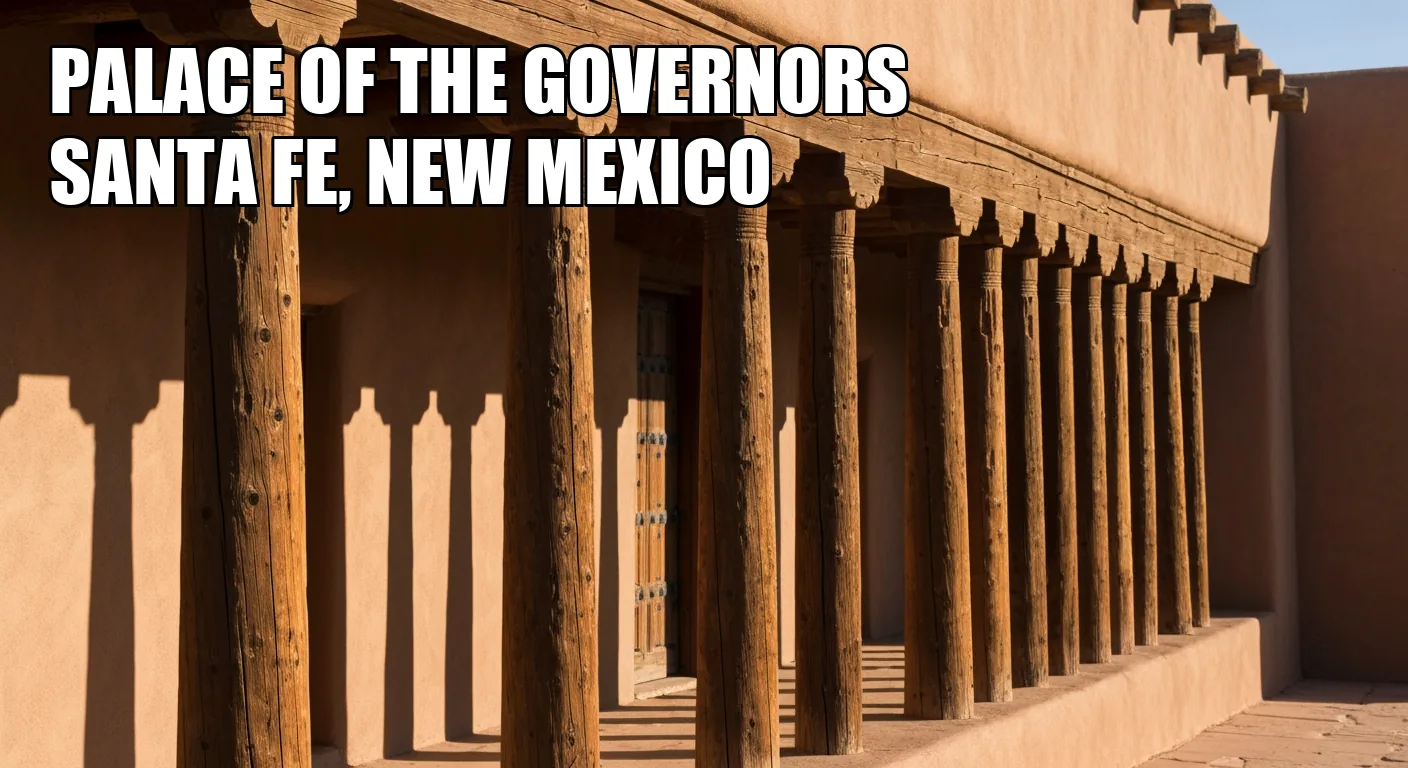
Imagine a public building that has continuously served a governmental function for over four centuries. Most places can’t even keep a coffee shop open that long. Yet, in the heart of Santa Fe, the Palace of the Governors, begun around 1610 (or perhaps 1618, depending on which historian you consult), stands as a testament to unparalleled historical endurance. Commissioned by Spanish governor Pedro de Peralta as the seat of power for Nuevo México, this adobe edifice has seen Spanish viceroys, Pueblo governors, Mexican officials, and American territorial leaders pass through its robust doors. It’s an unbroken chain of authority that is frankly astonishing, a living artifact of political transition.
The Palace's architectural journey reflects this layered history. Its core remains that thick-walled Spanish Colonial adobe, built to withstand time and conflict. However, what you see today owes much to a significant 1909 renovation. This restoration, far from merely preserving, actively *shaped* Santa Fe's future. It embraced a Spanish-Pueblo Revival style, drawing inspiration from local building traditions and inadvertently setting the aesthetic standard for the entire city. Walking its hallowed halls, you’re not just seeing the past; you're seeing an interpretation of it that became so definitive, it *became* the past for subsequent generations. The most striking feature for many visitors isn’t even inside: the block-long portal where Native American artisans sell their exquisite jewelry and crafts. This vibrant marketplace, under the colonnade, provides a powerful and immediate connection to the cultural exchange that defines Santa Fe, a fascinating contrast to the building's historical role as a symbol of colonial power.
Thinking of a visit? The Palace is now home to the New Mexico History Museum and operates 10:00 AM to 5:00 PM Monday and Wednesday through Saturday, and noon to 5:00 PM on Sunday. They close on Tuesdays. Don’t just rush through the museum; take time to absorb the atmosphere of the portal. If you're keen on context, consider one of the daily walking tours of historic downtown Santa Fe, offered from April through November 20, 2025, starting at 10:15 AM. You'll gain a richer understanding of how the Palace fits into the larger narrative of this unique city.
Why San Xavier del Bac's Asymmetry Holds the Key to Its Soul
Deep in the Arizona desert, just south of Tucson, rises a vision in white against the stark landscape: Mission San Xavier del Bac. Founded by the legendary Jesuit Father Eusebio Francisco Kino in 1692, it holds the distinction of being Arizona's oldest European structure. Yet, the current magnificent church, built by Franciscans between 1783 and 1797, is where the true wonder lies. Commissioned under the guidance of Spanish architect Ignacio Gaona, this mission is often heralded as "The White Dove of the Desert," a masterpiece of Spanish Colonial and Mexican Baroque styles, with whispers of Mudéjar — Spanish Islamic — influences.
What sets San Xavier apart, beyond its startling beauty, is its profound and deliberate asymmetry. One bell tower stands complete with a dome, while the other remains unfinished, a testament to its long construction and the changing fortunes of its builders. This isn't a flaw; it's an architectural confession, revealing the complexities of colonial enterprise and resource allocation. It forces you to pause, to consider the human element behind such grand designs. Inside, the visual onslaught is exhilarating. This isn’t a minimalist adobe; it's a riot of High Baroque decoration, a veritable feast of statuary, carvings, and paintings. They say there are at least 183 different angels adorning its surfaces, and honestly, you might believe them. Every inch is consecrated, drawing your eye upwards, a stark contrast to the often-plain exteriors of other missions. The Latin cross floor plan and transept chapels create a profound sense of sacred space, despite the throngs of visitors.
Unlike many historic sites that have become mere museums, San Xavier del Bac remains a vibrant, active Roman Catholic parish for the Tohono O'odham community. This continuity of purpose, spanning over three centuries, imbues the mission with a palpable spiritual energy that a purely secular monument simply cannot replicate. You’ll find Sunday Masses at 7:00 AM, 10:00 AM, and 11:30 AM. Docents are usually available to offer insights, and there’s a small museum. Expect crowds, especially on weekends and during the cooler months (October through April). Visiting during a weekday morning offers a slightly more tranquil experience to truly appreciate its sanctity.
The "U" of History: Unlocking Estudillo's Domestic Drama in San Diego
Moving west to San Diego, California, one encounters the Casa de Estudillo, a sprawling adobe built between 1827 and 1829. Unlike the grand religious institutions or political palaces, this was a domestic sphere, the home of Capitán José María Estudillo, a retired commander of the San Diego Presidio. Its U-shaped footprint, with wings extending 98 feet around a large central patio and a front spanning 113 feet, immediately suggests a particular way of life. The rooms, thirteen originally, connect only via an external covered *corredor* (portico), not interior hallways. This wasn’t about privacy in the modern sense; it was about climate control, communal living, and a blurring of indoor/outdoor spaces that defined early Californian Spanish Colonial dwellings.
The Casa's story is also one of remarkable resurrection. After the Estudillo family left in 1887, the house fell into disrepair. Its salvation came with a meticulous restoration between 1909 and 1910, spearheaded by architect Hazel Wood Waterman and funded by investor John D. Spreckels. Waterman's dedication to reproducing original materials and techniques set a gold standard for respectful historic preservation. This wasn't merely a repair job; it was an archaeological recreation, a testament to the growing appreciation for California's Spanish past. Another significant restoration occurred in 1972, further cementing its role as a house museum after the State of California acquired it in 1968.
The Casa de Estudillo’s thick adobe walls (3 to 5 feet!), river cobble foundations, and tile roof are textbook Spanish Colonial. But look closely at the turreted balcony, or cupola, which originally offered a prime vantage point for the Estudillo family to observe bullfights, horse races, and fiestas in the adjacent plaza. This detail reveals a vibrant social life, a blend of Spanish tradition and Californian frontier culture that typical guidebooks might gloss over. It's a reminder that these homes weren't just shelters; they were stages for community life. Located at 4000 Mason Street in Old Town San Diego State Historic Park, the casa welcomes visitors to wander through its restored rooms. While specific hours can fluctuate, expect it to be open during standard park hours, typically 10:00 AM to 5:00 PM. Guided tours are often available and highly recommended for a deeper dive into the family’s intriguing past.
San Miguel Chapel: A Phoenix of Faith in Santa Fe
Is it possible for a building to have nine lives? Santa Fe's San Miguel Chapel comes remarkably close. Believed to have been constructed around 1610 (though written records confirm it by 1628) by Tlaxcalan Indians—Mexican allies of the Spanish—under Franciscan guidance, this humble adobe chapel in the Barrio de Analco holds the unofficial title of the "oldest church in the United States." Its initial form was simple: a rectangular adobe box with a dirt floor and mud roof. It’s hard to imagine the current structure, with its stout buttresses and bell tower, starting from such basic beginnings.
The chapel’s resilience has been tested repeatedly. It was severely damaged during the Pueblo Revolt of 1680, its roof burned, walls crumbling. Yet, it survived. A major reconstruction effort completed in 1710 left its mark: an inscription on the choir loft beam proudly declares, "This building was erected in 1710." Further modifications came in 1798 with a beautiful *Retablo* (altar screen), thought to be the work of the mysterious Laguna Santero. The 19th century saw a three-tiered bell tower added in 1848, then the impressive 780-pound San Jose Bell in 1856. When the Christian Brothers acquired the chapel in 1881, they added stone buttresses, arched openings, and even a pitched metal roof, giving it a distinctly more European appearance. These stylistic shifts weren't necessarily for aesthetic purity, but for stabilization and modernization.
However, the 20th century brought a different kind of restoration. The European additions were stripped away in 1955, aiming to return San Miguel to a more "authentic" colonial appearance. This ebb and flow of architectural identity is what makes San Miguel so compelling. Its 5-foot-thick adobe walls, supported by venerable *vigas* (wooden beams)—two of which are thought to be from 1710—and a unique clerestory above the sanctuary, speak of constant adaptation. The choir loft's heavy corbeled beam, supporting thirteen carved perpendicular beams, is a particular highlight for anyone interested in traditional timber framing. Located at 401 Old Santa Fe Trail, San Miguel Chapel offers a quiet respite. Visiting hours are Monday 11:00 AM–3:00 PM; Tuesday-Saturday 10:00 AM–3:00 PM; and Sunday 12:00 PM–3:00 PM. Docent history talks are available Tuesday through Saturday at 11:00 AM and 2:00 PM, and photos are allowed. While entry is free, donations are gratefully accepted and crucial for its ongoing preservation; it’s a non-profit endeavor.
La Purísima's Linear Logic: A Mission Reimagined
California's missions often conjure images of quaint courtyards and quadrangle layouts. La Purísima Mission, nestled in Lompoc, breaks that mold entirely. Founded in 1787 by Father Presidente Fermín Lasuén, it was the 11th of California’s 21 missions. Its first iteration, a mile south of Lompoc, was obliterated by the devastating Ventura earthquake of December 21, 1812. This cataclysmic event, which leveled many mission buildings across the region, forced a radical rethink for La Purísima. Father Mariano Payeras received permission to relocate and rebuild, creating a *new* mission officially established in 1813. This history of destruction and rebirth is vital to understanding its unique design.
What makes La Purísima truly stand out is its defiance of the traditional quadrangle. Instead, it was built in a distinctive linear, straight-line arrangement of buildings along the foot of a hill. This wasn't merely an aesthetic choice; it was a practical and philosophical decision. The 1812 earthquake taught the builders the wisdom of faster exits, and, perhaps more tellingly, mission leaders believed the local Chumash people, who were remarkably docile, didn't necessitate the fortress-like containment of a typical mission quadrangle. This insight, often missed in general histories, tells us something profound about the relationship between the Franciscans and the native population at this particular site.
The mission complex is an impressive, stretched-out affair. The padres' quarters and gardens anchor the northern end, followed by storehouses, workshops, and soldier quarters, culminating in the mission church and Spanish cemetery at the southern extremity. The residence building alone stretches 300 feet long, bordered by a walkway with twenty distinctive fluted square columns. Inside the church, which measures 140 feet long and 30 feet wide, the design is utilitarian, almost stark, without the elaborate decorative features found in, say, San Xavier del Bac. Its 4½-foot-thick adobe walls and square posts (rather than arches) supporting the roof reinforce this functional aesthetic, a stark lesson learned from seismic activity. The interior, however, offers a surprising splash of color: rough-plastered surfaces adorned with vibrant native designs.
La Purísima underwent one of the largest historical restoration and reconstruction projects in the United States, initiated after its acquisition by California State Parks in 1933. The Civilian Conservation Corps (CCC) played a monumental role, meticulously uncovering ruins, making tens of thousands of adobe bricks and tiles from local earth, and bringing the mission back to life. Dedicated as a State Historical Monument in 1941, it’s now the most completely restored California mission, boasting ten fully restored and furnished buildings across 2,000 acres of parkland. This makes it an incredibly immersive experience.
As a State Historic Park, its operating hours are generous: parking 9:00 AM–5:00 PM, historic buildings 9:00 AM–4:00 PM, and the visitor center 10:00 AM–4:00 PM (Tuesday–Sunday). Trails are open 6:00 AM–Sunset. It’s closed on New Year's, Thanksgiving, and Christmas Day. Guided tours are free and offered at 1:00 PM Wednesday through Sunday, plus 11:00 AM on Saturdays, lasting about 90 minutes. A self-guided map is available for a dollar at the visitor center, and there's a $6 vehicle admission fee. For a truly unique experience, plan your visit around one of their Demonstration Days (April 12, May 31, July 26, and August 30 in 2025), where staff and volunteers bring the past to life with activities like tortilla making, weaving, and blacksmithing.
Each of these adobe wonders, from the Palace of the Governors to La Purísima Mission, tells a distinct story of the American Southwest. They challenge us to look beyond the surface, to appreciate the ingenuity, resilience, and profound faith of those who built them. Visiting these sites isn't merely a walk through history; it’s an active engagement with the spirit of a land shaped by converging cultures, an experience far richer and more nuanced than any textbook can convey. Go, explore, and let the walls speak for themselves.
Architecture Styles You Can Read From the Street
Use visible details like rooflines, columns, and ornament to identify building styles faster.
Discover Adobe Spanish Colonial Architecture: A Traveler's Guide to American Heritage
What is the history of adobe architecture?
Adobe construction dates back to ancient times, with evidence suggesting use in the Middle East and Egypt thousands of years ago, but sun-dried mud bricks emerged as prominent building materials in the Americas around 5,100-5,500 years ago, with indigenous Southwestern pueblos using adobe long before Spanish arrival in the 16th century.
Did Spaniards use adobe for building?
Yes, Spanish colonists brought their own adobe construction traditions to the Americas and extensively used adobe bricks to build missions, fortifications, dwellings, and government structures throughout the Spanish colonial territories of the Southwest, adapting the technique to local materials and climate.
What was the architecture of the Spanish Colonial period?
Spanish Colonial architecture (1590s-1821) featured thick adobe or stone walls, flat roofs with wooden vigas and latillas, simple Baroque elements in mission churches, central courtyards for ventilation and community gathering, and designs influenced by the Laws of the Indies for organized town planning with grid systems and central plazas.
What is the history of Spanish architecture?
Spanish architecture evolved through multiple periods including Pre-Romanesque, Romanesque, Gothic, Moorish, Mudéjar, Renaissance, and Baroque styles, with each era influenced by the cultural blending of Christian, Muslim, and Jewish traditions, creating Spain's distinctive architectural heritage from ancient times through the modern era.
How did Spanish colonialism influence architecture?
Spanish colonialism brought European architectural styles, construction techniques, and urban planning principles to the Americas, creating a fusion of Spanish Colonial, Moorish, and indigenous traditions that shaped settlements throughout the Southwest and influenced American architectural identity well into the 20th century with Mission Revival and Spanish Colonial Revival styles.
What is the history of the Spanish arch?
The horseshoe arch, also called the Moorish or keyhole arch, originated in Visigothic Spain and was refined during Moorish rule (8th-16th centuries), becoming a distinctive feature of Islamic and Spanish architecture with its semicircular curve extended below the horizontal line, creating elegant rounded openings distinct from Roman arches.
What type of architecture is Spain known for?
Spain is renowned for Moorish architecture featuring horseshoe arches and geometric patterns, Mudéjar style blending Islamic and Christian elements, ornate Gothic cathedrals with decorative details, and Baroque structures with elaborate facades, alongside Mediterranean and Renaissance influences that define its rich architectural legacy.
What is the brief history of architecture?
Architecture evolved from ancient mud structures and stone monuments through Classical, Medieval, Renaissance, Baroque, and modern periods, with each era reflecting technological advances, cultural values, and aesthetic principles, from functional ancient buildings to contemporary sustainable designs incorporating historical influences.
How is Spain's history reflected in its architecture?
Spain's architecture reveals centuries of cultural interactions: Roman structures, Moorish mosques and fortresses like the Alhambra, Christian cathedrals and monasteries, and Mudéjar buildings blending Muslim and Christian styles, with each layer representing different rulers and faiths that shaped the nation's diverse historical and artistic identity.
What are the key architectural features of adobe Spanish Colonial buildings?
Key features include thick adobe or stone walls with rounded edges, flat roofs with exposed wooden vigas (beams) and latillas (smaller poles), arched doorways and windows, wooden corbels supporting structural elements, central courtyards with fountains and gardens, stucco or mud plaster exteriors, minimal window and door openings, and earth-tone colors.
Where are the best locations to visit adobe Spanish Colonial architecture in the United States?
Top destinations include Santa Fe, New Mexico (Palace of the Governors, San Miguel Chapel built 1610), Ranchos de Taos Church (1772-1816), Taos Pueblo (continuously inhabited since ~1200 CE), Acoma Pueblo Sky City, and San Antonio Missions National Historical Park in Texas with four UNESCO-listed Spanish missions.
What is the best time to visit adobe architectural sites?
Late September through October and April-May offer ideal conditions with mild temperatures, minimal crowds, and comfortable weather; summer monsoons peak July-September in New Mexico, while winter brings occasional snow, making shoulder seasons most pleasant for outdoor exploration and photography.
What are typical admission costs and hours for these historic sites?
San Antonio Missions National Historical Park offers free admission daily 9am-5pm; Acoma Pueblo charges $25 adults ($22 seniors/military); Taos Pueblo charges admission for guided tours; Santa Fe sites like the Palace of the Governors have modest fees; many adobe churches are free but accept donations.
What should I know about photography at these sites?
Photography policies vary: interior church photography may require permission or be prohibited during services; Acoma Pueblo prohibits cameras on feast days and Christmas events but allows photography otherwise with included camera permits; early morning and sunset provide ideal lighting for exterior adobe photography; drones typically require permits.
What are the visiting requirements and accessibility considerations?
Many sites have restricted areas; Taos Pueblo is occasionally closed for ceremonial events and some areas remain off-limits; Acoma Pueblo requests modest dress (no revealing clothing); some historic adobe buildings have uneven surfaces limiting wheelchair accessibility, though main areas are often available; check ahead for seasonal closures and restrictions.
Why This Page Exists
Maison builds place guides to help readers plan a real visit or understand a real site. When a page makes present-day access, booking, or visitor claims, those details are revised against public-facing source material and editorial review. For the wider standards behind that work, see methodology.
The Cornerstone Brief
One historic place, once a week — what it is, why it matters, whether it's worth going. No filler, no paid placements.
Coming soon. Unsubscribe any time.
We use cookies to enhance your experience. By continuing to visit this site you agree to our use of cookies.