Photo by Nathan Prescott for Cornerstone Mansion · January 11, 2026
Does an American Pemberley truly exist? As someone who’s spent years traversing historic sites, often chasing the ghosts of literature or cinema, I can tell you the quest for Mr. Darcy's famed estate on U.S. soil is a surprisingly complex one. While adaptations of Jane Austen’s *Pride and Prejudice* overwhelmingly favor the ancestral grandeur of English country houses for Pemberley, there are a handful of intriguing instances where the United States has flirted with the role. But don't pack your carriage just yet; the reality of these "Pemberleys" might not be what you’d expect.
### The Curious Case of Connecticut's "Pemberley Manor"
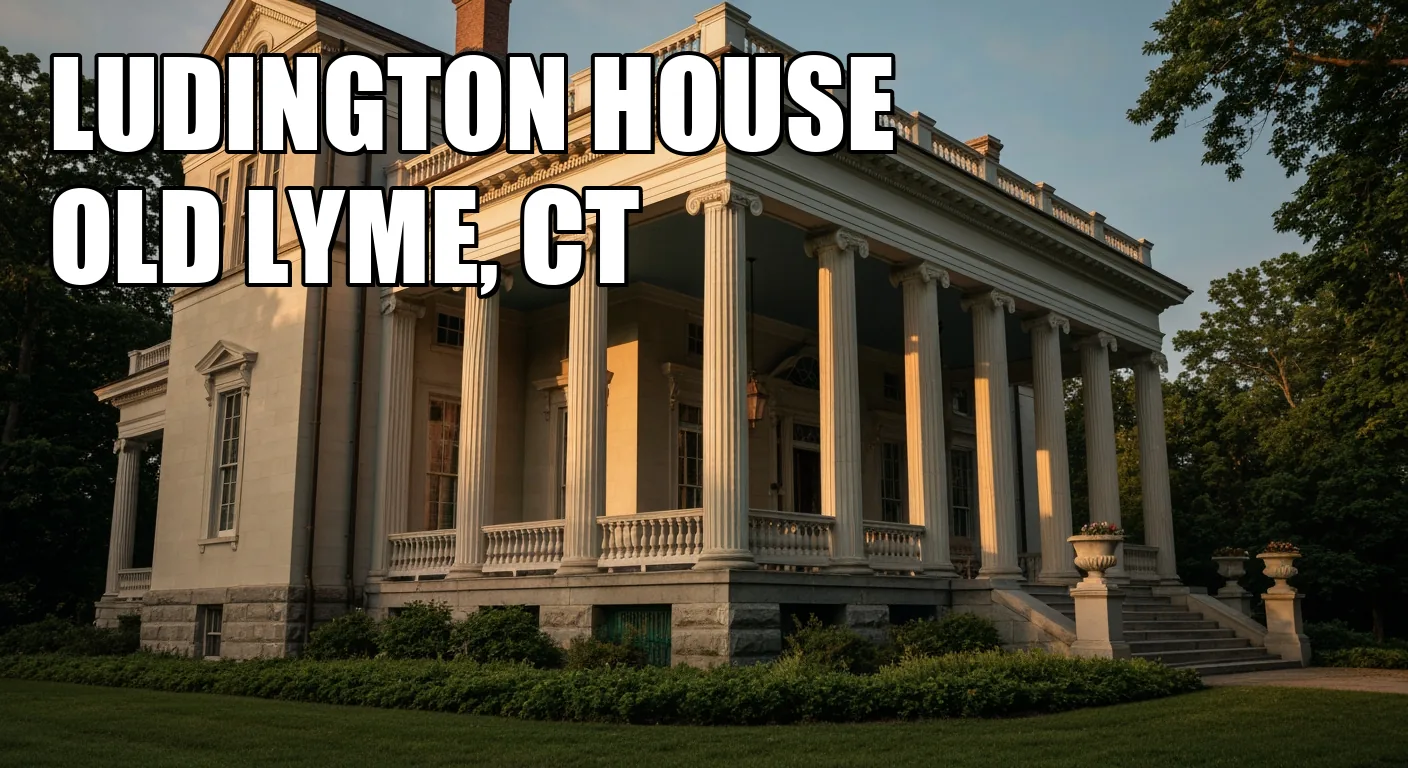
When the Hallmark Channel decided to produce *Christmas at Pemberley Manor* in 2018, their search for a suitably grand, yet accessible, American estate led them to Old Lyme, Connecticut. Here stands the Ludington House, a stunning example of Colonial Revival architecture from 1895. Now, for the purists among us, a late 19th-century Colonial Revival mansion might seem a far cry from a true Regency-era estate in Derbyshire, England. And you'd be right. The architectural language is distinctly American, leaning into a grand, classical aesthetic with ionic columns and sweeping verandas that speaks more to Gilded Age aspirations than Georgian sensibilities. Yet, for a made-for-TV movie, its stately presence and picturesque grounds certainly evoke a sense of wealth and heritage.
What really makes the Ludington House a fascinating study in cinematic illusion, however, is the sheer audacity of its filming schedule. Imagine depicting a snowy, festive Christmas at Pemberley—complete with sledding and holiday cheer—when the actual filming took place in early June, with temperatures soaring to 92 degrees Fahrenheit. That detail alone, often missed in casual viewing, underlines the incredible artifice of filmmaking; the crew must have been sweltering under all those "winter" costumes! This isn't just a quirky anecdote; it offers a glimpse into how a location is transformed to fit a narrative, sometimes at odds with its natural state.
Want to visit this particular "Pemberley"? Prepare for a rather unique experience. The Ludington House isn't a museum or a typical public attraction. Instead, it operates as a private event venue and an exclusive Airbnb rental. You won't simply wander through its halls on a self-guided tour. Access typically means committing to an overnight stay, with individual rooms sometimes available for around $400-500+ per night. For those dreaming of a full immersion, renting the entire mansion for a wedding or large event is an option, as are bespoke "Luxury Bridal Weekend Packages" that grant access to specific wings. The takeaway? This isn't a casual drop-in; it's a planned, expensive immersion, requiring a deliberate choice to experience its cinematic history rather than stumble upon it.
### Why Do Authentic Pemberleys Elude American Shores?
It’s a fair question: why are American estates so rarely chosen for the iconic role of Pemberley? The answer, I believe, lies in a blend of history, architectural veracity, and the intangible weight of authenticity. English country estates, many dating back to the 17th or 18th centuries, boast an architectural authority—a gravitas—that is simply unmatched by even the grandest American homes, most of which emerged much later, often in revival styles. The sheer age and continuity of heritage in places like Chatsworth or Lyme Park (actual Pemberley filming locations) imbue them with an inherent sense of Darcy’s ancestral lineage that’s incredibly difficult to replicate in the U.S.
Our architectural history, while rich, evolved differently. The American mansions that convey similar scales of wealth and prestige—think Gilded Age Newport "cottages" or Beaux-Arts city palaces—often represent different eras and stylistic movements. They lack the specific Regency elegance, the centuries of inherited grandeur, that define Pemberley in the collective imagination. Location scouts prioritize not just beauty, but historical accuracy that resonates with audiences, and for *Pride and Prejudice*, that resonance is overwhelmingly found across the Atlantic.
### When "Pemberley" Isn't Pemberley: *Bride & Prejudice*'s Modern Vision
Back in 2004, the Bollywood-meets-Hollywood adaptation *Bride & Prejudice* offered a vibrant, modern take on Austen's classic. While it’s certainly a *Pride and Prejudice* story, its use of American locales diverged entirely from the traditional Pemberley narrative. Filming locations like the Millennium Biltmore Hotel in downtown Los Angeles, the striking Walt Disney Concert Hall, and the sun-drenched Santa Monica Beach were chosen to represent modern, contemporary settings – a far cry from a stately English manor.
These sites offer a brilliant illustration of how the spirit of a story can be adapted without needing to replicate every historical detail. The Biltmore Hotel, with its opulent Spanish-Italian Renaissance architecture, certainly possesses a lavishness that could be associated with wealth, but it's a distinctly urban, early 20th-century luxury. The Walt Disney Concert Hall, a Gehry masterpiece, embodies futuristic grandeur rather than historical legacy. For fans tracing cinematic footsteps, these locations are intriguing, but they speak to a different vision of the Darcy story, one firmly rooted in the 21st century, rather than an attempt to conjure a true American Pemberley. It's important to differentiate between an estate representing the *idea* of wealth in an adaptation and an estate actually *portraying* the iconic Pemberley itself.
### Asheville's Biltmore Estate: A "Pemberley" by Association?
Though it has never served as a filming location for Pemberley, North Carolina's Biltmore Estate frequently enters conversations among American *Pride and Prejudice* enthusiasts. Built between 1889 and 1895, this colossal French Renaissance château, nestled in the Blue Ridge Mountains, is the largest privately owned home in the United States. Its sheer scale, architectural ambition, and meticulously maintained grounds naturally invite comparisons to the world's great estates.
The Biltmore's connection to Austen’s world, however, is indirect but potent. It has hosted remarkable exhibitions, such as "Fashionable Romance: Wedding Gowns in Film," which showcased period costumes from various *Pride and Prejudice* adaptations, including the beloved 1995 BBC television series. Walking through this magnificent house and seeing actual garments worn by actors bringing Austen's characters to life creates a powerful sense of immersion for fans. It's a Pemberley of the mind, where the grandeur of the setting amplifies the romance of the costumes.
Visiting Biltmore is an entirely different proposition from attempting to access the Ludington House. It operates as a full-fledged tourist destination, open to the public year-round. General admission typically runs around $89 for an adult day pass, with various tour options and seasonal events. While the "Fashionable Romance" exhibition has concluded, the estate itself remains a testament to American opulence and a fantastic place to spend a full day exploring its vast interiors, gardens, and vineyards. Expect crowds, especially during peak seasons like spring bloom or fall foliage, so arriving early or booking timed entry tickets well in advance is always my recommendation for the best experience. It offers a taste of lavish historical living, even if its architectural lineage isn't quite Georgian England.
### The Unspoken Truth: Managing Expectations for an American Pemberley
Let’s be honest: the idea of finding an authentic, Regency-era Pemberley in the United States is largely a romanticized fantasy. Our nation simply doesn’t possess the deep well of 18th-century stately homes that England does. While we have stunning Gilded Age mansions and beautiful Colonial Revival estates, they tell a different architectural story, one of American ambition and new money, rather than centuries of inherited landed gentry. The scarcity of American estates used for Pemberley scenes isn't an oversight by location scouts; it's a reflection of historical reality.
When you embark on a quest for an American "Pemberley," whether it's the Ludington House or a grand estate like Biltmore, you’re not just visiting a location; you're engaging with an interpretation. You're exploring how filmmakers or curators have woven aspects of Austen's world into an American context. The Ludington House, while a genuine filming location, requires a significant financial commitment and offers a private, Airbnb-style experience rather than a public tour. Biltmore, though not a filming location, provides an accessible, grand experience that can evoke the *feeling* of Austen's world through exhibitions.
My advice to fellow Austen aficionados? Go in with an open mind, appreciating these American sites for what they are: magnificent estates in their own right, each contributing a unique, if sometimes tangential, chapter to the ongoing story of *Pride and Prejudice* in popular culture. Don't anticipate stepping into the exact, muddy boots of Mr. Darcy on a drive through his ancestral park. Instead, celebrate the ingenuity of filmmakers and the enduring allure of a story that continues to find new homes, even across an ocean and a few centuries. The joy is in the journey, and the occasional surprising discovery along the way.
More Film & TV Locations
These guides identify the real building or site first, then explain what visitors can still see in person.
Your Complete Guide to Pemberley Filming Locations: Tour Information & Visitor FAQs
Can you tour Pemberley?
Yes, you can tour Pemberley's filming locations in England. The 1995 BBC adaptation used Lyme Park (exterior) in Cheshire and Sudbury Hall (interior) in Derbyshire, both open to the public. The 2005 film version used Chatsworth House in Derbyshire, which also welcomes visitors.
Is Chatsworth House really Pemberley?
Yes, Chatsworth House served as Pemberley in the 2005 Pride and Prejudice film adaptation starring Keira Knightley. The house and its grounds were used for filming, and visitors can recognize iconic scenes when touring the property.
Can you visit Mr Darcy's house in Pemberley 1995?
The 1995 BBC adaptation used two locations: Lyme Park in Cheshire for exterior shots and Sudbury Hall in Derbyshire for interior scenes. Both properties are open to the public and can be visited separately.
Is there a Pride and Prejudice tour in England?
Yes, several tour companies offer dedicated Pride and Prejudice tours, including Brit Movie Tours and Live for the Hills, offering guided visits to 1995 BBC and 2005 film locations across England.
Can you visit where Pride and Prejudice was filmed?
Yes, all major filming locations for both the 1995 and 2005 adaptations are accessible to the public. Key locations include Lyme Park, Chatsworth House, Sudbury Hall, and various other heritage sites throughout Derbyshire and surrounding areas.
Where is the Mr Darcy mansion?
For the 2005 film, Mr Darcy's mansion is Chatsworth House in Bakewell, Derbyshire. For the 1995 BBC adaptation, the exterior was Lyme Park in Disley, Cheshire, and the interior was Sudbury Hall in Derbyshire.
Is Chatsworth House worth visiting?
Yes, Chatsworth House is highly worth visiting, offering not only Pride and Prejudice filming locations but also 25+ rooms, 105 acres of designed gardens, impressive art collections, and historic significance as the ancestral seat of the Dukes of Devonshire.
What locations was Pride and Prejudice filmed in?
The 1995 BBC series filmed across Derbyshire and surrounding counties including Lyme Park, Sudbury Hall, Haddon Hall, and Peak District locations. The 2005 film used Chatsworth House, Stourhead, and locations in Wiltshire, Berkshire, and Kent.
How much is $10,000 a year in Pride and Prejudice?
Mr Darcy's £10,000 annual income in Pride and Prejudice is estimated to be equivalent to approximately £450,000 in modern terms when accounting for inflation, representing significant wealth during the Regency era.
Pemberley filming location tour - what can I expect?
Tours typically include guided visits to multiple filming locations with expert commentary on scenes filmed at each site, historical context about the properties, and opportunities to view locations where iconic moments occurred in the Pride and Prejudice adaptations.
What are the ticket prices for visiting Chatsworth House in 2025?
Chatsworth House day tickets start from £10 when booked in advance online. Personal guided tours begin from £55, and annual membership for Friends of Chatsworth starts from £140, with free parking available for online advance bookings.
How much does it cost to visit Lyme Park?
Lyme Park tickets typically cost around £8 for adults, with family tickets available. National Trust members receive free entry, making membership a worthwhile investment for frequent visitors to multiple heritage sites.
Can you visit Lyme Park and see where the famous lake scene was filmed?
Yes, Lyme Park is open to the public and visitors can explore the grounds including the famous pond where the iconic scene of Mr Darcy emerging from the water was filmed in the 1995 BBC adaptation.
Are there guided Pride and Prejudice film location tours available in 2025?
Yes, guided tours are available through companies like Brit Movie Tours and Live for the Hills, offering both group and private options covering 1995 and 2005 filming locations across England with varying tour lengths and itineraries.
Does Chatsworth House show Pride and Prejudice film screenings?
Yes, Chatsworth House hosts outdoor cinema screenings of Pride and Prejudice (2005) multiple times per year, typically in June and September, allowing visitors to watch the film on the actual Pemberley grounds.
Why This Page Exists
Maison builds place guides to help readers plan a real visit or understand a real site. When a page makes present-day access, booking, or visitor claims, those details are revised against public-facing source material and editorial review. For the wider standards behind that work, see methodology.
The Cornerstone Brief
One historic place, once a week — what it is, why it matters, whether it's worth going. No filler, no paid placements.
Coming soon. Unsubscribe any time.
We use cookies to enhance your experience. By continuing to visit this site you agree to our use of cookies.