Bed & Breakfast

Unearthing America's Most Authentic Historic B&Bs

For years now, I’ve chased the phantom of "authenticity" across this country. Every travel brochure promises it, every Airbnb listing claims it, but the real deal? That’s far tougher to pin down. When it comes to historic bed and breakfasts, a grand old house with antique furniture hardly qualifies. What I seek, what I celebrate, are those rare gems where the very bones of the building whisper stories, where original features aren’t merely decorative but deeply integral to the experience. These aren't just places to sleep; they are immersive journeys into American heritage, often revealing insights that glossy pamphlets simply can't capture.

I’ve grown weary of the term "historic" bandied about, slapped onto any structure older than a modern shopping mall. True historical preservation, the kind that retains the spirit and tangible evidence of the past, is a delicate art. It’s about more than just maintaining an old façade; it's about safeguarding the very elements that define a specific era, sometimes even a specific moment. This list isn't about the prettiest, or the most luxurious, but about the profound connection these establishments forge with the past through their remarkably preserved original features.

The Enduring Spirit of the Griswold: More Than Just Old Walls

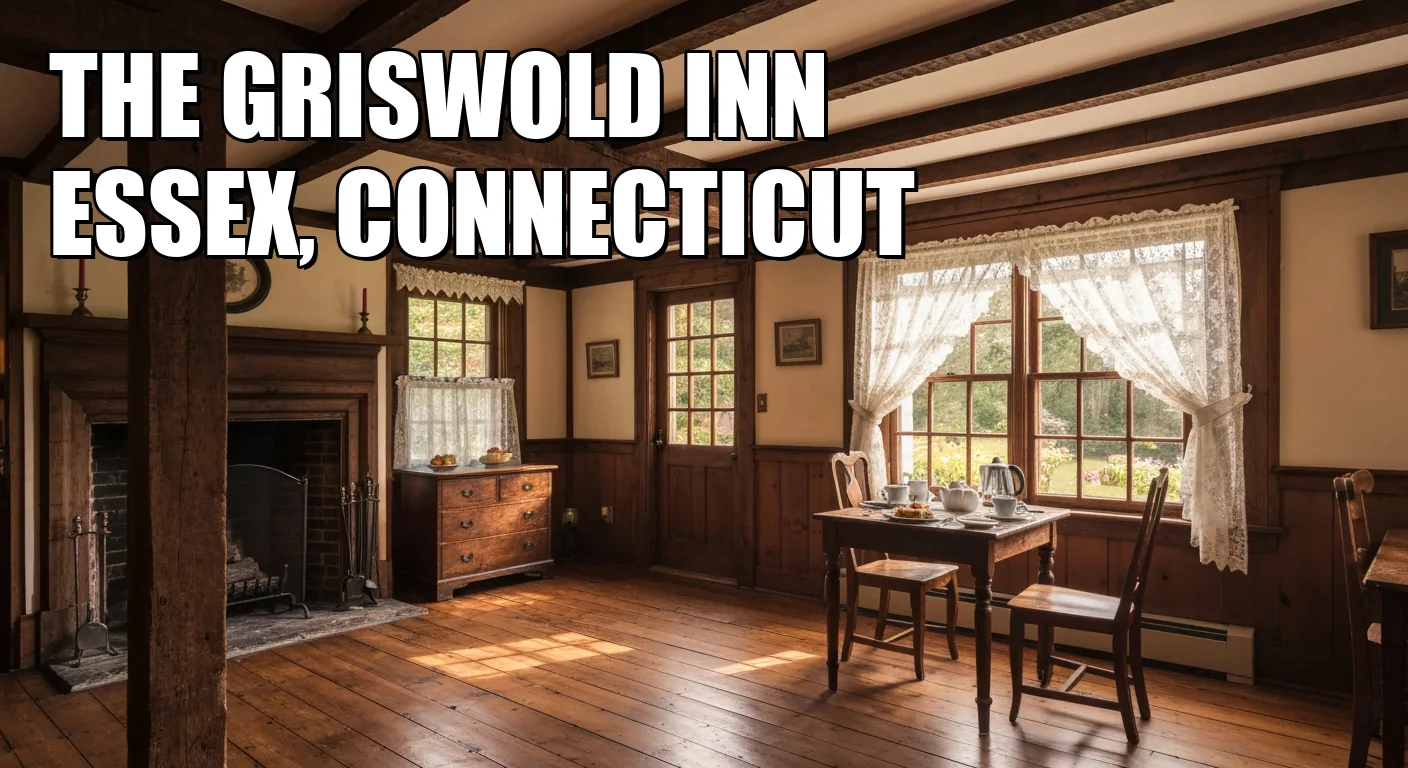
Stepping into the Tap Room at the Griswold Inn in Essex, Connecticut, you’re not just seeing history; you’re feeling it underfoot and above your head. Established in 1776 – yes, the very year of our nation's birth – this isn't merely "old," it's ancient by American standards, and its claim as one of the oldest continuously operating inns in the U.S. truly holds water. The main structure was built when the nascent Connecticut Colony commissioned its first warship. But it’s the Tap Room, relocated to the site in 1801, that grabs your attention. Originally a schoolhouse from 1735, its ceiling is a unique blend of crushed clamshell and horsehair plaster. It's not ornate; it's a testament to colonial ingenuity and readily available materials, still remarkably intact after nearly three centuries. Most guides will tell you about its age, but few will impress upon you the sheer tactile connection to history this humble ceiling offers.

Beyond the plaster, an even more telling detail resides within the Gun Room: a Revolutionary War-era musket that once concealed a secret note in its barrel. Imagine the clandestine communications, the palpable tension of that era, embodied in this single artifact. The Paul Family, who purchased the inn in 1995, deserve immense credit for their active and reverent preservation. While standard rooms, ranging from $235-$280, and suites, up to $375, including a continental breakfast, might seem steep for some, remember you're not just paying for a bed; you're investing in a night in a living museum. To truly appreciate it, I recommend visiting outside peak summer months (July-August) when the charm of Essex, less overrun, can truly shine, perhaps in late spring or early fall when the New England colors are vibrant.

Anchorage 1770: Tabby, Tragedy, and Tidewater Grandeur

Beaufort, South Carolina, holds a particular allure, and the Anchorage, built around 1770, stands as its oldest and largest tabby structure still in active use. What, you might ask, is "tabby"? It’s an ancient building material made from oyster shells, lime, sand, and water – a precursor to concrete, truly a hallmark of early coastal Southern architecture. The texture and resilience of this material are palpable, a testament to the resourcefulness of its original builders. This house has seen it all: entertaining the Marquis de Lafayette in 1825, serving as a Union Hospital during the Civil War, and later, a voter registration center for newly freed slaves. That’s a staggering spectrum of human experience within one set of walls.

The "best view in Beaufort" from the open-air deck on the fourth floor is indeed spectacular, but what truly captivated me were the exposed timbers in the ground-floor garden rooms. These aren’t decorative additions; they are the very bones of the late 1700s construction, telling a silent story of craftsmanship. Here's a surprising twist: the property faced demolition in 1971 before the Historic Beaufort Foundation stepped in. A 1902 renovation famously saw the tabby exterior covered with stucco (for preservation, they claimed) and, more delightfully scandalous, an elevator and secret compartments added to hide liquor from the owner’s wife. This isn't just history; it's drama! With rates around $330 per night, it’s a luxury stay, but for the history enthusiast, it's an unparalleled dive into both pre-Revolutionary architecture and post-Civil War social transformation. Don't just admire the elegance; ponder the stories the walls *aren't* telling about those secret liquor stashes.

Cape May's Angel: Gingerbread Dreams or Victorian Reality?

Ah, Cape May, New Jersey. The very name conjures images of vibrant Victorian gingerbread houses. The Angel of the Sea, a grand 27-room mansion from the 1850s, epitomizes this architectural exuberance. Transformed into a bed and breakfast in 1989, it’s often lauded for its ocean-view wraparound porch and intricate detailing. My question, always, is: does it feel like a museum piece, or a lived-in historical gem? Here, it leans satisfyingly towards the latter.

The Angel of the Sea avoids the pitfalls of becoming a mere themed hotel by genuinely preserving the Victorian character within its 27 uniquely designed rooms. Each boasts period-appropriate furnishings, and crucially for a house of this vintage, private baths. This might seem a minor point today, but in the 1850s, it was a luxury, and their integration speaks to a careful balance of modern comfort with historical integrity. What typical guides often overlook are the subtle design choices that keep it from feeling over-the-top. The accolades for its gourmet breakfast, afternoon tea, and evening wine and cheese pairings aren't just fluff; they’re an integral part of the immersive Victorian experience, a daily ritual that echoes the leisurely pace of an earlier era. Pricing is seasonal, ranging from $150-$250 per night, making off-season visits (late fall or early spring) a more accessible way to experience its charm without the bustling summer crowds. Weekday stays often yield better rates and a more serene atmosphere.

York Harbor Inn's Timeless Bones: Where 17th-Century Timbers Tell Tales

Imagine lodging in a room constructed from timbers that predate the United States by over a century. That’s the reality at the York Harbor Inn in Maine. While the inn encompasses multiple historic structures, including an outbuilding from 1783, it's the 1637 Cabin Room that truly anchors this place in deep time. Its original post and beam timber was dismantled from a sail loft on the Isles of Shoals and transported by barge – an incredible feat of early American resourcefulness. These aren't just old beams; they are hand-hewn, scarred with the marks of axes, telling a story of maritime heritage that’s almost tangible. This isn't some quaint imitation; it’s the genuine article.

And then there’s the basement pub. Forget the polished bar tops of modern establishments; here you'll find original hitching posts where travelers once tied their horses while stopping for a drink. This single detail offers a powerful, almost visceral connection to the daily rhythms of colonial life. York, incorporated in 1623, was one of Maine’s earliest settlements, and the inn embodies that pioneering spirit. Rates vary significantly by building and season, often around $279-$300+ per night, including continental breakfast. To truly soak it in, consider a visit during the shoulder seasons – May or October – when the crisp Maine air invigorates and the coastline is stunningly beautiful, but the crowds are far lighter than in high summer.

Monmouth Historic Inn: Antebellum Splendor, Uncomfortable Truths

Natchez, Mississippi, is a town steeped in antebellum history, and the Monmouth Historic Inn, built in 1818, stands as a designated National Historic Landmark. Set on 26 acres of meticulously landscaped gardens, it’s undeniably beautiful, a prime example of Greek Revival architecture. It was built by John Anthony Quitman, a twice-serving Mississippi Governor, U.S. Congressman, and Senator. But here's where the narrative gets complicated, as it always does with antebellum properties: Quitman was a significant slaveholder. While the inn celebrates its architectural virtue and elegant appointments—four-poster beds, period furnishings, even carefully integrated spa tubs and fireplaces—it faces the inherent challenge of presenting this history honestly.

The 30 rooms and suites, while luxurious, require a conscious effort from the visitor to look beyond the surface beauty. What stories remain unaddressed? How does one reconcile such grandeur with the reality of the labor that built and sustained it? This isn't a critique of the inn itself, which has done an admirable job of restoration, but rather an observation about the complexity of visiting such sites. The Restaurant 1818, housed within the antebellum home, serves as an award-winning dining experience, offering a taste of Southern hospitality. Room rates vary widely from $195 to $425, reflecting the range from standard rooms to opulent suites. If you visit, I urge you to also explore Natchez's other historical sites, particularly those that speak to the lives of enslaved people, to gain a more complete, and necessary, understanding of the era.

St. Augustine's St. Francis Inn: Blending Centuries, or Just Amenities?

St. Augustine, Florida, America’s oldest continuously inhabited European-established settlement, offers a unique historical tapestry. The St. Francis Inn, built in 1791, fits right in, comprising five historic buildings within the city’s historic district. Each room promises unique character and period-appropriate furnishings. But what truly makes it stand out in a town full of old buildings?

The inn often highlights its Ballerina Room, featuring a "magnificent portrait of a young ballerina displayed above the fireplace." While charming, one must question if this specific portrait is an "original feature" of a 1791 building or a later artistic addition. This points to a common dilemma in historic inns: how much decorative flair is added versus how much is genuinely preserved? The presence of modern amenities like whirlpool tubs in the Ballerina Room and Elizabeth’s Suite (which also boasts a refrigerator and microwave) raises a practical question: at what point do contemporary comforts begin to dilute the raw historical experience? While offering convenience, these additions necessitate careful integration to avoid feeling jarringly anachronistic. Standard room rates from $139-$309, and suites from $339, offer options for various budgets. I've found the best experience here comes with managing expectations; it's a very comfortable, historic *feeling* stay, but perhaps not as rigorously preserved in every detail as some others on this list. Arriving on a weekday might alleviate the inevitable weekend bustle of St. Augustine’s popular attractions.

Does Savannah's 17Hundred90 Inn Offer a Hauntingly Authentic Stay?

Savannah, Georgia, practically drips with history and spectral tales, and the 17Hundred90 Inn, constructed between 1821 and 1823, certainly plays into that mystique. As one of Savannah’s oldest eateries and inns, it offers vintage décor intended to transport guests back to the 1800s. But it’s Room 204 that has become legendary, thanks to its resident spirit, Anna.

The story of Anna, a bride who allegedly threw herself from a third-floor window after her sailor love sailed away, is quintessential Savannah folklore. Guests regularly report benign paranormal activity, from mysteriously moved items to the sensation of an unseen presence. The inn even maintains a journal documenting these occurrences, which is a genuinely fascinating and unique touch that elevates it beyond mere gimmickry. It transforms a potential "tourist trap" into an active, shared experience. While the spectral encounters are the draw, the inn's genuine historic architecture and atmosphere are compelling in their own right. Average nightly rates range from $165-$229, but be aware of a $15 per night parking surcharge – a minor but important detail in a city where parking can be a headache. If you're intrigued by the paranormal, booking Room 204 for a mid-week stay in the quieter months (e.g., February or November) will give you the best chance for an undisturbed (or perhaps, politely disturbed) encounter, and certainly a more intimate appreciation of the inn’s genuine history.

These establishments aren't just old buildings with new paint; they are living documents. Each offers a unique window into American history, from the raw, utilitarian charm of a colonial schoolhouse to the grand, yet complicated, elegance of an antebellum mansion. They challenge our perceptions, sometimes make us uncomfortable, and consistently surprise us with details that typical travel guides simply overlook. To truly understand a place, you need to feel its past in your hands, hear its whispers in the timbers, and perhaps, even feel its unexplained presences. These bed and breakfasts offer precisely that: a profound, often unexpected, connection to the story of America.

Charming Stays Decoded: Your Complete Guide to Bed & Breakfasts with Distinctive Character

What is the history of bed and breakfast with original features in the United States?
The American B&B tradition traces back to the colonial era when families hosted travelers for overnight stays; however, the modern B&B movement emerged in the 1960s-1980s after Americans returned from Europe inspired by European accommodations, and was further accelerated by the 1966 National Historic Preservation Act, which inspired restoration of historic homes into charming inns with original architectural features like Victorian details, period woodwork, and original fixtures.
What is the average cost of staying at a bed and breakfast in the United States?
The average daily rate for a B&B in the US is approximately $208 per night, with prices ranging from around $64 to over $303 depending on location, amenities, and season.
What is the difference between a bed and breakfast and a traditional hotel?
B&Bs typically feature 3-15 intimate rooms in converted homes or small properties with personalized service and locally-sourced breakfast, while hotels are larger chain establishments offering 24-hour front desk service, standardized amenities, and varied dining options; B&Bs emphasize local culture and authenticity while hotels prioritize consistency and efficiency.
What is included in a typical bed and breakfast stay?
Most B&Bs include a private or shared bedroom, a home-cooked or gourmet breakfast featuring fresh local ingredients, complimentary WiFi, parking, tea/coffee facilities, fresh towels, and personalized local recommendations from the innkeeper.
What are the best bed and breakfast destinations in the United States?
Popular B&B destinations include Cape Cod Massachusetts, Charleston South Carolina, Asheville North Carolina, Cape May New Jersey, Carmel-by-the-Sea California, and Camden Maine, each offering historic charm and unique regional character.
What are the standard check-in and check-out times?
Most bed and breakfasts operate with check-in beginning at 3:00 PM to 4:00 PM and check-out at 11:00 AM, though some properties may accommodate early arrival or late departure upon request.
How far in advance should I book a bed and breakfast?
For peak seasons and special events, booking 3-6 months in advance is recommended; for festivals and holidays like Mardi Gras or Christmas, book as early as possible as popular properties fill quickly.
What types of breakfast are typically served at bed and breakfasts?
Breakfasts vary from continental options with pastries and fresh fruit to full gourmet spreads featuring eggs, bacon, home-baked items, and increasingly include vegetarian, vegan, gluten-free, and locally-sourced options to accommodate dietary preferences.
Are bed and breakfasts pet-friendly?
Many bed and breakfasts welcome pets with advance notice, though some charge pet fees ($25-$40 per night) and require pets to meet certain criteria such as size restrictions or behavioral standards; however, some historic properties do not allow pets due to preservation concerns.
Are bed and breakfasts family-friendly?
Yes, many bed and breakfasts welcome families and offer family-friendly rooms with complimentary rollaway beds or cribs, though some properties cater specifically to couples; families should confirm child-friendly policies when booking.
What activities and amenities are available at bed and breakfasts?
B&Bs offer activities including guided property tours, hiking trail access, art and cooking classes, wine tastings, social breakfast gatherings, spa services, and outdoor recreation; many provide local maps and recommendations for exploring nearby attractions.
Do bed and breakfasts offer accessible accommodations?
Many bed and breakfasts now provide ADA-accessible rooms with wheelchair access, accessible height beds, grab bars, and accessible bathrooms, though older historic properties may have limitations; travelers should inquire about specific accessibility needs when booking.
What common amenities should I expect at a bed and breakfast?
Standard amenities typically include free WiFi, parking, daily housekeeping, complimentary tea and coffee, TV in rooms, quality linens and towels, and personalized service from innkeepers.
Can bed and breakfasts accommodate group bookings and special events?
Yes, many bed and breakfasts offer group reservations for weddings, family gatherings, corporate retreats, and celebrations, with some accommodating 10-150+ guests and providing full-house rental options with on-site catering services or recommendations.
Are there eco-friendly or sustainable bed and breakfasts available?
Yes, numerous bed and breakfasts across the United States implement sustainable practices including solar arrays, geothermal heating/cooling, organic bath products, eco-friendly cleaning solutions, natural fiber bedding, and locally-sourced organic breakfast ingredients.