
Unearthing America's Past: Beyond the Postcard Views
When most people think of America's historic landscape, images of grand colonial estates, stately presidential homes, or perhaps a battlefield or two likely spring to mind. And while those certainly hold their own allure, my expeditions have always sought the deeper currents, the less-trodden paths that reveal the true complexity of our national story. This isn't about perfectly preserved parlors; it's about the grit, the struggle, and the often-unseen forces that shaped entire eras. What truly excites me today is how augmented reality (AR)—that clever trick of layering digital information onto the real world—is finally pulling back the curtain on these nuanced histories, offering insights typical guides completely miss.
### Unpacking the Gilded Age: Beyond the Opulence
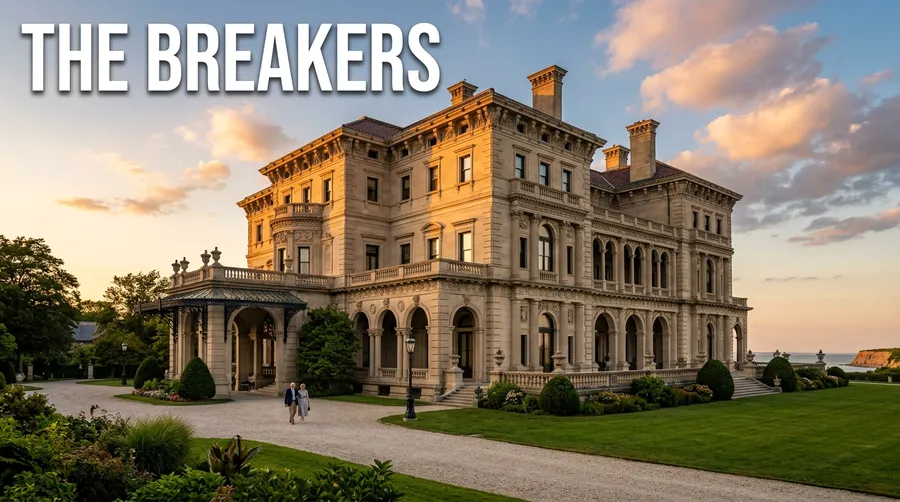
If the "Gilded Age" conjures up visions of opulent mansions on Fifth Avenue, all velvet and gold leaf, you're only seeing half the picture. The wealth that built those estates was underpinned by staggering industrial growth and, often, immense labor struggles. To truly grasp this era, you have to venture beyond the drawing rooms and into the workshops and factory floors. This is precisely what makes Greenfield Village in Dearborn, Michigan, such a revelation. It’s not just a collection of old buildings; it's a living, breathing testament to the ingenuity and the human cost of America's industrial ascent.
Walking through Greenfield Village feels like stepping onto a sprawling, meticulously curated movie set of 19th-century America, but it's the *stories* here that truly resonate. Rather than merely observing static exhibits, visitors can download the Greenfield Walks AR app, a tool that dramatically changes how you interact with the environment. Imagine approaching a homemade bicycle shop, then pulling out your phone to see animated period characters materialize, arguing over wages and working conditions right there on the street. This isn't a passive experience; it immerses you directly into the daily negotiations and struggles that defined the era, contrasting sharply with the common narrative of effortless Gilded Age prosperity. It's an insightful reminder that the magnificent wealth of the time was built on the backs of countless striving individuals, often in precarious circumstances.
One particular experience that genuinely surprised me was how the AR app transports you virtually inside early assembly lines. Here, you're not just seeing machines; you're witnessing the faces and hearing the voices of immigrant workers, whose experiences are seamlessly woven into the technological narrative. It powerfully links innovation with socioeconomic stratification, explaining *why* so many flocked to these new industries despite the harsh realities. Forget what you think you know about factory work; this offers a visceral understanding of its mechanics and its human toll.
Planning your visit here requires a bit of foresight. The park is sprawling, and while its pathways are fully ADA-compliant with wheelchair and scooter rentals available, covering its vastness takes time. Expect to dedicate a solid four to six hours to truly absorb everything, especially if you're keen on using the AR app, which demands your full attention. General admission for adults in 2025 is $39.00, a fair price for the depth of experience. They're open daily from 9 AM to 5 PM, but arriving closer to opening will give you a significant advantage, letting you explore some of the more popular areas before the midday rush. Afterward, venture into Dearborn to taste Detroit's rich Lebanese immigrant legacy at Al-Ameer Restaurant, a place established in 1989 that serves mezze platters — small, shareable dishes — reminiscent of the early 20th-century factory neighborhoods. It's a delicious way to connect with the culinary heritage shaped by the very communities you’ve just learned about.
### Dust, Despair, and Digital Empathy: Iowa's Living History Farms Reimagines the 1930s
Leaving the industrial behemoth of Michigan, we turn our gaze westward to a different kind of American struggle: the devastation of the Dust Bowl. At Living History Farms in Urbandale, Iowa, the 1930s Horse-Powered Farm is more than just a reenactment; it's a profound exploration of ecological catastrophe and human resilience. This site uses technology not to dazzle, but to cultivate a deep sense of empathy for a time when the very earth seemed to turn against its inhabitants.
What sets this experience apart is its thoughtful use of interactive digital kiosks. With touchscreens and AR overlays, visitors can visualize the harrowing effects of wind erosion and the desperate, often innovative, soil conservation measures farmers employed. More strikingly, projection-mapped dust storm simulations, accompanied by first-person audio diaries, convey the sheer terror and despair of living through these environmental disasters. You don't just *hear* about the Dust Bowl; you practically *feel* the dust in your lungs and the fear in your heart. It’s a powerful, almost overwhelming, sensory experience that traditional static exhibits simply cannot replicate.
Perhaps the most thought-provoking element involves QR-activated mini-games. These challenges ask guests to allocate limited crops and resources, forcing difficult decisions that were a daily reality for displaced families. While some might question the gamification of suffering, I found it to be a surprisingly effective way to foster empathy, putting you directly in the shoes of those who faced impossible choices. It goes beyond simple reporting, compelling you to grapple with the consequences of an unforgiving landscape.
Logistically, be prepared for an authentic farm experience. While a tractor-cart shuttle assists along the mile-long 300-Year Walk, offering an abbreviated ADA route upon request, many of the trails are unpaved, even if they have firm surfaces. Wear comfortable, durable shoes; this isn't a place for flip-flops. Admission for adults is $20, with discounts for seniors, military personnel, and children. Living History Farms operates seasonally, from May 1st to October 31st, Tuesday through Saturday, 9 AM to 4 PM. Plan for three to four hours to fully explore the farms and engage with the digital experiences. For a taste of Depression-era roadside cuisine, head to nearby Des Moines and savor the original loose-meat sandwiches at Maid-Rite, founded in 1926. It's a humble, yet historically significant, meal that reflects the ingenuity of a difficult time.
### Seattle's Quiet Revolutions: Finding Civil Rights History at Wing Luke
When the conversation turns to the Civil Rights Movement, the focus often—and rightfully—lands on the American South. Yet, pivotal struggles for equality were unfolding simultaneously across the nation, often in less publicized, but no less significant, ways. The Wing Luke Museum in Seattle, Washington, brilliantly shines a light on the early Civil Rights Movement in the Pacific Northwest, specifically through the lens of the Chinese American community. It's a vital corrective to an often-truncated historical narrative, revealing the diversity of voices and strategies employed.
The museum’s "Voices of the Hotel" AR experience is a masterclass in bringing history to life within its original context. You can step into period hotel rooms, then use your device to witness animated scenes of Chinese American activists strategizing for voting rights and racial justice. It’s an intimate, almost voyeuristic, glimpse into the clandestine meetings and brave discussions that fueled significant social change. Unlike larger, more generalized museums, Wing Luke offers incredibly specific insights into the unique challenges and triumphs of its community.
Interactive digital exhibits here integrate 3D reconstructions of protest banners and overlay era-specific newsreels onto gallery walls, creating a vibrant, multi-layered historical tapestry. But the true gem, for my money, is the geolocated mobile AR tour. This allows you to trace Seattle's 1968 sit-ins, literally standing in historical bookstores and storefronts that hosted civil rights meetings. Imagine hearing eyewitness accounts of these demonstrations as you stand on the very pavement where they occurred. It’s an incredibly powerful form of contextual learning that connects past and present in an almost spiritual way.
Navigating Seattle’s International District can be a bit overwhelming for those unaccustomed to dense urban environments, but the museum itself is a calm, fully ADA-accessible sanctuary with elevators, large-print guides, and assistive-listening devices. Tactile tours are also available if you call ahead. Admission for adults is $24.95, with various discounts for seniors, students, and children. The museum is open Wednesday through Sunday, 10 AM to 5 PM, and you should plan for two to three hours to fully engage with the exhibits. Afterwards, immerse yourself further in the local heritage at Jade & Bamboo, a restaurant established in 1972 that became a vital social hub for early civil rights gatherings in the area. It’s more than just a meal; it's a continuation of the experience.
### Making History Live: The Transformative Power of Immersive Tech
What these three disparate sites—a Gilded Age industrial village, a Dust Bowl farm, and a Civil Rights museum—unmistakably demonstrate is the sheer power of augmented reality to transform how we engage with history. This isn't just a gimmick; it's a revolutionary way to deepen understanding and foster genuine empathy. Instead of passively reading plaques or gazing at artifacts behind glass, visitors are actively participating in the narratives, standing where historical figures stood, and witnessing events unfold around them. It moves beyond simply showing *what* happened to explaining *why* it mattered, and *how* it felt.
The typical guidebook often glosses over the nuanced, everyday struggles that form the backbone of these grand historical epochs. These AR-enhanced sites, however, pull you into those complexities, whether it's the precarious negotiation of a worker's wage, the desperate struggle to save a farm from dust, or the quiet courage of activists strategizing in a hotel room. They challenge the conventional wisdom that history is a static, distant subject, proving instead that it is a dynamic, ever-present force. So, the next time you plan a historical journey, look beyond the usual suspects. Seek out these places that dare to use technology not just to entertain, but to truly illuminate the human spirit in its darkest and most brilliant moments. You might just find that the stories that surprise you the most are the ones that resonate deepest.
Exploring America’s Timeless Treasures: Historic Sites FAQ
What qualifies as a historic site?
In the U.S., a site qualifies as historic if it is listed or eligible for the National Register by meeting criteria for significance in events, persons, design, or information potential.
What counts as a historical site?
Any building, structure, site, object, or district of local, state, or national significance, typically at least 50 years old and possessing historical integrity.
How long until a building is considered historic?
Most U.S. preservation programs use a 50-year benchmark before a building can be formally considered historic.
Is a 100 year old home considered historic?
Yes—since it exceeds the 50-year age threshold and, if it retains its integrity and significance, it is generally considered historic.
How old must something be to be considered historic?
Generally, a property must be at least 50 years old to be considered historic, though exceptions exist for things of exceptional importance.
What makes a property historical?
A property is historical if it has sufficient age (usually 50+ years), retains its physical integrity, and holds significance in history, architecture, archaeology, or culture.
How many years are considered historical?
Fifty years is the common threshold for designating something as historical.
At what point is something considered historical?
Once it reaches around 50 years of age and meets criteria for integrity and significance, it is considered historical.
What are the 5 Rs of historical significance?
The five Rs are Remembered, Revealed, Remarked, Resonates, and Resulted.
What era are we in now?
We are in the Contemporary or Modern Era, often referred to as the Information Age or Digital Age.
How do I find historic sites near me?
Use the National Park Service’s online database or your State Historic Preservation Office resources to search for nearby registered historic places.
When is the best time to visit historic sites?
Spring and fall offer mild weather and fewer crowds, making them ideal seasons for visiting historic sites.
Are there entrance fees for historic sites?
Many national historic sites have free admission, though some may charge nominal entry or tour fees.
Do I need a guided tour to visit historic sites?
Guided tours enhance interpretation but most sites offer self-guided options with informational signage or brochures.
What should I bring when visiting historic sites?
Bring comfortable walking shoes, water, a camera, and be prepared to follow preservation guidelines to protect the site.