Expectation: a “Romanesque Revival B&B” means sleeping inside H.H. Richardson’s masonry — round arches, rock-faced stone, squat columns, fortress massing from the late 1800s. Reality: the label covers everything from a true Richardson asylum-hotel in Buffalo to Gilded Age houses later dressed in stone, and brand-new “castles” opened in 2002. The style is real. The overnight market is a mixed bag of adaptive reuse, luxury terminals, and marketing cosplay.
Richardsonian Romanesque peaked in the late 19th century: rough limestone and brick, round towers (often with conical or octagonal roofs), deep arches, asymmetrical massing, wide porches. Wood sometimes faked the mass for budget. If a listing says “castle” without a build decade, dig before you book.
Five things to know (2026)
- Hotel scale is commoner than four-room B&Bs. The Pfister (Milwaukee, 1893, Charles Koch) runs about 307 rooms with spa, Victorian art collection, multiple restaurants — Romanesque grand hotel, not a cozy inn.
- Union Station Nashville Yards is a restored ~1900 terminal with Romanesque/Richardsonian bones: barrel-vaulted stained glass (~65 ft), limestone fireplaces, marble — boutique hotel + event space, not a B&B breakfast table.
- Hotel Richardson (Buffalo) occupies the Richardson Olmsted Complex (H.H. Richardson + Olmsted landscape) — former asylum fabric, reopened as hotel after pandemic-era closure of Hotel Henry (rebrand/reopen March 2023). ADA work favors less-historic elevations so fabric survives.
- Castle Marne (Denver) — five-suite mansion inn; ground-floor Glenwood suite helps mobility. Strong guest praise for innkeeper knowledge and ballroom-scale interiors.
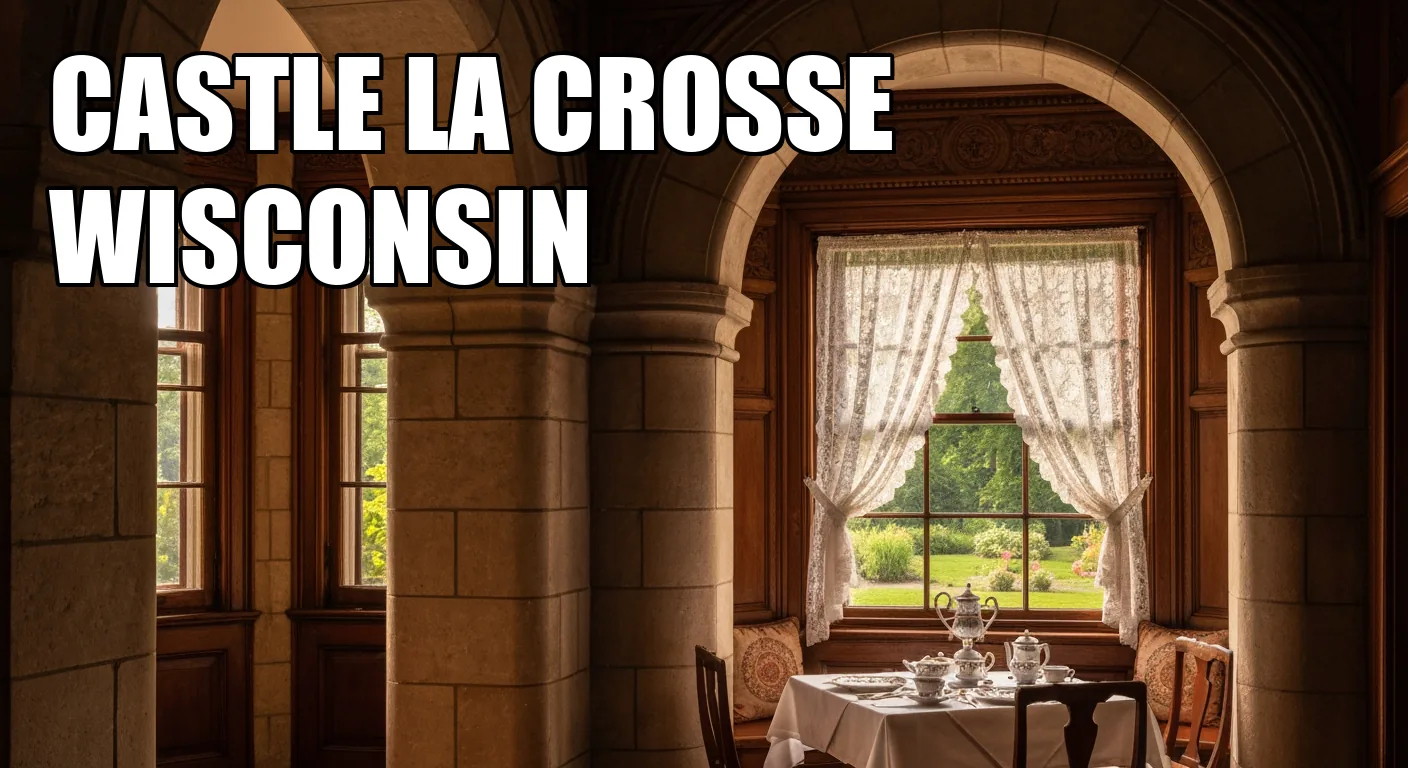
- “Castle” is not a pedigree. Castle La Crosse began as an 1892 wooden Queen Anne later given stone facing. Landoll’s Mohican Castle (2002) and Kentucky Castle (started 1969) are modern fantasy builds. Old Jail (St. Augustine) looks Romanesque hotel-ish but is a prison museum — no overnight.
Bookable properties worth the arch geek trip
- The Pfister Hotel — Milwaukee, WI — 1893 Romanesque Revival luxury; ~307 rooms; WELL Spa; pet-friendly directory; winter holiday programming. Check live rates (grand-hotel pricing).
- Union Station Nashville Yards — Nashville, TN — adaptive-reuse station hotel; specialty suites (including sleeper-car style concepts); lobby bar; 11,000+ sq ft events. Book for the ceiling, not a $99 special.
- Hotel Richardson — Buffalo, NY — sleep inside a National Historic Landmark asylum complex designed by Richardson. North-side modern access solutions; south monumental entrance preserved.
- Castle Marne — Denver, CO — five-suite B&B intensity; history-forward hosting; balcony/ballroom features guests rave about.
- Castle La Crosse B&B — La Crosse, WI — Gilded Age mansion with Romanesque stone face; verify suite count and rates on official booking (sources thin on live tariffs).
- The Abner Hotel — Litchfield, CT — opened September 2024 in a century-old Romanesque Revival courthouse; rear elevator tower for access without wrecking the facade; judge’s benches repurposed into lobby furniture. New conversion energy.
- Lodge at St. Edward State Park — Kenmore, WA — 1931 seminary → ~84-room lodge after ~$50M work; restorative park setting (more Collegiate Gothic seminary than pure Richardson, but same “monumental masonry adaptive reuse” traveler). Guests report stress-dropping calm.
Rates for these properties are highly dynamic and often under-published in secondary sources — always recheck the property’s own engine. Expect urban grand-hotel bands at Pfister/Union Station and inn-premium pricing at Marne-scale mansions.
Real heritage vs legend marketing
Real: National Register / NHL designations; documented architects (Richardson, Koch); rough-faced masonry; adaptive reuse with published renovation years (Abner 2024, Hotel Richardson post-2020 path).
Legend/marketing: “Castle” as a freestanding brand for any turret; European-trip fantasy castles with no 1880s American urban context; stone veneers over earlier wood houses sold as pure Richardson. Tour-only siblings (Eastern State Penitentiary, Trans-Allegheny Lunatic Asylum) sell ghost tickets, not room keys — do not confuse with hotels.
Rating the overnight
- Architectural authenticity — 8/10 at Pfister, Union Station, Hotel Richardson when you want period massing; 4/10 at modern fantasy castles.
- True B&B intimacy — 7/10 at Castle Marne / La Crosse scale; 2/10 at 300-room Pfister.
- Accessibility — improving at Abner (new elevator tower) and Richardson (planned north access); still stair-heavy at many mansions.
- Value transparency — 5/10 until you pull live rates; secondary sources rarely list dollars for these icons.
Who yes: travelers who will pay hotel rates for stone arches and adaptive-reuse stories. Who no: guests hunting a $120 Craftsman B&B breakfast package under a Romanesque hashtag, or anyone who thinks every “castle” is Richardson’s hand.
Bottom line: Unearth the real ones by architect and decade, not by Instagram battlements. Milwaukee, Nashville, Buffalo, and Denver still let you sleep under round arches — if you book the documented building, not the fairy-tale logo.
Romanesque Revival B&Bs FAQ
What is Richardsonian Romanesque?
A late-19th-century American style associated with H.H. Richardson: rock-faced stone or brick, round arches, heavy massing, towers, and asymmetrical facades inspired by medieval Romanesque forms.
Can you stay in a real Romanesque Revival hotel in the US?
Yes. Examples include the Pfister Hotel in Milwaukee (~307 rooms, 1893), Union Station Nashville Yards, Hotel Richardson in Buffalo’s Richardson Olmsted Complex, and mansion inns like Castle Marne in Denver.
Is every castle hotel Romanesque Revival?
No. Some are modern fantasy builds (e.g. 2002 Mohican Castle) or earlier houses later reclad in stone. Check construction date and architect before assuming Richardson pedigree.
Is the Old Jail in St. Augustine a hotel?
No. It was designed to look hotel-like but operated as a prison and is a museum today — not an overnight stay.
Are Romanesque hotels accessible?
It varies. New conversions like the Abner Hotel added rear elevator towers. Many mansion B&Bs still have steep stairs; ask for ground-floor suites such as Castle Marne’s Glenwood.
The Cornerstone Brief
One historic place, once a week — what it is, why it matters, whether it's worth going. No filler, no paid placements.
Coming soon. Unsubscribe any time.