For years, I've chased the whispers of history across the American landscape, often finding myself drawn to architectural styles that speak volumes about a bygone era. Among these, the Tudor Revival holds a particular fascination. It’s a style that, at first glance, might seem a charming but superficial nod to English antiquity. Yet, when done right, these buildings transport you, weaving a narrative of aspiration, craftsmanship, and sometimes, even outright eccentricity. We're not talking about mere mock-Tudor; we're seeking out places where the spirit of the 16th century truly took root on American soil, reimagined for a new world.
What distinguishes a truly great Tudor Revival from its more pedestrian counterparts? It's often in the details: the genuine half-timbering that isn't just cosmetic, the leaded glass, the often dramatic rooflines, and a certain robust, almost storybook quality that invites you to step into another time. This isn't just about aesthetics; it's about the feeling of substance, of a home built to endure, imbued with character. In an era where "historic" often means a fresh coat of paint over a generic structure, these B&Bs offer something genuinely different. They demand a closer look, a pause to appreciate the artistry, and perhaps, a willingness to believe in the tales they might tell.
Niagara Falls' Red Coach Inn: Where History Whispers on the Rapids
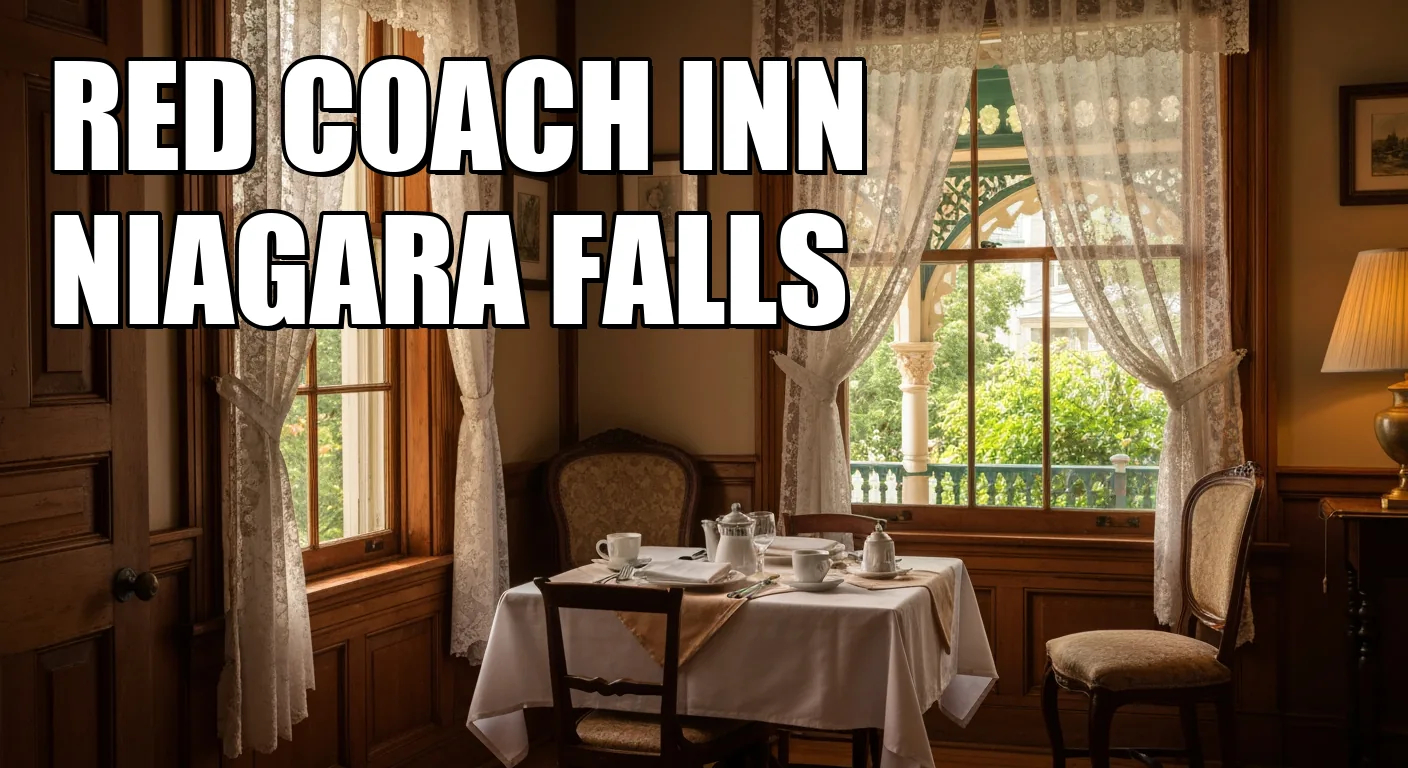
Standing sentinel over the roaring Upper Rapids, the Red Coach Inn in Niagara Falls, New York, offers a startlingly authentic slice of English countryside amidst one of America's most boisterous natural wonders. Constructed on August 30, 1923, this inn wasn't merely inspired by English Tudor; it was a meticulous replication of the Bell Inn in Finedon, England. Its three-and-a-half-story exterior, characterized by the striking brick and stone facades punctuated with half-timbering—that distinctive decorative timber framing filled with plaster or brickwork, often seen in medieval English architecture—immediately sets it apart. The story goes that artist A. Rafael Beck's painting of General LaFayette's red carriage in the Grill Room quite literally gave the inn its enduring name, cementing a whimsical piece of local lore into its very identity.
Beyond the architectural spectacle, the Red Coach Inn harbors a particularly chilling tale that elevates it from a mere historic landmark to a place with genuine spectral intrigue. Consider the Victoria Suite on the third floor, an expansive 1,100-square-foot apartment-style retreat. While its two queen beds, living room with a fireplace, and panoramic views of the thundering rapids sound idyllic, this suite holds a dark secret: it was the scene of a tragic 1927 honeymoon murder. A bridegroom bludgeoned his new wife to death, and ever since, guests have reported inexplicable occurrences—jewelry shifting mysteriously, disembodied music, and even apparitions of a woman in white. It's not the sort of amenity you typically find advertised, but for those with a taste for the paranormal, it certainly adds a unique dimension to an overnight stay.
Another room worth noting, though for different reasons, is the Newcastle Room. Reflecting the inn's charming convention of naming its 37 rooms after English towns, this second-floor accommodation provides a comfortable stay with its two queen-size beds and a large jetted tub. It’s a solid, well-appointed space, but lacks the spine-tingling narrative of the Victoria Suite. If you’re planning a visit, consider the timing; Niagara Falls can be a zoo in summer. Aim for the shoulder seasons—late spring or early fall—to experience the falls with fewer crowds and perhaps a clearer connection to the inn's historic ambiance. Parking can be a bit of a challenge in the immediate vicinity, so confirm options with the inn directly.
Seattle's Shafer Baillie Mansion: A Millionaire's Row Relic with Hidden Grandeur
Venturing west to Seattle, the Shafer Baillie Mansion stands as a formidable testament to the city's early 20th-century wealth and a fascinating interpretation of Tudor Revival. Built in 1914 on what was once Seattle's "Millionaires' Row," this 14,000-square-foot behemoth of brick and half-timbering immediately signals its pedigree. The rich oak and mahogany woodwork, along with the ornamental carved columns, are quintessential Tudor elements, certainly. But what truly sets this mansion apart, giving it a unique, almost theatrical flair, is the original lighted domed ceiling that once crowned its third-floor grand ballroom. Though currently in storage, its very existence hints at a past of lavish entertainment and grand design ambition that few B&Bs can claim.
Stepping into the entry hall, one can't help but admire the massive carved oak door, flanked by stained glass sidelights depicting a stylized flower motif, all complemented by the ubiquitous quarter-sawn oak flooring. It’s an opulent welcome, underscoring the mansion's original purpose as a brewer's lavish home. The guest rooms, thoughtfully named after Seattle landmarks, each carry a piece of this history. The Master Suite, predictably the most luxurious and commanding the highest nightly rate (ranging from $199-$239), offers a taste of the mansion's original splendor. However, the story behind the third-floor rooms is perhaps more compelling: the Central, Southeast, and Southwest Ballrooms were created in 1952 when the original grand ballroom, complete with its pipe organ, was divided into three bedrooms. This conversion, though practical at the time, ironically preserved the potential for future restoration of that remarkable domed ceiling—a tantalizing thought for architecture enthusiasts.
Historically, this mansion cycled through prominent Seattle figures, from brewing magnate Samuel Loeb to Alexander Baillie, credited with introducing golf to the western United States, and later Julius Shafer of the Shafer Bros. Land Company. The narrative of these successive owners provides a fascinating lens through which to view Seattle's growth and the ambitions of its early industrialists. If you're visiting, the mansion's location on Capitol Hill is ideal for exploring, but remember that Seattle traffic can be brutal; plan your arrival and departure outside of peak commute hours. Public transport is readily available, which can save you the headache of finding parking in this densely populated neighborhood.
The Pelican Inn in Muir Beach: An English Fantasy on the California Coast
Nestled along the rugged coastline of Muir Beach, California, the Pelican Inn is less a Tudor Revival and more a fully immersive, almost obsessive, recreation of a 16th-century English countryside pub. Built in 1979, this isn't an adaptive reuse or a revival of an American style; it's a deliberate, meticulously crafted fantasy. Whitewashed walls, rough-hewn timber beams, and leaded windows are just the beginning. The enormous inglenook fireplace—a large, walk-in fireplace with benches inside, perfect for warding off a chilly English evening—even conceals a priest hole, a secret hiding place for Catholic priests during periods of persecution in England. This level of detail, with architectural elements reportedly imported directly from England, is both astonishing and slightly disorienting.
Inside, the illusion deepens. Exposed wood beams are etched with graffiti designed to appear centuries old, and the doorways are built to 16th-century human proportions, which means taller guests will be ducking through every threshold. The darkly paneled bar features vintage wood panels and cupboards sourced from founder Charles Felix's grandfather's London hotel, lending a profound sense of authenticity that often eludes historical recreations. Felix, a fourth-generation English innkeeper, brought a lifetime of tradition to this corner of Northern California, and it shows.
Each of the seven atmospheric bedrooms continues this meticulous theme. Heavily draped half-tester or four-poster beds, a traditional medieval practice intended to protect sleepers from creatures falling through thatched roofs, immediately set a period tone. You'll find English antiques, Persian rugs, and small private baths. Room 7, the largest and most expensive ($335), is particularly noteworthy for its loft configuration and private staircase. But the truly unique, and perhaps most charming, detail hangs above every bed: a hagstone, a stone with a naturally bored hole, a British superstition meant to ward off witchcraft and disease. This is the kind of detail a typical guide overlooks, but it speaks volumes about the inn's commitment to its chosen aesthetic and history. While charming, its remote location means you’ll need a car, and cellphone service can be spotty, which might be a blessing or a curse depending on your travel philosophy.
Dover, Delaware's State Street Inn: A Governor's Legacy in a Historic District
In the heart of Dover, Delaware's Victorian Historic District, where architectural harmony reigns, stands the State Street Inn, a beautifully restored Tudor Revival residence from circa 1911. Its characteristic half-timbering and brick construction, coupled with intricate period details, exemplify the turn-of-the-century interpretation of English Tudor style that became so popular in American suburbs and towns. It doesn't shout its presence like some grander estates, but rather blends elegantly into its surroundings, embodying the refined taste of its original builders. This is the kind of place that appeals to those who appreciate subtle historical elegance over ostentatious display.
Eight charming guest rooms await, each offering modern comforts like air conditioning and private bathrooms, a welcome blend of old-world charm and contemporary convenience. The Caesar Rodney Room, affectionately known as the "Blue Room," claims the title of the inn's largest accommodation. Here, a four-poster queen bed, an expansive private bathroom featuring a jetted tub/shower combo, a fireplace, and original hardwood floors create a sense of dignified comfort. The room’s namesake, Caesar Rodney, a Delaware patriot famous for his midnight ride to Philadelphia to secure the state's pivotal vote for the U.S. Constitution in 1787, adds a layer of American historical significance often unexpected in a Tudor-style inn.
Originally built for Mr. and Mrs. Walt Conaway, the property later became the residence of Simeon Selby Pennewill, who served as Governor of Delaware from 1909-1913. This lineage of distinguished residents deepens its historical resonance. Converted to a bed-and-breakfast around 1984, the inn has undergone careful restoration, striking a delicate balance between preserving its historic charm and integrating modern amenities. If you’re visiting Delaware, particularly for legislative business or to explore the state capital, this inn offers an excellent base. Its location makes walking to nearby historical sites and restaurants easy, but parking, as with many historic districts, can be limited. Weekends often bring more tourists to Dover's historic areas, so a weekday visit might offer a more tranquil experience.
The Lodge at Nemacolin: A Grand Hunting Estate's Enduring Legacy
Up in the picturesque Laurel Highlands of Farmington, Pennsylvania, one discovers a different breed of Tudor Revival: The Lodge at Nemacolin Woodlands Resort. Commissioned in 1968 by Pittsburgh industrialist Willard F. Rockwell and designed by architect C.W. Balling, this four-story structure channels the grandeur of an English hunting lodge with its robust stone construction and half-timbering. Unlike the cozy, intimate scale of some other B&Bs, Nemacolin offers a sweeping, resort-style interpretation of the Tudor aesthetic, set on a sprawling 2,200-acre estate. It was, after all, originally conceived as the focal point of Rockwell's private game preserve, a vision that began unfolding in the late 1940s.
The Lodge, now featuring 98 guest rooms and suites, seamlessly blends contemporary comforts with its historic shell. While specific room names aren't widely publicized, the property's true historical weight lies in its illustrious list of past celebrity clientele. Think Tony Randall, Joan Rivers, Milton Berle, Phyllis Diller, and Eva Gabor – a veritable who's who of mid-20th-century entertainment. It's a reminder that this wasn't just a quiet retreat; it was a destination for the glamorous and well-heeled. The transformation from Rockwell's private hunting lodge, where he entertained lavishly, to the "Nemacolin Inn" in 1970, and finally to its current incarnation after Joseph A. Hardy III's acquisition in 1987, tells a fascinating story of evolving American leisure.
What makes Nemacolin truly distinctive, beyond its architectural style, is the sheer breadth of its offerings. The Lodge houses signature artwork from the Hardy Family Art Collection, provides access to Pennsylvania's largest wine cellar with over 21,000 bottles, and boasts comprehensive sporting facilities. You can indulge in sporting clays, upland bird hunts, or fly fishing at the Field Club. This isn't merely a bed and breakfast; it’s an entire experience, a luxurious escape that speaks to a very particular kind of traveler. Planning a visit here means embracing the resort experience, which, while offering unparalleled amenities, comes with a higher price tag and a more curated, less intimate feel than a traditional B&B. Expect to spend a full weekend, if not longer, to truly appreciate all the resort has to offer, particularly between late spring and early fall when the Laurel Highlands are at their most beautiful.
These five Tudor Revival gems, scattered across the United States, prove that American ingenuity, combined with a fondness for Old World charm, can produce truly remarkable results. From the haunted halls overlooking Niagara Falls to a faithfully recreated English inn on the California coast, each offers a distinctive journey into architectural history and a unique take on hospitality. They challenge the notion that all historic stays are uniform, instead inviting us to explore the idiosyncratic stories etched into their very foundations. So, next time you plan a trip, consider stepping past the usual chain hotels and into a world where half-timbering and historical narrative intertwine, promising an adventure unlike any other.
Your Complete Guide to Historic Tudor Revival Bed & Breakfast Stays
What is the history of Tudor Revival bed and breakfast in America?
Tudor Revival architecture emerged in the United States around 1890 as a romanticized tribute to England's Tudor period (1500s), becoming increasingly popular after 1905 with the Arts and Crafts movement. Many grand estates built between 1890-1930, originally owned by wealthy families, have been restored and converted into charming bed and breakfasts that visitors can enjoy today.
What are the defining characteristics of Tudor Revival architecture?
Tudor Revival buildings feature distinctive steeply-pitched gable roofs, decorative half-timbering with dark wooden framing over light stucco walls, leaded casement windows, large stone fireplaces, arched doorways, and often a prominent front chimney. Interior spaces showcase oak paneling, wood beams, and period furnishings that create an authentic English country manor atmosphere.
Where are the best locations to find Tudor Revival bed and breakfasts?
Popular Tudor Revival B&Bs are found throughout the United States, with notable concentrations in New York (Catskills, Lake Forest), Delaware (Dover's Victorian District), Ohio (Akron), Colorado (Redstone), Pennsylvania, and Illinois (Chicago's North Shore). Many are located in historic districts near cultural attractions and natural areas.
What is included in a typical Tudor Revival bed and breakfast stay?
Most Tudor Revival B&Bs include a complimentary full or continental breakfast served daily, private bathrooms, WiFi internet, air conditioning, and cable television in guest rooms. Many properties offer additional amenities such as fireplaces, hot tubs, gardens, and common living areas with period furnishings.
What are typical room rates for Tudor Revival bed and breakfasts in 2025?
Nightly rates for Tudor Revival B&Bs typically range from $100-$200 per night depending on location, season, and room amenities. Historic properties in popular destinations like the Catskills or near Niagara Falls may command higher rates, while properties in smaller towns often offer more affordable options.
How do I make a reservation at a Tudor Revival bed and breakfast?
Most Tudor Revival B&Bs accept reservations through their official websites, major booking platforms (Expedia, Booking.com, TripAdvisor), or by calling the property directly. Most properties require advance bookings, especially during peak travel seasons, with typical check-in at 3:00 PM and check-out at 11:00 AM.
What is the cancellation policy for Tudor Revival bed and breakfasts?
Cancellation policies typically require 14 days' advance notice for refunds, though some properties offer flexible cancellation during off-season months. Most B&Bs require a deposit to secure reservations, which is refundable if cancellation requirements are met; however, policies vary by property.
Are pets allowed at Tudor Revival bed and breakfasts?
Pet policies vary by property; many Tudor Revival B&Bs are pet-friendly with restrictions on size, breed, or species, often requiring advance approval and a pet fee (typically $100 per pet). It's essential to verify pet policies when booking, as some historic properties may have limitations due to their age and condition.
What amenities should I expect at a historic Tudor Revival inn?
Modern amenities at Tudor Revival B&Bs typically include free WiFi, private bathrooms, cable TV, heating and air conditioning, and on-site parking. Many properties feature fireplaces, gardens, hot tubs, fitness facilities, business centers, and elegant common areas, blending historical charm with contemporary comfort.
When is the best time to visit a Tudor Revival bed and breakfast?
Spring (April-May) and fall (September-October) offer pleasant weather and lower crowds, while summer attracts peak tourism with higher rates. Winter visits provide quiet, atmospheric stays with potential holiday decorations, though some regional properties may have limited availability or weather-related challenges.
Do Tudor Revival bed and breakfasts offer group or corporate reservations?
Many historic Tudor Revival properties accommodate group bookings and corporate events, offering meeting rooms, catering services, and package deals for weddings, retreats, or celebrations. Inquire directly with your chosen property about group rates, minimum stay requirements, and available event spaces.
What activities and attractions are near Tudor Revival bed and breakfasts?
Properties are often located near historic districts, museums, galleries, shopping areas, and outdoor recreation. For example, the Red Coach Inn near Niagara Falls offers proximity to the falls, while Deer Path Inn in Lake Forest provides access to Chicago attractions and lakefront trails.
Are WiFi and other modern technology available at historic B&Bs?
Yes, most contemporary Tudor Revival B&Bs offer free WiFi, flat-screen televisions, and modern bathrooms while preserving historic architectural features. Many properties have invested in technology upgrades to meet traveler expectations while maintaining their period character and authenticity.
What room configurations are typically available at Tudor Revival bed and breakfasts?
Most historic Tudor Revival B&Bs offer limited room inventory (typically 4-12 rooms) with queen or double beds and private bathrooms. Some properties feature suites with additional amenities like kitchenettes, living areas, or jetted tubs; availability varies by property, so confirm specifics when booking.
We use cookies to enhance your experience. By continuing to visit this site you agree to our use of cookies.