Photo by Benjamin Stone for Cornerstone Mansion · December 25, 2025
The very phrase "Colonial Revival" often conjures images of stately homes, perhaps a bit staid, evoking a simpler, idealized past. Yet, after years spent exploring these grand dame properties across the United States, I’ve learned that this particular architectural movement, blossoming most robustly between 1876 and 1940, is far more nuanced, even contradictory, than its name suggests. It's a fascinating blend of historical reverence and creative reinterpretation, a style born out of a yearning for a distinctly American aesthetic in the wake of the Gilded Age’s European pastiches and Victorian clutter.
What, then, truly defines this uniquely American sensibility, and why should it matter to today's traveler? Unlike its genuine Georgian or Federal predecessors, Colonial Revival wasn't about pure replication; it was an *interpretation*, often on a grander, more comfortable scale, incorporating modern conveniences while borrowing classical motifs—Palladian windows, symmetrical facades, grand central staircases, and often, an overwhelming sense of order. This wasn't merely about aesthetics; it was about asserting a particular vision of American heritage, often championed by families of immense wealth looking to connect their fortunes to an imagined, dignified lineage.
Kykuit: A Dynasty's Enduring Statement in the Hudson Valley
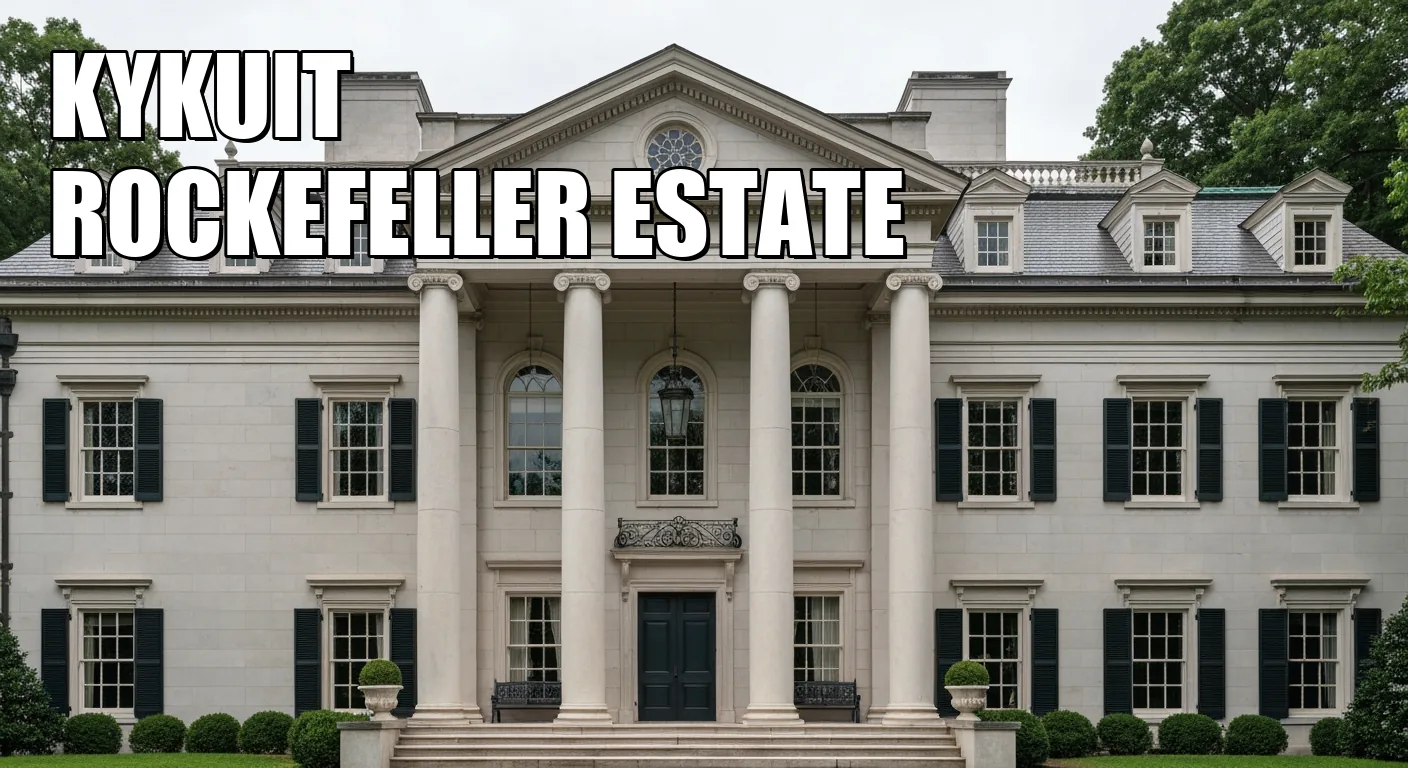
Stepping onto the grounds of Kykuit, the legendary Rockefeller Estate in Pocantico Hills, New York, is like entering a meticulously curated stage set for American power. Designed between 1906 and 1913 by William Adams Delano and Chester Holmes Aldrich, this sprawling 40-room mansion isn't just a house; it's a testament to the colossal influence of the Rockefeller family, whose fortune shaped industries and philanthropy alike. Many visitors come expecting a monument to Gilded Age opulence, and while the scale is certainly impressive, what consistently strikes me is the continuity of occupation, seeing how four generations of Rockefellers left their indelible mark.
Take, for instance, the New Room, with its refined Hepplewhite mahogany sideboards and an exquisitely molded ceiling depicting agricultural motifs – a subtle nod to the foundational wealth that underwrote such grandeur. Ogden Codman Jr.'s interior design here brilliantly balances grandeur with a sense of collected history, showcasing a global array of Chinese and European ceramics alongside 20th-century art. It’s this blend of the old and the surprisingly new that truly sets Kykuit apart. Imagine Nelson Rockefeller, a four-time governor and Vice President, adding more than 70 modern sculptures to the already elaborate Italian-style gardens, designed by William Welles Bosworth, in the 1960s and 70s. This juxtaposition of classical landscape and abstract art is a startling, unexpected dialogue between eras and sensibilities. Visiting Kykuit requires a bit of planning: all tours originate from the Philipsburg Manor Visitor Center and include shuttle bus service. As of October 2025, expect to pay between $25 for a 90-minute "Selected Highlights" tour and $75 for a comprehensive 3-hour "Grand Tour" per adult. They operate Friday-Sunday from May through September, extending to Wednesday-Monday in October and November, so booking online well in advance via the Historic Hudson Valley website is essential to secure your preferred time.
Filoli's Grandeur: A Pacific Coast Baron's Vision
Journeying west to Woodside, California, one encounters Filoli Historic House and Garden, a magnificent Georgian Revival estate that feels worlds away from the East Coast’s rock-ribbed traditions, yet shares the same architectural language of aspiration. Completed in 1917, this 56-room mansion, designed by Willis Polk, was originally the domain of William Bourn II—a titan of California's gold mines and the crucial Spring Valley Water Company. It speaks volumes about the early 20th-century desire for old-world elegance even on the raw, new frontier of the American West.
What often gets lost in the sheer scale of its 54,000 square feet is the estate's deeply personal ethos, embedded right in its name: "Fight for a just cause; Love your fellow man; Live a good life"—the Bourn family motto. This isn't just a house; it's a philosophical statement. The sheer pragmatism woven into its fabric also fascinates me; a colossal kitchen with a 17-foot-high coved ceiling was designed to manage up to nine meals *daily* for staff and family, highlighting the immense logistical undertakings required to maintain such an estate. While the estate’s debutante balls under the Roth family in the 1960s suggest a more carefree era, the scale of everyday operation here was truly staggering. As of October 2025, daily admission generally runs $34-$39 for adults, with the historic house accessible from 11:00 AM to 4:00 PM. Parking is free, and the estate is wheelchair accessible, making it a relatively easy visit once you've secured your tickets online. Consider a Thursday evening visit during their summer hours (June-September) for a different atmosphere.
How Salem's Ropes Mansion Rose from the Ashes, Twice
In the heart of historic Salem, Massachusetts, the Ropes Mansion and Garden presents a particularly compelling, and rather dramatic, case study in Colonial Revival’s transformative power. This wasn't a newly built estate; its bones are far older, dating back to 1727 as a Georgian merchant's home. The true Colonial Revival story here begins in 1894 when the Ropes sisters undertook a radical renovation, moving the entire house back 30 feet from Essex Street, then rebuilding it after a devastating fire broke out during construction. This wasn't merely an update; it was a resurrection and a re-imagining.
Architects Stone, Carpenter & Willson essentially created a new house within the old, installing central heat, plumbing, and electricity while layering on the elegant Colonial Revival details like the exquisite hand-painted wallpaper by George Porter Fernald in the dining room and south parlor, dating to circa 1900. It's a powerful reminder that "revival" often meant a willingness to demolish and rebuild, not just restore. Then, astonishingly, another fire in 2009 damaged the third floor, proving the building’s tenacious spirit. It reopened in 2015, a testament to its enduring significance. The Ropes Mansion Garden, a beautiful Colonial Revival restoration designed in 1912, is open year-round at no charge, offering a serene escape. Mansion tours, priced at $15 per person (or $5 with Peabody Essex Museum admission) as of October 2025, are self-guided on Saturdays and Sundays, but be aware of limited capacity and its non-wheelchair accessible entry via stone steps.
Hamilton House: A Privateer's Wealth and Poetic Interpretations
Venturing further north to South Berwick, Maine, the Hamilton House stands as a striking example of late Georgian design initially, built between 1787 and 1788 by Colonel Jonathan Hamilton, a shipping merchant who amassed considerable wealth through privateering during the American Revolutionary War. What makes it a fascinating inclusion in a Colonial Revival journey isn't its initial construction, but rather how later owners, particularly Emily Tyson and her stepdaughter Elise in the early 20th century, reinterpreted and imbued it with a Colonial Revival spirit, turning it into a whimsical summer retreat.
They weren't merely preserving; they were *curating* an idealized past. The reproduction wallpaper in the wide central hallway, based on original samples, provides a sense of authentic history, while the "whimsical murals" painted in 1900 by George Porter Fernald—the same artist who worked on the Ropes Mansion—offer a delightful, unexpected layer of artistic interpretation. This kind of artistic overlay, rather than strict historical adherence, is a hallmark of the Colonial Revival sensibility. The Palladian windows and gabled pediments on the exterior speak to a dignified formality, but the interiors reveal a more playful, personal engagement with history. The house, overlooking the Salmon Falls River, is seasonal, open from May 30 to October 15, Thursday-Sunday, 11:00 AM-3:00 PM. Admission for adults is $15, with discounts for seniors and students, and free for Historic New England members, as of October 2025. Group tours are also available by arrangement.
Winterthur: Henry Francis du Pont's Lifelong Quest for American Decorative Arts
Winterthur Museum, Garden & Library in Delaware isn't merely a house; it’s an absolute architectural and curatorial epic, a testament to one man's singular vision. Originally a modest 12-room Greek Revival manor from 1839, it underwent a monumental Colonial Revival expansion from 1902 and continuing through 1931 under Henry Francis du Pont. This wasn't a quick project but a decades-long obsession, transforming the estate into a 175-room mansion dedicated to American decorative arts, now housing over 89,000 antiques.
What truly sets Winterthur apart is this relentless, almost obsessive, growth and collection. Where else would you find a circular "free-flying" Montmorenci Stair Hall, relocated from a Southern plantation and rebuilt, designed to surprise du Pont's daughters upon their return from a world cruise? It's these kinds of personal, grand gestures that illuminate the mindset behind such expansive Colonial Revival projects. The story of John D. Rockefeller Jr. helping secure structural steel in 1906, when construction was threatened, further underscores the intertwined destinies of America's wealthiest families during this era. Plan for a full day here; the ticket is even valid for two consecutive days. General admission for adults is $26, and Yuletide admission (November 21-December 31) is $30 per adult as of October 2025, with significant discounts for seniors, students, and children. Advance reservations for tours are highly recommended, especially for groups, often needing 4-6 weeks' notice.
Osborne Homestead: A Personal Legacy of Preservation in Connecticut
Finally, the Osborne Homestead Museum in Derby, Connecticut, offers a more intimate, yet equally compelling, narrative of Colonial Revival's impact on American domestic architecture. This started as a mid-1800s farmhouse, but its true transformation occurred between 1919 and 1925, driven by Waldo Stewart Kellogg, a Cornell-educated architect, who married the estate's owner, Frances Osborne Kellogg. This makes the home a very personal expression of the style, shaped by the people who lived there.
Frances Osborne Kellogg was no ordinary homemaker; she was a formidable businesswoman and conservationist, holding executive positions in several companies. Her husband's architectural vision, particularly in expanding and remodeling the farmhouse into this elegant Colonial Revival mansion, beautifully complemented her own forward-thinking spirit. The home now displays four generations of family antiques and fine arts, creating a palpable sense of layered history. What makes this site particularly special is Frances's ultimate act of generosity: upon her death in 1956, she deeded her 350-acre estate to Connecticut, establishing both the museum and the adjacent Osbornedale State Park. It's a rare instance where the architectural transformation leads directly to a lasting public trust and a profound conservation legacy. Visiting here is refreshingly straightforward: admission is free, though donations are gratefully accepted for guided tours, which run approximately an hour. Open seasonally from May through October, Thursday-Sunday, it's an accessible and deeply rewarding experience, often overlooked by those chasing grander names.
Finding the True Spirit of the Revival
Exploring these six properties—from Kykuit's sweeping grandeur to the intimate, personally crafted spaces of the Osborne Homestead—reveals the multi-faceted nature of Colonial Revival architecture. It was never just one thing; it was a canvas upon which different individuals and families painted their aspirations for American identity, their connection to history, and their visions for the future. The style allowed for expansive, almost theatrical gestures, as seen in Winterthur's ever-growing collection, but also for more subtle, personal reinterpretations of a perceived past, like the whimsical murals at Hamilton House.
Forget the notion that Colonial Revival is simply a dry, academic style. It's a vibrant, sometimes contradictory, expression of nostalgia, innovation, and national pride. Each site offers not just architectural beauty but also a rich tapestry of human stories—of wealth accumulated, legacies preserved, and new identities forged. As you plan your visits for 2025, remember that the true insight lies not just in admiring the symmetry of a facade or the elegance of an interior, but in understanding *why* these homes were built, *who* built them, and what they tell us about America's enduring conversation with its own past. These aren't just old houses; they are living documents of a pivotal era in American design and culture, waiting for you to unearth their secrets.
Architecture Styles You Can Read From the Street
Use visible details like rooflines, columns, and ornament to identify building styles faster.
The Complete Guide to Colonial Revival Architecture in America
What is the history of colonial revival architecture?
The Colonial Revival movement began with the Centennial Exhibition in Philadelphia in 1876, celebrating America's 100th anniversary and reawakening national interest in colonial heritage. From 1910 to 1930, the style reached its peak, with approximately 40% of U.S. homes built in the Colonial Revival style.
What is the revival style of architecture?
Revival architecture refers to the practice of designing buildings to echo the styles of previous historical periods, combining elements from earlier eras while often adapting them to contemporary needs and aesthetics. Revival styles allow architects and homeowners to celebrate historical heritage while incorporating modern functionality.
What is the difference between Colonial and colonial revival?
Colonial architecture refers to the pre-revolutionary American architecture brought by settlers in the 16th-18th centuries, while Colonial Revival is the deliberate revival and reinterpretation of colonial elements that began in the 1880s and emphasized larger, more exaggerated features than the originals. Colonial Revival homes often combine aspects from Georgian, Federal, and Dutch Colonial styles.
What is French Revival architecture?
French Revival encompasses various architectural styles inspired by French traditions, including Second Empire with its distinctive mansard roofs and French Eclectic styles featuring symmetrical designs, arched entrances, and elegant proportions. These styles became popular in America during the 19th and early 20th centuries.
How did British Revival architecture change from the Rococo style?
British Revival architecture moved away from Rococo's ornate asymmetry, elaborate ornamentation, and pastel colors (which dominated 1715-1774) toward more structured, symmetrical Classical Revival and Georgian Revival styles that emphasized proportion and restraint. This shift reflected changing aesthetic preferences toward order and classical principles.
Why is the revival of classical architectural elements historically significant?
Classical elements provide harmony, proportion, and balance rooted in ancient Greek and Roman principles, establishing the foundation for Western architectural design and values. Reviving these elements connects modern structures to timeless principles of beauty and order that have influenced architecture for over 2,000 years.
What is the French architecture style called?
French architecture encompasses multiple styles including French Renaissance (combining Gothic elements with Italian Renaissance influence from the late 15th to early 17th centuries), French Eclectic (symmetrical and elegant), and Second Empire (featuring mansard roofs and Baroque ornamentation).
What is gothic revival architecture known for?
Gothic Revival architecture is known for drawing from medieval Gothic features including pointed arches, lancet windows, finials, hood moulds, decorative patterns, and steeply pitched roofs. This style emerged as part of the 19th-century picturesque and romantic architectural movement.
What defines the French Renaissance?
French Renaissance, prominent from the late 15th to early 17th centuries, combines Gothic architectural elements with strong Italian Renaissance influences, emphasizing proportion, hierarchy, classical columnar orders, and precision in design. It represents a transitional style that blended Northern European and Mediterranean architectural traditions.
Where can I visit the best colonial revival architecture in the United States?
Top destinations include Colonial Williamsburg, Virginia (featuring Governor's Palace and Capitol building), Newport, Rhode Island (Gilded Age mansions), Biltmore Estate in Asheville, North Carolina, Boston, Massachusetts, and New Orleans, Louisiana. Heritage Hill in Grand Rapids, Michigan, is also recognized as one of America's largest urban historic districts.
What are the most common characteristics of colonial revival homes?
Common features include symmetrical facades, double-hung windows with shutters, fanlights and sidelights around doors, decorative pediments, classical columns and porches, gabled or hipped roofs, clapboard or brick walls, and interior elements like grand staircases and paneled wainscoting. Many also feature Palladian windows and bay windows not typically found in original colonial homes.
How much does it cost to visit Colonial Williamsburg?
As of 2025, single-day adult admission is $35 (with an additional 10% online discount), youth ages 6-12 cost $10, and children under 6 are free. School group rates are available at $10 per student, and the Art Museums of Colonial Williamsburg offer free admission.
When is the best time to visit Newport's mansions?
Fall 2025 is ideal, with October through early November offering pleasant weather and thinning crowds, though the mansions remain open daily. The Breakers, Marble House, and The Elms operate daily 9:00 AM-5:00 PM, while Rosecliff operates 9:00 AM-4:00 PM during this period, with admission around $20 for adults.
What distinguishes colonial revival from original colonial architecture?
Colonial Revival homes tend to be larger, incorporate exaggerated or added features like broader porches and broken pediments not found in originals, and often combine elements from multiple colonial and early American styles. Colonial Revival is an eclectic reinterpretation rather than a faithful reproduction.
How long should I plan for visiting colonial revival sites?
A single-day visit to Colonial Williamsburg typically requires 6-8 hours, while Newport mansion tours can range from 1-2 hours per house; for comprehensive estate visits like Biltmore, plan 4-6 hours. Most historic home tours last 45 minutes to 2 hours depending on the property.
Are colonial revival homes still being built today?
Yes, Colonial Revival remains popular in contemporary residential design, with modern builders incorporating traditional elements into new homes. Contemporary versions often blend classical colonial features with modern amenities, a trend known as 'New Colonial' that adds contemporary twists to historic styles.
Why This Page Exists
Maison builds place guides to help readers plan a real visit or understand a real site. When a page makes present-day access, booking, or visitor claims, those details are revised against public-facing source material and editorial review. For the wider standards behind that work, see methodology.
The Cornerstone Brief
One historic place, once a week — what it is, why it matters, whether it's worth going. No filler, no paid placements.
Coming soon. Unsubscribe any time.
We use cookies to enhance your experience. By continuing to visit this site you agree to our use of cookies.