Photo by James Whitfield for Cornerstone Mansion · January 7, 2026
For decades, I’ve chased the elusive spirit of American architecture, particularly that potent blend of artistry and practicality known as the Craftsman style. It’s a pursuit that inevitably leads to the brothers Charles and Henry Greene, whose work in Southern California didn’t just define a movement; it elevated it to an art form. You see countless bungalows dotting neighborhoods across the U.S., but the Greenes’ "ultimate bungalows" – a term well-earned – transcend mere domesticity. They are meticulously crafted narratives in wood and stone, each revealing a deeper truth about the era’s aspirations and the architects’ almost obsessive dedication to detail.
What makes these particular homes, especially the seven stellar examples in the data, so captivating? It’s not just their age, nor simply the scale of their original commissions. It’s the way they capture a moment in time when American design began to assert its own identity, rejecting the excesses of Victorian ornamentation in favor of honest materials and a profound connection to the natural world. These houses weren't simply built; they were *grown* from their landscapes, their timber often sourced locally, their forms embracing the California sun and breezes.
The Gamble House: A Masterpiece, But What Does It Cost?
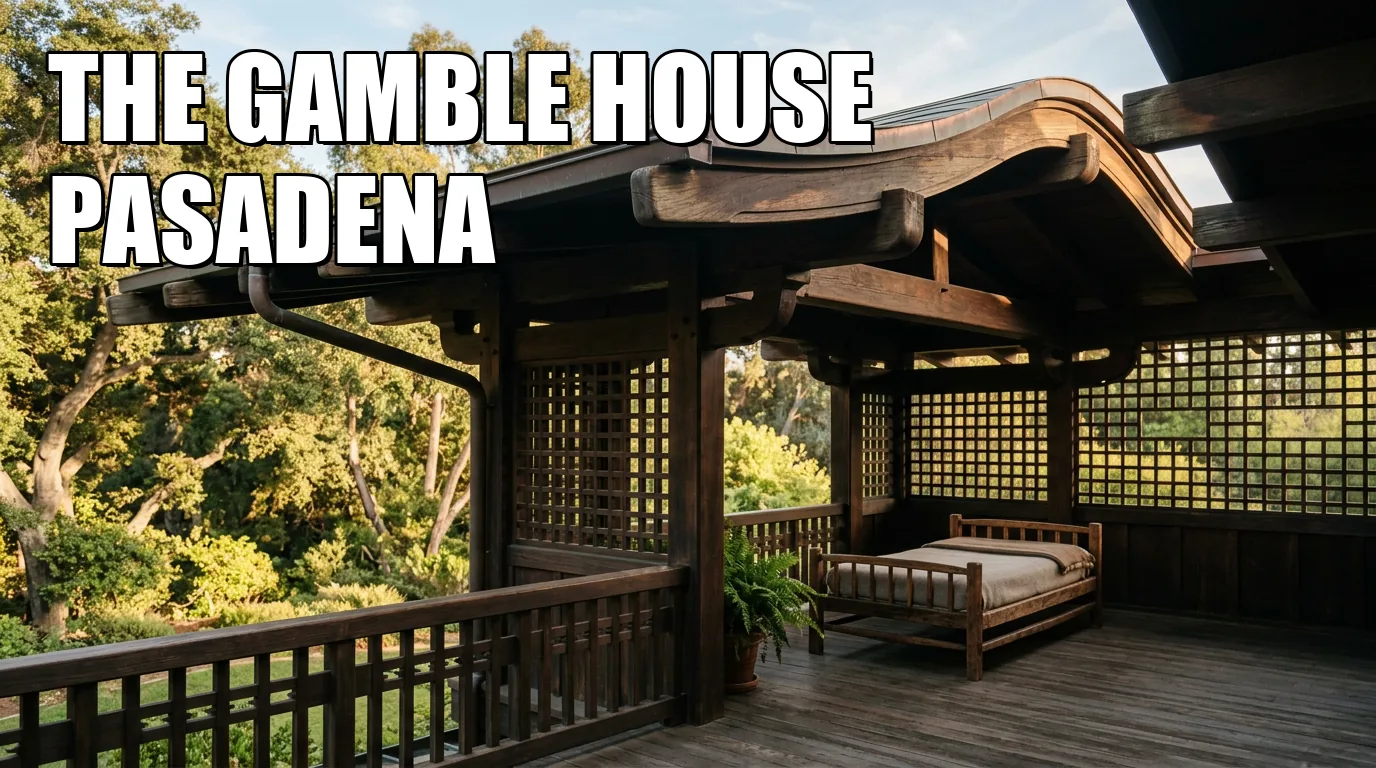
Stepping onto the property of the Gamble House in Pasadena, built between 1908 and 1909, you immediately sense a reverence. It's often hailed as "America's Arts and Crafts masterpiece," and indeed, it’s a stunning example of the Greenes' work, particularly with those ingenious sleeping porches. These weren't just balconies; they were carefully integrated outdoor living spaces, strategically oriented on the northern elevation to funnel cooling mountain breezes through the house. Imagine sleeping out there on a balmy Southern California night, the scent of jasmine mingling with the crisp air – a true testament to the Craftsman philosophy of blurring indoor and outdoor life.
Yet, beyond the aesthetic marvel, I always consider the practicalities and the sheer cost involved. This house, commissioned for $79,000 in 1908, would equate to a staggering $2.5 million today. A recent exterior restoration alone cost $3.5 million, addressing everything from splitting redwood shake shingles to compromised window frames. While it's wonderful that such a treasure is preserved and open to 30,000 visitors annually, one can't help but wonder if the extensive, continuous restoration for these properties occasionally edges into an almost *too perfect* state, where the patina of age is meticulously scrubbed away. It’s a fine line between preservation and historical re-creation, a tension I always feel when visiting such immaculately maintained sites.
Blacker House: A Glimpse into the Private World of Unrivaled Opulence
Just around the corner, also in Pasadena, stands the Robert R. Blacker House, completed in 1907. If the Gamble House is the accessible masterpiece, the Blacker House is its more elusive, perhaps even more extravagant, older sibling. This was the Greenes' largest and most costly commission, exceeding $100,000 at the time – roughly $3.37 million in current dollars. What truly sets it apart, in my view, are the custom-designed Tiffany stained-glass windows and doors. We're talking about massive mahogany front doors valued at over $330,000 *each* and nine original art glass windows that aren't just decorative but fundamentally integrated into the home's structure and light.
Unlike the Gamble House, the Blacker House remains privately owned. This means you won’t be strolling through its 12,000 square feet on a public tour, which is a shame, though understandable. The challenge with such private treasures is that while their integrity might be fiercely protected by dedicated owners, the public only gets tantalizing glimpses. What I find particularly poignant about the Blacker House is its journey from neglect to meticulous restoration under architect Randell Makinson. It reminds us that even architectural masterpieces require constant vigilance and incredible resources to survive, a testament to the enduring commitment of those who value this unique American heritage.
Thorsen House in Berkeley: A Northern California Enigma
Venturing north to Berkeley, we encounter the William R. Thorsen House, also known as the Sigma Phi-Thorsen House, finished between 1909 and 1910. This property holds a special place, being the last of Greene & Greene's "ultimate bungalows." It's a fascinating study in scale and detail, particularly its hand-designed leaded art-glass panels by Emil Lange, which frequently feature a distinctive gnarled grape vine motif. Inside, the mahogany paneling isn’t just wood; it’s a canvas adorned with hand-painted friezes and custom-designed furniture inlaid with delicate abalone, oak, and fruit wood, often depicting intricate periwinkle designs.
This house offers a different kind of visitor experience, being continuously owned and restored by the Sigma Phi Society since 1942. This collegiate stewardship presents both unique opportunities and challenges. On one hand, it guarantees a living history, a house that has been consistently *used*. On the other, the priorities of a fraternity might differ from a museum, leading to a different kind of "preservation." Seismic upgrades, for instance, were a significant concern here in earthquake-prone California, a practical issue many historic homes face that typical architectural guides rarely delve into. A $20,000 matching grant from the Getty Trust in the early 90s for restoration studies highlights the ongoing financial demands – these aren't static monuments, but living, breathing structures requiring relentless attention.
Casa Barranca: Where Nature Dictates Design
Away from the urban sprawl, nestled in the foothills above California’s Ojai Valley, sits the Charles M. Pratt House, or Casa Barranca, completed between 1909 and 1912. This particular Greene & Greene creation is a profound exploration of integration with nature. You hear that phrase often with Craftsman homes, but here, it’s not just a cliché. The roof pitch itself is calibrated to mirror the surrounding mountain contours, and the house literally steps down the hillside in terraces, following the natural land. It's a less ornamented, almost raw expression of the Arts and Crafts philosophy, a deliberate choice by the architects to prioritize structural honesty over applied veneer.
The story behind Casa Barranca is one of unfettered artistic freedom. Commissioned by Charles Millard Pratt, son of Standard Oil founder Charles Pratt, the project had virtually unlimited resources. This allowed the Greenes to purchase an *entire adjacent 38-acre parcel* just to preserve the critical viewshed – a luxury almost unimaginable today. What struck me about this house is how it challenges the notion of "ultimate bungalow" as being about sheer opulence. Here, the ultimate expression is about a deep, almost spiritual connection to the land, an experience often missed by those who only focus on the intricate joinery or stained glass. The house remains a private estate, its preservation flawless, offering a quiet testament to a singular vision.
Ford House: The Genesis of the "Ultimate Bungalow"
Returning to Pasadena, the Freeman A. Ford House, built between 1906 and 1908, marks a pivotal moment in the Greenes' journey. This residence is widely considered the *first* of their five "ultimate bungalows," serving as a critical step in their architectural evolution. It’s a more compact design than some of its successors, yet it introduced innovative elements that would define their later work, particularly the central courtyard. This wasn't just an open space; it was an elegant, private outdoor living room, complete with tile pavers, brick steps, and a pebble-dash fountain – that charming finish achieved by throwing small pebbles onto wet stucco.
What truly captivated me here was the remarkable entrance door. It showcases a wooden frame stylized into an abstract human figure, cradling art glass with a peacock-feather design in blues, greens, and creams. This detail, often overlooked in broader architectural analyses, speaks volumes about the Greenes’ ability to infuse even functional elements with profound artistry and symbolism. Commissioned by Freeman A. Ford, vice-president of the Pasadena Ice Company, the house itself offered sweeping views over the Arroyo Seco ravine, a natural feature that played a significant role in Pasadena's early development and influenced many of the Greenes' designs. It's a reminder that even the humblest of commissions from a local business leader could spark an architectural revolution.
The Sisters' House: A Triumph of Craft and Scale
Another Pasadena gem, the Cordelia A. Culbertson House (often called the Sisters' House), completed between 1911 and 1913, pushes the boundaries of the Craftsman style. This was the Greenes' largest and most expensive commission overall, costing $150,000 at the time, or roughly $4.7 million today. Built for three unmarried sisters, its scale is impressive, but it’s the sheer breadth of artistic craft that truly sets it apart. Imagine an Italian garden courtyard featuring not just water features, but column capitals adorned with Batchelder tile, depicting crouching musicians. Batchelder tile, for the uninitiated, was a highly sought-after, distinctive art tile produced in Pasadena, prized for its earthy tones and handcrafted feel.
The interior of the Sisters' House is a veritable museum of historical ceramic tile work, incorporating pieces from five significant manufacturers, including the renowned Grueby Faience Company and Pewabic Pottery. This meticulous selection of materials, combined with exotic marble, sculptured plaster walls, and velour fabric finishes, all within a dark wood framework designed by Charles Greene himself, creates an atmosphere of unparalleled opulence that still adheres to Craftsman principles of material honesty. When it was offered for sale at $7.5 million in 2013, it underscored the enduring value and desirability of these architectural statements, proving that true craftsmanship appreciates far beyond mere inflation.
James A. Culbertson House: The Roots of a Revolution
Finally, we arrive at the James A. Culbertson House in Pasadena, a fascinating case study in architectural evolution. Though initial designs date back to 1902, the house underwent continuous development and extensive additions through 1914. This wasn't a static project; it was a living collaboration that allowed the Greenes to push boundaries. What stands out here is the early, sophisticated use of Oriental design influences, evident in the dark-stained cedar interior and subtle Asian-inspired bracket details over window seats. It shows the Greenes’ clear transition from the more conventional English Arts and Crafts aesthetic towards their unique mature style, incorporating Japanese design vocabulary.
This commission was absolutely pivotal for the Greene brothers, setting the stage for their later successes. James Culbertson, the client, fostered an environment where they could explore radical new ideas. Charles Greene himself, reflecting on this period, noted his "sympathy with the 'William Morris movement,'" explicitly linking his emerging philosophy to the broader Arts and Crafts ideals. This house, therefore, isn't just a building; it's a manifesto, demonstrating how a visionary client and talented architects can together lay the philosophical groundwork for an entire architectural movement. It’s a testament to the fact that even the most iconic styles have their humble, experimental beginnings.
When contemplating a journey through these masterpieces, remember that they are more than just pretty houses. They are laboratories of design, battlegrounds of preservation, and living textbooks of American ingenuity. While some, like the Gamble House, offer regular tours, others remain private sanctuaries, demanding a different kind of appreciation from afar. Plan your visit for the cooler months, perhaps October through April, to truly savor the outdoor elements and avoid the stifling summer heat, especially if you plan on exploring Pasadena’s vibrant historic neighborhoods on foot. Admission fees vary, but generally expect to pay anywhere from $15-$20 for museum access, with parking often available on-site or nearby. Understanding their context – the money, the client relationships, the evolving philosophies – is what truly unlocks their genius. These aren’t just structures; they are profound statements about how we live, how we connect with our environment, and how enduring craftsmanship can shape our very understanding of home.
Architecture Styles You Can Read From the Street
Use visible details like rooflines, columns, and ornament to identify building styles faster.
Discovering American Craftsman Bungalow Architecture: A Complete Guide
What is the history of the Craftsman bungalow?
The Craftsman bungalow emerged in the late 19th century as part of the Arts and Crafts movement, gaining peak popularity between 1907-1925. Before 1906, bungalows were considered seasonal dwellings, but architect Gustav Stickley envisioned them as perfect year-round homes, combining craftsmanship, natural materials, and simple elegance as a backlash to Industrial Revolution industrialization.
What is the difference between a bungalow and a Craftsman house?
A bungalow refers to a particular form or type of building—typically a low, one-story house with a rectangular footprint and asymmetrical floor plan—while Craftsman refers to an architectural style based on the Arts and Crafts movement emphasizing craftsmanship and visible structural details. A bungalow can exhibit Craftsman style, making a Craftsman bungalow a specific combination of form and style.
What makes Craftsman bungalows so charming?
Craftsman bungalows charm through their emphasis on visible craftsmanship, natural materials like wood and stone, open floor plans with seamless transitions, prominent fireplaces, exposed structural elements, decorative details, and inviting front porches that encourage outdoor living. The style celebrates the handmade quality and harmony with nature that appealed to working-class homeowners.
What is the difference between a Tudor and a Craftsman house?
Tudor Revival homes feature steeply pitched gable roofs with little to no eave overhang, characteristic half-timbering, elaborate chimneys, and narrow tall windows, while Craftsman homes have lower-pitched roofs with wide overhanging eaves, exposed rafters, decorative brackets, and tapered columns. Both styles were popular around 1900-1940 but differ significantly in roof slope and exterior details.
What are the 4 types of Craftsman homes?
The four main types are: (1) Classic Craftsman Bungalow—one-story with open floor plan and tapered columns; (2) Prairie-Style Craftsman—featuring horizontal lines and large overhanging eaves inspired by Frank Lloyd Wright; (3) Mission-Revival Craftsman—showcasing stucco exteriors, arched doorways, and terra-cotta tiles from Spanish colonial influence; (4) Four-Square Craftsman—a two-story boxy design with hipped roof and central dormer.
What is the least desirable style house?
According to 2024 research, shipping container homes and tiny homes rank as the least desired house styles among American homebuyers when analyzing real estate listing views.
What makes a house a Craftsman house?
A house is Craftsman when it features: low-pitched gabled or hipped roofs with wide overhanging eaves, exposed roof rafters and decorative brackets, tapered or square columns, open functional floor plans, hand-crafted details, exposed wood beams and cabinetry, natural materials, earth-toned exteriors, and prominent fireplaces with decorative tilework or carved mantels.
What makes a house a Tudor?
A Tudor house is defined by steeply pitched gable roofs, distinctive half-timbered construction (wood frame filled with brick or stucco), elaborate masonry chimneys often with decorative pots, narrow tall windows often with leaded glass, arched doorways, and asymmetrical floor plans. The characteristic two-toned facade features dark timber contrasting with light stucco or brick cladding.
How can you tell if a house is a Tudor?
You can identify a Tudor by its steeply pitched roof with cross gables, exposed half-timber framing creating distinctive black-and-white patterns, tall narrow windows often in groups, prominent chimneys, heavy decorative masonry work, round-topped windows, and ornate doorways. The asymmetrical design and blend of brick and stone trim are also key indicators of this medieval-inspired style.
Where are the best locations to see Craftsman bungalows in the United States?
Pasadena, California—particularly the Bungalow Heaven and South Marengo Historic Districts—showcases the most concentrated examples of Craftsman architecture in America. Other notable locations include Columbus, Ohio; Tampa, Florida; Honolulu, Hawaii; Seattle, Washington; and Pennsylvania towns west of Philadelphia like Lancaster and York.
How much does it cost to renovate a Craftsman bungalow?
Craftsman home renovations typically cost $100,000-$200,000 or more, reflecting the detailed restoration work these historic homes deserve, with full-house remodels nationally averaging $150,000-$450,000 in 2025 depending on location and scope. Kitchen remodels run $30,000-$75,000, while bathroom upgrades cost $15,000-$35,000.
Can you tour Craftsman bungalows in America?
Yes, numerous Craftsman bungalow tours are available, particularly in Pasadena through Pasadena Heritage's Craftsman Week events featuring South Marengo and Bungalow Heaven walks ($28-35 per person). The Gamble House offers tours Tuesday through Sunday with advance reservations recommended. Many historic neighborhoods also offer self-guided walking tours.
What are the main design elements of Craftsman bungalows?
Key design elements include low-pitched gabled roofs with deep overhanging eaves, exposed rafter tails and decorative brackets, tapered columns or square pillars, front porches with railings, open floor plans, exposed wood beams and structural elements, built-in cabinetry, prominent fireplaces with decorative tilework, 4-over-1 or 6-over-1 sash windows, and natural materials like wood and stone throughout.
How do you maintain a Craftsman bungalow?
Maintain your Craftsman bungalow by regularly inspecting the roof for damaged shingles, cleaning gutters and downspouts, caring for exterior wood elements, inspecting the foundation and exterior paint, maintaining outdoor porches and living spaces, and scheduling professional HVAC servicing. Preserve original features and address issues promptly to prevent larger problems and maintain historic integrity.
Are Craftsman bungalows still popular in 2025?
Yes, Craftsman bungalows remain highly desirable in 2025 due to their timeless charm, quality craftsmanship, functional designs, and emphasis on natural materials. Many homeowners value their historic character, open floor plans that adapt to modern living, and strong connection to authentic design principles that contrast with mass-produced contemporary homes.
Why This Page Exists
Maison builds place guides to help readers plan a real visit or understand a real site. When a page makes present-day access, booking, or visitor claims, those details are revised against public-facing source material and editorial review. For the wider standards behind that work, see methodology.
The Cornerstone Brief
One historic place, once a week — what it is, why it matters, whether it's worth going. No filler, no paid placements.
Coming soon. Unsubscribe any time.
We use cookies to enhance your experience. By continuing to visit this site you agree to our use of cookies.