For years, travel guides have trumpeted the glory of Georgian mansions and Federal townhouses, painting a rather monochromatic picture of early American architecture. But for those of us who’ve dug a little deeper, tramped through forgotten fields, and peered into dusty archives, a far more intriguing narrative emerges: the enduring legacy of Dutch Colonial design. These aren't just old houses; they’re resilient testaments to a foundational culture often overlooked in the broader American story, revealing surprising insights into how early settlers truly lived, built, and thrived.
What makes these Dutch structures so compelling? Unlike their English counterparts, Dutch Colonial homes often boast distinctive gambrel roofs—a two-part, symmetrical roof with a shallower upper slope and a steeper lower slope—which not only maximize attic space but also give the buildings a unique, grounded profile. Then there’s the robust H-frame construction, where heavy timber bents, resembling a giant goalpost, create an incredibly strong internal skeleton. You’ll also spot the practical charm of split Dutch doors, allowing the top half to open for light and air while keeping livestock (or rowdy children) contained below. For me, the real allure lies in their unassuming honesty, a functional beauty that speaks volumes about the pragmatic spirit of their builders.
Tracing the Earliest Footprints: Brooklyn’s Enduring Legacies
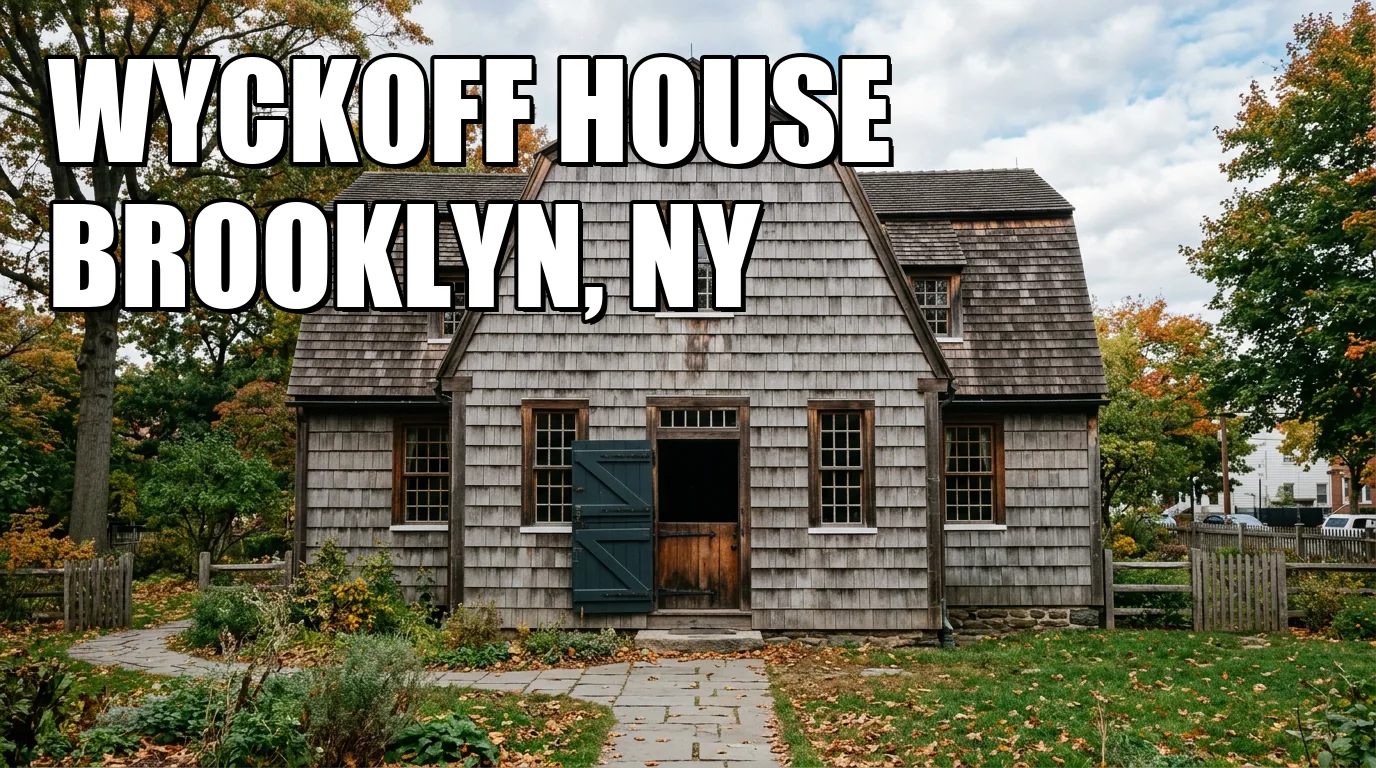
Our architectural pilgrimage must begin where it truly began: the heart of New Netherland. You can’t discuss Dutch Colonial without paying homage to the Pieter Claesen Wyckoff House in Brooklyn, a site so steeped in history it almost hums with it. Dating back to circa 1652, it stands as the absolute oldest surviving structure in New York City and, indeed, New York State. Most people, even many New Yorkers, have no idea this vernacular marvel exists, tucked away in the East Flatbush-Flatlands neighborhood. This isn't some grand manor; it started as a single room with a packed earth floor and unglazed windows, a stark reminder of the rough-and-tumble beginnings of colonial life. Later generations of the Wyckoff family, who ultimately birthed thirteen children in this very house, expanded it, adding parlors and bedrooms that subtly altered its original H-frame core. When you visit the Wyckoff, expect a humbling experience; it’s less about opulent display and more about raw, tangible history.
Just a short historical hop away, though geographically displaced, is the Jan Martense Schenck House. Originally constructed between 1675 and 1677 in Flatlands, Brooklyn, this house now resides, somewhat controversially for preservation purists, within the Brooklyn Museum. While I generally prefer to see historic buildings in their original context, the Schenck House's relocation to the museum in the 1950s undoubtedly saved it from demolition, offering an unparalleled opportunity to study its internal structure. Here, the "H-bents" are openly visible, twelve heavy timber structural elements that form the skeletal frame, an engineering marvel for its time. What always strikes me about the Schenck House is its high-pitched roof, which wasn’t just for aesthetics; it created crucial loft space for storage, a necessity for a farming family. Its horizontal wood clapboard siding, often with brick nogging as insulation—a technique where bricks were laid between timber framing for added thermal mass—speaks to a pragmatic ingenuity in adapting European building practices to the New World's climate.
The Brooklyn Museum offers a unique, if sterile, viewing experience. You won’t get the open-air feel of a traditional historic site, but the controlled environment allows for an intimate examination of construction details. General admission to the museum runs about $16 for adults, though students and seniors pay less, and kids 19 and under get in free, making it an accessible, albeit indoor, journey into the 17th century. Plan your visit for a Wednesday or Friday through Sunday, as the museum is closed Mondays and Tuesdays.
Manor Life and Revolutionary Footnotes: Beyond the Farmhouse
Moving up the Hudson River Valley, the Dutch influence blossomed into more substantial estates, though still retaining those familiar architectural signatures. Philipse Manor Hall in Yonkers, begun around 1682, represents the ascent of Dutch merchant power. Frederick Philipse I, the first lord of a sprawling 52,000-acre manor, initially built this modest two-room structure as a mere stopover between his NYC residence and his Upper Mills property. Constructed of dressed fieldstone with red brick trim, it features intriguing carved stone faces, or gorbels, as window keystones—a direct architectural import from Holland. This detail, often missed by the casual observer, is a powerful indicator of the Philipses' continued connection to their European roots.
By the mid-18th century, Philipse Manor Hall transformed dramatically. Frederick Philipse II, a subsequent owner, renovated and enlarged it into the principal seat of the family’s operations, complete with rare stucco ceilings depicting birds and pastoral scenes. It's a fascinating juxtaposition: the humble 17th-century core now enveloped by 18th-century grandeur, reflecting the family’s growing wealth and aspirations. Visiting Philipse Manor Hall means stepping into a complex narrative of colonial aristocracy, wealth, and, importantly, the often-overlooked history of enslaved Africans who made such enterprises possible. Guided tours are highly recommended, offered daily at specific times like 10:30 AM and 1:30 PM, and reservations are wise, especially during peak tourist season. The site is open Wednesday through Sunday, 10 AM to 5 PM, offering two floors of interactive, ADA-accessible exhibits that truly bring the stories to life.
Just south, in the Bronx’s sprawling Van Cortlandt Park, stands the Van Cortlandt House Museum, built in 1748. This two-and-a-half-story L-shaped manor, made of dressed fieldstone and red brick, is the oldest surviving house in the Bronx. While its exterior boasts Georgian Colonial elements like seven dormer windows, its core construction and interior details, such as authentic Dutch tiles and rich wood paneling, firmly root it in the Dutch tradition. But what makes this house truly resonate beyond its architecture is its role during the American Revolution. General George Washington himself used it as his headquarters on three separate occasions, and it was here that he and General Rochambeau famously strategized the war’s closing moves. Walking through those rooms, you can almost feel the weight of history in the air—a far cry from the typical "pretty old house" experience.
The Van Cortlandt House offers self-guided tours Wednesday through Sunday, 11 AM to 4 PM. At only $5 for adults, it's an absolute steal for the historical depth it offers. Don’t expect a massive gift shop or flashy exhibits; this is a more understated, reflective experience. Getting there can be a journey; while reachable by subway, it requires a pleasant, though sometimes lengthy, walk through the park.
Unpacking Long Island’s Transitional Dutch Farmhouses
Long Island holds some particularly compelling Dutch Colonial examples, often illustrating a fascinating transitional period as English influence grew. The Schenck House at Old Bethpage Village Restoration, dating to circa 1730 (though restored to its 1765 appearance), is a prime example. Originally from Manhasset, this house was painstakingly relocated to the living history museum, preserving its "massive Dutch framing"—the first-floor ceiling joists here span an impressive 32 feet, a testament to the skill and scale of Dutch timber construction. Its side-gabled roof with flared eaves, round butt shingles, and a massive stone jambless fireplace (a fireplace without a projecting mantel, typical of early colonial homes) mark it as a truly authentic specimen.
Old Bethpage Village Restoration is more than just a house; it’s an immersive experience. You get to see not just the Schenck House, but a collection of 36 historic buildings moved from across Long Island, dating from 1660 to 1875. This allows for a much broader understanding of colonial life, though it does mean the Schenck House isn't isolated. It's open Friday, Saturday, and Sunday from 10 AM to 4 PM, with last admittance at 2:15 PM. Tickets are $15 for adults, a fair price for a full day's exploration. I'd advise arriving early to beat the crowds, especially during school holidays, as the living history aspect can draw a substantial number of visitors.
Further north in Sleepy Hollow, the Philipsburg Manor House (Upper Mills), whose core dates to circa 1680, offers a crucial, often uncomfortable, look at the economic engine of Dutch colonial society. This isn’t just a manor house; it’s a fully reconstructed 18th-century milling and trading complex. The site includes the manor house, a water-powered gristmill, a barn, and chillingly, slave quarters. What makes Philipsburg Manor so vital is its unflinching presentation of the role enslaved Africans played in building fortunes in the northern colonies. In 1750, records show 23 enslaved people lived and worked here, highlighting the complex and often brutal realities behind colonial prosperity.
Visiting Philipsburg Manor is a profoundly educational experience. It’s open seasonally from May through December, with varying schedules; plan for a Friday-Sunday visit in the warmer months. Self-guided tours usually take 1.5 to 2 hours, and admission runs $18 for adults. Costumed interpreters here are exceptional, demonstrating crafts and agricultural techniques while providing context on the diverse, and often tragic, labor force. Don’t expect to gloss over the difficult parts of history; this site challenges you to confront them, making it an essential visit for anyone truly interested in colonial America.
Manhattan’s Last Stand: A Surprising Urban Survivor
Finally, we arrive in modern-day Manhattan, a place synonymous with relentless development, where the survival of any 18th-century structure is a near miracle. Yet, in the bustling TriBeCa neighborhood, at 2 White Street, stands the Gideon Tucker House, built in 1808-1809. This house is an anomaly, a defiant nod to Dutch Colonial aesthetics at a time when Federal architecture had firmly taken root as New York’s fashionable style. Gideon Tucker, a successful plaster manufacturer and city official, deliberately chose this traditional 18th-century Dutch style for his residence, a modest yet comfortable brick and wood structure.
Its distinctive gambrel roof, splayed stone window lintels, prominent dormers, and handsome original cornice work are all hallmarks of the style, making it a truly unique urban survivor. Likely always featuring a shop on the ground floor with residential quarters above, it embodies the pragmatic blend of business and home that characterized much of early New York. The Gideon Tucker House is a designated New York City Landmark but, alas, is not regularly open to the public. It serves as an active commercial/residential building. Nevertheless, seeing it from the street, standing proud amidst towering modern buildings, offers a surprising glimpse into what much of Manhattan once looked like. It’s a testament to one man’s quiet rebellion against prevailing trends and a stark reminder of the architectural heritage we’ve lost.
Beyond the Facades: What These Buildings Truly Teach Us
Exploring these Dutch Colonial sites reveals more than just building techniques; it offers a profound understanding of early American identity. These are not just artifacts; they are windows into lives lived, struggles endured, and cultures interwoven. What surprised me most over the years wasn’t the occasional grandiosity of a manor, but the sheer resilience and adaptability embedded in these structures. From the raw simplicity of the Wyckoff House to the complex social fabric laid bare at Philipsburg Manor, each building tells a story that challenges the neat narratives often presented in history books.
Don't go expecting theme park polish or perfectly manicured historical reenactments everywhere. Some of these sites, like the Wyckoff House, are truly grassroots operations, relying on passionate volunteers. Your visit is an act of supporting vital preservation work. Instead of merely ticking off a list, take your time. Look at the details: the hand-hewn timbers, the rough-hewn stone, the often-uneven floorboards that have borne witness to centuries of footsteps. These aren't just architectural styles; they are living documents of our nation's foundational period, reminding us that America's story is far richer, and more diverse, than many realize. These Dutch Colonial treasures stand as powerful reminders that our architectural roots run deep, varied, and, quite frankly, more fascinating than you might have imagined.
Your Complete Guide to Dutch Colonial Architecture in America
What style is Dutch Colonial?
Dutch Colonial is an architectural style originating from 17th-century Dutch settlements in North America, primarily recognized by its distinctive gambrel roof with two pitched slopes on each side and flared eaves. The style emphasizes practical design with features including symmetrical layouts, brick or stone construction, multi-pane windows, and shed dormers, reflecting both European Dutch traditions and American colonial adaptations.
Dutch colonial architecture guide
Dutch Colonial architecture is primarily found in the Northeast United States, particularly in New York and New Jersey, where Dutch settlers first established colonies in the Hudson River Valley during the 17th century. The style features distinctive gambrel roofs, horizontal lap siding, multiple chimneys, and charming flared eaves that were designed to shed heavy snow and provide practical shelter for colonial families.
What is the difference between gambrel and Dutch Colonial?
Gambrel refers specifically to the double-pitched roof design with two slopes on each side, while Dutch Colonial is an entire architectural style that typically features a gambrel roof as its primary characteristic. While gambrels are commonly associated with Dutch Colonial homes, they can also appear on barns and other architectural styles, meaning gambrel roofs are not exclusive to Dutch Colonial architecture.
What is the old Cape Dutch style?
Cape Dutch is a distinct architectural style originating from the 17th-century Dutch Cape Colony in South Africa, characterized by whitewashed walls, thatched roofing, large wooden sash windows, external wooden shutters, and ornamental gables reminiscent of Dutch canal houses. Unlike American Dutch Colonial, Cape Dutch reflects medieval Dutch, German, French, and Indonesian influences adapted to the South African climate.
What is the best siding for a Dutch Colonial?
Dutch lap and clapboard siding are both excellent choices for Dutch Colonial homes in 2025. Fiber cement siding (lasting 50+ years) offers superior durability and weather resistance, while Dutch lap provides enhanced visual appeal with its distinctive beveled edges and three-dimensional effect, and traditional clapboard delivers a timeless, authentic colonial appearance.
What looks better, Dutch lap or clapboard?
Dutch lap siding delivers a bolder, more sculpted profile with visual contrast from the beveled top edges, creating a three-dimensional appearance, while clapboard offers a more traditional, flat aesthetic that has remained timeless for centuries. The choice depends on your preference: choose Dutch lap for a more dramatic, distinctive look, or clapboard for a classic, understated colonial appearance.
What color house is the hardest to sell?
According to 2025 home staging surveys, lime green is the hardest color to sell, with 73% of staging professionals rating it as the most off-putting to buyers, followed by bold pink (42%), red (35%), and purple (33%). Neutral and soft colors like whites, beiges, and taupe are recommended for maximizing buyer appeal.
What kind of landscaping suits a Dutch colonial?
Colonial-style landscaping features formal, symmetrical designs with square or rectangular raised garden beds, organized walkways, flowering shrubs like rhododendrons and boxwoods, shade trees, and decorative elements such as arbors and fountains. Period-appropriate plants include flowering bulbs, fruit trees, herbs, and native plants arranged in organized, practical layouts that complement the home's structured architecture.
What is Dutch style siding?
Dutch style siding, also known as Dutch lap or German lap siding, is a horizontal plank siding with a slightly concave face and a distinctive notch at the bottom of each course. Originally made from wood, modern Dutch lap siding is typically vinyl or fiber cement, featuring beveled top edges that create shadow lines and visual depth, making it ideal for Colonial and Victorian-style homes.
What is the longest lasting exterior siding?
Brick siding offers the longest lifespan, lasting 100+ years, followed by fiber cement siding which lasts 50+ years with proper maintenance. Stucco also lasts up to 50 years, while metal siding (steel and aluminum) lasts 40-50 years, and engineered wood lasts 30+ years with proper care.
What are the main characteristics of Dutch Colonial architecture?
Key features include the iconic gambrel roof with flared eaves, symmetrical facade, horizontal lap siding or brick construction, large multi-pane windows, prominent chimneys, shed dormers, and sometimes ornamental shutters. These practical elements were designed to handle heavy snow and harsh climates while creating distinctive, charming residential aesthetics.
Where can I find the best Dutch Colonial architecture examples in the US?
The Hudson River Valley in New York and New Jersey contains the most authentic Dutch Colonial examples, including the Luykas Van Alen House (1737) in Kinderhook, New York. Other notable locations include the Dutch House Museum in New Castle, Delaware, and historic neighborhoods in Philadelphia, Boston, and upstate New York where numerous well-preserved colonial homes showcase original architectural features.
When was Dutch Colonial style popular in America?
Dutch Colonial architecture was prominent during the 17th and 18th centuries in early American colonial settlements, particularly in the Northeast. The style experienced a major revival during the Dutch Colonial Revival period from 1880 to 1950, when architects reintroduced the gambrel roof design and colonial features for new residential construction across America.
Are there tours available for historic Dutch Colonial homes?
Yes, several historic sites offer tours of authentic Dutch Colonial homes including the Luykas Van Alen House in Kinderhook, New York, which features a Dutch Farming Heritage Trail, the Dutch House Museum and Gardens in New Castle, Delaware, and the Historic House Trust in New York City offering Dutch Heritage Trail experiences showcasing Dutch-influenced architecture and interiors.
What is Dutch Colonial Revival architecture?
Dutch Colonial Revival refers to the resurgence of Dutch Colonial design elements that occurred primarily between 1880-1950, when architects and builders reintroduced the distinctive gambrel roofs and colonial features into new residential construction. This revival style maintains the core characteristics of original Dutch Colonial homes while incorporating modern construction techniques and conveniences popular during that era.
We use cookies to enhance your experience. By continuing to visit this site you agree to our use of cookies.