Photo by Olivia Hartwell for Cornerstone Mansion · February 16, 2026
For years, I've crisscrossed this nation, pushing past the velvet ropes and predictable narratives, searching for the raw humanity within our historical sites. What I’ve learned is this: a historic house museum isn’t merely an old building filled with period furniture. It’s a portal, if you know how to look, into the minds and dilemmas of those who shaped our destiny. These five early American political residences, preserved as house museums, aren’t just structures; they’re battlegrounds of ideas, cradles of grief, and monuments to contradictions.
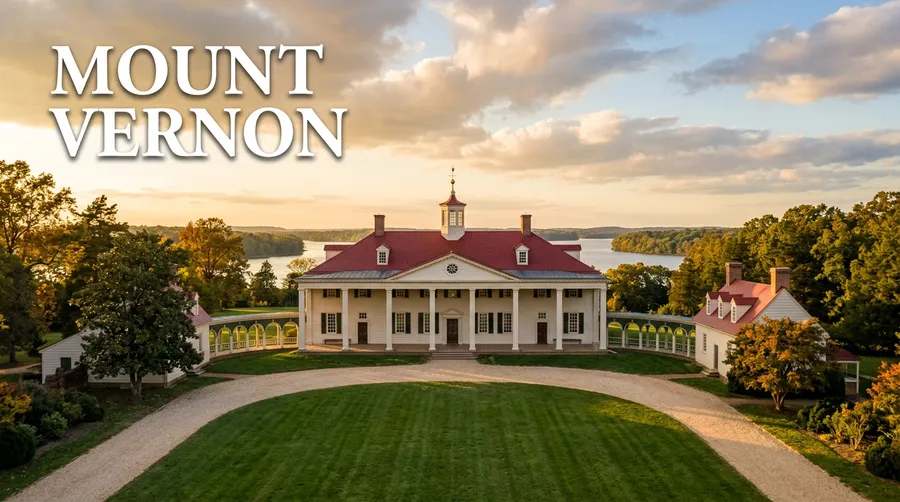
Mount Vernon: Washington's Grand Estate and Its Stark Realities
Journeying to George Washington’s Mount Vernon, nestled majestically along the Potomac, one might expect to encounter only the grandeur of the first president. And indeed, the estate is breathtakingly beautiful, an architectural marvel built and continuously expanded by Washington himself from 1734. Its iconic piazza, overlooking the river, offers a view that almost feels like a physical manifestation of his vision for a nascent nation. Yet, for all its beauty, the site demands a deeper engagement than mere admiration.
What often gets lost in the picturesque postcard views is the sheer scale of the operation, an economic engine powered by human bondage. The museum has made significant strides in recent years to tell the stories of the enslaved people who made Mount Vernon possible, moving beyond a sanitized narrative to confront the uncomfortable truths of Washington's life. This ongoing effort, to me, is what makes a visit truly profound – it’s not just about celebrating the father of our country, but wrestling with the complexities of his era.
Consider the profound weight of Washington’s final days, recounted vividly within these walls. On December 14, 1799, following a brief, brutal illness, he passed away right here. He’d ridden horseback in harsh winter weather, contracted a severe throat infection, likely acute epiglottitis, and despite the best efforts of physicians, succumbed at age 67. Standing in his actual bedchamber, knowing this detailed history, transforms a static room into a deeply emotional space, a stark reminder of human vulnerability even for the most powerful among us.
Practical advice for Mount Vernon: The adult admission fee of $28 might seem steep, but it funds extensive preservation and educational programs. If you want to avoid feeling like a sardine in a can, target a weekday morning during the shoulder seasons—late April or early October—and aim to arrive right when they open. The estate can feel overrun during summer weekends or major holidays, detracting from any contemplative experience. Parking, while plentiful, can require a bit of a walk.
Monticello's Contradictions: Jefferson's Genius and Its Shadow
Few places in America embody intellectual brilliance and profound moral paradox quite like Monticello, Thomas Jefferson’s architectural masterpiece near Charlottesville, Virginia. Begun in 1768, the house itself is a testament to Jefferson’s insatiable curiosity and innovative spirit, reflecting his polymath mind in every ingenious gadget and carefully curated book. You see the mind of the Declaration’s author, a man who believed in self-evident truths and liberty for all, laid bare in brick and design.
The famous reunion here on November 4, 1824, between the aging Jefferson and the Marquis de Lafayette, is a moment etched into historical memory, and the guides often paint a heartwarming picture. Picture it: over 200 friends and neighbors gathered, the 81-year-old Jefferson and the aged Lafayette quickening their steps into a shuffling run, embracing with tears. This human connection, between two revolutionary companions, resonates deeply, underscoring the enduring friendships forged during the crucible of nation-building.
However, Monticello offers a powerful lesson in historical reckoning. For years, narratives of Jefferson’s life here glossed over, or outright ignored, the central role of slavery and the story of Sally Hemings. Today, the museum has courageously begun to integrate these vital, uncomfortable histories, showcasing the lives of the enslaved community and acknowledging the complex relationship between Jefferson and Hemings. This isn't just an addition; it's a critical reframing that challenges visitors to confront the full, messy truth of the past. If you visit solely for the architectural splendor, you'll miss the most crucial, evolving narrative this site offers.
An adult admission price of $42 is among the highest for these sites, prompting visitors to ask, "Is it worth it?" I say yes, but with a caveat: choose your tour carefully. Many tours now specifically address the enslaved community's history, and these are, in my opinion, the most vital. Arrive early for your timed tour slot, especially during peak summer months or fall foliage season, as the crowds can be immense and parking lots fill up quickly.
The Hermitage: Andrew Jackson's Legacy, Marked by Loss
Traveling to Nashville, Tennessee, one encounters The Hermitage, Andrew Jackson’s beloved home. Original construction on the brick mansion began in 1819, later expanded between 1831-1836 to include its iconic wings and columned portico. This site often presents a different kind of historical experience than the intellectual pursuits of a Jefferson or Madison; it’s more about raw emotion, political populism, and profound personal tragedy.
The story of Jackson’s wife, Rachel Donelson Jackson, and her sudden death at The Hermitage on December 22, 1828, just weeks before Jackson's presidential inauguration, is intensely moving. She had endured relentless personal attacks during the brutal 1828 campaign, questions raised about a previous marriage, which Jackson fiercely believed contributed to her declining health and ultimate demise. The guides convey the depth of Jackson’s grief—how he refused to leave her side, holding her body for hours, desperately hoping she might revive. Rachel was buried in the ornamental garden she so cherished, a garden you can still walk through today. This palpable sense of loss elevates The Hermitage beyond a mere display of presidential artifacts; it’s a monument to a man's heartbroken devotion.
While Jackson's legacy is, rightly, debated and scrutinized for his treatment of Native Americans and his slaveholding, The Hermitage offers an unfiltered glimpse into the personal life of a deeply complex individual. It humanizes him in a way political biographies often cannot. The landscape, less formal than some other estates, feels more connected to the working plantation it once was.
Admission to The Hermitage ranges significantly, from $19 to $50, depending on the tour package you choose. I recommend opting for a package that includes both the mansion and the grounds, perhaps even an audio tour, to fully grasp the different facets of plantation life. Unlike some of the East Coast sites, The Hermitage feels a bit more spread out, and while busy, rarely reaches the same frenetic energy of a Monticello or Mount Vernon during peak season. Consider visiting on a spring or autumn afternoon for comfortable exploration.
Montpelier: Madison's Sanctuary of Constitutional Thought
Venturing into Virginia's Piedmont region, you’ll discover James Madison’s Montpelier, a site that, for me, often feels overlooked but offers some of the most profound insights into the foundational ideas of American democracy. The original house, completed around 1760-1764 by Madison Sr., was where young James Madison spent his formative years, and it was in these very rooms that he would later conceptualize and refine the foundational arguments for the U.S. Constitution, his greatest intellectual contribution. This place isn't just a home; it's the intellectual incubator for American governance.
What sets Montpelier apart is its deliberate focus on presenting a comprehensive, unflinching history. While Madison is celebrated as the primary architect of the Constitution, the museum also dedicates significant attention to the enslaved community that labored here, and their descendants are actively involved in interpreting the site. This collaborative approach ensures a more authentic and inclusive narrative, challenging the traditional "great man" history by presenting the full human story behind the nation’s founding.
Montpelier also holds a special place in the story of Lafayette’s Farewell Tour. On November 15, 2024, the site commemorated the 200th anniversary of the Marquis de Lafayette's visit, a recreation that highlighted the enduring bonds of the Revolutionary generation. While perhaps less dramatic than his reunion with Jefferson, Lafayette's visit to Madison underscored the quiet intellectual fraternity that underpinned their shared ideals.
Admission to Montpelier ranges from $13-22 for property passes, with house tours specifically costing $22. I strongly advocate for the house tour; it’s where the expert guides bring Madison’s intellectual process to life. Parking is ample, and the site tends to be less crowded than its more famous Virginian counterparts. This means you can often enjoy a more intimate, reflective experience. Plan for a full half-day to explore the mansion, gardens, and the powerful exhibits dedicated to the enslaved community.
Adams National Historical Park: A New England Dynasty's Enduring Will
Finally, we arrive in Quincy, Massachusetts, at what is now Adams National Historical Park, home to Peacefield, the residence purchased by John and Abigail Adams in 1788 (the original house dates to 1731). This site provides a stark geographical and atmospheric contrast to the sprawling Southern plantations, offering a glimpse into a New England intellectual dynasty that shaped the very character of American leadership. It’s less about agricultural enterprise and more about relentless public service and formidable intellect.
The most astonishing historical incident tied to this site is the dual passing of John Adams and Thomas Jefferson. On July 4, 1826—the fiftieth anniversary of the Declaration of Independence—John Adams died at Peacefield at age 90. In a remarkable, almost unbelievable, coincidence, Thomas Jefferson also died at Monticello on that very same day. This extraordinary synchronicity, linking the deaths of two revolutionary giants, underscores the powerful, almost mythical, narrative of the founding generation. The park does an excellent job of conveying this profound symbolism.
What truly resonated with me here was not just the Adams family's political contributions but their sheer tenacity and intellectual rigor, evident in the thousands of books in their Stone Library. This is a place where ideas were debated fiercely, letters exchanged prolifically, and a legacy of civic duty passed down through generations. It is a testament to the power of family in shaping the nation's destiny.
Adult admission to Adams National Historical Park costs $15 per person, with children 15 and under entering free—a very reasonable price for the depth of history offered. Unlike the more self-contained Southern estates, Peacefield is part of a larger historical park that includes other Adams family properties within Quincy. Therefore, plan for transportation between sites or be prepared for a substantial walk. Arriving in the late morning on a clear spring day provides the best experience, allowing you to explore the gardens and grounds in comfort before heading inside. Expect robust crowds during New England’s vibrant fall foliage season.
These homes aren't just remnants of the past; they are living testaments to the complex, often contradictory, human beings who shaped a nation. Visiting them offers an opportunity not just to learn facts, but to grapple with the profound questions of leadership, legacy, and the enduring struggle for American ideals. Go, and let these walls tell you more than any textbook ever could.
Famous Homes, Estates, and Public Houses
Track preserved homes, estates, and place-based biographies tied to real addresses and public sites.
Explore America's Preserved Homes: Your Guide to Historic House Museums
What are the most popular historical house museums to visit in the United States?
Top destinations include the Biltmore Estate in Asheville, North Carolina (America's largest private home with 250 rooms), Monticello in Charlottesville, Virginia (Thomas Jefferson's estate), Winchester Mystery House in San Jose, California, and the Harriet Tubman Home in Auburn, New York. The House of the Seven Gables in Salem, Massachusetts is also highly recommended for its period architecture and furnishings.
What are typical admission prices for historical house museums?
Admission fees vary widely; general adult tickets typically range from $10-$20, with seniors and military discounts often available at $8-$18, students at $5-$15, and children under 4-6 usually free. Group rates of $10-$12 per person are common for groups of 10 or more with advance reservations.
What are the standard hours of operation for house museums?
Most house museums operate Tuesday through Sunday, 10am-5pm, with some open daily. Many offer guided tours on the hour, and some close between 3:30-4:00pm for last entry. It's recommended to check individual museum websites for exact hours as they vary by location and season.
What can I expect to see inside a historical house museum?
House museums showcase original furnishings, decorative arts including ceramics, glass, metalwork, and textiles, period-appropriate artwork, and artifacts that reflect daily life from the home's era. Many display original collections of furniture, paintings, and objects that belonged to residents, offering intimate glimpses into the people who lived there.
Are historical house museums accessible for visitors with mobility limitations?
Many house museums have made accessibility improvements including wheelchair-accessible entrances, elevators for multi-level buildings, accessible restrooms, and rest areas. However, some historic buildings have limited interior accessibility due to preservation requirements, and alternative options like audio-visual materials are sometimes offered.
Should I book a guided tour or explore on my own?
Both options are valuable; guided tours provide expert interpretation, historical context, and immediate answers to questions about decorative arts and room uses, while self-guided tours allow you to explore at your own pace without time constraints. Many museums offer both options, allowing visitors to choose based on their preferences and schedule.
What is the typical photography policy at house museums?
Policies vary by location; most allow non-flash, personal photography in designated outdoor areas and common spaces, while prohibiting commercial, promotional, or professional photography without advance written permission. Some restrict interior photography to preserve collections and visitor experience.
What is the best time of year to visit historical house museums?
Fall (September-November) and spring (April-May) offer pleasant weather and moderate crowds. Summer can be busy, while winter months (January-March) typically see fewer visitors and offer a more intimate experience. Weekdays are less crowded than weekends year-round.
Can I arrange group or school tours at house museums?
Yes, most house museums offer group tours for 10 or more people with advance reservations, typically costing $3-$12 per person for school groups. Many provide customizable, educational programs lasting 1-1.5 hours tailored to specific grade levels or learning objectives, with teacher chaperones often admitted free.
What should I know before visiting a historical house museum?
Research the museum's history, check hours and admission prices on their website, understand photography and food policies, dress comfortably for walking, bring water, arrive early to allow time to explore, and consider reading about the historical period or residents beforehand to enhance your appreciation.
Do house museums have gift shops and dining facilities?
Many historical house museums feature on-site gift shops selling historical publications, replicas, and memorabilia. Some offer cafés serving coffee, pastries, sandwiches, and light meals, while others may only have vending options. It's wise to check individual museum websites to confirm amenities before visiting.
Are historical house museums suitable for families with young children?
Yes, many offer family-friendly programs and children's tours designed for younger visitors. Some museums provide interactive exhibits, scavenger hunts, and age-appropriate programming. Children under 4-6 are typically admitted free, and many museums encourage family participation though supervised behavior is expected in historic spaces.
How long does a typical visit to a house museum take?
Most visits last 1-2 hours depending on the house size and whether you take a guided tour or explore independently. Guided tours typically run 45 minutes to 1 hour, while self-guided exploration allows flexible timing. Plan 2-3 hours if including lunch or gift shop browsing.
Are there any free admission days or discounts for historical house museums?
National Park Service historic sites offer free entrance days throughout the year (though reservation fees may apply). Some museums offer discounts for military, seniors, and students. Additionally, many provide membership programs that offer unlimited visits and special member benefits at discounted rates.
Why This Page Exists
Maison builds place guides to help readers plan a real visit or understand a real site. When a page makes present-day access, booking, or visitor claims, those details are revised against public-facing source material and editorial review. For the wider standards behind that work, see methodology.
The Cornerstone Brief
One historic place, once a week — what it is, why it matters, whether it's worth going. No filler, no paid placements.
Coming soon. Unsubscribe any time.
We use cookies to enhance your experience. By continuing to visit this site you agree to our use of cookies.