Architecture Styles

Unearthing French Colonial Gems Across America

Find Nearby Hotels

Book Flights

When most people think of French influence in the United States, their minds immediately conjure images of wrought-iron balconies and beignets in New Orleans. And while the Crescent City undoubtedly holds a significant portion of that legacy, to confine the story there is to miss a much broader, richer tapestry woven across the American landscape. As someone who has spent decades tracing these threads, I can tell you that French colonial architecture isn't just a style; it's a testament to audacious dreams, brutal realities, and an enduring cultural imprint often overlooked by the casual tourist. What truly defines French colonial architecture in America, particularly in the humid climes of the Lower Mississippi Valley, is its ingenious adaptation to environment and available materials. You'll often encounter the distinctive *

briquette-entre-poteaux

* construction, literally "brick-between-posts," where a sturdy timber frame is filled with a mixture of brick and mortar, or

bousillage

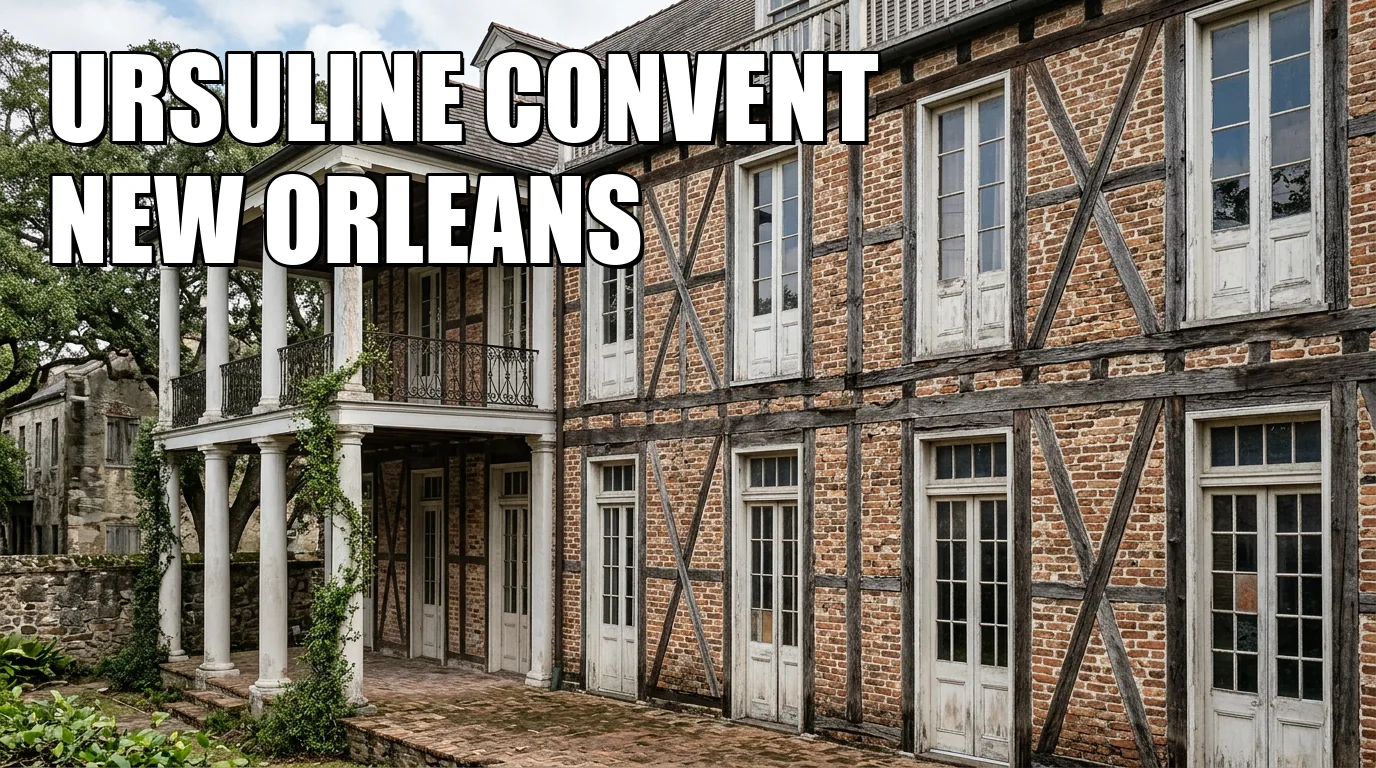
—a fascinating amalgam of mud, Spanish moss, and animal hair. This method, often hidden behind later stucco, provided excellent insulation and structural integrity against the fierce storms and relentless sun. Raised basements, deep galleries (porches), and tall, narrow windows were not mere aesthetic choices; they were pragmatic solutions for floodwaters, ventilation, and light in a pre-air conditioning world. These structures speak volumes about the ingenuity of their builders, many of whom were enslaved craftspeople whose skills shaped the very landscape.

The Ursuline Convent: New Orleans' Indomitable Spirit

Stepping onto the grounds of the Ursuline Convent in New Orleans, you're not just visiting an old building; you're touching a piece of the city's very soul. Constructed between 1745 and 1752, it stands as the oldest surviving French colonial building in the United States. Its quiet dignity belies a history of remarkable resilience, a narrative far more dramatic than any textbook could convey. I remember my first visit, how the sheer permanence of the structure, amidst the ephemeral buzz of the French Quarter, felt almost defiant. This isn’t merely an architectural marvel; it’s a site imbued with supernatural fortitude, or at least, a captivating tale of divine intervention. During the Great New Orleans Fire of 1788, which ravaged an astonishing 856 of the city's 1,100 structures, the convent miraculously escaped the inferno. Local lore, enthusiastically recounted by guides and echoed in historical accounts, suggests that as flames consumed the city, the Ursuline nuns and frightened residents gathered in the chapel, praying to Our Lady of Prompt Succor. Moments later, the wind abruptly shifted, diverting the fire's deadly path away from the convent. This isn't just a charming story; it's a crucial part of the city's self-identity, a testament to faith and survival against overwhelming odds. The convent’s significance deepened in 1815 when General Andrew Jackson sought the nuns' prayers before the Battle of New Orleans, securing victory shortly thereafter. Visitors often rush through, captivated by the fire story, but take a moment to absorb the quiet reverence of the chapel – it’s a space that has witnessed centuries of profound human experience.

Parlange Plantation: Where Charm Disarmed War

Heading west from New Orleans into Pointe Coupee Parish, the Parlange Plantation House offers a starkly different, yet equally compelling, narrative of French colonial survival. While some records dispute its exact construction date, placing it around 1835, strong evidence points to an earlier origin circa 1750, possibly with modifications over time. What makes Parlange particularly fascinating is its pure, unadulterated French Creole design – a raised cottage with a double-hipped roof and extensive galleries, almost a perfect prototype of the style adapted for the Louisiana climate. Most plantation tours focus on the opulent lifestyles of their owners, but Parlange tells a more nuanced story, one of cunning and survival. During the American Civil War, this grand home miraculously avoided the widespread destruction that befell so many Southern estates. How did it manage this feat? The widowed owner, Virginie de Ternant, a woman of formidable grace and diplomatic skill, quite literally charmed Union General Nathaniel Banks and his officers into sparing her property in 1864. She hosted a lavish banquet, allowing the general to sleep in her house while his troops camped in her formal gardens. This strategic hospitality so impressed the Union commanders that they designated Parlange as their headquarters, preserving it. Later, she extended the same courtesy to Confederate General Richard Taylor, making it one of the very few plantations to emerge from the war virtually unscathed. This is a story about human agency and unexpected power dynamics, a refreshing departure from the typical narrative of military might. Visiting Parlange often requires pre-arranged tours, making it a less spontaneous stop than some, but the intimate, personal scale of the experience is well worth the planning.

Destrehan Plantation: A Site of Both Grandeur and Rebellion

A visit to Destrehan Plantation, located just upriver from New Orleans in St. Charles Parish, reveals another layer of the French colonial story, one that intertwines wealth, enslaved labor, and the stirring echoes of resistance. Built between 1787 and 1790, it holds the distinction of being the oldest documented plantation home in the lower Mississippi River Valley. The original construction contract, preserved in the St. Charles Parish Courthouse, credits Charles Paquet, a free man of color, as the carpenter, woodworker, and mason. This detail alone challenges simplistic views of colonial society, highlighting the complex roles and skills of individuals often marginalized in historical narratives. However, Destrehan’s most profound historical resonance stems from its proximity to the 1811 German Coast Slave Revolt, a moment of extraordinary courage and tragedy. On January 8, 1811, roughly 500 enslaved men and women launched one of the largest and most organized slave rebellions in American history. They marched from a neighboring plantation toward New Orleans, passing perilously close to Destrehan. The plantation today doesn’t shy away from this painful past, offering tours that acknowledge the brutality of slavery and the bravery of those who fought against it. This isn't a comfortable history, nor should it be. It's a vital, often difficult, counterpoint to the romanticized visions of antebellum life and forces visitors to grapple with the true human cost of colonial prosperity. While beautiful, the site serves as a powerful reminder that history is never one-sided; it's a tapestry woven with threads of triumph and profound suffering. Be prepared for a thought-provoking, rather than merely picturesque, experience.

Fort de Chartres: A Vanished Empire's Last Stronghold

Leaving the humid embrace of Louisiana, our journey takes us north to the "Illinois Country," where Fort de Chartres stands as a stoic monument to France's fleeting grip on the American interior. The original wooden fort dates to 1720, but the impressive stone structure we see today was built between 1753 and 1756 by François Saucier, the engineer of the Louisiana Colony. This fort isn't just an old military outpost; it was, for a time, the very heart of French power in the Mississippi Valley, a vibrant hub of trade, diplomacy, and defense. What truly elevates Fort de Chartres from a mere ruin to a captivating historical landmark is its role as the last bastion of French colonial power east of the Mississippi River. Following France's crushing defeat in the French and Indian War, the 1763 Treaty of Paris formally transferred the fort to British control. Yet, the transition was far from smooth. French residents, alongside their allies from the Ottawa nation led by the legendary Chief Pontiac, fiercely resisted British occupation. When British soldiers first arrived in April 1765, the Ottawa seized and imprisoned them, forcing a humiliating retreat downriver to New Orleans. It wasn't until October 1765 that Captain Stirling's expedition successfully took possession, formally lowering the French flag and raising the British colors – a poignant, symbolic end to French dominance in a vast territory. The fort's subsequent abandonment by the British in 1772 due to Mississippi River flooding adds another layer of historical irony, demonstrating nature's ultimate indifference to imperial ambitions. This site requires a bit of imagination to fully appreciate, as only remnants of the stone walls stand, but the sheer scale of the reconstructed buildings and the interpretive center help to paint a vivid picture of its past glory. Visit in the spring or fall to avoid the summer heat and the winter chill, and definitely check their schedule for reenactments – they bring the history to life in a way static exhibits cannot.

The Gabriel Peyroux House: A Home on the Move

Returning to New Orleans, specifically the French Quarter, we encounter a piece of architectural ingenuity that challenges the very notion of a permanent address: the Gabriel Peyroux House. Originally constructed around 1777 on Bayou Road, this rare example of *briquette-entre-poteaux* construction boasts one of the most unusual backstories of any colonial dwelling. My first thought upon hearing its tale was, "They did *what*?" It’s a testament to the resourcefulness of the era, and perhaps a touch of eccentricity. Gabriel Peyroux de la Roche Molive, a prominent grain supplier, didn't just build a new townhouse when he wanted to move into the city center in 1781. Instead, he made the audacious decision to have his existing plantation house meticulously dismantled and reconstructed at 901 Burgundy Street. Imagine Maurice Milon, the contractor, carefully removing every piece of

bousillage

, extracting each wooden peg holding the frame together, transporting the entire structure, and then reassembling it, piece by piece, like a giant, historical LEGO set. This wasn't a renovation; it was a relocation of monumental proportions. Such an undertaking speaks volumes about the value placed on these unique timber-frame buildings, and the specialized skills of the craftspeople involved. The house later gained cultural significance as the home of the world's first jazz museum, opened in 1961, featuring artifacts from legends like Louis Armstrong and Jelly Roll Morton. To stand before it today is to consider not just its age, but its journey – a physical migration mirroring the ebb and flow of New Orleans' own vibrant history. When you visit, look closely at the walls; you can almost feel the echoes of the men who carefully took it apart and put it back together, peg by painstaking peg. These five sites are merely a glimpse into the enduring legacy of French colonial architecture in America. They are not simply picturesque relics; they are complex repositories of stories—of survival, resistance, ingenuity, and cultural exchange. Each brick, each beam, each preserved contract offers a deeper understanding of a period often simplified in textbooks. So, next time you plan a trip, look beyond the obvious. Seek out these testaments to a vanished empire, and discover the rich, often surprising, narratives that continue to resonate through their walls. You might just find yourself, as I have countless times, seeing the familiar landscape of America with completely new eyes.

Exploring French Colonial Architecture Across America: A Traveler's Guide

What is the best French colonial architecture guide for visiting the United States?
Start with New Orleans' French Quarter, which features the most intact French colonial architecture, including the Ursuline Convent (1745) and St. Louis Cathedral (1794). For additional resources, visit the French Colonial America museum campus in Ste. Genevieve, Missouri, and use architectural walking tour guides available through local tourism boards.
Where can I see the best French colonial architecture in the United States?
New Orleans, Louisiana is the premier destination, followed by Ste. Genevieve, Missouri (which has the largest concentration in North America), and Fort de Chartres near Prairie du Rocher, Illinois. These locations preserve authentic examples from the 18th century.
What are the key characteristics of French colonial architecture?
French colonial buildings feature steeply pitched hipped roofs with wide overhangs, thick stucco-covered walls, half-timbered construction (poteaux-sur-solle), large windows, symmetrical facades, wrap-around galleries, and ornate wrought iron details. Deep porches and enclosed courtyards are also common design elements adapted to local climates.
What is the difference between French colonial and Creole architecture?
French colonial refers to authentic buildings constructed during French rule (1600s-1803), while Creole is an architectural style developed in New Orleans that blends French, Spanish, African, and Caribbean influences. Creole architecture often features colorful painted exteriors, ornate iron balconies, and is distinctly adapted to the subtropical climate.
What is the best time to visit French colonial architecture sites in the United States?
October through May offers the most pleasant weather, with February-May and October-November being ideal. Avoid summer humidity and the crowds during Mardi Gras (January-March) unless you specifically want that experience.
How much does it cost to visit French colonial architecture sites?
Costs vary: St. Louis Cathedral is free with suggested donations; the Cabildo is $11 for adults; the Bolduc House museum is $5 and house tours are $10; Old Ursuline Convent offers affordable admission; walking tours typically range from $25-$50 per person.
How long do French colonial architecture tours typically last?
Most guided architecture walking tours last approximately 2 hours, covering key historic buildings and neighborhoods in areas like New Orleans' French Quarter and Ste. Genevieve.
Can I visit French colonial architecture sites year-round?
Most sites are open year-round, but hours vary by season and location. The Bolduc House is open Monday-Saturday 10am-5pm and Sunday 12pm-5pm; the Ursuline Convent opens daily at 10am; St. Louis Cathedral operates 9:30am-4pm daily.
What should I wear when visiting French colonial architecture?
Wear lightweight, breathable layers of cotton or linen suitable for warm, humid weather; comfortable walking shoes are essential for exploring historic neighborhoods. Bring a light jacket for air-conditioned museums and cooler evenings.
Are French colonial architecture sites wheelchair accessible?
New Orleans is very flat with no uphill walking; RED streetcars have wheelchair lifts; some museums offer accessible entry. Uneven historic cobblestones and narrow doorways may present challenges at older buildings, so inquire ahead.
Can I take photographs at French colonial architecture sites?
Personal photography for private use is generally permitted at most sites; however, professional photography and photo permits may be required at certain museums. Always check specific venue policies before photographing interiors.
What are the most iconic French colonial buildings I should see?
Must-see structures include the Ursuline Convent and St. Louis Cathedral in New Orleans, the Louis Bolduc House in Ste. Genevieve, Fort de Chartres in Illinois, and the Jacques Guibourd House (1806) in Missouri.
Where can I learn about French colonial history and architecture in detail?
The Centre for French Colonial Life in Ste. Genevieve, Missouri operates a museum campus with exhibits and house tours. New Orleans also has the Historic New Orleans Collection and numerous museums dedicated to colonial Louisiana history.
How did the Great Fires of 1788 and 1794 affect French colonial architecture?
These fires destroyed most original French colonial buildings in New Orleans' French Quarter, leading to a shift toward Spanish colonial architecture with brick, stucco, flat roofs, and wrought iron features that were more fire-resistant than earlier wooden structures.
What other French colonial sites exist outside of Louisiana and Missouri?
Fort St. Joseph near Niles, Michigan (established 1691) is an important archaeological site with ongoing preservation efforts; Fort de Chartres in Illinois is a reconstructed stone fort representing French military and administrative presence in North America.