
Unearthing The Other Revolution: A 2025 Southern & Western Guide
The stories we tell ourselves about the American Revolution tend to be, well, a bit narrow, don't they? We focus on Boston, Philadelphia, and the Continental Army, overlooking the complex tapestry of allegiances, conflicts, and outright revolutions that simmered and exploded across a much broader canvas. If you’re like me, constantly searching for the layers beneath the official narrative, then 2025 offers a unique opportunity to journey into what I’ve come to call "The Other American Revolution"—a sprawling, multicultural struggle for land, liberty, and sovereignty that shaped the nascent nation in ways most textbooks barely touch. This isn't just about adding footnotes; it's about fundamentally reshaping our understanding of America's origins.
### Fort Mose: A Sanctuary Forged in Spanish Florida
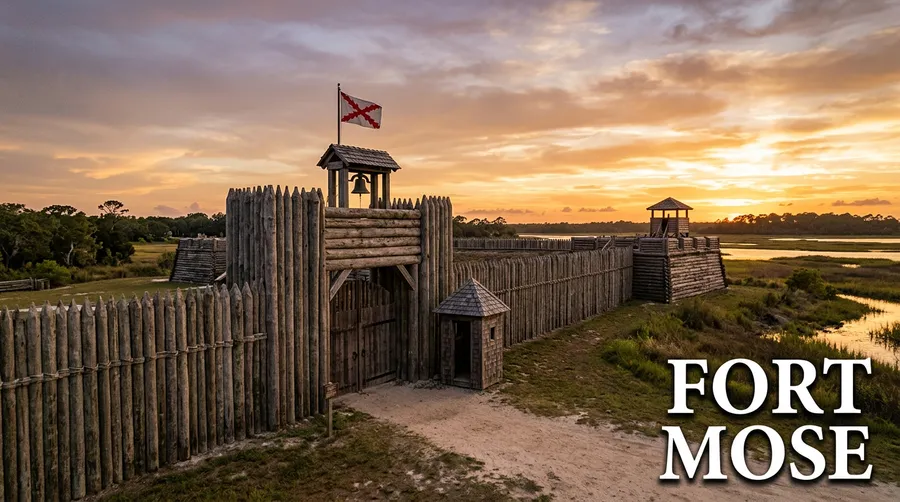
Imagine a place where enslaved people, simply by reaching its gates, found freedom more than a century before the Emancipation Proclamation. That's the powerful, often-bypied legacy of Fort Mose. Located just north of St. Augustine, Florida, Gracia Real de Santa Teresa de Mose, established by the Spanish in 1738, wasn't merely a strategic military outpost; it was the first legally sanctioned free Black community in what would become the United States. It served as a beacon for those escaping British slavery in the Carolinas, a testament to a complex geopolitical game where Spain offered freedom as a strategic tool against its rival.
Many visitors expect a grand, imposing fort, but the true significance lies not in its physical presence—the original structure was a simple palisade, more a village than a fortress—but in its revolutionary idea. The current 40-acre park, with its reconstructed fort and interpretive Flight to Freedom Trail, is undergoing exciting transformations. A significant reconstruction of the 1738 fort is slated for completion in 2025, promising a more tangible sense of place. This means that by the time you visit, you won't just be reading about history; you'll be walking through a physical representation of it.
For a truly immersive experience, mark your calendar for the Fort Mose Founders Day on March 22nd. This event, running from 10 am to 4 pm, will feature militia musters, reenactor ceremonies, and a blessing by Franciscan friars. Crucially, it's also the premiere screening of "The Courageous Women of Mose," finally giving voice to the often-silent strength behind the fort's community. If you prefer a different kind of cultural immersion, the Fort Mose Jazz & Blues Series, running from February 6th to 16th, brings top-tier talent like Snarky Puppy and Macy Gray to the historic grounds, with proceeds directly funding the ongoing fort reconstruction. Arriving early for these events is critical, as parking, while ample, fills quickly, and the sheer volume of attendees can make securing a good viewing spot a challenge. And for those who simply want to witness the newly completed fort replica, guided tours will run from October 5th through November 2nd, starting promptly at 10 am.
### Natchitoches: Where French, Spanish, and Creole Legacies Intersect
Heading west into Louisiana, the town of Natchitoches (pronounced NACK-a-tish) offers a stark contrast to the revolutionary fervor of Fort Mose, yet presents an equally vital narrative of America's early development. As the oldest permanent settlement in the Louisiana Purchase, founded in 1714, Natchitoches is a living museum of French colonial enterprise, Spanish administrative transfers, and, most compellingly, a rich Creole plantation legacy. This isn't just about pretty architecture; it’s about understanding how diverse cultures coexisted, collaborated, and clashed under shifting imperial powers.
What conventional guides often gloss over is the profound influence of the Cane River Creole culture here. This refers to the mixed-race communities of enslaved and free people of color who, over generations, developed a unique language, cuisine, and social structure that defines this region. Long before the United States even existed, Indigenous Caddo people thrived here, their presence predating European colonization by millennia. The Northwestern State University’s Louisiana History Museum and the broader Landmark Historic District actively work to preserve these layered histories, often through partnerships with institutions like the Louisiana State Exhibit Museum for traveling exhibitions.
Don't arrive expecting a simple "Revolutionary War" narrative in the traditional sense; Natchitoches’s contribution lies in its *context* for the South. The National Center for Preservation Technology & Training’s "American Revolution Experience Traveling Exhibition" will be hosted here from November 22, 2025, through January 17, 2026, offering a rare opportunity to explore the Revolution's profound impacts on the Deep South, a story often overshadowed by events in the North. Beyond this special event, daily "Exploring the Cane River Creole Culture" walking tours and museum panels provide a consistently insightful way to engage with the unique heritage of this area. These tours typically involve a fair amount of walking, so comfortable shoes are a must, and booking ahead is recommended, especially on weekends, to secure your spot.
### The Echoes of Resistance at Natchez's Fort Rosalie
South along the Mississippi River, where bluffs rise majestically above the water, lies Natchez, Mississippi. Here, the story of Fort Rosalie (established 1716) isn't about colonial triumph, but rather about a dramatic act of Indigenous resistance. This pivotal French colonial stronghold became the epicenter of the 1729 Natchez Uprising, a desperate and ultimately tragic stand by the Natchez people against forced land cessions and cultural obliteration. This event, often framed as a mere footnote in French colonial history, represents a profound act of self-determination, illuminating the brutal realities of European expansion.
Today, the site of Fort Rosalie is preserved within Natchez National Historical Park, marked by ruins and foundations that invite quiet contemplation rather than grand spectacle. Interpretive signage along the bluffs helps visitors visualize the former fort and grasp the magnitude of the conflict. What makes this site particularly compelling is the ongoing archaeological excavations, constantly unearthing new details about both Native and colonial lifeways. These digs remind us that history isn't static; it's a dynamic, evolving understanding, literally uncovered piece by piece.
For those planning a trip, the Natchez Literary & Cinema Celebration, from March 27th to 29th, 2025, promises a rich immersion. This annual event will include a "Follow the Frenchman through Natchez" Lafayette tour reenactment, a living-history encampment, and scholarly lectures that dissect the complexities of the era. Simultaneously, the Mississippi SAR Annual Meeting (March 27th-30th) will feature panels on Lafayette's farewell tour and grave markings of Revolutionary veterans. These combined events offer a dense, scholarly, yet often surprising, perspective on the region's contribution to the larger American saga, providing context you simply won't get from a standard historical marker. Expect the town to be abuzz with activity during this period, meaning accommodations should be booked well in advance.
### Kentucky's Rough Frontier: Fort Boonesborough's Tumultuous Birth
Shift your gaze now to the rugged frontier of Kentucky, where the American Revolution wasn't fought by disciplined lines of soldiers, but by a hardy mix of English, Scots-Irish, and Indigenous peoples scrambling for survival and territory. Fort Boonesborough State Park, near Richmond, recreates the very essence of this struggle. Founded in 1775 by Daniel Boone's party, this was the westernmost theater of Revolutionary expansion, a place where the lines between settler, scout, and soldier blurred considerably.
What many might envision as a simple pioneer story often overlooks the incredibly complex interactions and often brutal conflicts with the Shawnee, Chickasaw, and Cherokee peoples who considered this their ancestral land. It also often ignores the roles of women and enslaved Africans, whose lives were inextricably woven into the fabric of fort life, facing similar dangers and contributing to its survival. The reconstructed log fort, complete with cabins, blockhouses, and living-history artisans, brings this era to life with a vibrancy that can feel both thrilling and disquieting. The Kentucky River Museum on-site further interprets 19th-century riverine communities, providing a wider context for the area's development.
The 250th Anniversary Celebration on June 7th and 8th, 2025 (9 am to 5 pm), stands as the undisputed highlight for any visit. This event will feature extensive living-history demonstrations, a legislative session reenactment under the "Divine Elm," author talks, and commemorative souvenirs. If you crave intense historical immersion, the Siege of Fort Boonesborough Reenactment, scheduled for September 20th and 21st, is a must-see. This battle re-fight, complete with Native camps and 18th-century crafts, offers a visceral glimpse into the desperate struggles that defined frontier life. Be prepared for crowds during these major events, and know that certain reenactment areas might be muddy depending on recent weather, so appropriate footwear is advised. For a quieter, yet still period-accurate, experience, the 18th-Century Christmas on December 5th and 6th offers period holiday customs, bonfires, and music—a surprisingly intimate look at frontier winter life.
### Kaskaskia: The Western Front's Boldest Stroke
Our final stop takes us further north and west, into the Illinois Country, to Fort Kaskaskia State Historic Site. Here, on July 4, 1778, George Rogers Clark achieved one of the Revolution's most audacious and often-forgotten victories, capturing Kaskaskia without firing a shot. This strategic coup severed British influence west of the Appalachians and made Kaskaskia the first colonial capital secured by American forces in this vast region. This single act dramatically expanded the perceived reach of the nascent United States, giving it a powerful claim to the Western territories.
The story here is not just about American triumph; it's about the complex loyalties of the French-speaking settlers who suddenly found themselves under new rule, and the critical, though often shifting, roles played by Native Allied Potawatomi, Osage, and Illinois confederations. The site itself features a brick memorial housing the 1741 Liberty Bell of the West, cast by Louis XV—a tangible link to the French heritage that defined the town for decades before Clark's arrival. While the original river-town footprint is now largely gone due to shifts in the Mississippi River, an overlook and interpretive trail mark its former location atop the bluffs, allowing you to envision the bustling port town that once stood below.
To truly appreciate the significance of this location, plan your visit around the July 4th Commemoration, which includes a poignant bell-ringing ceremony atop the bluff, marking the exact moment of Clark's capture. This ceremony, while not a massive spectacle, carries immense symbolic weight, resonating with the broader themes of liberty and shifting power. Also of note in 2025 is the premiere of the "Kaskaskia and the Pursuit of a More Perfect Union" video, a statewide engagement program exploring the multicultural legacies from 1703 to the present. The venue is still to be announced, so check local listings closer to the date. While the site is free to enter, amenities are limited, so bringing your own water and snacks is a good idea, especially on hot summer days.
This journey through "The Other American Revolution" isn't a simple history lesson; it's an invitation to confront a more nuanced, often uncomfortable, but ultimately richer understanding of who "we" are as Americans. By stepping away from the well-trodden paths of colonial New England and the Mid-Atlantic, by engaging with the marginalized narratives of Spanish Florida, Creole Louisiana, Indigenous-French Mississippi, and the tumultuous Western frontier, you will gain an entirely new perspective. These sites, with their special 2025 programming, offer a vital context for the upcoming 250th anniversary, pushing us toward a more inclusive and truthful commemoration of our nation’s birth. Prepare to be surprised, to question, and to emerge with a profound appreciation for the diverse forces that truly shaped this revolutionary experiment.
America’s Timeless Treasures: Essential Historic Destinations FAQ
Must see US historical landmarks
The Statue of Liberty, Mount Rushmore, the Alamo, Independence Hall, and Gettysburg National Military Park are unmissable historic landmarks in the USA.
What is the most important landmark in the USA?
The Lincoln Memorial in Washington, D.C., symbolizing national unity and honoring President Abraham Lincoln, is widely regarded as the USA’s most important landmark.
What are the must-see places in the USA?
Boston, Miami, Washington, D.C., Los Angeles, Chicago, San Francisco, and Montana top the list of must-see destinations for 2025.
What is the most historical place in the United States?
Independence Hall in Philadelphia, where the Declaration of Independence and U.S. Constitution were signed in the 18th century.
What are the top 10 historical places to visit in the world?
Angkor Wat, Göbekli Tepe, Machu Picchu, the Great Wall of China, the Pyramids of Giza, the Colosseum, Petra, the Taj Mahal, Chichén Itzá, and the Acropolis.
What is the most famous landmark in Mexico?
Chichén Itzá on the Yucatán Peninsula is Mexico’s most famous landmark and one of the New Seven Wonders.
What is the #1 tourist spot in the world?
The Eiffel Tower in Paris remains the world’s #1 tourist spot, drawing millions of visitors annually.
What is the most beautiful place on Earth?
Banff National Park in Canada, famed for its dramatic Rockies and turquoise lakes, is often cited as Earth’s most beautiful place.
Who is the richest person in the world?
Elon Musk, with an estimated net worth of around $500 billion in 2025.
What is the least visited country in the world?
Tuvalu, a remote Pacific atoll nation that saw just 3,700 visitors in 2023.
What is the best time of year to visit US historical landmarks?
Spring (April–June) and fall (September–October) offer mild weather and fewer crowds at major historic sites.
How much does it cost to visit major US landmarks?
National Park week-long vehicle pass is $35, and the Statue of Liberty ferry plus museum entry starts at $25 per person.
Are reservations required to tour the White House?
Yes, US residents must request a tour through their congressional office at least 21 days in advance.
What accessibility options are available at Mount Rushmore?
Wheelchair-accessible parking and viewing areas are provided, with shuttle service from the Lincoln Borglum Visitor Center.
Can you climb to the top of the Statue of Liberty?
Crown access is available by advance ticket purchase, subject to timed-entry restrictions and security screening.