Architecture Styles

Unearthing Victorian America: A Guide to Grandeur

Stepping into a Victorian-era home in the United States often feels like walking onto a stage set for a grand, sprawling drama. For too long, "Victorian" has been a catch-all, sometimes even a pejorative, for anything old and ornate. But dismiss it at your peril. This period, roughly from 1837 to 1901, unleashed an astonishing diversity of architectural styles, each telling a distinct story of technological advancement, burgeoning wealth, and an almost feverish desire for individual expression. Having traipsed through countless historic districts and dusty archives, I’ve learned that truly appreciating these buildings means understanding the "why" behind their flamboyant flourishes and imposing forms.

Most guidebooks merely point you to the pretty houses, perhaps listing a few features. My goal? To arm you with the insight to look past the obvious, to question the narrative, and to truly *see* the ambition, the occasional folly, and the sheer human effort poured into these structures. We're not just observing bricks and mortar; we're witnessing a pivotal moment in American history etched in wood and stone. Prepare to be surprised by what you find, because the reality often outshines, or at least complicates, the postcard perfect image.

A Whirlwind of Turrets: Deciphering Queen Anne's Extravagance

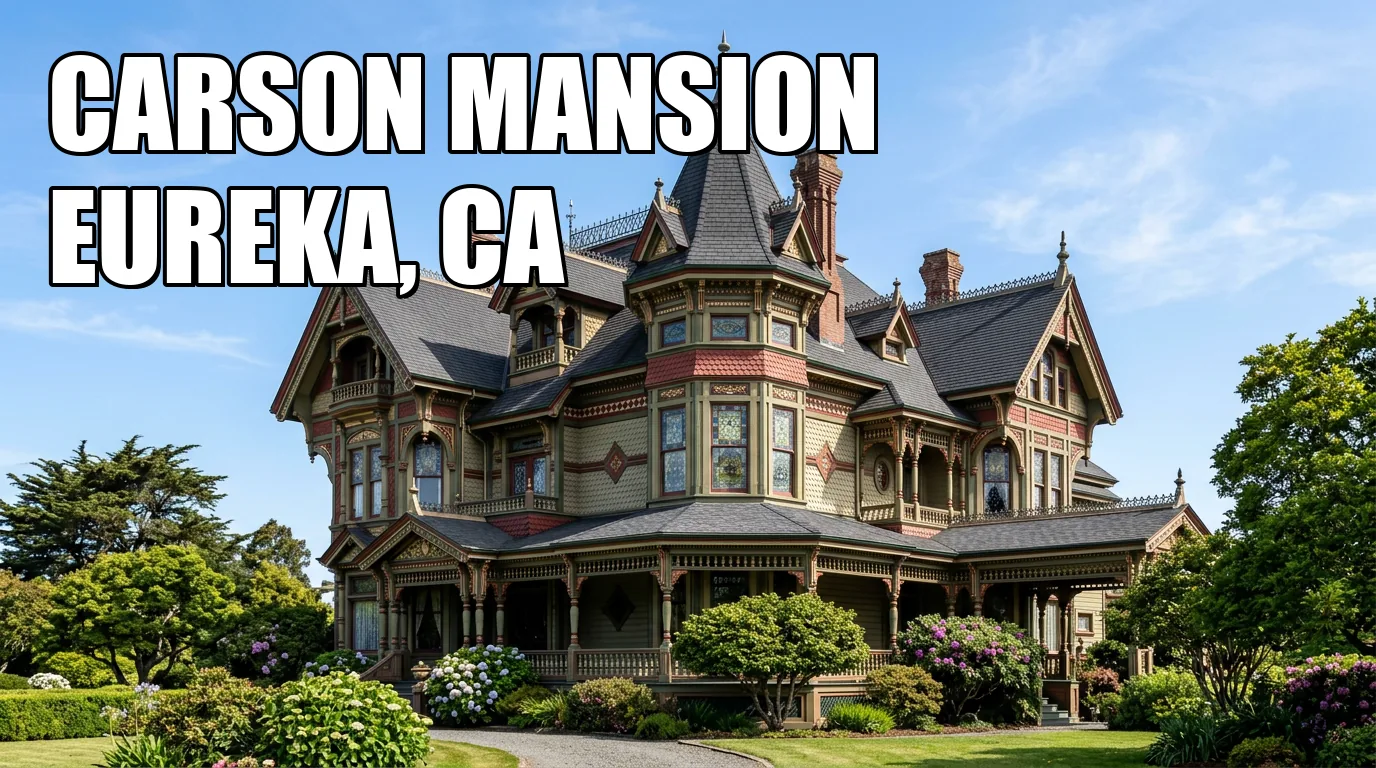
If you've ever envisioned a "classic" Victorian house, odds are you're picturing Queen Anne. This style, exploding onto the American scene in the 1880s, revels in its unapologetic asymmetry and a sheer abundance of decorative elements. It’s the architectural equivalent of a maximalist party, where every surface vies for attention. The undisputed champion, the building that launched a thousand imitations and stands as perhaps the most photographed private residence in America, is none other than the Carson Mansion in Eureka, California. Completed between 1884 and 1886 for lumber baron William Carson, it’s a dizzying masterpiece.

What truly defines this grand dame, setting it apart from its contemporaries, is its almost fantastical array of asymmetrical towers and turrets. These aren't merely decorative; they're the style's defining characteristic, pushing verticality and three-dimensional complexity to their absolute limits. The Carson Mansion also sports a dizzying array of stained glass, elaborate gables, and intricate wooden ornamentation—often referred to as "gingerbread"—that collectively scream exuberance. While many lesser Queen Annes might feel like an overwhelming mishmash, the Newsom brothers, who designed it, somehow managed to orchestrate a symphony of details here, a testament to their skill and Carson's deep pockets. It's a private club now, so admiring it from the street is your only option. Go early on a weekday morning to catch the best light without busloads of tourists, and you’ll see the delicate shadows play across its complex façade, revealing new details with every shift of the sun.

Where the Coast Meets Craftsmanship: The Shingle Style's Quiet Revolution

For those accustomed to Queen Anne's boisterous declarations, the Shingle Style offers a sophisticated, understated counterpoint, a distinct departure from the prevailing Victorian fussiness. Emerging in the 1870s, it’s often seen as a bridge between the Picturesque and the burgeoning Arts and Crafts movement, emphasizing natural materials and a more flowing form. Henry Hobson Richardson's William Watts Sherman House in Newport, Rhode Island, finished in 1876, is widely considered the very prototype of this uniquely American aesthetic, making it an essential pilgrimage for any serious architectural enthusiast.

Unlike the multi-textured complexity of Queen Anne, the Sherman House presents a unified, sculptural appearance. Its defining feature is the continuous wrapping of wooden shingles, often in jigsawn patterns, that clad the upper floors. This isn't just a facade; it’s a skin that unifies the entire structure, creating a seamless, almost organic feel. Below the shingles, you'll often find rusticated pink granite ashlar, stones rough-hewn and laid in distinct courses, grounding the building visually. The home also showcases characteristic elements like steeply gabled rooflines, massive red brick chimneys that assert their presence, and bands of multi-paned windows that hint at the interior's light-filled spaces. Visitors expecting a riot of color might be surprised by its muted palette, but that's precisely the point: it's about form and texture, not overt decoration. While the interior is private, the exterior remains an imposing, yet elegant, spectacle. Parking can be tight on the residential streets, especially during Newport's peak summer season. Aim for spring or fall, and allocate at least an hour to truly absorb its subtle grandeur from various angles.

Beyond Gingerbread: Unpacking Stick-Eastlake's Structural Honesty

Many casually lump all ornate Victorian homes under the "gingerbread" umbrella, but to do so is to miss the fascinating, almost didactic, intentions behind styles like Stick-Eastlake. This particular aesthetic, popular in the 1880s, attempted to express the underlying structural skeleton of the house through decorative means, a sort of proto-modernist transparency. The Thomas F. Ricks House in Eureka, California, built in 1885, stands as an exceptional surviving example, revealing a craftsmanship that challenges any dismissive views of Victorian design.

The style's most arresting characteristic is its vertical stickwork—narrow planks or thin projections applied directly over wall clapboards in a grid-like pattern. This isn't actual structural timber framing, mind you, but it *mimics* exposed timber, creating a visual dialogue between surface and imagined structure. At the Ricks House, these vertical strips interact with horizontal elements, forming intricate patterns within the frieze, the band just below the roofline. Brackets, often ornate, extend from these vertical strips, while narrow belt courses and cornices frame the windows, emphasizing their form. What surprises many is the Ricks House's relative symmetry, a rarity for Stick structures, especially two-story ones in Eureka. Its squared bay windows and remarkably preserved Eastlake-style bedrooms upstairs—named for English furniture designer Charles Eastlake, whose published patterns influenced the architectural ornamentation—offer a deeper dive into the era's aesthetic principles. While private, its presence on a quiet street offers ample opportunity for appreciation; just remember that while these homes appear sturdy, they often hide delicate historical nuances.

Paris in New England? The Imposing Grandeur of Second Empire

Imagine the lavish boulevards of Second Empire Paris transplanted to the leafy lanes of New England, and you begin to grasp the ambition behind this distinctive Victorian style. Popularized after the reign of Napoleon III, it arrived in America around the Civil War, signifying wealth, sophistication, and a cosmopolitan outlook. One of New England's most perfectly preserved examples is the Park-McCullough Historic House in North Bennington, Vermont, a 35-room mansion constructed between 1864 and 1865 for entrepreneur Trenor W. Park.

The defining, unmistakable feature of Second Empire architecture is the mansard roof. This isn't just any roof; it's a dual-pitched marvel with a steep lower slope and a nearly flat upper slope, essentially providing an additional full floor of living space without counting as a "story" in the traditional sense, a clever way to bypass certain building taxes in France. This roof creates the monumental silhouette so characteristic of the style. At the Park-McCullough House, you'll also notice the elegant iron cresting along the roof ridge, heavily bracketed cornices that project dramatically, decorative dormer windows punching through the mansard, and distinct quoins—those decorative masonry blocks at the corners of a building—all speaking to its ornate, French-influenced design. What often goes unmentioned is the sheer scale of such a home, even in a relatively rural setting. It's a statement, certainly, but also a logistical challenge, from heating to upkeep, that visitors rarely consider. The house is typically open for tours from May through October, and during the fall foliage peak (late September to mid-October), the vibrant leaves provide a stunning contrast to its stately exterior. Expect a modest admission fee, but the guided tour offers invaluable insights often missed by self-guided explorations.

Italianate Charm, American Scale: A Look at Victoria Mansion's Opulence

Before the Queen Anne explosion, the Italianate style reigned supreme in mid-19th century America, offering a romantic, picturesque alternative to the more rigid classical forms. Inspired by Renaissance villas, these homes celebrated verticality and a relaxed grandeur. Portland, Maine’s Victoria Mansion, also known as the Morse-Libby House, completed in 1860, is widely regarded as one of the nation's finest and most remarkably unaltered examples. It’s a brownstone villa that truly makes you pause.

The mansion’s most striking feature, the one that immediately draws your eye, is its prominent four-story square tower with intricate detailing. This isn't merely a quaint addition; it’s the visual focal point, a bold assertion of the Italianate style’s emphasis on vertical forms and architectural prominence, creating a dramatic silhouette against the sky. Further distinguishing it are elements like its asymmetrical design, the characteristic overhanging eaves supported by ornamental brackets—which you see absolutely everywhere on this house—and its numerous arched windows, often with elaborate decorative moldings. However, what sets Victoria Mansion apart from its peers and makes a visit truly indispensable are its interiors. Crafted by the celebrated designer Gustave Herter, they boast extraordinary detail: intricate wall paintings, carved marble fireplaces, and a dramatic flying staircase that seems to defy gravity. Many Italianate homes have been renovated into blandness, but here, the original vision largely endures. Schedule your visit during the shoulder seasons—late spring or early autumn—to avoid the summer crowds, especially if you want to linger and appreciate Herter's exquisite craftsmanship without feeling rushed. Tickets are timed, so booking online ahead of time is highly recommended.

Mark Twain's Masterpiece: Gothic Revival's Literary Flair

When most people think of Gothic Revival, grand cathedrals or universities come to mind, not necessarily the whimsical home of America's greatest humorist. Yet, the Mark Twain House in Hartford, Connecticut, completed in 1874 and designed by Edward Tuckerman Potter, is a quintessential, albeit idiosyncratic, example of residential Gothic Revival. This is where Samuel Clemens penned some of his most enduring works, including "The Adventures of Huckleberry Finn," imbuing the very walls with literary history.

The defining decorative feature of this house, and indeed of residential Gothic Revival, are its steeply pitched gables and the elaborate bargeboards that adorn them. These aren't just simple trim; they are carved or cut wooden elements, often in picturesque patterns, that evoke medieval Gothic ornamentation. The Twain House amplifies this with its flamboyant patterns of black and vermilion brick—a striking and somewhat unconventional color choice for the time, though entirely in keeping with Twain's own flamboyant personality. Sweeping roof cornices, decorative finials—those ornamental elements at the apex of gables—and a host of other ornate architectural details contribute to an asymmetrical, picturesque silhouette. What’s often missed is how this house, despite its European roots, feels distinctly American in its execution, blending traditional forms with a sort of playful, almost experimental spirit. It's not a cold, austere Gothic; it's a warm, inviting, and highly personalized Gothic. The house is a museum, open year-round with varying hours, so check their website. Timed entry tours are standard, and I strongly advise booking your spot weeks in advance, particularly if you're planning a weekend visit or during school breaks. The adjacent Harriet Beecher Stowe Center can also be visited on the same trip, offering a fascinating dual perspective on literary and architectural history of the era.

These magnificent structures aren't just relics of a bygone era; they're vibrant classrooms, offering glimpses into the lives, ambitions, and artistic sensibilities of the people who commissioned and built them. Each twist of a turret, every meticulously laid shingle, and the proud assertion of a mansard roof tells a story far richer than any static photograph could convey. Go beyond the superficial; look closer, ask questions, and you'll find that Victorian America, in all its exuberant complexity, still has plenty to teach us.

Discover the Elegance: Your Complete Guide to Victorian Architecture

What is Victorian architecture history?
Victorian architecture emerged during Queen Victoria's reign (1837-1901) in Great Britain and became known for highly decorative, ornate styles including Gothic Revival, Queen Anne, Romanesque Revival, and Stick-Eastlake. In America, approximately 40,000 Victorian homes were built in San Francisco alone between 1850 and 1900, with the style becoming widespread throughout the country.
What is Victorian architecture inspired by?
Victorian architecture drew inspiration from medieval prototypes, Greek Revival, Gothic Revival, Italianate styles, and historic architectural precedents, creating an eclectic mix rather than pure replicas of earlier buildings. It reflected an era of growth and technological advancement through factory-built components and balloon framing techniques that allowed for more complex and decorative structures.
What are the 5 features of the Victorian era?
Key features include ornate decorative detailing (such as stained glass and ornamental trim), asymmetrical facades, steep roof pitches with complex gables, colorful exterior paint schemes, and elaborate bay windows. These elements combined to create the distinctive miniature castle-like appearance that characterizes Victorian homes.
What is the difference between Edwardian and Victorian architecture?
Edwardian architecture (1901-1910) is simpler, more elegant, and far less ornate than Victorian style, featuring streamlined designs with classical influences like columns and cornices. Victorian architecture, by contrast, is known for elaborate ornamentation, ornate details, and decorative complexity.
Where was Victorian architecture most commonly used?
In the United States, Victorian architecture was primarily used in industrial cities and urban areas, particularly in the Northeast and Midwest where it housed workers and wealthy families alike. Major concentrations appeared in cities like San Francisco, New York, Boston, and throughout industrial regions where the expanding railroad system allowed architectural components to be transported efficiently.
What makes Victorian architecture unique?
Victorian architecture stands out for its intricate ornamentation, asymmetrical and complex forms, eclectic mix of historical styles, vibrant color schemes, and elaborate decorative elements applied to create distinctly individual structures. Each Victorian home often combines elements from multiple architectural movements into a unique design that reflects both the owner's wealth and the era's aesthetic innovations.
Which country has the most Victorian houses?
The United Kingdom has the most Victorian houses in the world, with over a quarter of the British population living in Victorian homes built during Queen Victoria's reign. More than six million Victorian homes were constructed in Britain between 1837 and 1901, and the majority still stand today.
Where was the Victorian era most prominent?
The Victorian era was most prominent in Great Britain and the British Empire, particularly in England where it emerged following the Industrial Revolution. As British architects emigrated, Victorian architectural styles spread to former British colonies including Canada, Australia, New Zealand, and the United States.
When were Victorian houses most popular?
Victorian houses were most popular in the United States from the 1880s until around 1920, representing the height of American home building during the Victorian period. This era coincided with significant economic growth, industrial expansion, and urbanization across the country.
Is Victorian architecture still relevant today?
Yes, Victorian architecture remains highly relevant and is experiencing renewed interest in 2025, with homeowners drawn to maximalism and Grandmillennial design trends that embrace Victorian aesthetics. Modern Victorian homes blend historic architectural elements with contemporary features like energy efficiency, open floor plans, and sustainable materials.
Where can I see Victorian architecture in the United States?
Old Louisville in Kentucky has the highest concentration of restored Victorian homes in the US with 48 city blocks of Victorian mansions. Other notable areas include San Francisco's famous Painted Ladies, Savannah's 50-block Victorian District, Charleston's historic homes, and Port Townsend in Washington.
What are the best Victorian towns to visit?
Top destinations include Ferndale, California; Cape May, New Jersey; Savannah, Georgia; Charleston, South Carolina; and Portland, Maine. These towns feature well-preserved Victorian districts with guided tours, museums, and historic home tours available throughout the year.
How much does it cost to tour Victorian houses?
Admission fees typically range from $8-$20 per person for museum house tours, with group discounts available. Guided walking tours range from $15-$50 per person depending on duration and inclusions, while self-guided tours of historic districts are generally free.
What are the most famous Victorian houses in America?
Iconic Victorian homes include the Painted Ladies in San Francisco, the 1879 Emlen Physick Estate in Cape May, the Glessner House in Chicago, and the Biltmore Estate in Asheville, North Carolina. Many of these are now museums offering public tours and educational programs year-round.
What makes the Painted Ladies of San Francisco special?
The Painted Ladies are a row of seven connected Queen Anne Victorian houses built in 1892 that survived the devastating 1906 earthquake and fire, each painted in different colors to enhance their architectural details. Located at Alamo Square, they are iconic symbols of San Francisco and among the most photographed Victorian structures in America.