
Unlocking America’s Grand Estates: 2025’s Essential Mansion Guide
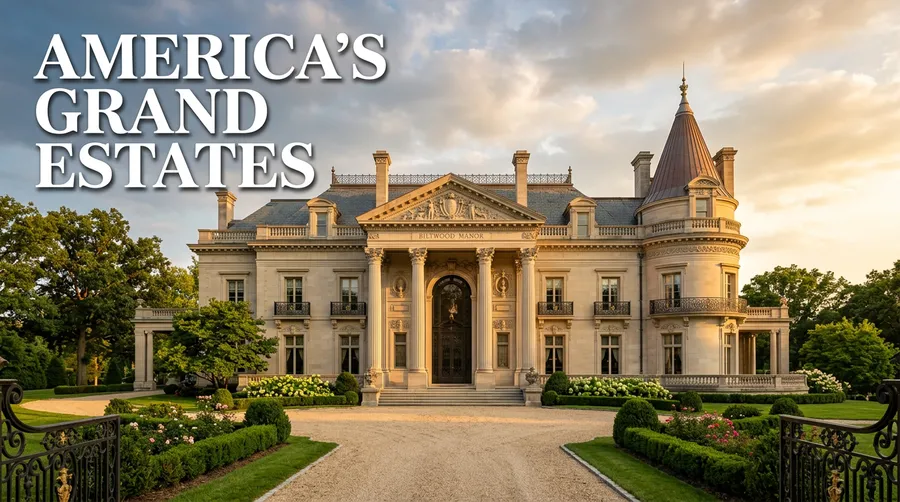
When I tell people I study historic mansions, I often see eyes glaze over. They imagine endless rooms filled with dusty furniture, or perhaps a superficial tour highlighting only the wealth. But for the serious architecture enthusiast, the American mansion is so much more: it’s a living document, an architectural fossil revealing the very strata of our nation’s economic ambition, social structures, and, increasingly, its uncomfortable truths. In 2025, a trio of exceptional estates across the country isn't just showcasing their grandeur; they're actively inviting visitors to engage with their complex narratives in fresh, insightful ways.
What makes these particular sites stand out this year? It’s not simply about admiring ornate plasterwork, though there’s plenty of that. Rather, it’s their commitment to critical interpretation, unique access, and a willingness to challenge the rose-tinted views that often accompany such monumental displays of wealth. We're moving past mere adoration of opulence into a more robust, honest historical conversation—a crucial shift for any truly enriching travel experience.
### The Breakers: Peering Behind Newport's Gilded Curtain
If you’ve ever imagined the apex of Gilded Age excess, you’ve likely pictured something akin to The Breakers in Newport, Rhode Island. Commissioned by Cornelius Vanderbilt II and completed in 1895, this 70-room marble palace designed by Richard Morris Hunt embodies the full thrust of Beaux-Arts architecture—a style characterized by classical grandeur, strict symmetry, and elaborate ornamentation, all intended to project immense power and prestige. Its ocean-facing *piano nobile* rooms, the principal floor of a large house, truly blur the line between interior splendor and the vast Atlantic, creating an effect of boundless, almost defiant luxury. Yet, what often goes unsaid in typical guides is the human cost behind such magnificent displays.
For years, the narrative at Newport’s mansions felt, to me, a little too sanitized. It focused on the Vanderbilts, the Astors, the sheer scale of their fortunes. Now, in 2025, tours at The Breakers are refreshingly explicit, foregrounding the reliance on immigrant craftsmen—the masons, carvers, and plasterers whose skilled hands literally built this dream—and discussing the era's stark wealth disparities. The updated audio-guide scripts delve into labor conditions and the rigid social hierarchies of the Gilded Age, giving context to the "millionaire's playground" by showing that not everyone was playing. This nuanced approach prevents the estate from feeling like an uncritical ode to excess and instead transforms it into a powerful educational tool.
Visitors consistently rave about The Breakers, often citing it as the highlight of their Newport experience, with the popular trolley-plus-mansion package earning high marks. Expect crowds, especially during peak summer months or early autumn; it’s a popular spot for a reason. To truly appreciate its scale and detail, arrive early, ideally right when doors open at 9 AM, especially if you plan to do a self-guided audio tour, allowing you to move at your own pace and absorb the wealth of new interpretive content without feeling rushed.
Perhaps the most compelling reason to plan your visit for 2025 lies in the extraordinary new programming designed for the truly curious. From November 3-18, 2025, between 9 and 11 AM, members can access a limited-capacity "Top-to-Bottom Expert Tour" that grants entry to all three floors, including areas typically closed to the general public. Imagine seeing the servants' quarters or original service corridors, gaining a tangible sense of the "invisible" labor that kept this colossal machine running. Separately, small-group (12-person) tours of the third floor, also focusing on servants' lives, require advance booking, often opening six months ahead. These specific offerings are a game-changer, moving beyond the public-facing grandeur to reveal the full operational reality of a Gilded Age estate. Keep an eye on the Newport Mansions website for exact booking dates and don't hesitate: these sell out fast.
### Stanton Hall: Unpacking the Southern Belle's Complex Legacy
Venturing south to Natchez, Mississippi, we encounter a very different kind of grandeur at Stanton Hall, an antebellum masterpiece completed in 1857. This monumental Greek Revival edifice, designed by Thomas Rose, consumes an entire city block, its symmetrical Corinthian portico—a row of columns topped by an elaborate, often fluted capital—dominating the landscape. Step inside, and 17-foot ceilings soar above Italian marble mantels, imported specifically for its palatial parlors. It's an overwhelming display of pre-Civil War Southern wealth, a stark contrast to Newport's coastal opulence but equally powerful in its statement.
The beauty of Stanton Hall, however, cannot be separated from its foundation. I’ve visited many antebellum homes over the years, and the most crucial shift in interpretation—and what makes Stanton Hall particularly resonant in 2025—is its unwavering commitment to confronting the source of its splendor. Tours now explicitly address Dr. Frederick Stanton’s wealth from cotton and slavery, integrating critical discussion of enslaved labor and the Pilgrimage Garden Club’s decades of preservation work. Interactive exhibits in the antebellum kitchen and carriage house don’t just show how things *were*; they detail the lives of both wealthy owners and the enslaved people who built, maintained, and made the estate productive. This isn't just an acknowledgement; it's a deep, deliberate integration that enriches, rather than detracts from, the historical understanding.
Visitors consistently award Stanton Hall high marks, praising its authentic furnishings and the profound knowledge of its guides. The site holds a 4.5 out of 5 Travelers' Choice rating, signifying its excellence. Unlike some grand estates that feel like museums, Stanton Hall retains a palpable sense of its past, inviting a deeper, more personal engagement with its narrative.
For 2025, Stanton Hall is a featured gem during Natchez’s famed Spring Pilgrimage Garden Tour, offering carriage rides past its magnificent gardens paired with lectures on 19th-century landscape design. While the Pilgrimage itself can be a whirlwind of homes and history, this particular pairing promises a thoughtful exploration of the estate’s exterior spaces, which are often overlooked in the rush to see interiors. Furthermore, architecture students will participate in a summer workshop focused on preserving Stanton Hall’s original arched millwork, a testament to the ongoing, meticulous effort required to maintain such an important historical structure. If you happen to be in Natchez during such a workshop, it's worth asking if there are any public viewing opportunities or lectures—sometimes these behind-the-scenes preservation efforts offer unique insights into the physical history of the building.
### Meadow Brook Hall: A Midwestern Fortune Forged in Steel and Style
Our final stop takes us to Rochester, Michigan, for a wholly different chapter in American mansion history: Meadow Brook Hall. Completed in 1929 for Matilda Dodge Wilson, this 88,000 square-foot Tudor-Revival masterpiece by William Kapp reflects the industrial fortunes of the early 20th century. Its half-timbered façades, leaded-glass windows, and intricately carved oak interiors speak to a distinct aesthetic, drawing inspiration from medieval English precedents while scaling them to the immense proportions only possible with automotive wealth. It's less about ostentatious display and more about an enduring, comfortable luxury, a testament to a different kind of American dream.
What surprised me about Meadow Brook Hall on my first visit was the deeply personal story it tells, especially through the lens of Matilda Dodge Wilson. While interpretive materials correctly highlight the Wilson family’s role in the automotive and lumber industries, critically discussing the environmental impacts of early 20th-century resource extraction, new guided tours in 2025 are spotlighting Matilda’s extraordinary legacy in education and the arts. This isn’t just a rich woman’s house; it's a testament to a female philanthropist who shaped institutions and community, challenging the conventional wisdom that such grand estates were solely the domain of men. It’s a powerful narrative of independent wealth used for public good, rather than just private indulgence.
Meadow Brook Hall consistently earns accolades, including TripAdvisor’s 2025 Travelers’ Choice Award, placing it in the top 10% of attractions worldwide. Its 4.7 out of 5 average rating from nearly 300 reviews underscores its consistent quality and visitor satisfaction. The atmosphere here feels lived-in, grand yet welcoming, a refreshing departure from some of the more museum-like estates.
Beyond its daily tours, 2025 brings a roster of captivating events. Mark your calendar for the Gatsby Garden Party on June 5, 2025, a Roaring Twenties-themed evening promising live jazz, croquet, and period attire—a delightful way to step back in time. For those who crave a different perspective, the intimate "Flashlight Tours" offer after-dark explorations, illuminating hidden architectural details with guided light. And as the year winds down, the "Holidays at Meadow Brook" (November 28-December 30) expand their popular Holiday Walk and Winter Wonder Lights, featuring over 50 decorated trees and nightly light displays that transform the estate into a festive wonderland. These events aren’t just add-ons; they’re designed to show the estate in different lights, at different times of day, revealing architectural nuances you might miss otherwise.
Embarking on a journey to these three distinctive regional estates in 2025 offers far more than a simple peek into lavish lifestyles. It's an immersion into the architectural evolution of American mansions, a critical engagement with complex histories—from labor rights to the uncomfortable truths of slavery, and the powerful impact of women's philanthropy. These aren't just buildings; they're ongoing conversations, waiting for curious travelers to listen, question, and truly see.
America’s Grand Estates: Visitor FAQs
What famous mansions are open to the public?
Iconic estates open for tours include The Breakers and Marble House in Newport, Hearst Castle in California, The Biltmore Estate in North Carolina, and Graceland in Tennessee.
Do any of the Gilded Age mansions still exist?
Yes; many survive as museums or cultural sites, including the Newport “cottages” like The Elms and Rosecliff, as well as New York City landmarks repurposed as museums.
Are the Newport mansions free?
No; regular admission applies year-round, though residents may receive occasional free-entry days with proof of residency.
Are any Newport mansions still privately owned?
Yes; a handful of oceanfront estates such as Beaulieu and Champ Soleil remain in private hands and are not open for public tours.
Can you walk between Newport mansions?
Yes; walking paths and the Cliff Walk trail allow visitors to pass several estates on foot.
Is Beechwood mansion open to the public?
No; after its sale to a private owner in 2010, Beechwood is currently closed to tours.
Is First Cliff Walk free?
Yes; access to the metal walkway is free, though a cable car or hike is required to reach the start point.
How long does it take to walk through the Newport Mansions?
Allow about 90 minutes per mansion, including travel time between properties.
Why is the Newport Cliff Walk closed?
Sections have been closed for repairs due to sinkholes and trail collapse requiring structural stabilization.
How long is the entire Newport Cliff Walk?
The trail runs about 3.5 miles along the coastline.
What are the must-see mansions in the United States?
Highlights include The Breakers, Hearst Castle, The Biltmore Estate, and Graceland.
When is the best time to visit these mansions?
Spring (April–June) and fall (September–October) offer mild weather and smaller crowds.
How much do typical mansion tours cost?
Admission generally ranges from $20 to $30 per adult, with discounts for youth and seniors.
Do I need to book tours in advance?
Yes; advance online reservations are recommended, especially during peak season.
Are guided tours and audio guides available?
Yes; most sites offer guided tours and self-guided audio apps or devices.
Is photography allowed inside these mansions?
Indoor photography is usually prohibited; exterior and grounds photos are generally permitted.
Are these mansions wheelchair accessible?
Accessibility varies by site; many offer ramps and elevators on limited floors but check individual policies.
Can you stay overnight in a historic mansion?
A few, such as Castle Hill Inn in Newport, operate as hotel-style accommodations within restored mansions.
Are pets allowed on mansion grounds?
Pets are typically not permitted, except for service animals; check each property’s policy.