
Stepping onto the manicured grounds of a Gilded Age mansion, you don't just see a building; you encounter a monument to an era defined by staggering wealth, rapid industrialization, and an almost feverish desire to impress. This period, roughly from the 1870s to the early 1900s, saw America’s industrial magnates commission homes that weren't merely residences but opulent declarations of power, taste, and social standing. Yet, to truly appreciate these architectural behemoths, one must look past the sheer scale and delve into the human stories, the engineering marvels, and even the occasional folly that brought them to life.
My travels through countless historic properties across the nation have taught me that the most compelling insights often lie in the details—the quirks a casual visitor might overlook or a standard guide might gloss over. The six mansions we’ll explore here represent the zenith of this architectural ambition, each offering a unique window into a bygone age. But don't expect a dry historical recitation; we’re here to uncover what makes these places genuinely remarkable, what might surprise you, and how to navigate their grandeur without feeling overwhelmed.
Richard Morris Hunt's Imprint: Crafting American Palaces
It's impossible to discuss Gilded Age architecture without acknowledging the towering influence of Richard Morris Hunt. The man practically owned the era, shaping the very definition of American luxury. Four of the six mansions on our list—Biltmore, The Breakers, Marble House, and Ochre Court—sprang from his drawing board, each a testament to his mastery of European historical styles adapted for the American landscape. You'll notice a common thread: a penchant for the grand, the classical, and the imposing. But to lump them all together would be a disservice, for each possesses a distinct personality, born from the unique demands and eccentricities of its original owner.
Take Biltmore Estate in Asheville, North Carolina, for instance. Begun in 1889, it’s not just the largest privately owned house in the United States; it's a French Renaissance Château dropped into the Appalachian Mountains. George Vanderbilt, the youngest son of William H. Vanderbilt, envisioned a self-sustaining country estate, a monumental undertaking that spanned six years and cost approximately $6 million—an astonishing $200 million in today's dollars. What often gets overlooked amidst its 250 rooms and 178,926 square feet is the sheer logistical nightmare of its construction. Imagine, as they were raising those grand walls, souvenir seekers actually chipped away at a granite archway so extensively it had to be rebuilt! This wasn’t just a construction site; it was an early, unplanned tourist attraction, highlighting the intense public fascination with such unprecedented displays of wealth.
Newport's Summer Stage: Opulence and Ingenuity by the Sea
Newport, Rhode Island, became the Gilded Age’s summer playground, a competitive arena where industrial titans vied for social supremacy through architectural showmanship. Hunt’s most iconic Newport commissions stand as colossal monuments to this rivalry. The Breakers, completed in 1895 for Cornelius Vanderbilt II, is a magnificent Italian Renaissance Revival palazzo. Valued at $7 million at its completion, this 70-room marvel isn't just a pretty face; it's a fortress. Vanderbilt, having seen his previous Breakers burn down, insisted on an almost fanatical level of fireproofing. The entire structure is steel-reinforced masonry, devoid of wooden components, even going so far as to house the boiler room in a detached building connected by an underground tunnel. It’s a testament to Gilded Age paranoia as much as it is to engineering prowess—a detail often missed when you're simply gazing at the gilded ceilings.
Just down the road, Marble House, a Beaux Arts confection completed in 1892, offers a different kind of narrative. William K. Vanderbilt gifted this to his wife, Alva, for her 39th birthday, spending an astronomical $11 million, with $7 million alone sunk into the half-million cubic feet of marble that give the house its name. While its lavishness is undeniable—a temple-front portico echoing the White House, no less—the real story here lies with Alva herself. After her divorce and remarriage, she transformed this symbol of her past into a powerful hub for the women’s suffrage movement. Hosting national conferences and even charging admission to benefit the cause—a shocking move for a Newport mansion at the time—she subverted the very purpose of Gilded Age display, turning ostentation into activism. Don't miss the charming, if historically charged, Chinese Tea House she later added specifically for suffrage rallies on the grounds.
Another Hunt masterpiece, Ochre Court, also in Newport and completed in 1892, provides a slightly less trafficked but equally compelling experience. Commissioned by real estate magnate Ogden Goelet, this 50-room château, inspired by French Louis XIII style, holds an unexpected secret: a profound connection to the sea. Goelet's passion for yachting permeates the interior, with nautical motifs—mermaids, anchors, helms—intricately woven into the décor. The centerpiece, a three-story Great Hall with gilded, carved wooden arches and a domed ceiling mural ringed with heraldic shields, feels almost like a grand vessel's salon. This personal touch, this fusion of a man's love for the ocean with his desire for terrestrial grandeur, is something I find infinitely more engaging than mere square footage figures.
Rosecliff's Grand Folly and Lyndhurst's Gothic Whisper
Not every Gilded Age mansion came from Hunt’s hand, and the variations offer crucial context. Rosecliff, built between 1898 and 1902 in Newport for silver heiress Theresa Fair Oelrichs, was the creation of Stanford White of McKim, Mead & White. Modeled after Louis XIV’s Grand Trianon at Versailles, its exterior of white architectural terracotta tiles gives it a lighter, more delicate feel than Hunt’s stone fortresses. It cost $2.5 million (nearly $91.4 million today). But here’s the kicker: Mrs. Oelrichs was so eager to outdo her rival hostesses that she moved into the unfinished mansion in July 1900 and threw a dinner party for 112 guests the following month, strategically concealing incomplete areas with ferns and flowers. The house wasn't truly finished until 1902! This anecdote, a vivid snapshot of Gilded Age social climbing, speaks volumes about the pressures and performative nature of the era. Don't forget to admire Newport's largest ballroom and White's celebrated heart-shaped double staircase, both designed for these legendary, and sometimes premature, extravaganzas.
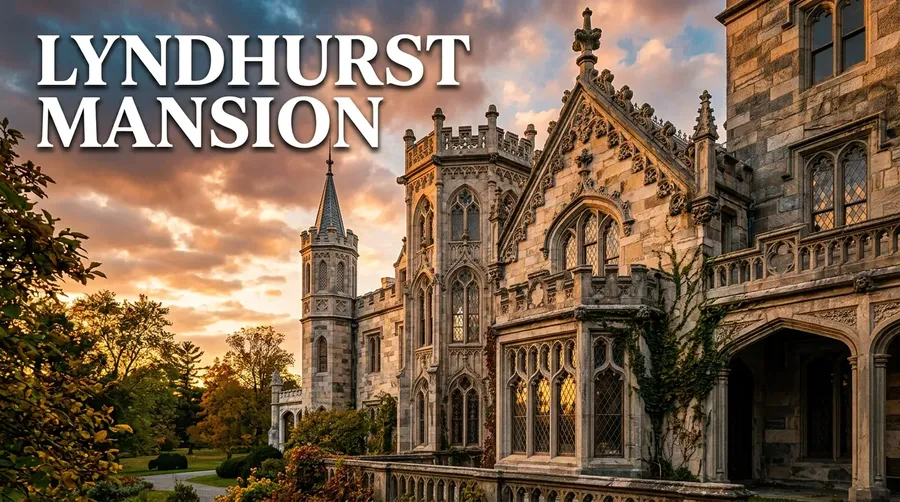
Then there's Lyndhurst in Tarrytown, New York—an outlier that provides a vital counterpoint to the classical opulence of Newport. Originally built in 1838, this Gothic Revival mansion was designed by Alexander Jackson Davis. It earned the derisive moniker "Paulding's Folly" for its revolutionary, asymmetrical design and fanciful turrets, a dramatic departure from the prevailing classical tastes. Expanded significantly in 1864-1865 for merchant George Merritt, and later purchased by railroad magnate Jay Gould in 1880, Lyndhurst maintains a distinctly different atmosphere. Unlike the sun-drenched, open spaces of the Beaux Arts palaces, Lyndhurst’s rooms are intentionally Gothic, with narrow hallways, sharply-arched windows, and fantastically peaked ceilings that create a somber, romantic, almost moody ambiance. Visiting Lyndhurst feels like stepping into a different century, a deliberate retreat into a fantastical past rather than a bold embrace of a gilded future. It's a reminder that wealth expressed itself in more ways than one.
Planning Your Grand Tour: Maximizing Your Gilded Age Experience
Embarking on a journey through these Gilded Age marvels requires a bit more than just buying a ticket; it demands strategic planning to truly absorb their essence. If you're tackling the Newport mansions, I strongly recommend visiting in the shoulder seasons—late April/May or late September/October. The summer months, especially July and August, bring throngs of tourists, making it difficult to appreciate the scale and detail without feeling rushed. Parking in Newport can be a challenge, so consider using shuttle services or arriving early in the day. A single admission to The Breakers might run you around $30-35, and most others are in a similar range, so budget accordingly if you plan to visit multiple properties.
As for Biltmore, it’s a destination unto itself, requiring at least a full day, if not two, to truly explore the house, gardens, and Antler Hill Village. Weekdays are always less crowded than weekends, and purchasing tickets online in advance is non-negotiable, particularly during peak fall foliage season (October) or the Christmas holidays, when prices can surge. Expect to pay anywhere from $70-$100+ for admission, depending on the season and day of the week, with an additional fee for special tours. Lyndhurst, being closer to New York City, can be a fantastic day trip. Weekday visits there also offer a more serene experience, allowing you to linger in its deliciously gloomy, romantic interiors without the bustle. Its admission typically hovers around $20-25.
Ultimately, these Gilded Age mansions aren't just architectural feats; they are time capsules. They reveal an America grappling with its burgeoning identity, showcasing both the extraordinary achievements and the profound inequalities of an era. To walk their halls is to grapple with the sheer ambition of individuals like the Vanderbilts and Goulds, to marvel at the artistic genius of Hunt and White, and to reflect on how such monumental extravagance shaped the nation. They are a grand, sometimes ostentatious, but always compelling chapter in our shared history, waiting for you to uncover their stories.