For decades, I’ve chased history across the American landscape, often finding that the most profound stories aren't those shouted from billboards, but whispered in the details of a place. Harriet Tubman’s home in Auburn, New York, is precisely one of those sites. It’s a nexus of her later life, a place where her extraordinary deeds as "Moses" converged with her quiet, steadfast commitment to community and family. But if you’re planning a visit for 2025, prepare yourself for something richer, and perhaps a touch more nuanced, than a typical historical walk-through.
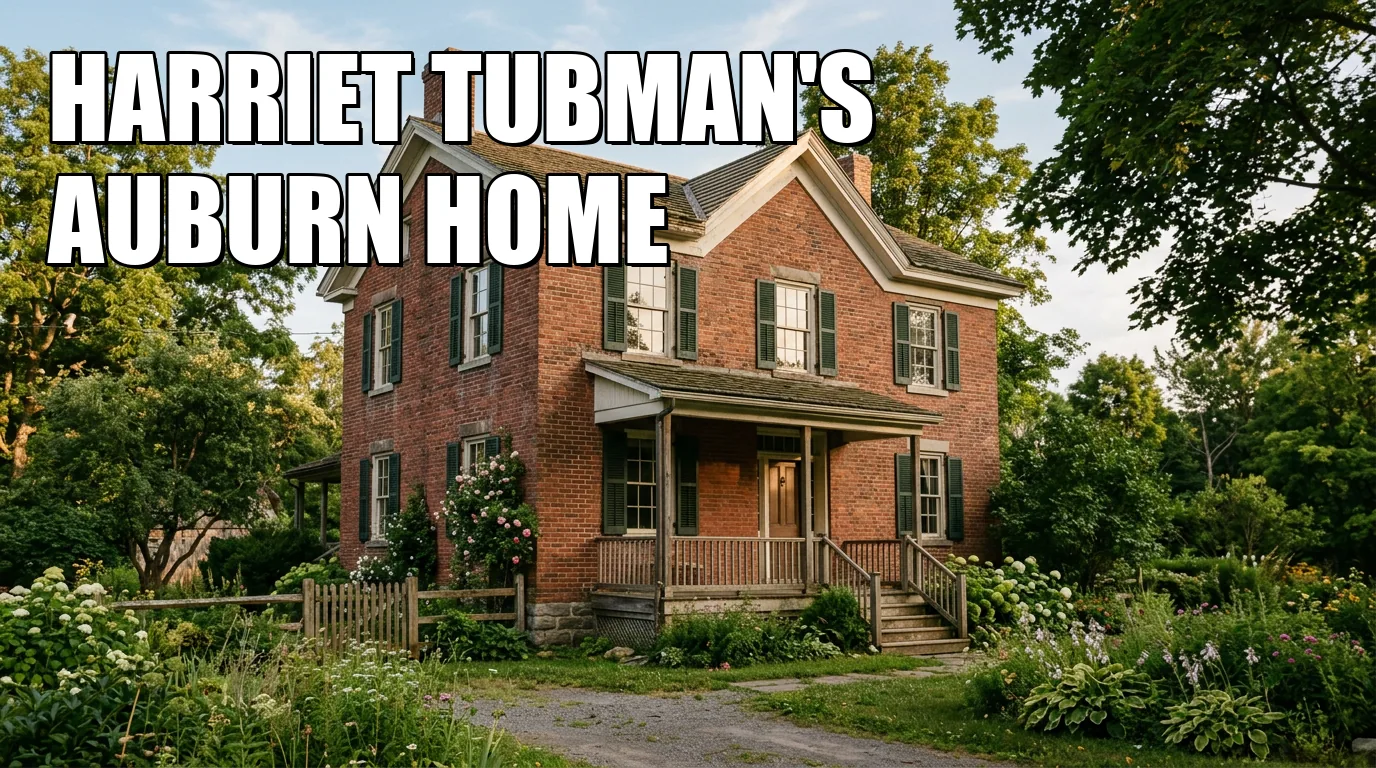
You might imagine a pristine, perfectly preserved 19th-century farmhouse, perhaps the very structure where Tubman plotted her daring escapes. The reality, however, holds a powerful story of resilience and community rebuilding. What stands today is not the original wooden structure Tubman inhabited upon settling in Auburn, which succumbed to a catastrophic fire between 1880 and 1882. This accidental blaze, reportedly caused by a boarder, could have been a devastating end to Tubman's domestic aspirations. Instead, it became a testament to her and her community's unwavering spirit.
The Phoenix from the Ashes: Rebuilding a Sanctuary
Following that tragic fire, the local community, along with her second husband, Nelson Davis, and a network of brick mason friends and relatives, rallied to reconstruct her home. What emerged was a sturdy, two-story brick house, approximately 1,200 square feet, built on the very foundation of its predecessor. It’s said some of the bricks themselves may have been manufactured on-site, a tangible embodiment of self-sufficiency and mutual aid that characterized Tubman’s entire life. This brick residence, standing proud today, symbolizes not just a house, but a community's enduring commitment to its most revered resident, offering a unique perspective on the challenges and triumphs of post-Civil War Black communities.
This wasn't just a place for Tubman; it was a sanctuary for many others. An incredible 1887 photograph of her household paints a vivid picture of this haven, revealing a diverse constellation of individuals living under her roof. You’ll see her husband, Nelson Davis; her adopted daughter, Gertie; neighborhood resident Lee Cheney; the elderly John "Pop" Alexander; an orphan named Walter Green; "Blind Auntie" Sarah Parker and her husband, John Andrew Parker; and her great-niece, Dora Stewart. This image, far from a posed family portrait, is a profound document illustrating her lifelong commitment to sheltering the vulnerable and marginalized—a direct continuation of her Underground Railroad work, but now within the confines of her own home.
More Than a Home: A Hub of Humanity and Haven
Why did Harriet Tubman, a national hero, choose to fill her home with so many? It wasn't merely out of charity; it was an extension of her very being. This practice, often overlooked in the grand narratives of her daring rescues, reveals the depth of her compassion and her understanding that freedom, once gained, required ongoing support and community. She welcomed her own parents, her father dying there in 1871 and her mother in 1880, bringing them north from Canada after enduring the perils of their escape. This wasn't a choice for convenience; it was a moral imperative, cementing her role not just as a liberator but as a provider and caregiver for those who had little hope elsewhere.
You might be surprised to learn that her personal life also flourished within these walls. In 1869, Tubman married Nelson Davis, a man more than twenty years her junior, who had initially boarded with her around 1866. Their ceremony at Auburn's Central Presbyterian Church, attended by prominent figures like Frances Seward of the famed Seward family, wasn't just a private affair. It underscored her deep integration into Auburn society and showcased the respect she commanded from across social strata. This marriage, a testament to her personal happiness after decades of struggle, offers a different, tender side to the formidable woman history remembers.
The Echoes of Her Final Journey and Lasting Legacy
Perhaps the most poignant chapter of her life unfolded right next door, on property she herself acquired and developed. In May 1911, as her health faltered, Tubman moved into the Home for the Aged, an institution she founded to care for elderly, indigent African Americans. Specifically, she resided in John Brown Hall, named after her abolitionist compatriot. This wasn't merely a care facility; it was the ultimate expression of her life’s purpose, providing dignity and comfort to those society often forgot. Her final two years spent here reveal a woman who, even in her frailties, continued to nurture the community she had spent a lifetime building.
On March 10, 1913, Harriet Tubman passed away from pneumonia in that very building, at the age of 91 or 92. Her last recorded words, "I go away to prepare a place for you, and where I am ye may be also," spoken to those gathered at her bedside, echo a biblical promise of hope and reunion. These weren't the words of a revolutionary, but of a deeply spiritual woman, reflecting her unwavering faith and her lifelong commitment to guiding others to a better place. Her funeral, held at Thompson Memorial A.M.E. Zion Church where she had worshipped for 22 years, drew hundreds, a testament to her profound impact and revered status, even wearing a Diamond Jubilee medal from Queen Victoria herself—a surprising detail that speaks volumes about her international recognition.
Planning Your Visit: Navigating a Revered Site
For those intent on experiencing this extraordinary legacy firsthand in 2025, a word to the wise: preparation is key. The Harriet Tubman Home operates on a guided tour model, strictly by appointment only. Don't expect to just show up and walk in; this is not a walk-up experience. Tours run Tuesday through Saturday at 10:00 AM and 2:00 PM, each lasting approximately 1 hour and 45 minutes. You'll need to call (315) 252-2081, leave a clear voicemail with your name (spelled slowly, please), phone number, desired date and time, and the number of guests. Crucially, unless they contact you, consider your tour confirmed. It’s an old-school system, yes, but it ensures an intimate experience.
What should you expect to see? The Home for the Aged building, where Tubman spent her final years, is fully open for touring, offering a tangible connection to her later life and the culmination of her philanthropic efforts. This is where you'll stand in the very room where she passed. However, the brick residence—her actual home—is currently undergoing restoration. While public access to its interior is limited, visitors can view it from the outside and through its windows during the guided tour. This is an important distinction, as many visitors arrive expecting full access to the house itself, only to find the Home for the Aged is the primary accessible structure. Admission fees are reasonable: $7.00 for adults (18-64), $5.00 for college students and seniors (65+), and $3.00 for youth (6-17). Groups of 25 or more should definitely contact staff directly for specialized arrangements. It’s a modest cost for an invaluable glimpse into history, especially considering the depth of insight these guided tours provide.
A journey to Harriet Tubman’s Auburn home isn't just a tick-box on a historical itinerary; it's an immersive dive into the practicalities and profound realities of freedom, community, and unwavering human spirit. You won't just learn facts; you'll feel the echoes of a life lived with extraordinary purpose, a life that continued to serve others long after the last chains were broken. This is a place that challenges easy narratives, demanding visitors to grapple with the complex, enduring legacy of one of America's greatest heroes.