There’s a quiet language spoken by old buildings, often whispered through the details we overlook. Among these silent narrators, the transom window stands as a particularly eloquent storyteller. For centuries, these small panes of glass, set above doors or larger windows, have done far more than simply admit light; they’ve managed air, guarded privacy, and even broadcasted a nation’s nascent identity. Having explored countless historic sites across the United States, I’ve come to appreciate the profound ingenuity embedded in these architectural accents. They reveal not just evolving aesthetics, but the pragmatic challenges and cultural aspirations of their eras.
Most travel guides will point out a grand facade or a famous architect, but few truly delve into the 'why' behind specific elements. My journey through America’s architectural heritage has taught me that understanding the transom means understanding a deeper layer of human ingenuity, sometimes practical, sometimes profoundly artistic. It’s about peeling back the layers of history to see how a simple design choice could address complex needs, from regulating temperature in a pre-air conditioning era to integrating a home with its natural surroundings.
Wright's Prairie Masterpiece: A Symphony of Stained Glass and Space
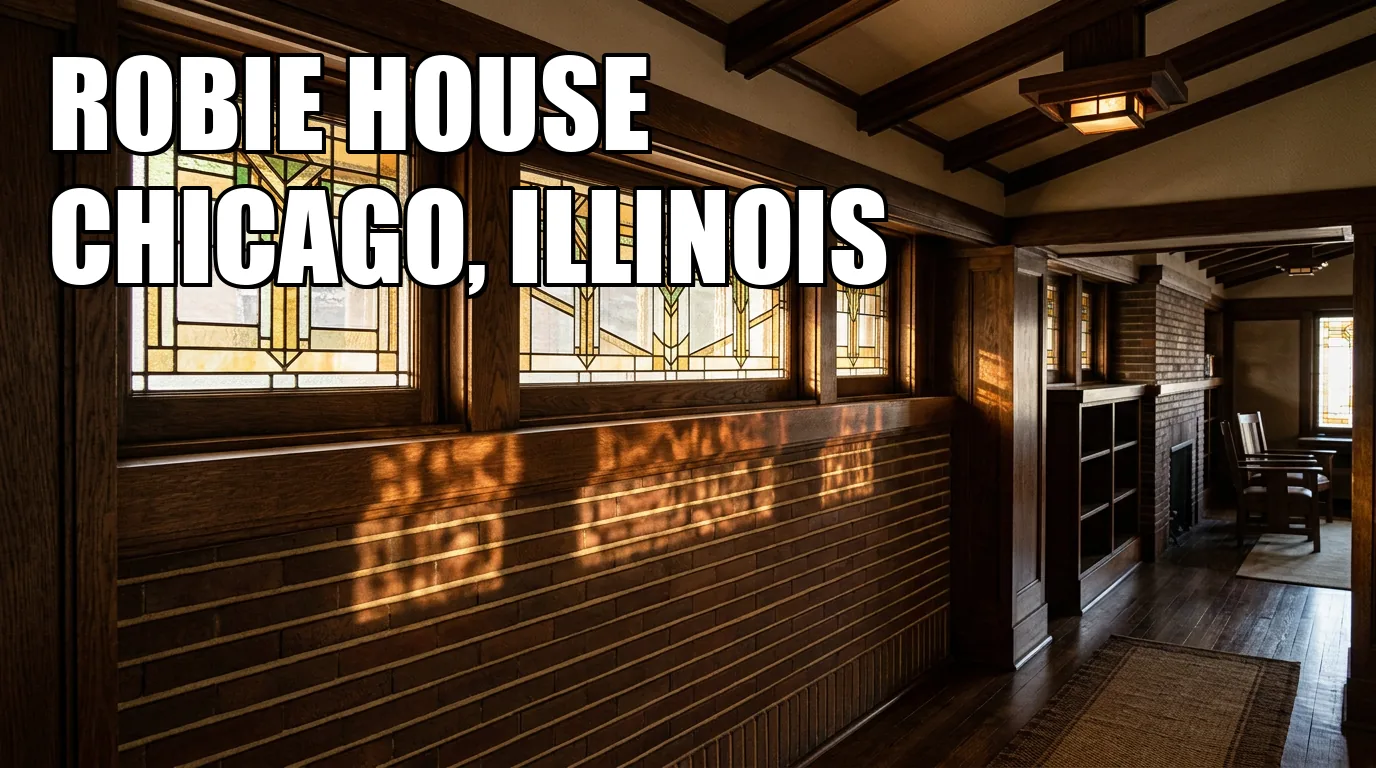
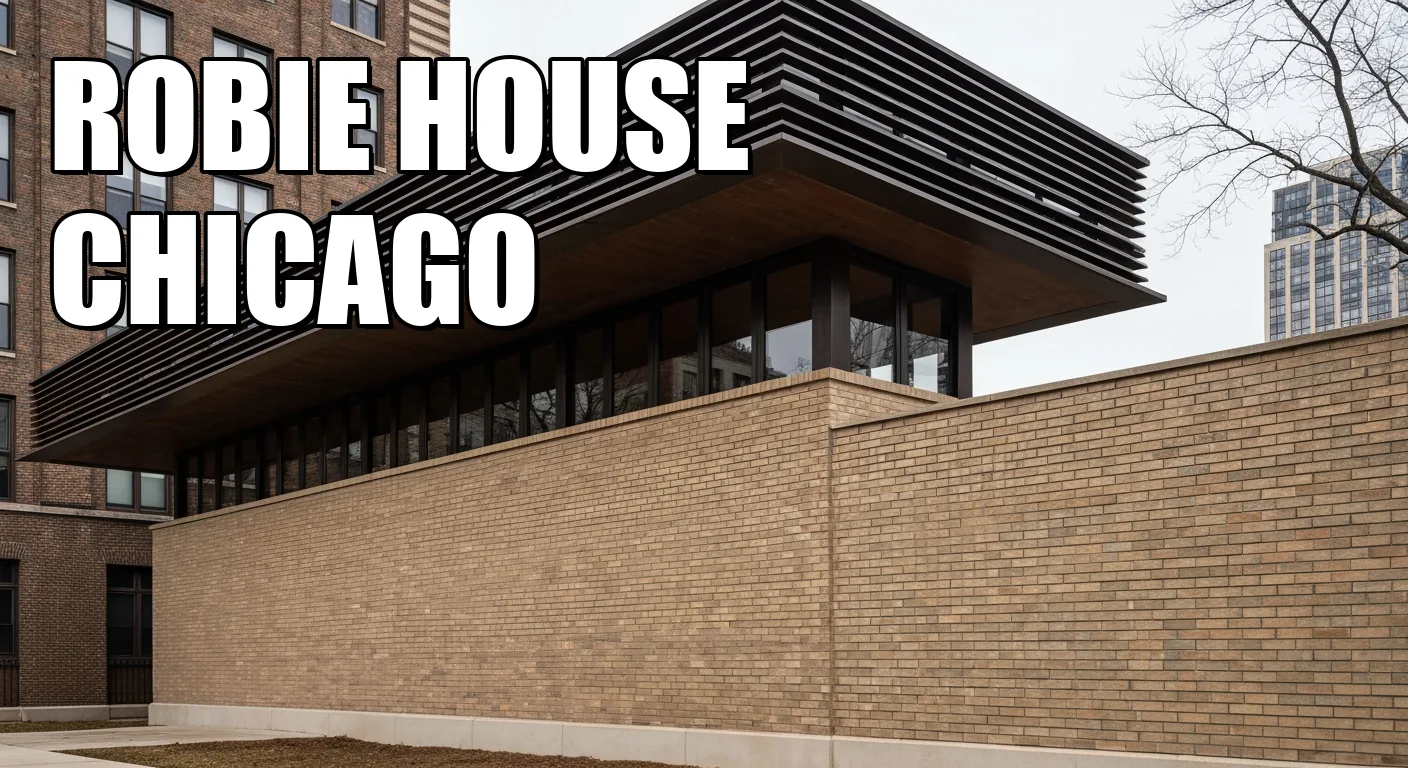
Step inside Frank Lloyd Wright's Frederick C. Robie House in Chicago, built between 1908 and 1910, and you’re immediately struck by an almost ethereal quality of light. This isn’t just a house; it’s a meticulously composed landscape of glass, wood, and brick, where the architect’s vision of what he called "light screens" becomes palpable. Wright, ever the control freak (in the most brilliant way), designed 175 doors and windows for this Prairie style masterpiece, with 163 original casements still intact, showcasing an unparalleled integration of the transom concept into his larger aesthetic.
Here, the transom isn't a separate, utilitarian element; it's an extension of the broader window scheme, often featuring Wright’s signature geometric art glass patterns. These weren't merely decorative; they were essential components of a 47-foot span of leaded glass casement doors on the south façade, designed to filter light in complex geometric patterns, preventing glare while maintaining that crucial horizontal emphasis of the Prairie style. What a typical guide might miss is the sheer *thought* Wright put into how light would move, how privacy would be maintained without sacrificing openness, and how these transoms contribute to the feeling that the house is gently unfolding into its landscape. It’s an exercise in controlled transparency.
The extensive interior restoration of the Robie House, completed in 2019, cost a staggering $11 million. This wasn't just a fresh coat of paint; it was a painstaking effort coordinated by preservation architect Gunny Harboe, ensuring that every detail, down to the lead came framing the art glass, faithfully reflects Wright’s original intent. Visiting means understanding that you're experiencing a living, breathing testament to one man's vision, painstakingly preserved. If you're planning a trip, anticipate a guided tour will be your primary access, often requiring advance booking, especially during weekends or peak tourist seasons like summer or early fall. Parking in the Hyde Park neighborhood can be tricky, so consider rideshares or public transport.
Unlocking the Secrets of Federal Fanlights: More Than Just Decoration
Shift your gaze from the organic lines of Wright to the symmetrical elegance of America’s early republic, and you’ll encounter another iconic transom: the fanlight. This element, a hallmark of the Federal style (roughly 1780-1820), speaks to a different kind of national aspiration. Where Georgian architecture often featured simpler rectangular transoms, the Federal style embraced the elliptical or semi-elliptical fanlight, radiating like an open fan in sunburst patterns. It’s a distinct visual signature for a newly independent nation, eager to express its neoclassical ideals.
These fanlight transoms became omnipresent, particularly in urban centers like Salem, Massachusetts, and across the stately row houses of Washington, D.C. Why such popularity? They weren't just pretty. Strategically placed above main entrance doors, often flanked by sidelights, they allowed precious natural light to flood into otherwise dark, central hallways, a critical feature before electric lighting. Yet, they did so while maintaining the security and privacy of the entryway, thanks to their intricate tracery and often high placement. It’s a beautiful solution to a practical problem, symbolizing the Enlightenment ideals of clarity and order that informed the young nation.
No example embodies this more profoundly than the White House itself. Designed by James Hoban and completed around 1800, its iconic fanlight transom over the North Portico's main door is arguably the quintessential symbol of Federal architecture in America. While specific costs for fanlight-only restorations are elusive, major renovations, such as those undertaken by President Theodore Roosevelt in 1902, by the firm McKim, Mead & White, certainly included comprehensive window work. When you're strolling through historic districts, pause and really *look up* at these fanlights. They're not just a design choice; they're a democratic declaration of light and accessibility, subtly woven into the fabric of American identity.
The Dana House's Elaborate Artistry: Wright's Canvas of Light
Returning to the world of Frank Lloyd Wright, but with an entirely different sense of scale and opulence, we find the Susan Lawrence Dana House in Springfield, Illinois. Constructed between 1902 and 1904, this residence stands as one of Wright's most elaborate and ambitious residential commissions, a veritable museum of his early Prairie style. Here, the concept of the transom as an integral "light screen" explodes into an almost overwhelming display of artistic integration.
This twelve-thousand-square-foot structure boasts over 450 art glass windows, doors, skylights, and light fixtures, all designed by Wright. The transoms, in particular, feature exquisite butterfly and sumac patterns, uniting the decorative scheme throughout the entire home. You’ll see them framing the distinctive arched doorway entry, transforming a functional threshold into a visual gateway. These aren’t just abstract designs; they incorporate local natural forms—sumac, butterflies, and ferns—unified by a distinct design vocabulary and palette. What surprised me on my first visit was the sheer volume; it’s less a house with art glass and more an environment *composed* of art glass. It challenges the notion that transoms are small, secondary elements; here, they are central to the home’s very identity.
The Dana House remains remarkably well-preserved, a testament to careful stewardship since its completion. Unlike many other Wright properties, a vast majority of its original art glass and even about 100 pieces of Wright-designed furniture survive intact. This offers an incredibly authentic experience. Due to its extensive and fragile nature, access is primarily via guided tours, which often have limited capacity and specific schedules. Booking well in advance, especially for weekend visits, is highly recommended to ensure you don't miss this truly immersive example of Wright's genius.
Beyond Beauty: How Texas' McFaddin-Ward House Mastered Natural Airflow
Now, let's pivot from the aesthetic and symbolic to the purely ingenious, functional side of transoms. In Beaumont, Texas, the McFaddin-Ward House, built between 1905 and 1906, offers a fascinating glimpse into a pre-air conditioning era where comfort relied entirely on architectural smarts. Designed by Henry Conrad Mauer, this impressive Beaux-Arts Colonial Revival home is a blend of Victorian, Greek Revival, and French influences, but its true genius lies in its sophisticated natural ventilation system.
The transom windows here were not passive decorative elements; they were active participants in the home's cooling strategy. Unlike the fixed, decorative transoms often seen elsewhere, those at McFaddin-Ward operated via simple push-up metal rods attached to the door frames. These rods allowed the windows to be lifted, creating a crucial pathway for hot air to escape upward while cooler air entered through lower windows, establishing an effective cross-ventilation system. What typical guides often gloss over is the sheer brilliance of how the entire house, including a third-floor skylight, was engineered to facilitate this airflow, effectively acting as a chimney to draw warm air from all three floors through the transoms. It challenges the conventional view of transoms as mere light sources; here, they were integral climate control devices.
The house has undergone significant preservation efforts, including an extensive roof restoration project in 2001-2002 costing $2 million, funded by the Mamie McFaddin-Ward Heritage Foundation, replacing the original century-old slate and copper. More recently, an extensive electrical rewiring project, commissioned in 2023, is part of ongoing efforts to preserve the 118-year-old home. This continuous investment speaks to the home's historical value, not just for its beauty but for its groundbreaking functional design. If you find yourself in Southeast Texas, this is a must-see for anyone interested in the intersection of comfort and historical architecture; check their website for tour availability, which can vary.
Unity Temple's Unconventional Transoms: Wright's Modernist Light Boxes
My final stop brings us back to Frank Lloyd Wright, but to a profoundly different expression of the transom concept. Unity Temple in Oak Park, Illinois, completed between 1905 and 1908, stands as Wright's only remaining public Prairie-style building and a bold early experiment in poured-in-place reinforced concrete. Here, the traditional notion of a transom is entirely re-imagined, applied vertically rather than horizontally, and serving a complex array of functions.
Instead of typical street-level windows, Unity Temple employs stained glass skylights and clerestories—high windows set in the upper part of a wall—that function as ingenious overhead transoms. These elements, rendered in calming green, yellow, and brown tones, evoke the colors of nature and provide soft, filtered natural light to the interior worship space. More critically, they also served to reduce the intrusive street noise from the bustling intersection outside, creating a serene sanctuary within. It’s an innovative design solution that takes the core principles of a transom – admitting light and air while managing other external factors – and applies them in a thoroughly modernist, almost sculptural way. It’s a masterclass in how an architectural element can adapt and redefine itself to meet specific contextual challenges.
Unity Temple underwent a comprehensive restoration between 2014 and 2017, a monumental undertaking that cost between $23 and $25 million, supported by major funders like Chicago's Alphawood Foundation. This included the painstaking restoration of hundreds of art glass windows and light fixtures, with pieces carefully catalogued and shipped to Judson Studios for expert care. This restoration was one of the most extensive transom and art glass preservation projects on any Wright building, ensuring that future generations can experience his vision as intended. Given its status as a working church and a major architectural landmark, planning your visit carefully is essential. Check their website for public tour schedules, which are typically offered multiple times a day but can be limited during worship services or special events.
Planning Your Architectural Pilgrimage: Practical Considerations
As you embark on your own journey to discover America's historic transoms, a few practical pointers will enhance your experience. First, remember that many of these sites are historic homes or active places of worship, meaning access is often by guided tour only. Always check the official websites for the most current information on operating hours, admission fees, and tour availability. Pre-booking tickets, especially for Frank Lloyd Wright sites like the Robie House, Dana House, and Unity Temple, is almost always necessary and can save you significant disappointment, particularly if you're visiting during peak tourist months like summer (June-August) or popular long weekends.
Costs vary: the Robie House and Unity Temple typically have admission fees ranging from $20-30 per adult, while the Dana House might be slightly higher due to its intricate nature. Parking around these urban sites can be a challenge; research nearby parking garages or public transport options. For the McFaddin-Ward House in Beaumont, Texas, admission fees are generally more modest, often around $5-10, and parking is usually more accessible. When planning, consider visiting on a weekday morning to avoid the largest crowds, allowing for a more intimate experience with these architectural marvels. And finally, always look up! The subtle beauty and ingenious function of the transom are often literally above eye level, waiting to be discovered.