Richard Neutra. The name alone conjures images of sleek lines, seamless indoor-outdoor living, and a certain utopian ideal that defined mid-century modernism. Yet, for all the reverence, actually *experiencing* these homes can be a surprisingly complex endeavor. Many are privately owned, zealously guarded, or only accessible through highly curated, often expensive, channels. After decades of seeking out these architectural touchstones, I’ve developed a sixth sense for which are worth the pilgrimage, and what you’ll find once you get there.
What makes a Neutra house truly significant? It’s rarely just about the size or the client’s fame. Often, it’s a pioneering structural detail, a revolutionary approach to integrating with the landscape, or a profound statement on human well-being and modern living. These aren't just pretty boxes; they're philosophical arguments etched in concrete and glass. Let's delve into some of the most compelling examples across the United States, revealing what typical guidebooks often miss.
The Audacious Ascent of the Lovell Health House
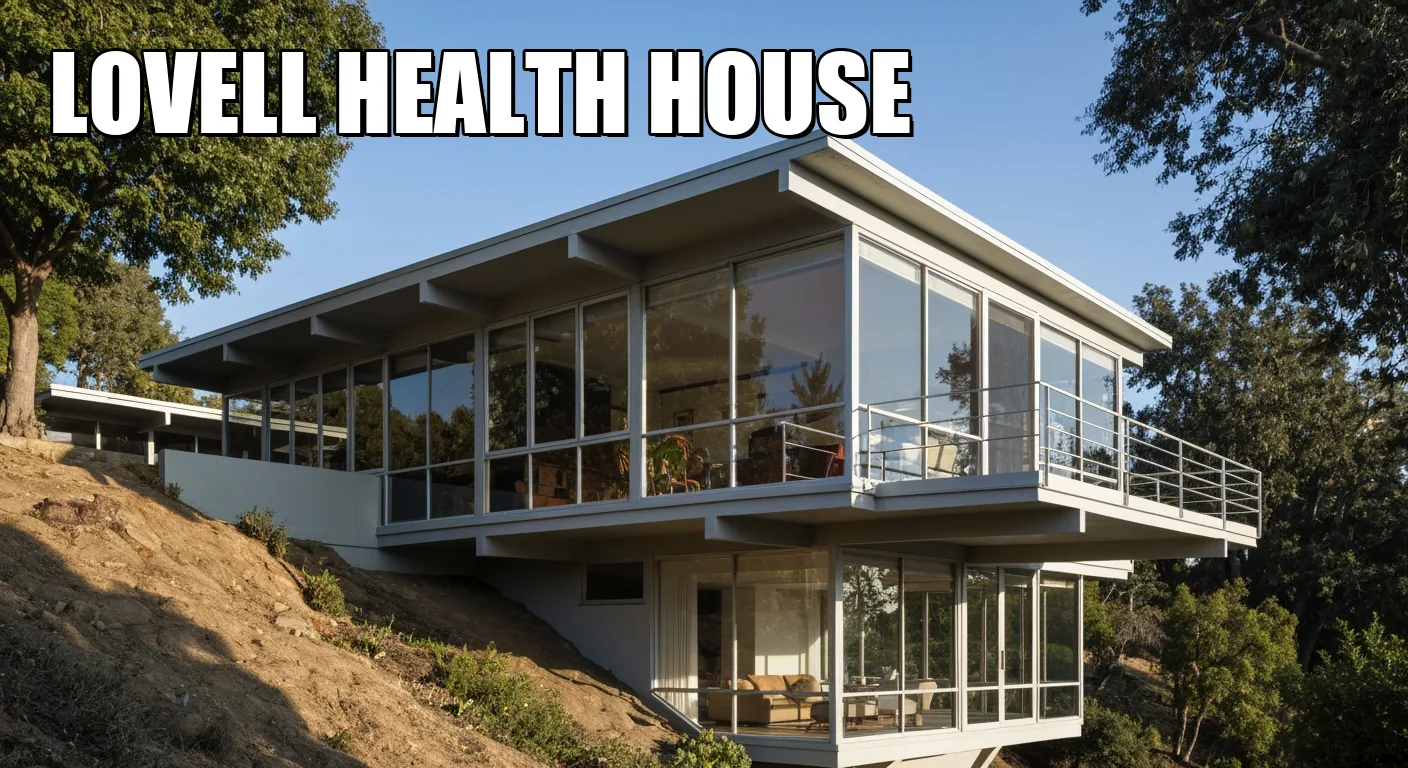
Perched precariously on a Los Angeles hillside, the Lovell Health House (1927-1929) doesn’t merely sit on its site; it lunges forward, a defiant declaration against gravity. This was Neutra's audacious statement, funded by Philip Lovell, a physician and naturopath whose vision of healthy living aligned perfectly with Neutra’s modernist ideals. What makes this house so utterly groundbreaking, and why does it still resonate almost a century later? It was the first completely steel-framed residential house in the United States, a detail often glossed over, yet it utterly reshaped what was possible in domestic architecture. The steel skeleton freed Neutra to wrap the structure in vast expanses of glass and innovative gunite—sprayed concrete—creating spaces that felt both robust and impossibly light.
Inside, the panoramic views of Los Angeles aren't just a backdrop; they're an integral part of the experience, pulled in through those distinctive bands of steel-casement windows. You'll notice the meticulous consideration of air circulation and natural light, elements that were revolutionary for their time. While many modernist homes feel cold or sterile, Lovell, with its almost suspended quality, feels surprisingly organic. It’s an exercise in balancing transparency with intimacy, a lesson in how architecture can mediate between man and nature without resorting to pastoral clichés. Getting inside, however, requires foresight. Curated tours are available, often on Saturdays, or by weekday reservation through L.A. Architecture and Art Tours. Expect to pay a premium, but the insight provided by architect-guides, and often the passionate owners themselves, transforms a simple visit into a profound architectural dialogue. Book well in advance; these aren't walk-in affairs.
Kaufmann's Desert Mirage: Why This Iconic House Remains So Elusive
Every February, as Palm Springs gears up for Modernism Week, the name Kaufmann Desert House (1946) floats through conversations with a wistful reverence. It's the crown jewel of desert modernism, designed for Pittsburgh department store magnate Edgar J. Kaufmann Sr., but also one of the most frustratingly inaccessible. The home's celebrated pinwheel-shaped cross design, with its four wings extending into the landscape, isn't just a pretty floor plan; it's a sophisticated response to the harsh desert environment. Neutra brilliantly blurred the lines between interior and exterior using sliding glass walls and the clever repetition of Utah stone, bringing the rugged desert right into the living spaces.
What few guides tell you is the sheer effort required to glimpse this masterpiece. While it occasionally offers *garden-only* tours during Modernism Week, these tickets evaporate faster than water in the summer heat. We're talking minutes, not hours. Don't go expecting to wander through the interiors unless you're very, very lucky, or know someone with a private jet and a deep rolodex. Is it overhyped given the difficulty of access? Perhaps. But the *idea* of the Kaufmann House—its bold integration of microclimates, the use of water features for cooling, the distinct courtyards for different times of day—continues to inspire. It’s a Class 1 Historic Site, and its exclusivity, ironically, only amplifies its mystique. Plan your Palm Springs trip around Modernism Week (typically mid-February) if you harbor any hope of seeing its exterior, and be ready to pounce on tickets the moment they drop.
Neutra's Evolving Vision: A Personal Laboratory in Silver Lake
If you truly want to understand Neutra's architectural journey, you must visit the Neutra VDL Studio and Residences (1932, rebuilt 1964-1965). This wasn't just a commission; it was his home, his office, and his living laboratory, funded by Dutch industrialist C.H. Van der Leeuw. What's fascinating is seeing the original 1932 structure evolve after a devastating fire in 1963, allowing Neutra to rebuild and refine his ideas. It’s an architectural palimpsest, revealing layers of his thinking across three decades.
Dubbed a "radical glass house," the VDL Research House (as it was also known) still feels remarkably current. From its floor-to-ceiling windows that dissolve the walls to the rooftop and balcony gardens, every element speaks to a profound connection with nature. Pay attention to the passive design elements: the cleverly placed louvers that manage sunlight and the "water roofs" designed for rainwater retention. These weren't just aesthetic choices; they were crucial to creating a comfortable living environment in the Los Angeles climate, long before "sustainability" became a buzzword. For an aspiring architect or anyone curious about how a master's mind works, this is an invaluable experience. The VDL Studio is open to the public on Saturdays from 11:00 a.m. to 3:00 p.m., and for a modest admission ($15 adults, $10 students/seniors), you get a tour led by knowledgeable Cal Poly Pomona architecture students. It’s located at 2300 Silver Lake Boulevard, Los Angeles, CA, and I strongly recommend online registration at neutra-vdl.org to secure your spot.
The Unseen Gems: Bailey, Kronish, and Chuey – A Lament for Lost Access
Not all of Neutra's masterpieces are designed for public consumption, and this is where the enthusiast's heart can ache a little. Three notable homes—the Bailey House (Case Study House #20, 1948), the Kronish House (1954-1955), and the Chuey House (1956)—represent crucial facets of his career, yet remain largely out of reach. The Bailey House, Neutra's only fully realized Case Study House, introduced his "Four-Courter" concept, proving that even a modest 1,320-square-foot home could feel expansive with intelligent design. The Kronish House, one of only three Neutra homes in Beverly Hills, is a grander, 7,000-square-foot pinwheel villa, boasting a glass-enclosed central garden and Utah stone surfaces. It reflects a more formal aesthetic, tailored to the specific tastes of its real estate developer clients, Herbert and Hazel Kronish.
Then there's the Chuey House, a more intimate 1,896-square-foot marvel designed for artist Josephine Chuey and her poet husband Robert. It features dramatic floor-to-ceiling glazing and a cantilevered deck that seems to float over the hillside, showcasing Neutra’s belief that environment can enhance creativity. These homes, each significant in their own right, illustrate Neutra’s versatility and his ability to adapt his core principles to vastly different scales and client needs. But here's the rub: none of these properties are regularly open for public tours. They're private residences. While they occasionally surface in architectural publications or very specialized professional tours, don't plan a trip expecting to walk through their doors. This limited access is a constant challenge for those of us who want to see these historic structures up close, forcing us to admire them from afar or through photographs, a pale imitation of the immersive experience Neutra intended.
Renting a Legacy: The Lew House and the Price of Immersion
For some of Neutra's homes, the path to access takes a decidedly modern, and often prohibitive, turn: the luxury vacation rental. The Lew House (1958-1959), perched on a steep West Hollywood hillside, offers this unique, if exclusive, opportunity. What sets this three-level residence apart? Neutra's innovative use of piano wires stretching floor-to-ceiling between spaces, creating a mesmerizing vertical rhythm. It’s a subtle yet brilliant detail, playing with light and perception in a way that’s uniquely Neutra. The house also features contrasting woods, clerestory windows, and an iconic glass-enclosed carport—a modernist design element that became instantly recognizable.
Can you visit? Yes, if your budget allows for an extended stay. The Lew House is available for vacation rental, but be prepared for a significant outlay—we’re talking potentially $26,000 per month, according to current listings through The Agency. This isn't a casual drop-in; it's an immersive experience for those with deep pockets. While it lacks the guided tours that provide historical context, staying overnight offers an unparalleled opportunity to live within Neutra's vision, to feel the spaces breathe, and to understand how every detail contributes to the overall effect. It's an alternative to the traditional museum model, albeit one that highlights the increasing financial stratification of architectural tourism. For most of us, this one remains a beautiful, aspirational dream, glimpsed only in high-end design magazines.
Chasing Neutra’s legacy across the United States is more than just sightseeing; it’s a journey into the soul of modernism. You learn to appreciate the subtle differences in his work, from the raw ambition of Lovell to the refined elegance of Kaufmann, and the deeply personal experimentation of VDL. Each home, whether publicly accessible or privately guarded, tells a story not just of architectural innovation, but of an era's aspirations. These structures are not static monuments; they are dynamic essays in human shelter, challenging us to rethink how we live, how we connect with our environment, and what truly makes a house a home. Don't just look at pictures; if you can, find a way to step inside, even for a moment. The experience is transformative.
Exploring Richard Neutra's Architectural Masterpieces: Your Complete Guide
What is a Richard Neutra houses tour?
A Richard Neutra houses tour is a guided visit to homes designed by the pioneering modernist architect Richard Neutra in Los Angeles and Palm Springs, featuring his iconic architectural style and design philosophy. Most tours are led by knowledgeable docents and provide insights into Neutra's biorealism approach and the homes' historical significance.
Is the Neutra VDL house open to the public?
Yes, the Neutra VDL Studio and Residences is open for public tours most Saturdays from 11 a.m. to 3 p.m. at 2300 Silver Lake Boulevard, Los Angeles, operated by Cal Poly Pomona's College of Environmental Design.
Can you tour the Hollyhock House?
Yes, Hollyhock House (designed by Frank Lloyd Wright) is open to the public for self-guided tours Thursday through Saturday from 11 a.m. to 4 p.m. at Barnsdall Art Park in Los Angeles.
Can you visit the Kaufmann Desert House?
Yes, the Kaufmann Desert House opens to the public during Palm Springs Modernism Week (February 13-23, 2025) for limited garden tours, making it a rare opportunity to see this iconic Neutra masterpiece.
Why is the Stahl House so famous?
The Stahl House (Case Study House #22) is famous for its stunning panoramic views of Los Angeles and the iconic 1960 photograph by Julius Shulman showing two women relaxing with the city lights visible through floor-to-ceiling glass walls. It has also appeared in numerous films and television shows, making it one of Los Angeles' most recognizable modernist homes.
Can I visit the Stahl House?
Yes, the Stahl House offers docent-led tours by reservation only; tickets ($35-$60 per person) must be purchased in advance on their official website due to high demand and limited tour slots.
What movies were filmed at the Stahl House?
The Stahl House has appeared in numerous films including Galaxy Quest, Playing By Heart, Why Do Fools Fall In Love, Nurse Betty, Knight of Cups, and many others, plus television shows like Adam-12 and Emergency.
Does anyone live in the Stahl House?
Yes, the Stahl House remains privately owned by the Stahl family, who continue to live there while hosting public tours and allowing it to be used for film and photography shoots.
What is so special about brutalist architecture?
Brutalism is characterized by its use of raw, exposed concrete and structural honesty, emphasizing the building's inner workings and materials while creating bold, monumental forms that challenge traditional design aesthetics. The style developed in the 1950s following World War II and values functionality and authenticity over decorative elements.
Who owns the $250 million dollar house in LA?
Casa Encantada, a 40,000-square-foot mansion in Bel Air that was initially listed for $250 million, is owned by Karen Winnick, widow of telecom billionaire Gary Winnick; it has since been relisted at lower prices.
What is Richard Neutra's biorealism architecture philosophy?
Biorealism is Neutra's architectural philosophy emphasizing the inherent relationship between humans and nature, using design elements like extensive glass walls, open floor plans, and natural materials to support psychological well-being and create spaces that enhance human sensory experience.
What is the best time to visit Richard Neutra houses?
Fall and winter (October-February) offer the best weather for visiting, with mild temperatures ideal for exploring outdoor courtyards and gardens; sunset tours at the Stahl House are particularly popular for experiencing the city views when lights begin to twinkle.
How much does it cost to visit Neutra houses in 2025?
Prices vary: Neutra VDL House is $15 per adult ($10 for seniors/students, free for children under 15), Stahl House tours are $35-$60 per person depending on time of day, and Kaufmann Desert House tours during Modernism Week typically range $50-$75.
How do I book tours for Richard Neutra houses?
Tours must be reserved in advance through official websites: Neutra VDL via neutra-vdl.org, Stahl House via stahlhousedemo.com, and Kaufmann Desert House through Modernism Week at modernismweek.com; advance booking is essential as tours often sell out months ahead.
What makes Richard Neutra's design style unique?
Neutra's designs are recognized for clean lines, floor-to-ceiling glass walls, open floor plans that blur indoor-outdoor boundaries, and minimal ornamentation; his client-centered approach involved studying residents' daily schedules to create spaces tailored to their lifestyle and psychological well-being.