Haunted Hotels

Unlocking Room 303: Parker House's Darkest Secret

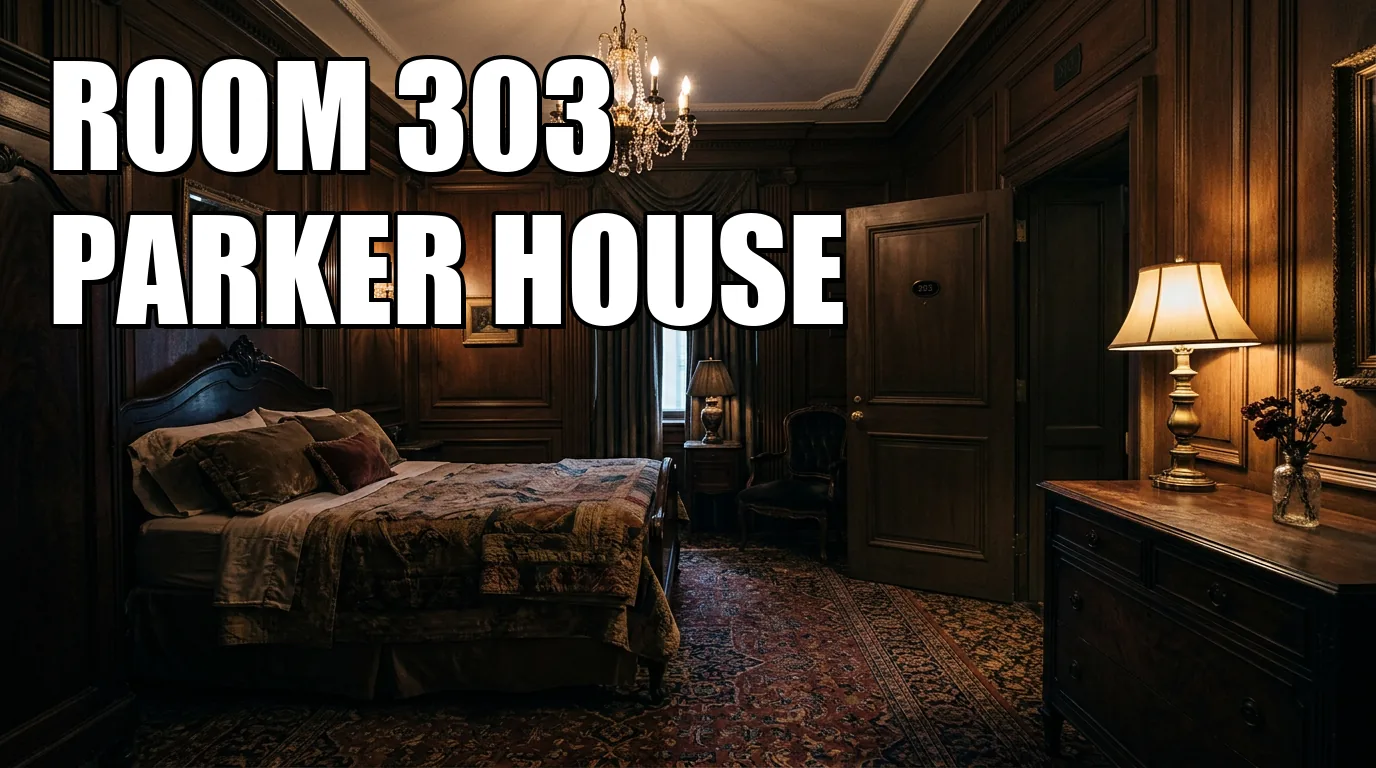
For years, I've crisscrossed this nation, chasing whispers of the uncanny, sifting through historical dust for the truths beneath the tall tales. Boston, a city steeped in both revolution and lingering shadows, offers a banquet for such pursuits. Yet, amidst the myriad spectral claims, one particular legend at the Omni Parker House consistently catches the discerning ear: the enduring enigma of Room 303. Forget the generic "haunted hotel" brochures; this particular chamber, now inaccessible to guests, presents a fascinating study in how history, architecture, and tragedy can coalesce into a truly compelling spectral narrative. What makes a single hotel room, a mere 1949 suicide site, morph into a cornerstone of Boston's paranormal folklore, compelling enough to be rendered a permanent storage closet rather than a revenue-generating guest space? It's a question I've wrestled with, and the answers, as often happens, are far more intricate than the simple "ghost story" label suggests. This isn't just about disembodied laughs or phantom odors; it's about the very fabric of memory, manifest in plaster and aged wood, and the profound impact of human suffering on a physical space.

The Grand Dame's Whispers: More Than Just a Haunted Room

Before we zero in on Room 303, it’s crucial to understand the venerable institution that houses it. The Omni Parker House isn't merely an old building; it’s a living museum, a Federalist-era behemoth opened in 1855, making it the longest continuously operating hotel in the United States. Think about that for a moment: nearly two centuries of lives lived, deals struck, political tides turned, and countless secrets whispered within its walls. This isn't some hastily erected Victorian mansion; this is Boston’s heart, a place where American history was quite literally made. Charles Dickens resided on the third floor for two years, famously giving the first American public reading of *A Christmas Carol* in the hotel's legendary dining room in 1867. Can you imagine the echoes of his booming voice, his theatrical presence, still resonating through those opulent halls? Beyond Dickens, literary giants like Ralph Waldo Emerson and Henry Wadsworth Longfellow were frequent visitors, forming the Saturday Club here. Actresses of immense fame, such as the celebrated 19th-century tragedienne Charlotte Cushman, even passed away within its third-floor confines in 1876, though not in Room 303 itself. This deep, almost suffocating historical density, where so many illustrious and ordinary lives intersected, creates a potent energy. It’s this profound sense of continuity, of lives overlapping through generations, that often provides the fertile ground for enduring spectral claims in such places. The hotel, in essence, is a grand stage, and Room 303, a particularly dramatic scene.

The Singular Tragedy: Why Room 303 Became Untenable

Every haunting, if it’s to hold any real weight, needs an anchor, a specific moment when the veil thinned. For Room 303, that moment arrived in 1949. A liquor salesman, his name largely lost to the sensationalism that followed, chose this particular room for his final act. He mixed whiskey with barbiturates, ending his life in a profoundly solitary, despairing manner. Now, suicides aren’t uncommon in hotels, sadly, but the lingering effects reported from Room 303 were distinct enough to warrant extreme measures. Following this tragic event, hotel management found themselves facing an insurmountable problem: a barrage of guest complaints emanating from that particular room. They weren't just reports of a "bad vibe" or a creaking floorboard; these were sensory bombardments. Guests repeatedly smelled spilled whiskey, a potent and lingering odor that defied explanation after the room had been thoroughly cleaned. More unsettling still, many reported hearing disembodied, raucous laughter, a chillingly inappropriate sound given the room’s grim history. Imagine trying to sleep in a room permeated by the phantom scent of cheap liquor and the sound of someone else’s macabre amusement. It’s not just unsettling; it's utterly unrentable. The hotel eventually capitulated, converting Room 303 into a storage closet – a rather telling admission of defeat against an unseen presence.

Architecture's Unwitting Role: A Stage Set for Unease

Delving into the specifics of Room 303’s physical layout, even as a storage space, offers a compelling hypothesis for *why* this particular room might be so prone to perceived paranormal activity. It’s not just the dark history; it's how the space itself conspires to create an atmosphere of unease. Unlike many standard hotel rooms, this one sits at the very end of a short, almost vestigial hallway that branches off the main corridor of the third floor. This isolated position immediately sets it apart, lending it a sense of seclusion, almost as if it’s tucked away from the rest of the hotel’s bustling energy. Step into that short hallway, and you’d find two small windows, their exterior adorned with heavy wrought-iron bars. These aren't just decorative flourishes; they drastically limit natural light, plunging the interior into a perpetual twilight. Coupled with the original 19th-century wallpaper, which would have been dark and perhaps patterned, this creates an undeniably claustrophobic ambiance. It's a space that feels trapped, confined, rather than open and welcoming. Furthermore, the room retains its original plumbing and bathtub fixtures – a pedestal sink, a narrow circulation space – all hallmarks of mid-19th-century hotel design. These old, heavy fixtures, often with their own creaks and groans, can easily be misinterpreted in a heightened state of mind. It’s easy to project a sense of melancholy or entrapment onto such a space, making it ripe for interpretation as "haunted."

The Chorus of the Unseen: Phenomena Beyond Belief

Beyond the whiskey and laughter, the reports from Room 303 (and indeed, the entire third floor) take on an even more peculiar character. Olfactory and auditory manifestations are one thing, but then there are the physical anomalies. Visitors and staff alike have consistently reported dark, moving shadows at the far end of the room, a fleeting peripheral movement that suggests a presence just out of reach. These aren't just vague feelings; they are visual impressions. Perhaps the most baffling of the mechanical manifestations involves the bathtub. There have been numerous accounts of the bathtub faucet activating on its own, water filling the tub despite all valves being demonstrably off. Imagine the sheer bewilderment, the instinctive jolt of disbelief, encountering something so utterly defiant of physics. Even more broadly on the third floor, the old service elevator seems to possess a mind of its own. It frequently stops at the third floor with no call button pressed, no passengers waiting. This particular quirk is often attributed, with a certain wistful romanticism, to Charles Dickens himself, who, as noted, favored this very floor during his extensive stays. It’s almost as if the hotel’s most famous literary ghost still roams his preferred level, perhaps impatiently waiting for a lift.

From Local Legend to Pop Culture Echo: Room 303's Enduring Allure

The persistent, compelling narrative of Room 303 has seeped far beyond the hotel's grand lobby. Its notoriety is such that it’s regularly featured on Boston’s popular paranormal walking tours. The fact that tour guides can only point to a closed-off storage room and still captivate an audience speaks volumes about the power of this particular legend. It underscores Room 303's status not just as a haunted chamber, but as the very heart of the hotel's spectral reputation, its inaccessibility only adding to its mystique. What typical guides don't often tell you is how many skeptics attend these tours, only to leave feeling genuinely unnerved by the sheer consistency of the stories. Moreover, the Room 303 tale is widely cited as the inspiration for Stephen King’s chilling short story, "1408," about a writer who dares to spend a night in a notoriously haunted hotel room. While King’s assistant has publicly denied a direct link, the parallels—a haunted hotel room, a specific number, and a history of tragic death—are too striking for mere coincidence. It’s an interesting insight into how urban legends, even with official denials, permeate the collective consciousness and inspire new works of art. This cultural impact solidifies Room 303’s place not just in local lore, but in the broader tapestry of American ghost stories.

Navigating the Spectral Path: Practicalities for the Curious Visitor

So, if Room 303 is now a storage space, what's the practical advice for the curious traveler hoping to experience a touch of its legendary unease? You certainly can’t book it for a night, which, honestly, is probably for the best. Instead, consider these approaches for your own spectral exploration of the Omni Parker House. Firstly, a visit to the hotel itself is essential. The lobby, with its dark wood paneling and soaring ceilings, practically hums with history. Head up to the third floor, if you can discreetly manage it, and walk the main corridor. You won't see Room 303 directly, but the very act of being on that legendary floor, where Dickens once paced, can be quite evocative. Aim for a weekday afternoon in the off-season, perhaps late autumn or early spring (avoiding the peak tourist months of summer and the holiday rush), when the corridors are quieter and the overall ambiance lends itself better to contemplation. You could certainly book a room on the third floor, though without guaranteed proximity to the "hot spot." Expect standard Boston hotel pricing, which can be steep, often ranging from $300-$600+ per night, depending on the season and room type. Parking in downtown Boston is notoriously expensive; budget $40-$60 for overnight valet parking at the hotel, or seek out cheaper public garages a few blocks away. For a less expensive, yet still potent, dose of the paranormal, join one of Boston's numerous ghost tours that specifically mention the Omni Parker House. These tours typically operate in the evenings, often costing around $25-$40 per person, and provide the narrative context you’ll need. While they won't grant you access to the storage closet, they will point out the relevant exterior windows and delve deeper into the historical and cultural significance. These guides, often local historians themselves, offer a nuanced perspective that goes beyond mere jump scares. In the end, Room 303 at the Omni Parker House isn't just a tale of a ghost; it's a testament to how certain places, imbued with specific energies and dark histories, can retain an almost palpable memory. It challenges the conventional wisdom that a room must be physically accessible to leave a profound impression. The true haunting, perhaps, resides less in definitive proof and more in the enduring power of a story well told, whispered through generations within the hallowed halls of a truly historic establishment.

The Haunted Secrets of Omni Parker House Room 303: Your Complete Guide to Boston's Most Legendary Hotel Room

What happened in Room 303 at Omni Parker House?
Room 303 was allegedly where a traveling liquor salesman committed suicide, and guests reported hearing strange laughter, the smell of whiskey, shadows on walls, and bathroom water turning on and off by itself. Due to the persistent paranormal activity, hotel management eventually converted the room into a storage closet.
Is Room 303 still available to book at Omni Parker House?
No, Room 303 is no longer available for guests; it was converted into a storage closet due to reported paranormal activity and to stop the supernatural complaints.
What is the scariest room in the Stanley Hotel?
Room 217 is considered the most famous haunted room at the Stanley Hotel, where Stephen King and his wife stayed for one night in 1974, inspiring his novel 'The Shining.' Guests report mysterious phenomena including unpacked luggage, shoes lined up on beds, and shadow figures.
What happened in Room 428 at the Stanley Hotel?
Room 428, known as the Cowboy Attic Suite, is reportedly haunted by the ghost of a friendly cowboy whom guests have witnessed as a shadow at the foot of their bed or in room corners, with some female guests reporting him kissing their foreheads.
What happened in Room 441 of Congress Hotel?
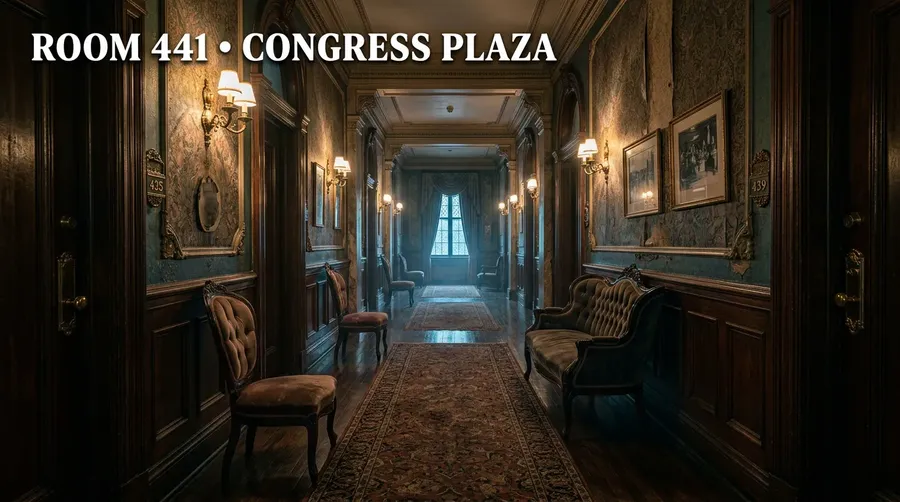
Room 441 is reported as the Congress Plaza Hotel's most haunted room, where guests and staff have documented a woman's shadowy figure standing or hovering over beds, pushing or tugging on bedding and covers, and moving between the bedroom and bathroom.
What is the most haunted room in Hotel Congress?
Room 441 is considered the most haunted room at the Congress Plaza Hotel, receiving more calls about paranormal activity than any other room in the building.
Does room 411 exist in the Plaza Hotel?
Yes, Room 411 exists at the Plaza Hotel in New York City; it is known as the Kevin Suite or one of the Central Park Suites and was featured in the film 'Home Alone 2: Lost in New York' where Kevin McCallister stayed.
Why is there no room number 13 in any hotel?
Hotels omit Room 13 and often skip the 13th floor due to triskaidekaphobia, the widespread fear of the number 13 rooted in superstitions linked to Norse mythology and Christian beliefs. Approximately 85% of buildings with Otis elevators do not feature a labeled 13th floor.
Who was the serial killer in the Congress Plaza Hotel?
H.H. Holmes, known as America's first serial killer and the 'Beast of Chicago,' was known to meet young women in the Congress Hotel lobby before coercing them to his Murder Castle a few blocks away during the 1890s.
What was the famous quote from Home Alone 2?
One of the most famous quotes from Home Alone 2 at the Plaza Hotel is Kevin's impersonation: 'Howdy do. This is Peter McCallister, the father. I'd like a hotel room please, with an extra large bed, a TV, and one of those little refrigerators you have to open with a key. Credit card? You got it.'
What is the Omni Parker House Room 303 experience like?
While Room 303 itself is now a storage closet, guests visiting the Omni Parker House can still experience the hotel's haunted reputation through tours and other rooms on the third floor, where Charles Dickens stayed and elevators mysteriously stop without being called.
Is the Omni Parker House considered one of America's most haunted hotels?
Yes, the Omni Parker House is recognized as one of the most haunted hotels in New England and the United States, with paranormal activity documented since the 1940s across multiple floors, particularly on the 3rd, 9th, and 10th floors.
Can you visit the Omni Parker House to experience its haunted history?
Yes, the Omni Parker House welcomes guests and offers the authentic hotel experience in downtown Boston along the Freedom Trail, where visitors can stay and potentially experience paranormal activity reported in other rooms.
What famous literary figure inspired Room 303 paranormal stories?
Charles Dickens' ghost is believed to haunt the third floor of the Omni Parker House where he stayed, though some attribute third-floor phenomena to the former resident of Room 303; guests report smelling cigar smoke and hear disembodied voices on this floor.
How do I book a room at the Omni Parker House for 2025?
You can book rooms at the Omni Parker House by visiting their official website at omnihotels.com or contacting the Boston property directly at (617) 227-8600 for current rates and availability for 2025.