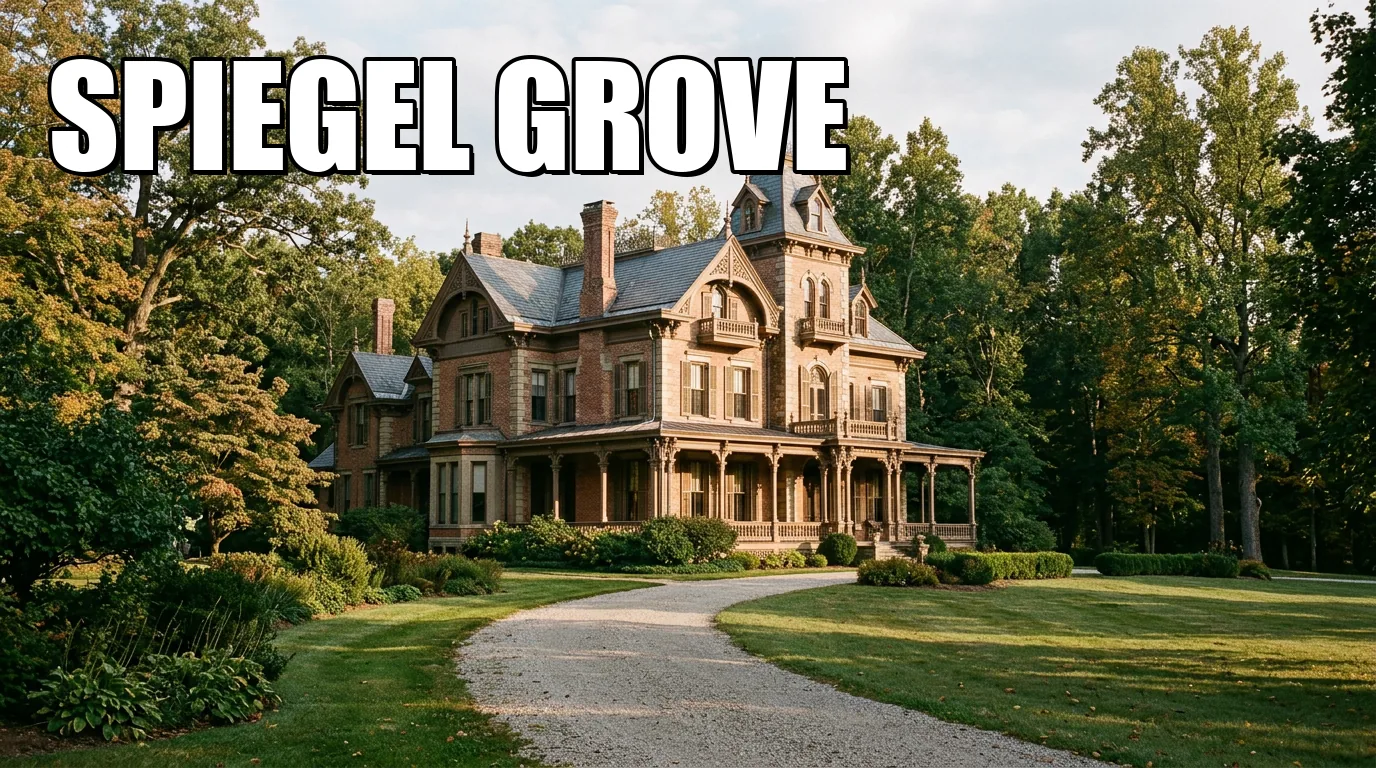
There are presidential homes, and then there’s Spiegel Grove. For years, I’d dismissed Rutherford B. Hayes as a figure relegated to the middle-of-the-pack, a man whose presidency felt more like a placeholder between Reconstruction and the Gilded Age’s excesses. That narrative, however, utterly evaporates the moment you step onto the sprawling, tree-lined grounds of his Fremont, Ohio estate. This isn't just a house; it’s a living, breathing testament to a life deeply intertwined with nation-building, family, and a surprisingly profound sense of legacy. What makes Spiegel Grove truly compelling isn't its grandeur – it's the intimate, almost startling honesty with which it reveals the human side of a president and his extraordinary wife, Lucy.
My first visit was born of curiosity, a desire to check another box on my historical travel list. What I found, though, was a place brimming with unexpected stories, a collection of artifacts so unique they challenge the very notion of what a presidential library and museum typically offers. Forget the perfectly curated, sterile environments you might expect; Spiegel Grove feels like the Hayes family just stepped out for a walk, leaving their lives and the echoes of their conversations hanging in the air. This guide aims to peel back those layers, offering the kinds of insights and practical advice you won't find on a glossy brochure, ensuring your pilgrimage to Hayes's home is as enriching as it is surprising.
Stepping Inside Spiegel Grove: More Than Just a Presidential Address
Upon entering the Hayes home, the first thing that strikes you isn't opulent luxury, but rather a palpable sense of comfort and lived-in history. Unlike many contemporary presidential estates designed for public spectacle, Spiegel Grove was first and foremost a family home, which makes its occasional architectural flourishes all the more intriguing. Take the Library Parlor, for instance; added between 1880 and 1881 while the Hayeses were still occupying the White House, its imposing 13-foot ceilings were clearly an intentional design choice, crafted to visually elevate this particular space, perhaps reflecting a desire for a grander entertaining area upon their return from Washington's political stage. This distinct contrast with the cozier scale of other rooms immediately signals a fascinating blend of public aspiration and private domesticity.
Move further into the house, and the Master Bedroom quickly becomes a focal point, not for its decor, but for its profound human significance. This is no mere exhibit; it's the very room where both Rutherford and Lucy Hayes drew their last breaths—Lucy in 1889 and Rutherford in 1893. The room served as more than just a sleeping quarter; it was a gathering space, a private sanctuary, and ultimately, a silent witness to their final moments. The family's meticulous decision to tag every item in the bedroom upon the president's death speaks volumes about their early, almost prescient, understanding of the historical weight of their personal effects, offering a powerful, unvarnished glimpse into their lives and passing.
The Grand Dining Room, added in 1889, presents another curious duality. While designed as a formal space for entertaining, still in use today for special events like their delightful Victorian-era Christmas dinners, it also played host to some rather less dignified family moments. Imagine the high ceilings and elegant furnishings witnessing Webb Cook Hayes III and his brothers engaging in a legendary meatball-flinging contest, aiming for the ceiling! This anecdotal glimpse of boyish mischief provides a wonderful counterpoint to the room's stately purpose, reminding visitors that even presidential families navigated the messy, joyful realities of everyday life. Across the hall, the Library itself, reportedly a haven where the couple spent 5-6 hours daily absorbed in reading and writing, underscores their intellectual curiosity and shared devotion to knowledge, painting a picture of a partnership built on more than just politics.
A Reliquary of the Republic: Unexpected Presidential Connections
Beyond the architectural nuances, the Hayes Home truly distinguishes itself through its astonishing collection of personal artifacts, each telling a story that resonates far beyond the confines of Fremont, Ohio. Consider the Mahogany Four-Poster Bed in the master bedroom. Given to Rutherford and Lucy as a wedding gift in 1852 by Lucy's mother, it wasn't just a piece of furniture; it was the foundation of their married life. The fact that this very bed bore witness to their shared beginnings and, ultimately, their individual ends, transforms it into a poignant symbol of a lifetime together, imbuing it with a raw, emotional power few museum pieces possess.
Then there's Lucy Hayes's Sewing Machine, an object that might initially seem mundane but unveils a powerful narrative of devotion and resilience. Lucy brought this machine with her to visit Rutherford during a Civil War winter camp, using it to mend soldiers' uniforms. This wasn't merely a domestic chore; it was an act of profound support for the troops and a tangible expression of her hands-on commitment to her husband's regiment. It challenges the conventional image of a First Lady, showcasing her as an active, engaged participant in a national struggle, not merely a supportive figurehead.
What truly startles many visitors, however, are the connections to an entirely different, perhaps more famous, president: Abraham Lincoln. The museum, adjacent to the home, houses some of the most remarkable Lincoln artifacts outside of Washington D.C., and these are details rarely highlighted in generic travel guides. You’ll find the original leather gloves worn by President Abraham Lincoln on the night of his assassination at Ford's Theatre on April 14, 1865. A swatch of the coat he wore that same tragic evening is also displayed, gifted to President Hayes by the White House chief doorkeeper. The sheer proximity to such profoundly significant, almost sacred, relics of American history is breathtaking, offering a visceral link to a defining moment in the nation's past. Alongside these, you can also view Lincoln's slippers—which famously served as models for Daniel Day-Lewis's portrayal in the film *Lincoln*—a bronze cast of Lincoln's right hand, and even selections of Lincoln's White House china that Mary Todd salvaged. This unexpected trove redefines the Hayes site from a single-president focus to a broader lens on 19th-century American leadership and loss.
Echoes of Laughter and Loss: The Hayes Family Unveiled
The Hayes Presidential Library & Museums doesn't shy away from revealing the full spectrum of family life, from its most humorous moments to its deepest sorrows, creating a narrative that feels authentically human. The famed "Meatball Incident," for instance, stands as a testament to the unvarnished realities of family dynamics. Webb Cook Hayes III and his brothers, the president's grandchildren, reportedly turned the stately Grand Dining Room into a battlefield for a meatball-flinging contest, with one triumphantly sticking to the ceiling for a record two days. This anecdote injects a vital dose of levity and relatability into the otherwise solemn atmosphere of a presidential residence, reminding us that even the most prominent figures had boisterous, imperfect family lives.
Conversely, the story of Lucy Hayes's stroke and passing is etched with profound sadness, yet it provides an intimate glimpse into the vulnerabilities of the era. On June 22, 1889, Lucy, renowned for her kind spirit and active role, suffered a severe stroke while engrossed in sewing by her bedroom's bay window. The detail that she was found paralyzed, with a needle and thread still in hand, paints a vivid and heartbreaking picture of her final days. She passed away three days later at age 57, with her devoted husband at her bedside, a moment that underscores the deep bond they shared and the swift, unforgiving nature of illness in the late 19th century.
Perhaps the most poignant anecdote involves a beloved family heirloom: the grandfather clock. Following Lucy's death, President Hayes, a man often perceived as stoic, recorded a deeply moving observation in his diary. He noted that Lucy's favorite grandfather clock, which still stands silently in the home today, had inexplicably ceased to keep time or strike the hour regularly since her passing. This simple, almost superstitious, sentiment reflects the depth of his grief and the pervasive sense of loss that permeated the household. It's a powerful reminder that history isn't just about dates and policies, but about the very human emotions that shaped lives and legacies.
Planning Your Pilgrimage: Navigating Spiegel Grove's Gateways
Before embarking on your journey to Spiegel Grove, understand that a bit of forward planning makes all the difference in optimizing your experience. Critically, site passes must be booked online through the official website. This isn't a walk-up friendly site for the home tour itself, so don't arrive expecting to purchase tickets on the spot for immediate entry. Furthermore, visitors are required to check in at the museum building's front desk a full 20 minutes before your scheduled Hayes Home Tour time. Miss this window, and you might miss your slot, as tickets are non-refundable. While this might seem a little strict, it helps manage tour sizes and ensures a smoother experience for everyone.
A standard adult admission is $20, which impressively includes access to both the Hayes Home tour and a self-guided museum tour, with the added bonus of a two-day pass benefit. This means you can explore the museum at your leisure, leave for lunch, and return the following day without purchasing another ticket—a significant perk, especially if you want to absorb the vast collection of artifacts without feeling rushed. Seniors (65+) and AAA/Military members receive a slight discount at $18, while teens (ages 13-18) are $10, and children (ages 6-12) are $5, with those aged 0-5 entering free. If you're only interested in the museum, a separate adult admission is $13. Membership to the Hayes Presidential Library & Museums or the Ohio History Connection grants you free access, a worthwhile investment for frequent visitors or history enthusiasts.
Tour schedules vary seasonally, with the fullest offerings running from April to December. During these months, home tours depart hourly from 10 a.m. to 4 p.m. Monday through Saturday, and from 1 p.m. to 4 p.m. on Sundays. Be aware that modified hours are in effect during January, February, and March, so it’s always best to check the website for specific times if planning a winter visit. Consider visiting on a weekday morning for smaller crowds, allowing for a more intimate interaction with the guides and the historical spaces. Keep an eye out for special tour options, such as those focusing on art and architecture, priced similarly to general admission but offering a deeper dive into specific aspects of the estate. And for a truly unique experience, consider becoming a member to unlock access to their Victorian-era Christmas dinners held in the Grand Dining Room—an opportunity to literally dine where history, and perhaps a few meatballs, were made.
Why Hayes Still Matters: A Legacy Worth Reclaiming
Rutherford B. Hayes often finds himself an enigma, a figure whose presidency arrived at a pivotal, transitional moment in American history, yet whose contributions are frequently overshadowed. His one term, marked by the end of Reconstruction, civil service reform efforts, and a commitment to specie payments, hardly sets the popular imagination alight compared to a Lincoln or a Roosevelt. Yet, a visit to Spiegel Grove fundamentally challenges this oversight, forcing you to reconsider the man behind the headlines.
The home reveals Hayes not just as a president, but as an intellectual, a devoted husband, a loving father, and a man deeply engaged with the world around him. His passion for reading, his extensive library, and his detailed diary entries paint a portrait of a thoughtful leader, far more nuanced than the simplistic "President of the Gilded Age" label suggests. Moreover, Lucy Hayes emerges as a formidable force in her own right—a pioneering First Lady known for her humanitarian work, her unwavering support during the Civil War, and her quiet strength, making her a figure far ahead of her time.
Visiting Spiegel Grove, therefore, isn't merely a historical exercise; it's an act of reclamation. It’s an opportunity to connect with a period of intense national change through the incredibly personal lens of a family that lived through it all, leaving behind an astonishingly preserved record of their lives. It reminds us that every presidential story is multifaceted, and sometimes, the most profound insights are found not in grand pronouncements, but in the quiet corners of a beloved home, surrounded by the tangible echoes of those who once walked its halls. Don't let this American gem remain a footnote in your own travel history; give it the attention it so richly deserves.