
Unlocking Victorian Parlors: A Connoisseur's Guide
For years, I've crisscrossed this country, pushing past the predictable tourist loops, seeking out the genuine articles in historic preservation. What I've found, time and again, is that few spaces reveal the true soul of the American Gilded Age quite like the Victorian parlor. It wasn't merely a sitting room; it was the public face of a family's ambition, a carefully curated stage for social maneuvering, and often, a riot of artistic expression. Yet, too many guides treat these rooms as mere collections of period furniture, missing the pulsating narratives beneath the brocade and gilding.
Why does it matter how these rooms were designed, or by whom? Because they are primary documents of aspiration, innovation, and sometimes, a delightful lack of restraint. From the East Coast to the West, a handful of historic house museums offer unparalleled access to these domestic theaters, allowing us to parse the nuances between regional tastes, architectural philosophies, and the personal quirks of their wealthy inhabitants. However, don't expect a uniform experience. These aren't just variations on a theme; they represent entirely different visions of what luxury and domesticity could be.
A Gilded Masterpiece: Portland's Unrivaled Victoria Mansion
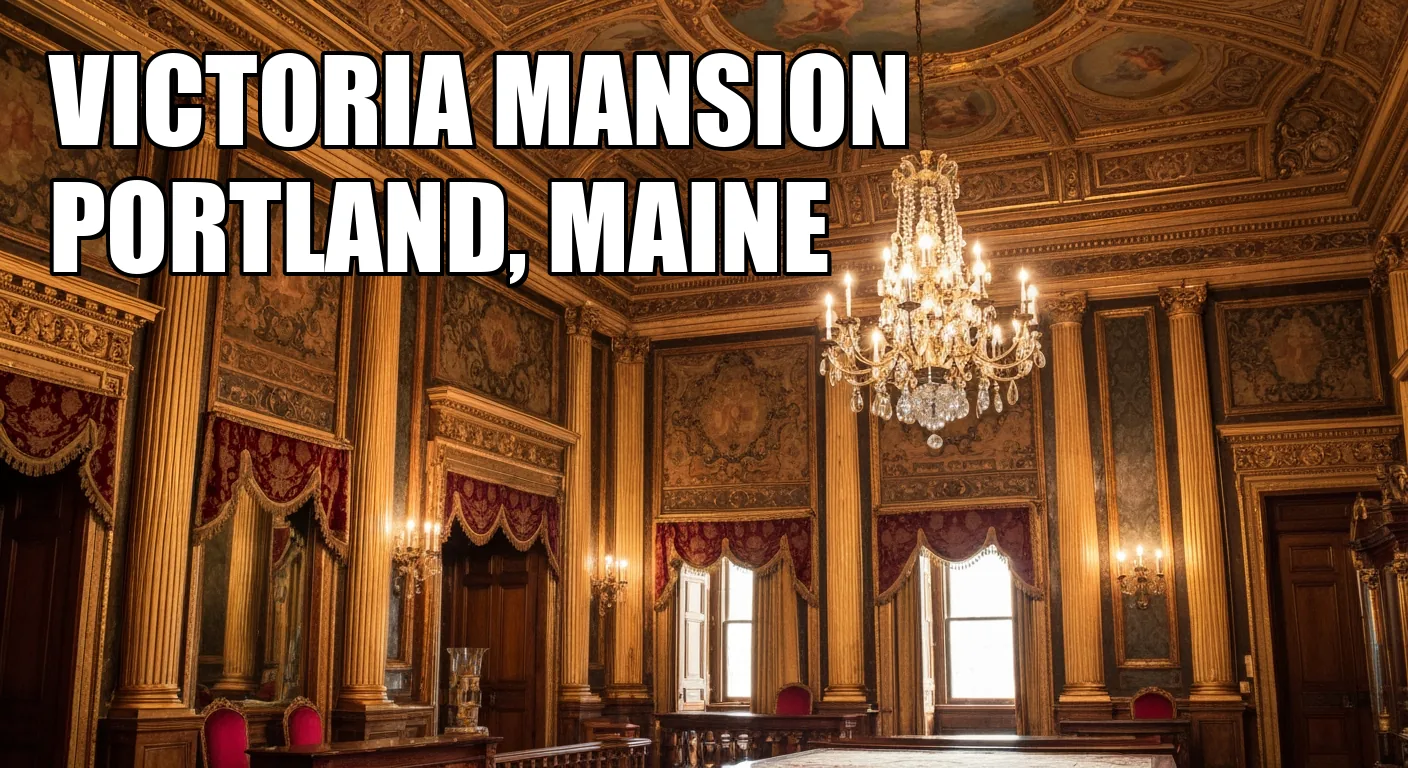
Imagine a space so intensely decorated it feels like stepping inside a jewel box—one crafted with an almost dizzying dedication to opulence. That's the parlor at Victoria Mansion in Portland, Maine, an architectural marvel that often gets overshadowed by its more famous Gilded Age cousins further south. Built between 1858 and 1860 for hotelier Ruggles Sylvester Morse, this house isn't just an Italianate stunner on the outside; its interiors are a testament to the singular vision of German-trained designer Gustave Herter. This commission was, remarkably, Herter's first whole-house interior design project, and it remains the only completely intact example of his firm’s work. Most guides will simply tell you it's lavish. But *why* is it so significant? Herter's work here, with its richly gilded surfaces, intricate plasterwork, colossal mirrors, and sumptuous fabrics, wasn't just fashionable; it set the standard for American palatial interiors. The parlor's hand-carved marble fireplace, adorned with cherubs and botanicals, and the ornate cabinetry of figured maple and rosewood featuring baroque-inspired winged female figures, illustrate a depth of craftsmanship rarely seen even in its time. Then there are the decorative wall paintings by Italian artist Giuseppe Guidicini, masterfully employing *trompe l'oeil*—"fool the eye"—techniques that make flat surfaces appear three-dimensional. It's a sensory overload, and in the best possible way. Visiting the Victoria Mansion offers a rare chance to witness the Victorian aesthetic frozen in time. Over 90 percent of its original 1860 contents persist, from Herter's furniture to the gas lighting fixtures. Be aware that the ongoing conservation efforts, which began in 2012, mean certain sections or details might be under wraps during your visit, a small price to pay for the meticulous preservation of such a treasure. Check their website for specific tour times and any potential impacts on your experience. Admission typically runs about $18 for adults, a reasonable fee for such an immersive historical journey.When "Stick Style" Meant Grandeur: Unpacking Cape May's Physick Estate
Shift your gaze southward to Cape May, New Jersey, a town synonymous with Victorian charm. Here, the Emlen Physick Estate stands as an intriguing counterpoint to Victoria Mansion's continental opulence. Designed by Philadelphia's prolific Frank Furness in 1879, this 18-room mansion is a quintessential example of "Stick Style" architecture, a term that might conjure images of rustic simplicity but, in Furness's hands, translated into something far more sophisticated and grand. Furness wasn't one for subtlety, even within a style that emphasized structural elements. His signature gigantic upside-down corbelled chimneys and hooded "jerkin-head" dormers were avant-garde details for the period, challenging the prevailing architectural norms. The parlor, like the rest of the house, showcases his penchant for intricate moldings, custom furnishings, and vibrant wallpapers, all meticulously restored. What's often missed is the subversive nature of Furness's design: he wasn't trying to hide the bones of the house; he was celebrating them, making the structure itself decorative. Expect to see the quintessential Victorian embrace of layered textiles, ornate mirrors, and seating arrangements upholstered in velvet. The house itself, saved from demolition by the Mid-Atlantic Center for the Arts & Humanities (now Cape May MAC), is a testament to community preservation. While Cape May can feel a bit like a Victorian theme park during peak summer months, the Physick Estate offers an authentic, deep dive into the style without feeling like a tourist trap. Plan your visit for the shoulder seasons (May, early June, or September, October) to avoid the biggest crowds and truly appreciate the quiet grandeur. Adult admission is generally around $15, with various tour options available.San Francisco's Resilient Queen: The Haas-Lilienthal House and Urban Survival
Cross the continent to San Francisco, where the Haas-Lilienthal House, built in 1886, offers a different narrative of Victorian survival. This is the city's *only* intact private Victorian home regularly open to the public, a fact that speaks volumes about San Francisco's tumultuous past. Designed by Bavarian architect Peter R. Schmidt, this exuberant Queen Anne mansion, with its distinctive "witch's cap" turret and elaborate trim, is a stark reminder of what the city lost in the 1906 earthquake and fire. The parlor, with its characteristic golden oak paneling, reveals the late-Victorian aesthetic favored by the wealthy German-Jewish Haas family. Unlike some of its East Coast counterparts, the focus here is on robust elegance rather than delicate excess. What surprised me during a visit wasn't just the sheer scale of the 11,500-square-foot house, but the fascinating story of its preservation: it survived the 1906 catastrophe by standing a mere block west of the critical Van Ness Avenue firebreak. This isn't just a house; it's a monument to resilience. Recent restorations in 2018 uncovered the home's original color palette—a vivid green and serene white with cool blue-green accents—challenging the common misconception that Victorian homes were universally dark and somber. Visitors often expect a heavy, somber atmosphere, but the reality is a lighter, more vibrant interior that reflects the family's sophisticated taste. The house operates as a museum, welcoming over 6,500 annual visitors. Parking in San Francisco is notoriously difficult and expensive, so consider public transport or ride-shares. Entry fees are typically around $15 for adults.Rebel Architect, Intimate Spaces: Chicago's Glessner House Defies Expectation
In Chicago's historic Prairie Avenue district, the Glessner House, completed in 1887, presents perhaps the most radical departure from conventional Victorian parlor design. Architect Henry Hobson Richardson's distinctive Richardsonian Romanesque style, characterized by rusticated granite walls and massive arches, was a revolutionary concept for urban residences. Richardson himself considered this one house he would have personally chosen to live in, and that speaks volumes about its thoughtful design. Unlike the long, open vistas typical of many grand mansions, the Glessner House parlor was designed for intimacy and specific function. Its ceiling, nearly a foot lower than adjacent rooms, was a deliberate choice to optimize acoustics for musical performances. Furthermore, the three large windows face *into* an innovative private courtyard, not onto the street. This decision provided abundant natural light while ensuring privacy—a rare luxury in bustling urban residences of the era. The focus was less on ostentatious display for passersby and more on a comfortable, functional interior life for the family. The parlor's fireplace, adorned with finely carved acanthus leaf motifs, ouroboros (dragons eating their tails), and delicate G-shapes, tells a story of refined taste and symbolic depth. The Glessners furnished their home with wallpapers, textiles, and carpets by the legendary William Morris and Morris & Co., and ceramics by William De Morgan, indicating a sophisticated appreciation for the Arts and Crafts movement. They also championed American talent, acquiring the largest collection of furniture by Isaac Elwood Scott, a designer who worked in Modern Gothic and Eastlake styles. This isn't just a Victorian home; it's a philosophical statement, challenging the very notion of what a wealthy urban dwelling should be. Check their website for specific tour dates and times, as they vary seasonally. Adult tickets usually cost around $20.The Unseen Jewel: Eureka's Carson Mansion and the Limits of Access
Finally, consider the Carson Mansion in Eureka, California, built between 1884 and 1886. Often lauded as the most grand Victorian home in America, and certainly one of the highest executions of American Queen Anne style, it’s a veritable encyclopedia of eclectic design. Architects Samuel and Joseph Newsom (the Newsom brothers) blended Italianate, Eastlake, Stick, and Queen Anne elements into a jaw-dropping confection for lumber baron William Carson. This house, however, presents a unique challenge for the curious traveler: it’s not open for regular public tours. Since 1950, it has been privately maintained by the Ingomar Club. Why, then, include it in a guide for visitors? Because its existence highlights a crucial aspect of historic preservation and access. While you can admire its exterior, a true understanding of its interior — where Carson insisted "no two design elements were identical," from stained glass medallions to intricate millwork — remains elusive to most. His personal parlor glowed in peacock blue, while silk brocade wall coverings shimmered salmon pink in less sunlit areas, details that bring the owner's personality vividly to life in the historical record, even if we can't experience them directly. The Carson Mansion, with its imported primavera wood, Mexican onyx mantels, and extensive use of local redwood, represents the pinnacle of Gilded Age extravagance, built by over one hundred workers over two years. Its inaccessibility forces us to acknowledge that some historical treasures, though monumental, remain largely private. It’s a poignant reminder that even in our era of pervasive tourism, certain insights into the past are reserved for historical records and the privileged few. So, while you can't step inside, recognizing its existence and impact on other ornate architecture throughout Eureka is vital to a comprehensive understanding of Victorian design. These five parlors, spanning diverse geographies and architectural philosophies, collectively dismantle any notion of a singular "Victorian style." From Herter's Italianate theatricality to Richardson's Romanesque introspection, and the Newsoms' eclectic Queen Anne grandiosity, each space reflects not just the era's craftsmanship but the deeply personal aspirations of those who built them. To truly understand the American Victorian experience, one must explore these domestic stages, not just for their beauty, but for the profound stories they continue to tell.Your Guide to Discovering Victorian Parlor Architecture Across America
What is the history of Victorian parlor architecture?
Victorian parlor architecture flourished during Queen Victoria's reign (1837-1901), representing a period of rapid industrial and social change. The parlor served as the formal front room in middle and upper-class homes, designed exclusively to receive and entertain visitors, showcasing a family's wealth and status through ornate furnishings, dark rich woods, luxurious velvet upholstery, and elaborate moldings.
What are the main architectural features of a Victorian parlor?
Victorian parlors feature ornate crown molding, decorative chair rails, wainscoting, bay windows, elaborate fireplaces with cast-iron surrounds, leaded glass windows, high ceilings, and intricate baseboards. Interior elements include wall sconces, ornamental mirrors, and chandeliers, with walls adorned in decorative wallpaper or wallpapers with rich patterns.
Which U.S. cities have the best Victorian parlor architecture to visit?
Cape May, New Jersey (second-highest concentration of Victorian homes with over 600 buildings) and San Francisco, California are premier destinations, with other notable locations including Boston, Massachusetts; Charleston, South Carolina; Savannah, Georgia; and the Hudson Valley, New York. Cape May was rebuilt after an 1878 fire using Victorian style, and many homes feature public tours.
What is the typical cost of touring a Victorian home with parlors in 2025?
Admission prices vary by location; Victoria Mansion in Maine charges $19.25 for adults, $17.25 for seniors, $8.00 for students, and $6.00 for children. Gibson House Museum in Boston charges $15 for ages 13-61, $12 for seniors, $5 for ages 6-12. Many historic home tours and trolley tours in Cape May cost $12-40 per person.
How long does a typical Victorian home tour take?
Most guided Victorian home tours take 45-55 minutes, with self-paced visits generally lasting 30-45 minutes. Victorian trolley tours in Cape May typically run 45 minutes, while walking tours may take 1-2 hours depending on the route and stops.
Part of 🏛 Architecture Styles
Architecture Styles
Gothic Revival Architecture: What the Street Can—and Cannot—Tell You
A three-level field test separates visible Gothic Revival evidence from a style hypothesis and the dates, authorship or alterations that require records.

Architecture Styles
Greek Revival Without Columns: A Confidence Test
Greek Revival can survive without a portico. Use roofline, entablature, entrance, wall plane, date and later alterations to state confidence.
Architecture Styles
Prairie Style Architecture: How to Spot the Style in American Houses
A practical guide to Prairie Style architecture in the United States, with the roof, window, massing, and site cues readers should compare from the street.