Architecture Styles

Unpacking America's Second Empire Architecture

Find Nearby Hotels

Book Flights

For years, I’ve chased architectural styles across the globe, but there’s something singularly compelling about the Second Empire period in the United States. It wasn't just an aesthetic choice; it was a loud, proud declaration of America’s burgeoning wealth, its post-Civil War confidence, and its ambition to rival the European capitals it so admired. Born from Napoleon III’s grand transformation of Paris in the mid-19th century, this style landed on American shores with a dramatic flourish, instantly changing the skyline of our burgeoning cities. Forget the quaint colonial or the stoic federal; this was about making a statement, about volume, and often, about sheer, unadulterated visual impact. What makes these buildings truly fascinating isn't just their ornate facades or towering presence, though those are certainly part of the appeal. No, the real magic lies in understanding *why* these features were adopted, what they signified, and how they ultimately shaped the urban fabric of a nation finding its footing on the global stage. It’s a story of industrial might, civic pride, and a dash of architectural mimicry that, in America, evolved into something uniquely our own. Let's peel back the layers on five features that truly define this exuberant era.

The Mansard Roof: More Than Just a Pretty Top

Ask any architect or serious history buff about Second Empire, and the first thing they’ll undoubtedly mention is the mansard roof. This isn't merely a decorative choice; it's the very soul of the style, a distinctive four-sided gambrel roof characterized by its steep lower slope and a far shallower upper one, almost always punctuated by dormer windows. Named after the 17th-century French architect François Mansart, this design was an ingenious workaround, allowing architects to maximize attic space for living or working areas without adding perceived height to the building itself—a massive boon in cities where height restrictions or taxation on stories were often a factor. In America, it became a symbol of European sophistication, a crown of elegance that instantly elevated a building's status. Consider the Renwick Gallery in Washington, D.C., a masterpiece by James Renwick Jr. If you're strolling past the White House and catch sight of its magnificent mansard, you’re looking at what was originally the Corcoran Gallery of Art, completed in 1874. Renwick, having studied in Paris during the late 1850s, was utterly captivated by the Second Empire structures emerging there, particularly the Louvre's new wings. He brought that inspiration directly back to the States, making the Renwick one of America’s earliest and most faithful interpretations of the style. The sheer audacity of its design for its time, as the nation's first purpose-built art gallery, speaks volumes about the ambition of its patrons. Visiting today, you can freely wander its grand halls (admission is always free, a fantastic bonus for a national landmark), admiring not just the art within but the architecture itself. Go on a weekday morning to truly appreciate its quiet grandeur before the lunchtime crowds descend, allowing you to trace the intricate patterns of the roof from the ground up, noticing how the dormers integrate seamlessly.

Dormer Windows with Distinctive Flourishes

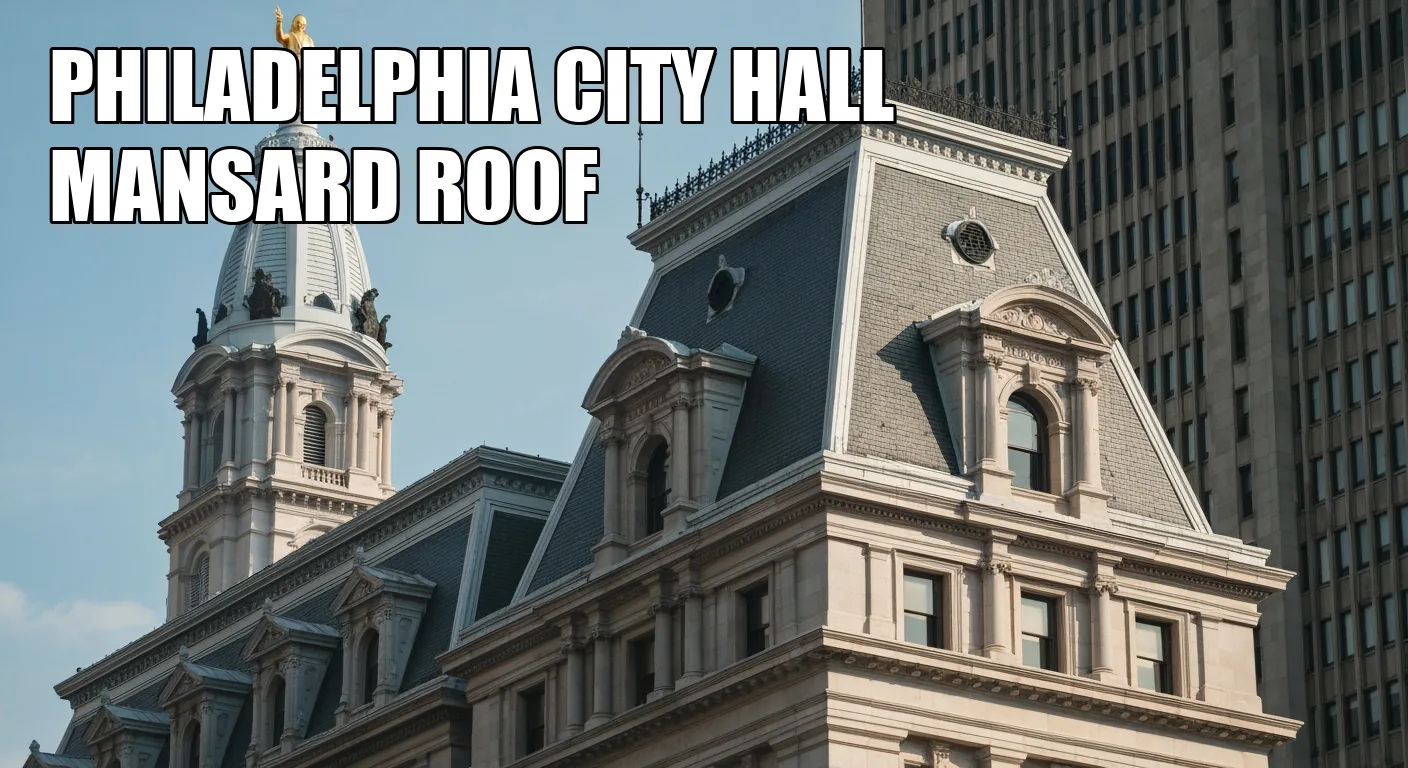
While the mansard roof provides the canvas, the dormer windows are the jewels that adorn it. These aren’t just functional openings for light and air into the attic—though they certainly serve that purpose. In Second Empire architecture, dormers become elaborate sculptural elements, frequently boasting intricate hoods that might be rounded, arched, pedimented, or even fantastical forms. They break the monotony of the roofline, adding a rhythm and visual interest that’s hard to ignore. This emphasis on ornamentation, on making every element sing with decorative intent, is a defining characteristic of the style. Now, if you want to see dormers taken to an almost insane level of grandeur, you absolutely must visit Philadelphia City Hall. Begun in 1871 and finally completed in 1901, this behemoth by John McArthur Jr. (with Thomas Ustick Walter) isn't just one of the largest municipal buildings in the world; it’s an absolute festival of Second Empire excess. Everywhere you look, particularly along its vast mansard rooflines, you’ll find dormer windows, each encased in its own miniature architectural drama. They’re not merely decorative; they’re *statement* pieces, framed by ornate surrounds, pilasters, and friezes that make each one a tiny masterpiece. McArthur's work here was so influential it helped solidify the style's popularity across the Northeast. Don't just admire it from the street; take one of the daily public tours (check the City Hall website for times and booking details) to get an up-close perspective, or, if you're brave enough, ascend to the observation deck in the tower for a panoramic view that truly lets you appreciate the scale and intricacy of its roofing system. It's a building that, despite its critics who found it overly ornate even in its own time, demands respect for its sheer ambition and the craftsmanship it embodies.

Projecting Pavilions: Breaking the Monotony

One could argue that Second Empire architects loved a good visual interruption. The projecting pavilion, a segment of a facade that dramatically pushes forward from the main building line, is a prime example. These pavilions typically appear at the center or corners, serving to emphasize key areas, break up the building’s uniformity, and introduce a dynamic play of light and shadow. They often feature different roof designs, varying heights, or unique stylistic elements, creating a sense of drama and monumental scale that was particularly favored for important public buildings and the homes of the newly wealthy. It’s a trick to make a long building feel more complex and imposing, like a grand symphony with distinct movements. Driving through Poughkeepsie, New York, a stop at Vassar College is essential to appreciate this feature. The Main Building, completed in 1865 under the design of our old friend James Renwick Jr., is an exceptional example. Its U-shaped configuration is defined by a dominant central projecting pavilion, which is crowned by a striking slate-roofed dome and intricate iron cresting. At the time of its completion, this building boasted more interior space than any other in America, a testament to the ambitious vision of its founder, Matthew Vassar, for women's education. Strolling across the campus, you’ll quickly grasp how this central pavilion anchors the entire structure, drawing the eye upwards and outwards. It’s a National Historic Landmark, not just for its architectural merit but for its profound educational significance. While tours might require prior arrangement, the exterior is easily accessible for a walk-around, offering fantastic photo opportunities, especially during the vibrant fall foliage or crisp spring bloom, which only enhance its architectural lines.

Iron Cresting and Ornamental Brackets: The Industrial Age's Delicate Touch

The Second Empire style didn't just borrow from history; it embraced the technological advancements of its own era. The proliferation of cast iron, a material that became increasingly accessible and affordable after the Civil War thanks to America’s burgeoning industrialization, allowed for an explosion of intricate, mass-produced ornamentation. You’ll see this manifest in two key ways: delicate iron cresting that adorned roof lines like elaborate tiaras, and ornamental brackets, often paired or single, tucked beneath the lower cornices of those mansard roofs. These brackets, frequently influenced by Italianate styles, created deep shadows that added texture and depth to the facades. For a masterclass in this industrial elegance, look no further than the Eisenhower Executive Office Building (EEOB) in Washington, D.C., originally known as the State, War, and Navy Building. Begun in 1871 and finished in 1888, this leviathan was designed by Alfred Mullett, the Supervising Architect of the Treasury. Upon its completion, it was the largest office building in the world, a truly monumental undertaking. Its granite, slate, and, yes, extensive cast-iron exterior are a testament to Second Empire’s embrace of modern materials. You can spend an hour just trying to count the myriad ornamental brackets marching along its cornices, creating a shadowed relief against the stone. And the iron cresting along its roofline? It's a delicate, almost lacelike counterpoint to the building's formidable mass. While public access inside is generally limited to specific tours (White House Visitor Center can provide information on rare opportunities like the annual Spring Garden Tour), you can easily admire its impressive exterior from Lafayette Square or the adjacent streets. The contrast between its grand scale and the meticulous, almost delicate ironwork is something every architecture enthusiast should witness firsthand.

Rectangular or Octagonal Towers: Vertical Ambition

What’s a grand architectural statement without a bit of vertical thrust? Towers were another prominent feature of Second Empire buildings, often positioned centrally or at the corners, acting as powerful visual anchors. These weren't just functional clock towers or bell towers; they were deliberate expressions of prominence, often rising an additional one or two stories above the main structure, topped by their own mansard roofs, frequently in concave, convex, or s-shaped profiles. They provided distinctive silhouettes, creating a memorable skyline and reinforcing the building’s importance. The New York State Capitol in Albany, a monumental project that began in 1867 and wasn't fully completed until 1899, provides a fascinating, if somewhat complex, example of the Second Empire tower. This building is an architectural saga, having been worked on by multiple teams, including Thomas Fuller, Leopold Eidlitz, Henry Hobson Richardson, and Isaac G. Perry. While it eventually incorporates Romanesque and even French Chateau elements due to these shifts in design philosophy over its 32-year construction, the initial Second Empire vision, particularly in its massing and central composition, heavily featured the grand tower element. The interplay of these styles, often referred to as eclectic, is itself a hallmark of the era, where architects weren't afraid to blend historical influences. It’s a building that feels almost like a geological formation, reflecting layers of changing taste and ambition. Public tours are offered (check the NYS Capitol website for schedules), and they are highly recommended. Not only do you get to explore the interior’s astonishing craftsmanship, but you also gain a fuller appreciation for the scale and vertical ambition that the various architects sought to achieve, particularly the way the tower attempts to unify the disparate styles. America’s embrace of Second Empire architecture wasn't just a fleeting fancy; it was a profound cultural moment. These buildings, with their mansard roofs, elaborate dormers, imposing pavilions, delicate ironwork, and soaring towers, transformed our urban landscapes from the 1860s through the 1880s. They stand as robust testaments to a nation finding its voice, eager to demonstrate its sophistication and strength on the world stage. While some might find the style a bit too "heavy" or ornate for modern tastes, there's no denying the sheer craftsmanship and ambition that went into every granite block and cast-iron detail. Next time you're exploring an old city center, take a moment to look up. You might just catch a glimpse of this exuberant French import, still reigning supreme, still telling its grand American story.

Exploring Second Empire Architecture: The Ultimate Guide to French-Inspired Elegance in America

What is the Second Empire?
The Second Empire was the period of French government from 1852 to 1870 under Emperor Napoleon III, marked by significant infrastructure development, economic prosperity, and the renovation of Paris with broad boulevards and striking public buildings that inspired architectural styles worldwide.
What is second empire architectural features history?
Second Empire architecture emerged during Napoleon III's reign (1852-1870) in France and became fashionable in the United States following successful international expositions in Paris in 1855 and 1867, dominating American construction between 1860 and 1880.
What are the features of the Second Empire architecture?
Key Second Empire features include mansard roofs with dual pitches, dormer windows, decorative brackets, quoins, cornices, elaborate ornaments in cast iron or terra cotta, paired columns, pediments, and often a symmetrical facade with classical elements inspired by the Louvre renovation in Paris.
What was the most distinctive feature of the Second Empire style and what advantages did it provide?
The mansard roof is the most distinctive feature, allowing architects to add an extra livable floor while complying with height restrictions, providing practical expanded living or storage space while creating an elegant, stately appearance that enhanced curb appeal and property value.
What does a Second Empire house look like?
Second Empire houses typically feature a distinctive dual-pitched mansard roof with steeper lower slopes, decorative dormer windows, ornamental brackets beneath the roofline, classical columns or pilasters, and ornate facade details, often built symmetrically around a central axis with either box or rectangular forms.
What is 2nd Empire furniture style?
Second Empire (Napoleon III) furniture prioritizes comfort and luxury through elaborate upholstery with fringes and tassels, incorporating eclectic historical influences, exotic materials like bamboo and rattan, and decorative elements such as crapaud armchairs, confidante chairs, and pieces with gilded bronze ornamentation.
What are the characteristics of the Empire style?
Empire style (1804-1815) furniture features grand, imposing forms inspired by Greco-Roman antiquity, with heavy mahogany construction, sharp corners, flat surfaces, minimal moldings, gilded bronze details, and symbolic ornaments like laurel wreaths reflecting Napoleonic imperial majesty.
Is second empire architecture still popular?
Yes, Second Empire architecture is experiencing a renaissance in 2025, with renewed appreciation for its ornate detailing, opulence, and distinctive design; preservation efforts continue, and restored Second Empire buildings are highly valued for their historical significance and aesthetic appeal.
What is a Second Empire chair?
Second Empire chairs are elaborately upholstered seating pieces featuring thickly padded backs and arms, often with fringed skirts hiding the legs, made from mahogany with gilded bronze ornamentation, including specialized designs like the confident (for two people) and indiscret (for three people).
What is the difference between Second Empire and Beaux Arts?
Second Empire (1852-1870) is more eclectic with ornamental mansard roofs and blended historical styles, while Beaux-Arts (late 19th-early 20th century) is more overtly neoclassical and explicitly monumental, typically appearing as more formal institutional and Gilded Age buildings.
Where can I see the best Second Empire architecture in the United States?
Top destinations include New York City (19 National Register properties), Worcester, Massachusetts (15 properties), Boston (14 properties), Cambridge (14 properties), and Washington D.C. (13 properties), featuring iconic examples like Philadelphia City Hall and the Lockwood-Mathews Mansion in Connecticut.
What are famous Second Empire buildings in the United States?
Notable examples include Philadelphia City Hall (1871-1881), the Lockwood-Mathews Mansion in Norwalk, Connecticut (1864-1868), the Renwick Gallery in Washington D.C. (1859-1860), and public buildings designed by architect Alfred B. Mullett in St. Louis, Boston, Philadelphia, and New York City.
How can I identify a Second Empire building?
Look for the characteristic dual-pitched mansard roof with dormer windows, decorative brackets beneath the roofline, ornate terra cotta or cast iron details, classical columns or pilasters, symmetrical facade, and often elaborate cornices and pediments distinguishing it from other Victorian styles.
When was Second Empire architecture most popular in America?
Second Empire was the dominant American residential style from 1860 to 1880, following favorable reception of early public buildings like the Renwick Gallery; it was also extensively used for government buildings during President Grant's administration (1869-1877).
Can I take tours of Second Empire mansions?
Yes, the Lockwood-Mathews Mansion Museum in Norwalk, Connecticut offers 45-minute ($20 adults) and 90-minute ($35 adults) guided tours Wednesday-Sunday, plus other museums like the Hower House in Akron, Ohio, Park-McCullough in Vermont, and various historic house museums nationwide feature Second Empire properties.
What is the mansard roof and why is it important to Second Empire design?
Named after French architect Louis Mansart, the mansard roof features two slopes on each of its four sides with the lower slope steeper than the upper, allowing usable attic space while complying with height restrictions, making it both practical and visually distinctive for Second Empire architecture.