Photo by Diana Kowalski for Cornerstone Mansion · February 2, 2026
Find Nearby Hotels
Book Flights
For years, I've crisscrossed this country, driven by an insatiable curiosity about the echoes of the past. I’ve walked battlefields where empires crumbled, stood in chambers where nations were born, and traced the painful footsteps of those who fought for freedom. What I’ve learned is that history isn't static; it's a dynamic conversation, constantly reshaped by how we choose to tell its stories. In 2025, as we hurtle towards America's 250th anniversary, that conversation is more vibrant and varied than ever, especially when it comes to technology's role.
How do we bridge the chasm between a dusty textbook and a visceral, emotional understanding of history? Some sites lean into solemn tradition, relying on the inherent gravitas of the place itself. Others experiment with cutting-edge digital wizardry, hoping to conjure the past anew. Let's delve into three extraordinary places—Cahokia Mounds, Independence Hall, and the Edmund Pettus Bridge—each a monument to a distinct American epoch, and each offering a profoundly different interpretive journey.
Unearthing Ancient Grandeur with Augmented Reality at Cahokia Mounds
Imagine a bustling pre-Columbian city, larger than London was at the time, teeming with life, grand temples rising on massive earthen mounds. You'd be picturing Cahokia, an ancient metropolis near modern-day Collinsville, Illinois, that flourished a thousand years ago. For decades, interpreting this vast Mississippian culture site, with its largely vanished wooden structures, has been a monumental challenge. How do you help visitors visualize what’s no longer there? Cahokia Mounds State Historic Site has an answer that feels both innovative and deeply intuitive: augmented reality.
Stepping onto the grounds here in 2025 means engaging directly with the future of historical interpretation. The *Cahokia AR Tour App*, available for a modest $4.99 on iOS and soon Android, transforms the landscape before your eyes. Point your phone’s camera at the sprawling grounds around Monks Mound—the largest pre-Columbian earthwork in the Americas, a truly staggering feat of human engineering—and suddenly, the screen overlays vivid 3D reconstructions. You'll see the towering stockade, the meticulously planned Grand Plaza, and even peer into the interiors of temples that once crowned these colossal mounds. It's a genuinely transformative experience, pushing beyond static signage to deliver a visceral sense of discovery.
The genius of Cahokia’s AR isn't merely in its visual spectacle; it's in how it fosters discovery learning. Rather than passively absorbing facts, you are actively *seeing* and *exploring* a lost world. For those without a compatible device, or who prefer a more robust experience, iPads complete with headphones are available for rent on-site at $15, providing narrated context and deeper dives into artifact details at six key waypoints. While the Interpretive Center is currently undergoing renovations, shifting the primary educational focus to this digital platform, the AR experience itself stands as a powerful testament to how technology can resurrect history.
So, how do you make the most of your visit to this incredible archaeological wonder? To truly appreciate the scale and mystery of Cahokia, I recommend arriving in the morning, ideally on a weekday between April and October to avoid summer heat and weekend crowds. The path around the mounds is exposed, so bring water, a hat, and comfortable walking shoes. And yes, absolutely download that app or rent the iPad. It’s not just an enhancement; it's essential for grasping the sheer magnitude of this ancient civilization, helping you understand *why* this place matters beyond its quiet grassy mounds.
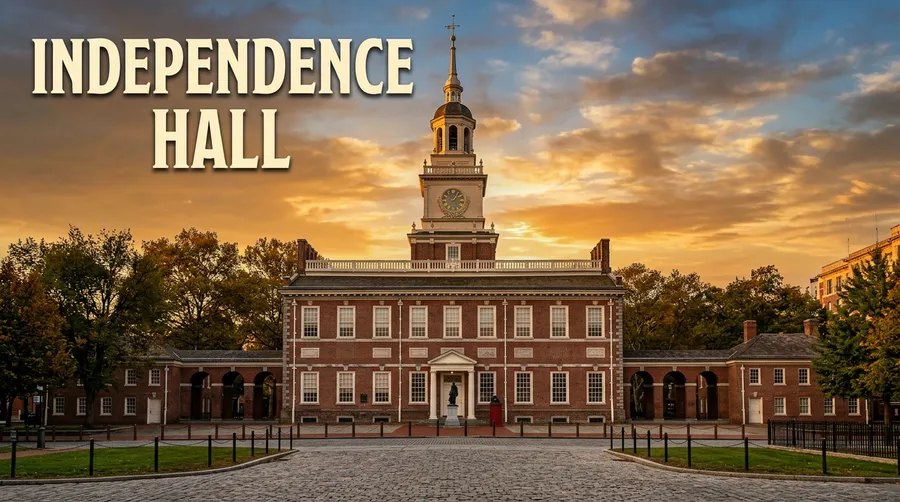
Independence Hall: The Enduring Power of Solemnity, Unplugged
From the whispers of a forgotten city, we journey to the very crucible of American democracy: Independence Hall in Philadelphia. This isn’t just a building; it’s a living testament to revolutionary ideals, the very birthplace of a nation. Here, in 1776, the Declaration of Independence was debated and adopted, and later, the U.S. Constitution was crafted. Walking through its hallowed doors, one feels the undeniable weight of history, a profound sense of continuity with the past.
Unlike Cahokia's digital embrace, Independence Hall in 2025 largely holds to a more traditional interpretive path, and frankly, it works. Park rangers, steeped in the stories and significance of these chambers, lead engaging 20-minute guided tours throughout the day. Their narratives bring the pivotal moments to life, painting vivid pictures of the debates, the compromises, and the audacious courage that defined the founding era. There’s a solemnity here, an emotional resonance that doesn’t require flashing lights or virtual overlays. The power lies in the unaltered setting, the very air you breathe, the direct narrative connection.
While you can pick up a "Birthplace of a Nation" pamphlet and view a self-guided "Birthplace of Freedom" film (with ASL and assistive listening options available), the site isn't chasing the cutting edge. The adjacent Visitor Center, with its promised interactive exhibit spaces, digital kiosks, and a rooftop terrace, remains under renovation, now targeting a 2027 reopening. This delay means visitors in 2025 will find the experience centered firmly on ranger-led interpretation and the physical presence of the Hall itself. It’s a reminder that sometimes, the most profound connections are made through human storytelling, rather than pixelated reconstructions.
Planning your visit here requires foresight, especially during peak tourist seasons (summer, spring break, fall weekends). Tickets, which are required for entry, must be reserved via Recreation.gov well in advance, and they often come with a small service fee. Expect crowds, especially for morning tours. My advice? Arrive early, even for a timed ticket, and take a moment to simply *be* in the space before your tour begins. The quiet grandeur of the Assembly Room, where so much was decided, demands a few moments of reflection without a guide's voice. Don't expect a flashy tech experience; instead, prepare for a powerful, deeply human encounter with the bedrock of American identity.
The Edmund Pettus Bridge: A Walk Through Living Memory and Future Immersion
Few structures embody the raw courage and brutal injustice of the American Civil Rights Movement as powerfully as the Edmund Pettus Bridge in Selma, Alabama. This steel arch bridge, named for a Confederate general and Ku Klux Klan Grand Dragon, became a symbol of resistance on March 7, 1965—"Bloody Sunday"—when state troopers violently attacked peaceful marchers advocating for voting rights. To stand on this bridge is to stand on hallowed ground, charged with the echoes of sacrifice and the unyielding pursuit of justice.
Unlike the ancient past of Cahokia or the distant revolution of Independence Hall, the events of the Edmund Pettus Bridge are within living memory, lending an immediate, heartbreaking poignancy to the site. Here, interpretation leans heavily on the power of physical presence and traditional commemoration. Interpretive signage along the bridge and the broader Selma to Montgomery National Historic Trail provides context, while annual commemorative marches draw thousands, turning remembrance into a collective, lived experience. The bridge isn’t just a landmark; it's an active stage for ongoing dialogue about civil rights.
Yet, this site, too, looks to technology to deepen empathy and understanding. A fascinating proof-of-concept VR experience, developed by archDSW, offers a geospatially accurate reenactment of Bloody Sunday. Though not yet publicly available for everyday visitors, this prototype hints at a future where one could virtually step onto the bridge in 1965, experiencing the unfolding tragedy with chilling immediacy. Imagine the power of such an immersive tool, especially for younger generations who might struggle to grasp the visceral reality of historical struggle.
The real game-changer here is the impending $10 million NPS-funded interpretive center, targeted for completion by 2027 at 210 Broad Street. This center promises to be a hub of state-of-the-art educational technologies, including interactive displays and audio-visual programming that will house the VR experience and other immersive tools. For visitors in 2025, you'll still primarily rely on the power of the bridge itself and the interpretive signs. My advice for this profoundly moving site? Visit during a quieter period for personal reflection, but also consider aligning your trip with an anniversary march or event if you wish to witness the collective power of remembrance firsthand.
Which Approach Connects Best? A Traveler's Honest Assessment
Having experienced these vastly different approaches to historical interpretation, one can’t help but ask: which method truly delivers the most profound connection? Cahokia Mounds’ full AR integration allows visitors to "see" a vanished city, providing an immediate, almost magical sense of what was lost. This immersive tech is undeniably effective for tech-savvy Millennials and Gen Z, transforming abstract archaeological data into vibrant, tangible experiences. It bridges the gap between the modern landscape and its ancient past beautifully.
However, does a reliance on screens risk detracting from the inherent quiet awe of a site? The very act of *imagining* what once stood on Monks Mound, without digital interference, can be a powerful, personal meditative experience. I sometimes wonder if the AR, while brilliant, might inadvertently diminish that quiet, internal reflection. It's a trade-off: unparalleled visualization versus the subtle, often more enduring, power of personal contemplation.
Independence Hall, on the other hand, embraces a more conservative path, trusting the solemnity of its original structures and the eloquence of its rangers. There's an undeniable gravitas to standing in the Assembly Room, knowing the very air you breathe once witnessed Benjamin Franklin, Thomas Jefferson, and George Washington. The lack of pervasive digital tools means fewer distractions, fostering an environment where the *narrative* and the *setting* themselves do the heavy lifting. While it may not capture the attention of a TikTok generation in the same immediate way as AR, its power is in its unwavering authenticity and the direct connection to monumental human achievement.
The Edmund Pettus Bridge presents yet another dynamic. The bridge itself, along with the self-guided trails and annual marches, already possesses an extraordinary emotional weight. The pain and triumph of the Civil Rights Movement are palpable here, requiring little embellishment. The planned VR initiatives and interpretive center, while promising to deepen contextual understanding and empathy through immersive tech, will build upon an already potent foundation. Here, the technology isn't replacing the experience of presence; it’s enhancing it, providing new avenues to connect with events that profoundly shaped our nation.
Looking Forward: The Evolving Tapestry of American History
As our nation approaches its 250th birthday, these three sites beautifully illustrate the evolving landscape of historical interpretation. Cahokia Mounds demonstrates a mature, fully realized AR model, making the invisible visible. Independence Hall holds firm to its reverence for tradition, proving the enduring power of human storytelling and untouched historical spaces. The Edmund Pettus Bridge stands poised at a fascinating juncture, blending traditional commemoration with the cutting edge, promising a future where technology amplifies, rather than replaces, lived remembrance.
Ultimately, the "best" way to experience history remains subjective, deeply personal. What these sites collectively teach us is that there’s no single right answer. Whether through the magic of augmented reality, the gravitas of a ranger’s voice, or the profound stillness of a bridge that bore witness to history, the goal is always the same: to connect us to the past, to understand *why* these stories matter, and to carry their lessons forward. So, go forth, explore, and let America's history surprise you.
Unlocking America’s Timeless Treasures
What are top US historical sites?
Iconic sites include Independence National Historical Park in Philadelphia, Statue of Liberty National Monument, Alcatraz Island, Mount Rushmore National Memorial, and Colonial Williamsburg in Virginia.
What is the most visited historical site in the US?
The Golden Gate National Recreation Area drew 17.18 million visitors in 2024, making it the most visited historic site managed by the National Park Service.
What are the top 10 historical places to visit in the world?
Globally celebrated sites include the Great Wall of China, Pyramids of Giza, Machu Picchu, Taj Mahal, Colosseum in Rome, Angkor Wat, Petra in Jordan, the Acropolis of Athens, Stonehenge, and Easter Island.
What are the must-see places in the USA?
Must-sees include the Grand Canyon, Yellowstone National Park, Independence Hall, Alamo in San Antonio, and the French Quarter in New Orleans.
What is Americas most historic city?
St. Augustine, Florida, founded in 1565, is the oldest continuously inhabited European settlement in the United States.
Which US city has the most historic sites?
New York City leads with over 23,000 designated landmarks and historic districts.
What is the most forgotten city in the US?
Cahokia, Illinois, once North America’s largest pre-Columbian city, is largely overlooked today.
What is the least visited place in the United States?
Gates of the Arctic National Park and Preserve in Alaska receives fewer than 8,000 visitors annually, making it the least visited national park.
What is the coolest city in the US?
Austin, Texas is renowned for its live music scene, vibrant arts culture, and booming tech industry.
Which city is known as the city that never stops?
New York City, nicknamed “the city that never sleeps,” is famed for its nonstop energy and 24/7 activity.
When is the best time to visit US historic sites?
Spring (April–June) and fall (September–October) offer mild weather and smaller crowds at most sites.
How much does it cost to visit national historic landmarks?
Many sites are free or charge nominal fees ($5–$25); entrance fees vary by site and management agency.
Do I need a pass or ticket for US historic parks?
Some sites require individual tickets, while the America the Beautiful Pass (US $80/year) covers entrance to most federal lands.
What are the best guided tours of US historic sites?
Top tours include ranger-led programs at Colonial Williamsburg, Alcatraz night tours, and trolley tours in Charleston.
How accessible are US historic sites for disabled visitors?
Most major sites offer wheelchair access, accessible restrooms, and assistive-listening devices; check each site’s website for details.
Are dogs allowed at US historic landmarks?
Policies vary: many outdoor sites permit leashed pets, but indoor areas often prohibit animals.
Can I camp near US historic sites?
National parks and recreation areas often have nearby campgrounds; book well in advance for popular locations.
How long does it take to tour major US historic cities?
Plan 2–4 days to explore highlights in cities like Boston, Philadelphia, and Washington, D.C.
What are free historic sites in the USA?
Free sites include the National Mall, Lincoln Memorial, Ellis Island Museum, and many state-run historic parks on designated days.
Are U.S. historic sites safe at night?
Most sites close at dusk for safety; only select monuments (e.g., Lincoln Memorial) are open 24/7 with security patrols.
What are unique culinary experiences at historic US destinations?
Enjoy clam chowder in Boston’s Quincy Market, beignets in New Orleans’ French Quarter, and apple pie in colonial Williamsburg.
We use cookies to enhance your experience. By continuing to visit this site you agree to our use of cookies.