The South holds a particular magic, doesn't it? Its very air seems thick with history, a tapestry woven from grand fortunes and profound tragedies. For years, I’ve been drawn to its antebellum bed and breakfasts, not just for their undeniable beauty, but for the way they offer a visceral connection to a bygone era. Yet, what many guides won't tell you is that these aren't merely places to sleep; they are living museums, each with its own quirks, its unique demands, and often, a story far more complex than any brochure could capture.
Beyond the Brochures: What Really Defines an Antebellum Escape?
What constitutes an authentic antebellum experience, anyway? Is it simply a structure built before the Civil War, or does it require a certain spirit, a particular narrative echo? Frankly, I've found it's a dynamic interplay of meticulous preservation, the quality of interpretation, and, sometimes, the sheer force of local folklore. The term "antebellum" itself, meaning "before the war," carries a heavy historical weight, referring to the period in the South roughly from the late 18th century to 1861. These homes, built during an era of significant social and economic transformation, stand as tangible links to a complex past, embodying architectural styles from Federal to Greek Revival, and hinting at lives both opulent and, often, profoundly unjust. It’s this intricate blend of beauty and buried stories that truly draws me in, far more than any perfectly plumped pillow.
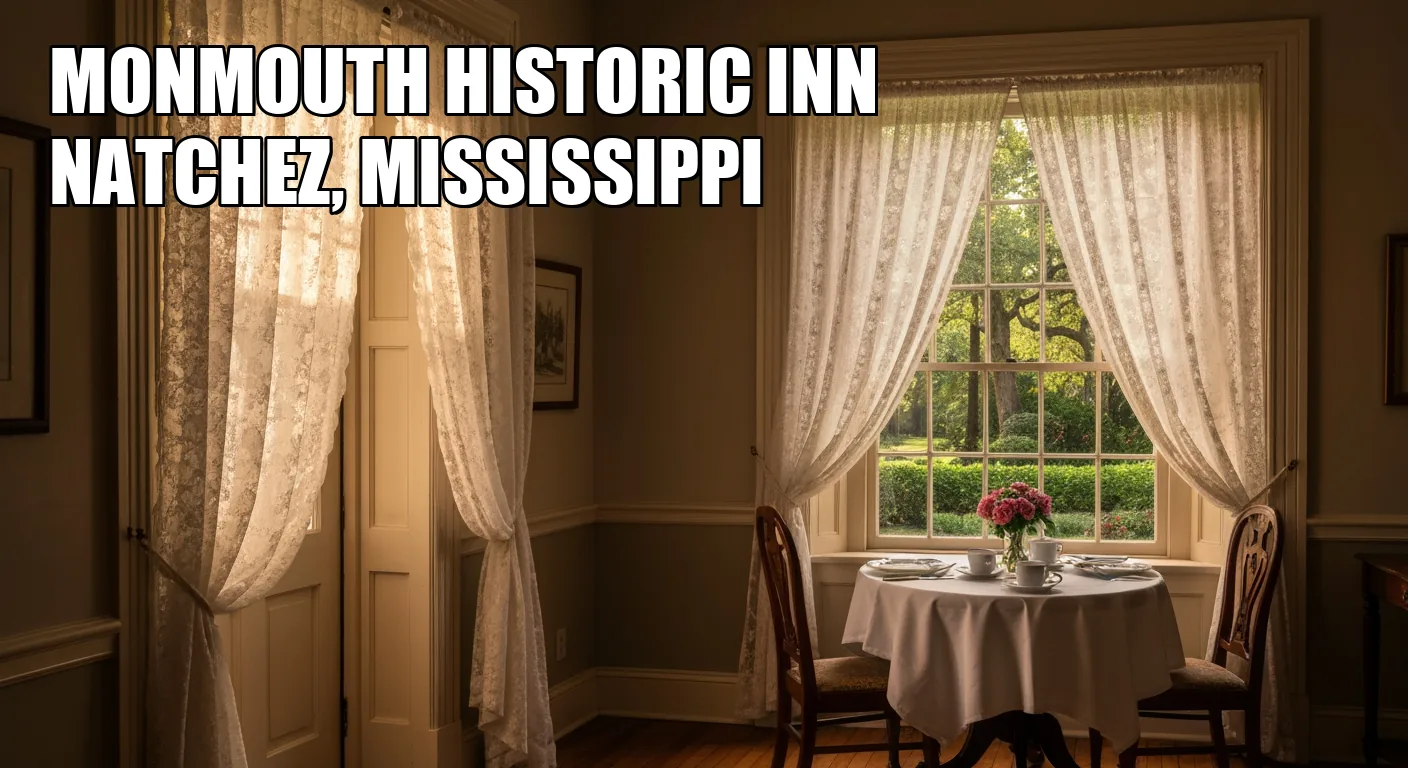
Many of these properties, like the magnificent Monmouth Historic Inn & Gardens in Natchez, Mississippi, offer an immersive journey into that particular segment of history. Imagine stepping into a home built in 1818, later renovated into a sprawling Greek Revival mansion by Governor John A. Quitman himself. Monmouth, a National Historic Landmark, doesn't just display period furnishings; it breathes them. Its 30 rooms, spread across the main house and various outbuildings, are a masterclass in elegant comfort, many featuring fireplaces and spa tubs – a truly luxurious nod to modern amenities within a historical framework. Guests consistently rave about the attention to detail, from the décor to the impeccable service. You won't find sensationalized ghost stories here; instead, the focus remains firmly on the grandeur and the rich political tapestry of its past, a welcome departure from some of the more overtly commercialized "haunted" venues. Expect rates ranging from $195 to $425 per night, depending on whether you opt for an original Antebellum Room on the second floor or a spacious Deluxe Suite nestled amidst the grounds.
Natchez's Grand Dames: Monmouth and Linden's Enduring Charms
Venturing through Natchez, one quickly realizes its bounty of historical homes, and two stand out as compelling, albeit distinct, options for an overnight stay: Monmouth and the Linden Historic Bed & Breakfast. While Monmouth offers a sweeping, grand estate experience, Linden, dating back to approximately 1790, presents a more intimate, classic Federal style. Linden is often whispered about in connection with "Gone with the Wind," its front door reportedly inspiring the design of Tara. Now, while such anecdotes certainly add to the romantic allure, it’s worth remembering that these connections often grow through generations of storytelling rather than verifiable historical records. Does it detract from Linden's charm? Absolutely not. Its American Federal antiques and meticulously preserved interiors speak volumes on their own.
Linden, unlike Monmouth, also leans into a more overtly "haunted" reputation. Visitors often speak of a phantom horse-drawn buggy in the driveway or the distinct tapping of a cane from the west gallery. There's even talk of a man in a top hat appearing in a child's bedroom and a woman's apparition seen leaping from the roof, only to vanish before hitting the ground. These tales, passed down through generations of owners and guests, contribute to a different kind of historical immersion – one where the past doesn't just sit in portraits but actively *interacts* with the present. When planning a visit to Natchez, particularly during the vibrant autumn months, understand that parking can be a bit tight downtown, so choosing a B&B with dedicated parking, or at least ample street parking nearby, is a wise move. Always contact Linden directly for their most current autumn rates, as they vary by room type and season.
The Myrtles: Where History Whispers... or Screams?
Can a place truly be "one of America's most haunted plantations," or is that merely a brilliant marketing tagline? The Myrtles Plantation in St. Francisville, Louisiana, certainly stakes that claim, and few places ignite such passionate debate among paranormal enthusiasts and skeptical historians alike. Built in 1796 as Laurel Grove and later expanded dramatically in the 1830s, The Myrtles has cultivated an international reputation for its spectral residents. The most famous is Chloe, an enslaved woman said to appear in a green turban, a story that has been embellished and retold countless times. Guests frequently report disembodied footsteps, a grand piano playing on its own, and the unsettling sight of children's apparitions on the veranda.
The Ruffin Stirling Room, named after one of the plantation's 19th-century owners, is singled out for its intense activity, with guests reporting crying children and even personal items, like lipstick, being disturbed. And then there's the infamous mirror in the grand hallway, where handprints are said to reappear no matter how many times it's re-silvered. Is it genuine spectral energy, or a masterclass in atmospheric storytelling? Probably a bit of both. What's undeniable is the palpable atmosphere and the sheer dedication to preserving these ghost stories, making it a truly unique, if sometimes unsettling, experience. Expect to pay around $207 per night if you're looking to commune with Chloe in October 2025. While the plantation embraces its haunted persona, it's also a stunning piece of history, and its beauty alone is worth a visit, even if you remain a staunch skeptic about the supernatural claims. Be aware that the Myrtles can get incredibly busy, especially around Halloween, so book well in advance if you want to experience its eerie charm.
From "Tara" to Madison's Birthplace: Cinematic Echoes and Foundational Roots
Sometimes, history is amplified by popular culture, and sometimes it stands on its own immense merit. The Twelve Oaks Bed & Breakfast in Covington, Georgia, is firmly in the former camp, celebrated as a model for Ashley Wilkes' home in "Gone with the Wind" – a recommendation directly from Margaret Mitchell herself. This 1836 Greek Revival mansion, now an 11,000-square-foot award-winner on the National Register of Historic Places, offers opulent guest rooms complete with modern luxuries like flat-panel TVs, fireplaces, and plush Turkish robes. One suite even boasts a rare antique ribcage shower from the late 1800s, designed to spray guests like an old-fashioned carwash – a quirky, delightful feature you won't find just anywhere. The allure here is the blend of cinematic fantasy with tangible luxury, offering a lavish escape. Autumn rates typically range from $195 to $308 per night, depending on the specific room and date.
Contrast that with Belle Grove Plantation Bed & Breakfast in King George, Virginia. While visually stunning, its claim to fame isn't Hollywood, but rather the very foundation of the United States. James Madison, the fourth President and "Father of the Constitution," was born on its grounds in 1751. The current Federal-style mansion, built in 1791 and later expanded, retains incredible original features like heart pine floors and lead-pane windows. This isn't just an old house; it's a profound historical landmark, stretching across 600 acres established way back in 1670. Here, you walk in the footsteps of a Founding Father, a feeling far more profound than any fictional connection. The Madison Suite commands $240-$270 per night, while other suites like The Conway or Hipkins-Bernard offer slightly more accessible rates, starting from $175-$199. It's an essential pilgrimage for anyone truly passionate about early American history.
New Orleans and Natchez: Urban Oases vs. River Town Retreats
The geography of an antebellum B&B deeply shapes the experience. Consider the Antebellum Guest House in New Orleans, for instance. Situated just three blocks north of the vibrant French Quarter on historic Esplanade Avenue, this circa-1850s home has been meticulously restored to National Historic Society standards, offering a museum-quality stay within the bustling urban fabric. Its unique charm includes the Bordello Room, featuring a truly rare piece of New Orleans history: a bed from an infamous Storyville bordello, carved with mirrors and ornate details. The three-course breakfasts, served on silver platters with authentic antebellum recipes and china, elevate the dining experience into a historical event in itself. It’s an immersive dive into New Orleans' distinct blend of history and hedonism, with rates ranging from $150-$350 per room.
Then there's the Beaumont House Natchez, another jewel in Natchez, Mississippi's crown. A historic downtown home from the 1830s, it provides a more traditional antebellum B&B experience. While it offers all modern conveniences, its charm lies in its classic decor and location, placing you squarely in the heart of Natchez's rich historical district without the overt theatricality of some other properties. Rooms like The Laura Suite or The Hemingway Room offer comfortable, elegant stays, with rates between $129-$219 per night. The distinction between these two becomes clear: New Orleans offers a historical stay steeped in its unique, flamboyant culture, while Natchez, represented beautifully by Beaumont House, provides a quieter, more classically Southern immersion into river town elegance.
Navigating the Nuances: Planning Your Antebellum Adventure
Planning a trip to these historical gems requires a bit more finesse than simply hitting "book now." Firstly, let’s be honest: while I've provided typical autumn rates, specific 2025 pricing is a fluid beast. It fluctuates based on demand, specific dates (weekdays versus weekends, holidays versus off-peak), and room category. The most reliable way to secure accurate rates and availability, particularly for popular properties like The Myrtles or the exquisite suites at Monmouth, is always to contact the property directly. This also applies to securing specific rooms you might have heard about, whether for their historical significance or rumored spectral residents.
Secondly, manage your expectations regarding the "haunted" aspect. While places like The Myrtles and Linden certainly lean into their ghost stories, these are largely built on anecdotal guest reports and local folklore, not scientific documentation. Go for the history, the atmosphere, and the storytelling, and if a spirit decides to make an appearance, consider it a bonus. As for timing, late spring and especially autumn (October-November) are glorious throughout the South, with cooler temperatures and vibrant foliage. However, these are also peak seasons, meaning heavier crowds and higher prices. If solitude is your aim, consider a weekday visit during early spring or late fall. Always ask about parking availability, especially in more urban or compact historic districts, as a forgotten detail like a meter or a distant lot can quickly dampen the romantic illusion. Remember, these experiences are about discovery, and a little proactive research ensures your journey is filled with pleasant surprises, not logistical headaches.
These antebellum bed and breakfasts are more than just places to rest your head; they are portals to another time, each offering a unique glimpse into the intricate tapestry of the American South. From grand architectural statements to whispered ghost stories, from the birthplaces of presidents to the backdrops of legendary films, they challenge us to confront history in all its beauty and complexity. Go with an open mind, a curious heart, and a willingness to look beyond the surface, and you’ll find an experience that lingers long after you’ve left the porch swing behind.
Historic Antebellum Bed & Breakfast Guide to America's Southern Charm
What is the history of the antebellum homes?
Antebellum homes were built in Southern states from approximately 1830 to 1860, primarily in Greek Revival and classical architectural styles before the Civil War. These grand mansion complexes were typically plantation estates built by wealthy landowners and remain important historical landmarks reflecting the South's pre-Civil War era.
What is the origin of Bed and Breakfast?
The bed and breakfast concept originated centuries ago with monasteries offering travelers lodging and meals; the modern B&B format developed during Victorian Britain's Georgian spa towns and became widespread during the 1870s with the rise of steam travel and seaside tourism.
Antebellum bed and breakfast history - what makes them special?
Antebellum bed and breakfasts combine historic preservation with modern hospitality, allowing guests to stay in or visit actual pre-Civil War mansions that have been carefully restored; these establishments offer authentic Southern charm while providing comfort and educational experiences about 19th-century plantation life.
Was 12 Oaks a real plantation?
Twelve Oaks in Margaret Mitchell's 'Gone with the Wind' is fictional, but author Mitchell modeled it after an actual antebellum mansion built in 1836 in Covington, Georgia. That real Twelve Oaks mansion now operates as a historic bed and breakfast and event venue.
Are any antebellum mansions still standing?
Yes, numerous antebellum mansions remain standing throughout the South; Natchez, Mississippi has over 100, including Linden (circa 1790), Glenfield Plantation, and others, while Louisiana, Georgia, and other Southern states preserve additional historic antebellum estates.
What city has the most antebellum homes?
Natchez, Mississippi has the nation's largest collection of antebellum homes with over 100 historic mansions, many of which survived the Civil War and have been preserved. The city was home to more millionaires per capita than any other American city before the Civil War.
Are there any original plantations still standing?
Yes, Shirley Plantation in Virginia, established in 1613, is the oldest active plantation in the United States with its main house built around 1736; it remains in continuous family ownership as the oldest family-owned business in North America.
Do any of the Gilded Age mansions still exist?
Yes, many Gilded Age mansions are still standing and open to visitors, primarily in Newport, Rhode Island, including The Breakers (Vanderbilt, 1893-1895), Marble House (1888-1892), The Elms, and Rosecliff, all preserved by the Preservation Society of Newport County.
Are there any Vanderbilt mansions left?
Yes, several Vanderbilt mansions remain standing; notable examples include The Breakers in Newport (70 rooms built 1893-1895), Marble House in Newport (completed 1892), and the Biltmore Estate in Asheville, North Carolina (178,926 sq ft, the largest privately owned house in America, built 1889-1895).
Can I claim an abandoned house in the USA?
Through adverse possession, you may potentially claim abandoned property by continuously occupying it openly for a specified period (typically 5-30 years depending on state law) while meeting strict conditions including exclusive control, openly treating it as your own, and sometimes paying property taxes.
What is the best time to visit antebellum bed and breakfast properties?
Spring (March-May) and fall (September-November) offer ideal weather and natural beauty with mild temperatures and blooming gardens; however, winter provides cozy romantic stays, and some plantations host special holiday events.
How much does it typically cost to stay at an antebellum bed and breakfast?
Antebellum B&B guest rooms typically range from $150 to $300+ per night depending on the property, location, and season; plantation tours are often $20-$35 per person, and many offer special packages combining lodging with guided historical tours.
Where are the best antebellum bed and breakfast locations to visit?
Natchez, Mississippi, is known as the 'Bed and Breakfast Capital of the South' with numerous historic properties; other top destinations include Louisiana's plantation country (Laura Plantation, Houmas House), Covington, Georgia (Twelve Oaks), and South Carolina's coastal plantations like Mansfield Plantation.
What amenities and experiences can I expect at an antebellum bed and breakfast?
Guests typically enjoy gourmet Southern breakfasts, guided historical tours of the mansion and grounds, WiFi and modern comfort amenities, beautiful gardens and sitting areas, evening social hours, authentic period furnishings, and often access to special events or seasonal festivities.
How do I book an antebellum bed and breakfast stay?
Most antebellum B&Bs can be booked through their websites, major travel platforms like Booking.com, Agoda, Tripadvisor, and Viator; many properties accept direct bookings and offer special packages for romantic getaways, family reunions, or extended stays with historical tours included.
We use cookies to enhance your experience. By continuing to visit this site you agree to our use of cookies.