Few films have woven themselves into the fabric of popular culture quite like *The Sound of Music*. It's a cinematic juggernaut that, nearly sixty years on, still draws pilgrims to the very hills where Maria taught the von Trapp children to sing. I've walked through countless historic sites, from battlefields to grand estates, and what always captivates me isn't just the 'what' but the 'why'—the stories beneath the surface, the struggles behind the beauty. This film's production story, rooted deeply in Austria, offers a masterclass in how much goes into creating movie magic, often in the face of relentless adversity.
Unpacking Mirabell's 'Do Re Mi' Magic
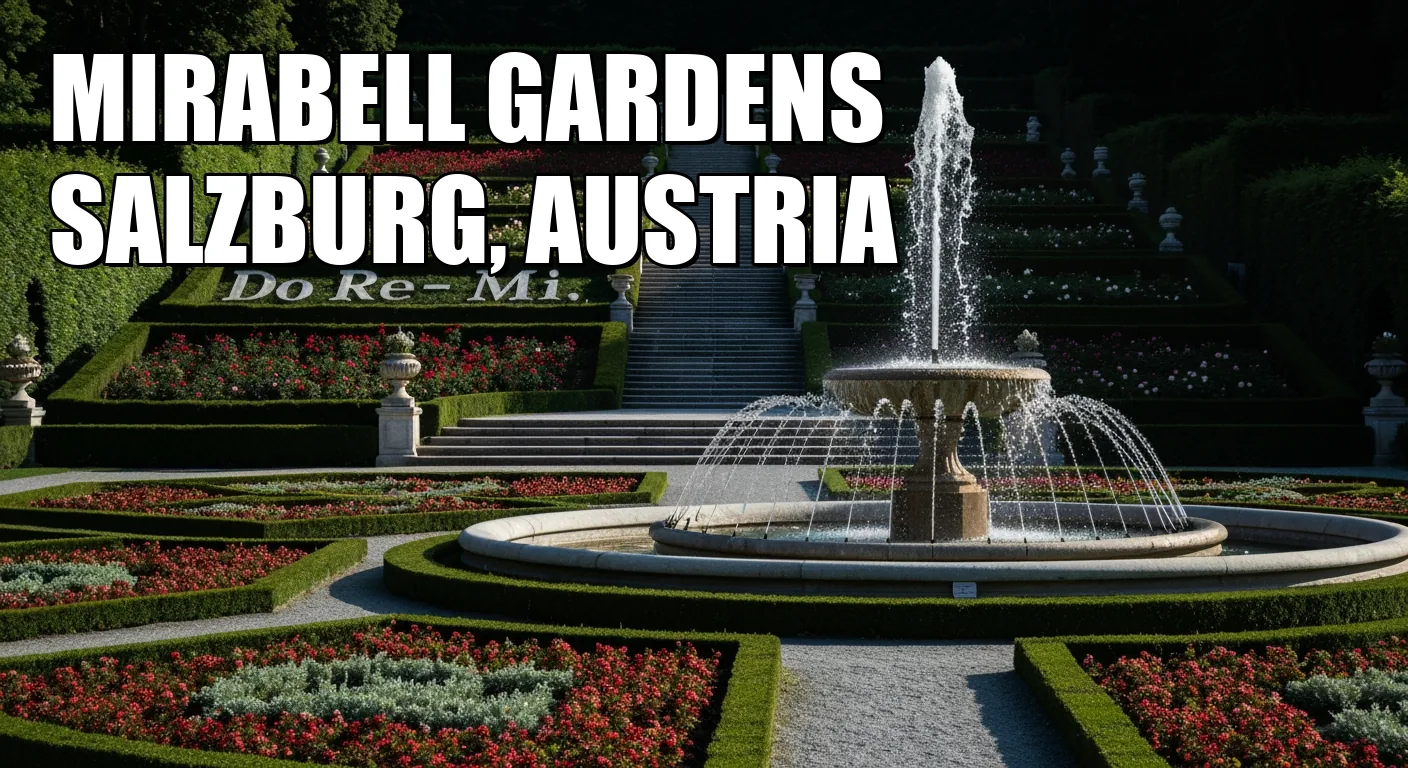
Stepping into Salzburg's Mirabell Gardens, one immediately understands why it became the backdrop for the iconic "Do Re Mi" sequence. The geometric precision of the flowerbeds, the Pegasus Fountain's elegant spray, and those famed musical steps leading to the rose garden—it all feels inherently designed for a grand, joyous musical number. Most visitors simply revel in the beauty, snapping photos where Maria and the children danced. What they often don't realize is the sheer, back-breaking effort behind that nine-minute scene, shot between April 25 and May 22, 1964.
That seemingly effortless choreography was anything but. The spring of 1964 in Salzburg, as cinematic lore now confirms, was an absolute nightmare for weather. Imagine the frustration: crew members constantly halting mid-song, costumes becoming drenched, and wooden instruments warping under relentless downpours. The cheerful "Do Re Mi" we all know and love actually took two months to film, with whole days lost to the elements. The final footage is a testament to the editor's artistry, stitching together shots captured weeks apart, often under wildly inconsistent conditions. It’s a sobering reminder that even the most joyful moments on screen can hide a grueling battle off-camera.
And then there's the story of Julie Andrews herself. While she effortlessly embodied Maria, playing the guitar, singing, and performing the intricate choreography proved a significant hurdle. Production tales whisper of a major dispute with director Robert Wise, followed by Andrews discovering a rather unconventional remedy: a stiff glass of brandy. Suddenly, the scene became manageable. Look closely at her vintage Goya F19 guitar in the film; a handmade bridge pin, fashioned by a resourceful crew member after the original broke, is still visible. Details like these peel back the glossy veneer of Hollywood, revealing the very human, often improvised, reality of filmmaking.
Leopoldskron: The Illusion Behind the Grand Estate
The von Trapp villa, with its sprawling lakeside terrace where children tumble into the water, is perhaps one of the most memorable settings in *The Sound of Music*. Many assume it’s all Leopoldskron Palace, but the reality is a clever cinematic sleight of hand. While Schloss Leopoldskron’s stunning Venetian Salon *inspired* the ballroom set, those interior scenes were actually shot at 20th Century Fox studios in Hollywood, not in Austria. Furthermore, the Salzburg Seminar, which occupied the palace, didn't grant permission for direct filming at the Schloss itself. This meant the production had to get creative, meticulously recreating crucial elements.
From May 23 to June 7, 1964, the magic unfolded on the adjacent Meierhof property. Here, faithful replicas of Leopoldskron's terrace and its distinctive "seahorse-gate" were constructed. This is where we see Captain von Trapp and Uncle Max sipping pink lemonade and, of course, the dramatic scene where the children capsize their boat in the lake. It's a subtle but important distinction for any film buff: the grand façade of the von Trapp residence that viewers remember actually belongs to Schloss Frohnburg, which provided the front exterior, while Leopoldskron lent its inspiration and its neighboring grounds for key exterior sequences. It’s a powerful lesson in how cinematic realism is often meticulously engineered illusion.
One cannot discuss Leopoldskron without mentioning the iconic white music pavilion, the backdrop for Liesl and Rolf's "Sixteen Going on Seventeen" and Maria and the Captain’s "Something Good." After the film's release, the pavilion, a magnet for tourists, caused such congestion at Leopoldskron that it was eventually moved. Today, you'll find it relocated to Schloss Hellbrunn, where it remains a popular, if slightly out of its original context, photo opportunity. Visiting Hellbrunn to see it provides a fascinating post-script to its on-screen narrative, a physical piece of the film's enduring legacy adapted to a new home.
Mondsee's Wedding: A Marathon of Meticulous Planning
The pivotal wedding of Maria and Captain von Trapp, filmed in the grand Basilika St. Michael at Mondsee, stands as one of the film's emotional pinnacles. What's truly astonishing about this scene is not just its grandeur but its place in the production timeline. It was, remarkably, the very first filming location used by the cast and crew upon their arrival in Austria, shot on April 23, 1964. Imagine the pressure: tackling such a central, complex sequence right out of the gate, before the team had even fully settled into the rhythm of location shooting.
Director Robert Wise, as Julie Andrews recounted, orchestrated "an extraordinary thing." To fill the majestic church, approximately 600 local residents were invited to serve as extras, all in full wedding attire. This wasn't a piecemeal effort; the entire, elaborate wedding scene was completed in a single, incredibly long day of filming. The patience and cooperation of both the hundreds of extras and the local church community were indispensable, allowing for such an ambitious accomplishment within one marathon session. It speaks volumes about the dedication of both the production team and the Austrian populace, keen to see their homeland brought to the silver screen.
Beyond the Postcard: The Unseen Production Gauntlets
While the final film radiates a timeless joy, its creation was plagued by a series of unforeseen and often hilarious challenges. The boat capsize scene at Leopoldskron, for instance, nearly turned tragic. Child actor Kym Karath, playing Gretl, accidentally sank into the lake. Nicholas Hammond, who played Friedrich, later recalled the chilling ten seconds before anyone realized there were only six children in the boat, not seven. Crew members sprang into action, pulling a very ill Karath to safety, who promptly vomited on her co-star Heather Menzies. It’s a vivid illustration of the hazards, both planned and accidental, that lurked behind the idyllic scenes.
The extended filming schedule, originally projected for a mere six weeks but stretching to an arduous eleven due to Austria's persistent rain, brought its own unique set of complications for the child actors. Debbie Turner, who portrayed Marta, endured significant dental challenges; she lost four bottom teeth during production, necessitating custom false teeth to maintain continuity. Similarly, Nicholas Hammond experienced a growth spurt that added six inches to his height. To combat this, certain scenes were shot with actors separated, and Charmian Carr (Liesl) often stood on an apple crate to maintain the illusion of age difference. These are the unsung battles fought by a film crew, subtly ensuring the narrative flow remains unbroken despite the undeniable realities of growing children.
The unpredictable Austrian weather remained the production's most relentless adversary. What director Robert Wise had envisioned as a concise six-week location shoot ballooned to nearly double that, almost entirely due to incessant rainfall. The rain didn't just cause delays; it ruined countless dialogue takes, necessitating three full weeks of dialogue dubbing after principal photography concluded. Street noises and precipitation had damaged the original recordings beyond repair. This behind-the-scenes struggle underlines the immense pressure and adaptive spirit required in filmmaking, especially when nature refuses to cooperate. From principal photography's start in Los Angeles on March 26, 1964, to its conclusion on September 1, 1964, a total of 83 scenes were filmed in just over five months – a testament to sheer perseverance.
Why Austria's Hills Still Sing: A Lasting Legacy
Visiting these iconic locations today isn't merely a nostalgic trip; it's an opportunity to connect with a story that transcends the screen. It's about understanding the dedication of hundreds of people who, despite mud, rain, and unexpected dental emergencies, created something beautiful and enduring. While the film's primary locations are rooted firmly in Austria's breathtaking landscapes and charming cities, its universal themes of family, freedom, and the power of music have resonated across continents for decades, inspiring countless journeys to experience its magic firsthand. What makes these sites truly special isn't just their beauty, but the rich, human stories of triumph over adversity embedded within their cinematic history.
For those planning a visit, consider traveling in the shoulder seasons—late spring or early autumn. You'll often find milder weather and slightly smaller crowds than the peak summer months, offering a more serene experience, perhaps even hinting at the challenging yet beautiful conditions the original crew faced. While specific admission costs for the gardens themselves are generally minimal (Mirabell is free, Hellbrunn has an entry fee), be prepared for potential parking fees or tour costs. Embrace the unexpected, look for the details guides often omit, and listen closely; perhaps, just perhaps, you'll hear the echoes of a timeless melody carried on the Austrian breeze.