Architecture Styles

Vanderbilt Mansion: Gilded Age Grandeur & Hidden Stories

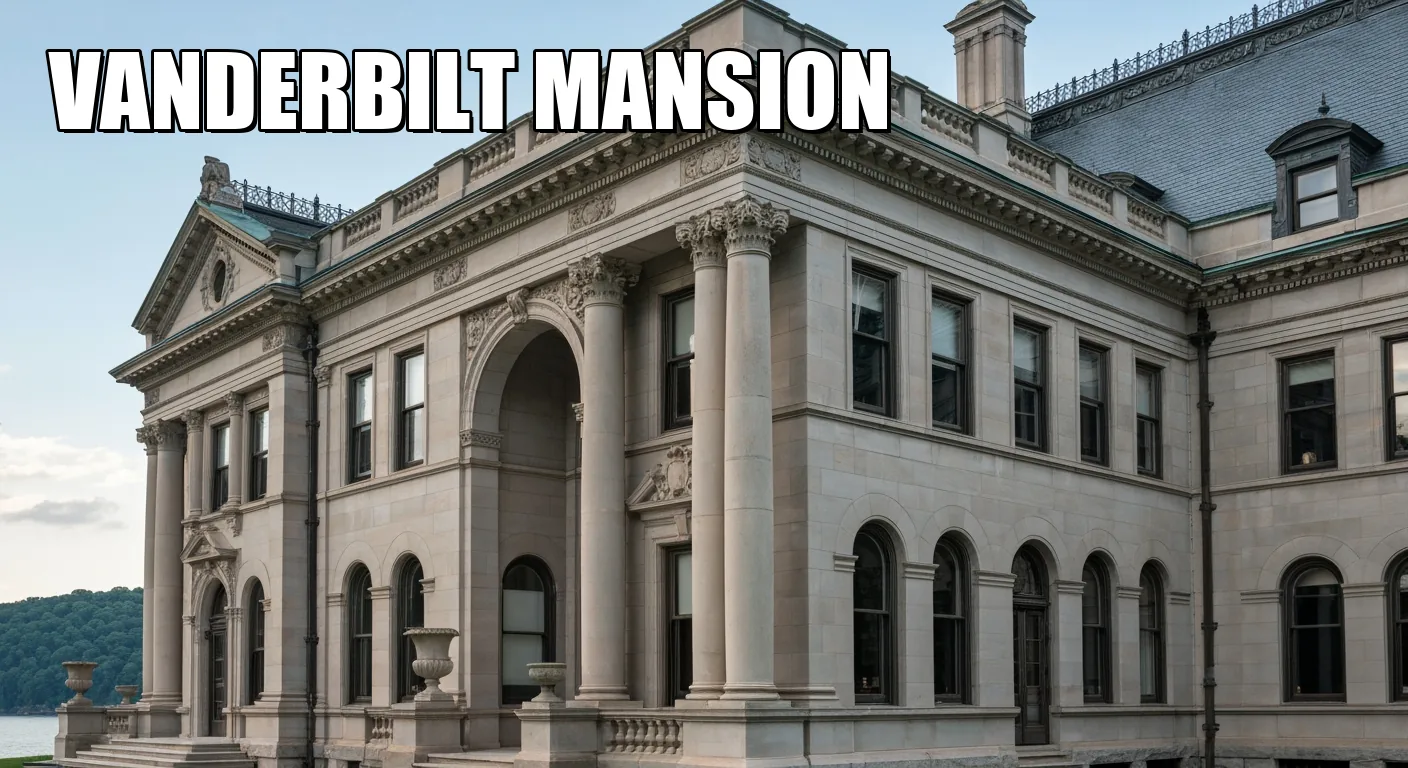
Standing before the Vanderbilt Mansion, a hulking monument of Indiana limestone rising majestically above the Hudson River, one might expect a straightforward tale of Gilded Age extravagance. And yes, it delivers on that promise of scale and lavishness. Yet, to truly understand this estate, to feel its pulse, means looking beyond the obvious opulence and recognizing the nuanced story etched into its very foundations—a story often overlooked by the standard historical accounts. When we talk about Renaissance Revival architecture in the United States, we’re often speaking of a broad fascination with classical forms and ideals, a desire to imbue American institutions and homes with the gravitas of European history. The Vanderbilt Mansion, completed in 1899, perfectly embodies this trend, but it does so with a distinct American accent, particularly through the lens of the Beaux-Arts style—a dominant architectural idiom of the late 19th and early 20th centuries, rooted in French academic traditions. For Frederick and Louise Vanderbilt, this wasn't just about building a big house; it was about crafting a statement, a tangible symbol of their place in an America rapidly asserting its own cultural authority on the global stage.

Architectural Splendor: More Than Just a Pretty Facade

What truly distinguishes the Vanderbilt Mansion isn't just its size, but the pedigree of its design. Think of it: McKim, Mead & White, the undisputed rock stars of late 19th-century American architecture, penned these plans. Their work here is a masterclass in the Beaux-Arts style, a French-influenced approach that emphasized grand scale, classical elements, and rigorous symmetry. This wasn't merely a replication of European palaces; it was an interpretation, a carefully curated vision that blended Old World gravitas with New World ambition. You’ll notice the meticulous detailing in the Indiana limestone exterior—a choice that speaks volumes about the desire for permanence and quality, a material synonymous with monumental civic buildings. The firm, known for its elegant public buildings and impressive private residences, brought an unparalleled level of sophistication to the Vanderbilts' vision, shaping a structure that commanded respect without being overtly flashy, at least by Gilded Age standards. Venturing inside, one encounters the American Renaissance in full bloom. This wasn't a strict architectural style but a broader cultural movement in the United States, roughly concurrent with the Gilded Age, characterized by a renewed interest in classical art, architecture, and design. Here, it translates into interiors brimming with European architectural salvage, antiques, and period reproductions. Imagine walking through rooms where carved wood ceilings and elaborate fireplaces were literally transported from centuries-old European castles and palaces. It’s a fascinating, almost audacious, blend of historical artifacts and contemporary craftsmanship, all meticulously arranged to create an atmosphere of cultivated grandeur. This approach, far from being a simple imitation, became a signature of American wealth seeking to establish its own lineage and artistic legitimacy.

A Private Kingdom on the Hudson's Edge: The Vanderbilts' Seasonal Escape

Why Hyde Park? For the Vanderbilts, this sprawling 600-acre estate, acquired in 1895, offered the perfect blend of secluded grandeur and startling convenience. Situated right on the Hudson River, the location wasn't just picturesque; it was supremely practical. Frederick Vanderbilt, a director of the New York Central Railroad, held the keys to his own personal express line to Manhattan. This meant escaping the city for their seasonal vacation home wasn't a cumbersome journey, but a swift, luxurious transit. One might picture them arriving at their private station, stepping directly into their awaiting carriage, and being whisked away to this architectural masterpiece. This level of seamless connection between urban life and rural retreat was a hallmark of true Gilded Age privilege, enabling them to enjoy the best of both worlds without the logistical headaches lesser mortals endured. The mansion remained their primary occupancy, albeit seasonally, until Frederick's death in 1938. Louise's passing in 1926 marked a pivotal shift in the mansion's lived experience, transforming it from a bustling, if intimate, retreat into a quieter, almost melancholic residence. The fact that such an immense structure was primarily a *vacation* home truly underscores the staggering wealth accumulated during this period, a level of affluence that allowed for multiple grand residences to serve different purposes throughout the year.

Gilded Age Glories, Guarded Secrets, and a Reclusive Heart

Despite the mansion's imposing scale, the social life within its walls was surprisingly intimate, a detail often missed when envisioning typical Gilded Age grandiosity. Sure, the formal dining room could expand to seat thirty guests, featuring magnificent carved wood ceilings and fireplaces salvaged from European nobility. Yet, records suggest that the largest gathering ever hosted at Hyde Park numbered only about eighteen people. This challenges the stereotype of endless, overflowing balls and instead paints a picture of selective, refined gatherings. When dining alone, Frederick and Louise used a small round table tucked away at the far end of the vast dining room, a poignant image of domesticity within such monumental surroundings. It reveals a desire for intimacy and privacy that contrasts sharply with the public spectacle of other wealthy families. A profound shift occurred in 1926 with Louise Vanderbilt’s death in Paris. Already a reserved man, Frederick became a virtual recluse, withdrawing almost entirely from friends and family. For the remaining twelve years of his life, until 1938, he resided largely alone, save for his loyal servants, on the third floor of the mansion. This immense estate, once a vibrant (if quiet) hub, became a gilded cage for a man consumed by grief. His passion for gardening, which saw him personally plant over 2,000 rose bushes across the estate, vanished abruptly with her passing, a stark symbol of his profound loss. This personal tragedy, playing out within such an architectural marvel, adds a layer of human vulnerability that few guides fully explore.

From Millionaire's Retreat to Presidential Annex: An Unforeseen Legacy

The mansion's story took another fascinating, almost unbelievable, turn after Frederick's death. His niece, Margaret "Daisy" Van Alen, inherited the property. It was President Franklin D. Roosevelt, whose own estate was just a stone's throw away, who encouraged Van Alen to donate the mansion and 211 acres to the National Park Service in 1940. This pivotal decision secured the site for public preservation, but it also led to an extraordinary, if brief, chapter in its history. From 1941 to 1943, as World War II raged, the Vanderbilt Mansion became an unlikely outpost for presidential security. Roosevelt’s Secret Service agents were housed in the basement and third-floor service areas—imagine the contrast of federal agents in what was once servants’ quarters, protecting a president whose personal staff and friends were occasionally staying in the opulent main bedrooms, even those of Frederick and Louise themselves. This transformation from private residence to a temporary extension of the White House is a unique historical footnote, highlighting the mansion’s adaptability and its unexpected role in a moment of national crisis. It’s a compelling reminder that history, like architecture, often finds new purpose in old structures.

Navigating the Grandeur: A Practical Guide for the Modern Traveler

Planning a visit to the Vanderbilt Mansion requires a touch of strategy, especially if you’re hoping to delve into its interiors. The current adult admission price is a reasonable $15.00 per adult, with children aged 15 and under enjoying free entry—a welcome gesture for families. Be prepared, however, as payment is strictly by credit card only, so leave your cash at home. This isn't just a suggestion; it's the only accepted method. Here's where conventional wisdom about advance booking might lead you astray: individual visitors and families cannot reserve tickets ahead of time. Tours are sold on a first-come, first-served basis directly at the Pavilion Visitor Center. This crucial detail means that during peak seasons, particularly summer months and October, tours can, and often do, sell out early. Your best bet for securing a spot, especially on a weekend, is to arrive early in the day, ideally shortly after opening. Otherwise, you might find yourself admiring the exterior from a distance while all tour slots are gone. The guided tour covers approximately 18 rooms across three floors, offering a comprehensive glimpse into the Vanderbilts’ world. A vital piece of information, particularly for summer visitors: the mansion is not air-conditioned. While the thick stone walls offer some respite, a mid-July afternoon tour can be uncomfortably warm. Plan your visit for cooler months if heat bothers you, or choose an early morning slot to beat the peak temperatures. Groups of 20 or more do have the advantage of making reservations through recreation.gov, a small consolation for those organizing larger excursions. Ultimately, the Vanderbilt Mansion isn't merely a static display of wealth. It's a dynamic tapestry of architectural ambition, personal tragedy, and unexpected historical significance. It prompts us to reconsider what "Gilded Age" truly meant, challenging assumptions about social life, and offering a poignant glimpse into the lives of those who built and lived within its formidable walls. To visit is to step not just into a house, but into a complex, compelling chapter of American history.

Exploring Renaissance Revival Architecture in America: A Visitor's Guide

What is Renaissance Revival architecture?
Renaissance Revival is a 19th-century architectural revival style inspired by the architecture of Renaissance Italy (15th-17th centuries), characterized by symmetry, classical proportions, columns, rounded arches, and domes. It became one of the most popular styles during the last half of the 19th century and early 20th century in the United States.
What is the history of Renaissance architecture?
Renaissance architecture originated in Italy around 1400 as a conscious revival and development of Classical Greek and Roman architecture, accompanying a renewed interest in classical thought. The style first developed in Florence with innovators like Filippo Brunelleschi and quickly spread throughout Europe during the 15th-17th centuries.
What is the difference between Renaissance and Revival architecture?
Renaissance architecture is the original historical style from the 15th-17th centuries in Italy that drew from Classical antiquity, while Renaissance Revival is a later 19th-century architectural movement that imitated and reinterpreted the original Renaissance style for Victorian and Gilded Age America.
When was Renaissance Revival popular in the United States?
Renaissance Revival enjoyed two distinct periods in America: the first phase from 1845-1885 and the second phase from 1890-1915, with the peak of Italian Renaissance Revival popularity occurring between 1900-1920.
What are the main characteristics of Renaissance architecture?
Key characteristics include symmetrical façades, rounded arches and hemispherical domes, classical columns and pilasters, rusticated stone work, strong geometric proportions, low-pitched roofs with balustrades, arched windows and doors, and emphasis on symmetry and classical order rather than medieval complexity.
What is Renaissance Revival furniture and when was it made?
Renaissance Revival furniture originated in the mid-19th century (around 1855-1860s) as a revival of classical Renaissance styles, characterized by intricate carvings, rich materials like walnut and mahogany, and elaborate decorative motifs. The Renaissance Revival furniture period peaked during the 1860s-1870s and continued through the 1890s-1930s.
What are the origins of revival furniture?
Revival furniture emerged as a reaction to mass production and industrialization in the 19th century, with craftspeople creating pieces that emulated historical styles to emphasize quality craftsmanship and artistic merit over factory-made uniformity.
How can you date Revival furniture?
Dating revival furniture involves examining construction methods (hand-cut dovetails before 1860 vs. machine-cut after), materials and hardware, decorative styles, tool marks, nails versus screws, wood type, and maker's marks. Machine-cut dovetails and factory-made screws indicate post-1860 production.
What is the 1930s furniture style called?
The 1930s furniture style is called Art Deco, characterized by geometric shapes, clean lines, luxurious materials like exotic woods and marble, and a sleeker form later known as Streamline Moderne featuring curving forms inspired by transportation design.
Where are the best Renaissance Revival buildings to visit in the USA?
Top cities for Renaissance Revival architecture include New York City (70 listed properties including the Dakota Apartments and Pierpont Morgan Library), Washington, D.C. (36 properties including the National Building Museum), and Los Angeles (28 properties). Other notable locations include Milwaukee, Boston, and Philadelphia.
What are notable Renaissance Revival buildings I can visit?
Notable examples include the National Building Museum (Pension Building) in Washington, D.C., the Dakota Apartments in New York, the Pierpont Morgan Library, Milwaukee City Hall (Flemish Renaissance Revival), the Pabst Mansion in Milwaukee, and the Boston Public Library.
What is the best time to visit Renaissance Revival architecture?
Spring through fall (April-October) offers pleasant weather for exterior exploration and photography, while many buildings offer extended hours during warm months. Winter provides fewer crowds but requires weather-appropriate clothing for outdoor viewing.
How much does it cost to visit Renaissance Revival buildings?
Most Renaissance Revival buildings charge modest admission fees ranging from free (many Great Halls and exterior viewing) to $10-15 for museum admission. The National Building Museum charges $10 for adults with free access to the Great Hall, while free tours are often available at city halls and civic buildings.
Are Renaissance Revival buildings accessible to visitors with mobility challenges?
Many Renaissance Revival buildings have undergone accessibility modifications, though historic preservation requirements may limit complete ADA compliance. Most provide wheelchair access to main floors, with staff assistance available; contact buildings in advance to discuss specific accessibility needs.
How can I take photography tours of Renaissance Revival architecture?
Many cities offer guided architectural walking tours featuring Renaissance Revival buildings, with photographers particularly interested in exterior detailing, interior courts, and classical elements. Spring and fall offer optimal lighting conditions for exterior photography.