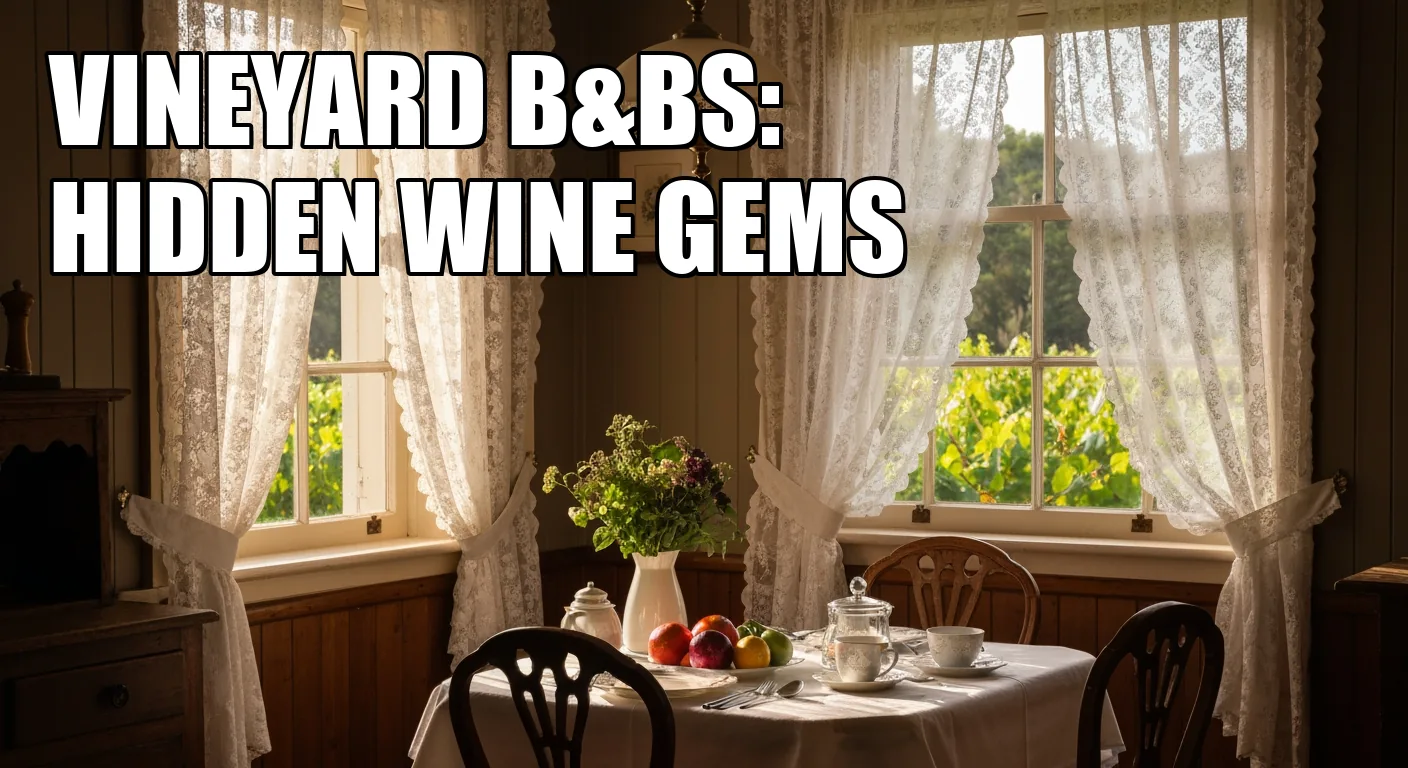
Does the thought of a vineyard getaway conjure images of crowded tasting rooms and rushed tours? Perhaps you've grown accustomed to the predictable, sanitized experiences offered by larger hotel chains. But for the discerning traveler, those who seek more than just a place to sleep—who crave a connection to the land, the history, and the very soul of wine country—a vineyard bed and breakfast isn't merely an accommodation; it's an immersion. Over my decades exploring America's most storied wine regions, I've come to understand that the true magic lies in waking up amongst the vines, savoring breakfast crafted with local produce, and engaging with the passionate individuals who pour their lives into these special places.
Beyond the Tasting Room: Why Vineyard B&Bs Offer Deeper Immersion
Why choose a B&B over a luxury resort in wine country? It's simple, really: authenticity. While five-star hotels offer impeccable service and amenities, they often lack the personal touch, the historical resonance, and the genuine sense of being a guest in someone's cherished home. The best vineyard B&Bs aren't just properties; they are living legacies, often steeped in generations of farming or pioneering winemaking. They pull back the curtain on the industry, allowing you to glimpse the dedicated effort behind each bottle, the delicate balance of nature and nurture that defines great wine. For a 2025 trip, particularly if you’re looking to escape the well-trodden paths, this intimate approach can transform a simple vacation into an unforgettable journey.
Napa's Quiet Corner: Unearthing Serenity Amidst the Spectacle
Napa Valley, California, for all its undeniable allure, can sometimes feel like a high-octane spectacle, especially during peak season. Swarms of visitors, bustling traffic, and a pervasive sense of "see and be seen" can sometimes detract from the quiet contemplation one seeks in such a beautiful landscape. Yet, even in Napa, havens exist. One such gem is the Candlelight Inn, tucked away in Browns Valley, a short, scenic drive from the main thoroughfare. Its 1929 Tudor Revival architecture, encircled by towering redwoods and resting gently on a Napa River tributary, offers a stark contrast to the glitz of some newer establishments.
What makes this inn particularly compelling for a 2025 visit? It’s not just its old-world charm, though that is considerable. The inn's very structure, dating back to 1929, speaks volumes about early 20th-century wine country elegance, offering a tangible link to a less frenetic era. Many rooms feature two-person Jacuzzi tubs and fireplaces, inviting a genuine sense of escape. While prices during peak season (roughly summer through fall) range from $185 to $580 per night, reflecting Napa’s premium, the experience here is designed to slow you down. Book well in advance—at least six to nine months for peak fall weekends—because its popularity among those seeking an antidote to Napa’s commercial buzz means rooms fill quickly. Don't expect to just walk in for a last-minute booking, especially if you're targeting a fall harvest stay; those dates are usually gone before spring.
Oregon's Diverse Terroir: Two Paths to Pinot Perfection
Oregon’s Willamette Valley has, in recent decades, carved out an international reputation for its world-class Pinot Noir, often presenting a more laid-back, yet equally sophisticated, alternative to California’s more celebrated regions. Here, two distinct experiences stand out, each offering its own unique flavor of wine country hospitality. First, consider the sweeping grandeur of Youngberg Hill Vineyard & Inn. Perched dramatically on a 50-acre hilltop estate, this isn't just a bed and breakfast; it's an active, biodynamic vineyard where you can truly feel the pulse of the land.
This property boasts a rich history, originally farmed by the Swedish Youngberg family in the 1850s, then evolving into a vineyard estate in 1989. What's truly remarkable is its transformation under Nicolette Nickolaou, who has stewarded the property since 2003, turning it into a women-owned enterprise dedicated to biodynamic farming. She lives on-site with her three daughters, whose names are immortalized in the vineyard's signature blocks—a testament to a deeply personal connection to the land that few places can match. Guests staying here from $240 to $580 per night during peak times aren't just enjoying a luxurious retreat; they are participating in a living, breathing ecosystem. Expect to engage with the philosophy of biodynamics, taste wines crafted with incredible intentionality, and wake up to some of the most spectacular vineyard views Oregon has to offer. The tranquility here is palpable, and for those who care about sustainable practices, it feels less like a stay and more like an alignment with a core principle.
Contrast Youngberg Hill’s immersive vineyard setting with A' Tuscan Estate Bed and Breakfast, located in McMinnville’s charming historic downtown, just five blocks from Main Street. This 1928 Colonial-style home offers a different kind of Willamette Valley experience: one rooted in urban charm and culinary excellence. It’s been operating as a B&B for over 21 years, maintaining its architectural integrity while providing contemporary comforts. The current owner, Erin Gilchrist, has cultivated a reputation for her exceptional three-course gourmet breakfasts, meticulously prepared with local ingredients. This isn't just breakfast; it's an event, a culinary masterclass that sets the tone for your day of wine tasting.
For 2025 travelers, choosing between these two depends on your priority: do you wish to be enveloped by the vines themselves, or do you prefer a stroll to a vibrant downtown after a day of tasting? A' Tuscan Estate, with peak rates from $185 to $450, provides easy access to McMinnville's burgeoning restaurant scene and tasting rooms, making it an excellent base for exploring multiple wineries without having to drive far between dinner and bed. Both offer a distinct flavor of Oregon, but Youngberg Hill is the vineyard immersion, while A' Tuscan Estate offers sophisticated town-based exploration.
Finger Lakes: The Pioneering Spirit Meets Lakeside Charm
New York's Finger Lakes region, with its deep, glacially carved lakes and steep slopes, presents a wine landscape distinct from its West Coast counterparts. It’s a region that often surprises first-time visitors with its beauty and the quality of its cool-climate wines, particularly Riesling. Here, two establishments illustrate the region's diverse offerings: one a pioneering force, the other a picture of intimate, lakeside tranquility. The Inn at Glenora Wine Cellars on Seneca Lake holds a unique place in the region's history, not just as an inn, but as the first winery established on Seneca Lake in 1977.
Picture this: the Farm Winery Act of 1976 passes, and suddenly, a window of opportunity opens. Gene Pierce, alongside his co-founders, seized that moment, launching Glenora in May 1978. Their initial vintage garnered medals at the New York State Fair, immediately cementing their pioneering status. The Inn itself, with its 30 rooms and Veraisons Restaurant, only opened in 2000, nearly a quarter-century after the winery's inception. This means when you stay at Glenora, with peak rates ranging from $175 to $400+, you're not just staying at a hotel; you're on hallowed ground for Finger Lakes wine. You’re literally part of the ongoing story of a winery that helped put the region on the map. For 2025, if you’re keen on understanding the genesis of modern Finger Lakes wine, this is a pilgrimage site, offering a larger, more comprehensive experience than a typical B&B.
For a more intimate, classic bed and breakfast experience in the Finger Lakes, look no further than Magnolia Place Bed & Breakfast in Hector, nestled directly on the shores of Seneca Lake. This isn’t a modern build or a purpose-built inn; it’s an 1837 farmhouse, lovingly converted and impeccably maintained. Its history as a hospitality destination stretches back over 180 years, providing a profound sense of continuity. The allure here lies in its highly-rated, family-owned approach—a palpable pride of ownership that translates into meticulous attention to detail.
Imagine waking up to the gentle lapping of Seneca Lake, enjoying a breakfast crafted with locally sourced ingredients, and receiving personalized service from hosts who genuinely love their region. Peak season rates (late April through mid-November) typically fall between $205 and $265+, with the luxurious Harvest Suite offering expansive space and a private hot tub—a splurge worth considering for a truly romantic escape. Magnolia Place offers a quiet respite, a stark contrast to Glenora’s more expansive, winery-centric operation. For 2025, if your goal is serene lakeside charm coupled with access to the region's renowned wineries, this farmhouse offers a comforting embrace.
Navigating Your Visit: A Savvy Traveler's Blueprint for 2025
Planning a wine country escape for 2025 requires a certain foresight, especially when targeting these unique, high-demand bed and breakfasts. First and foremost, understand that "peak season" is more than just a vague concept; it directly impacts pricing, availability, and the overall atmosphere. For Napa and Willamette, summer and fall (June through October) see the highest demand, with harvest season in September/October being particularly sought after. If you're seeking fewer crowds and slightly lower prices, consider late spring (April/May) or early fall (late October/November) in California and Oregon. The Finger Lakes, with its more defined seasonality, experiences its peak from May through November; visiting in April or early December can offer a unique, quieter perspective, though some attractions might have reduced hours.
Always, always book directly through the inn’s website. Not only does this often secure the best rates and access to special packages, but it also allows you to communicate directly with the owners or innkeepers, gaining valuable insights and personalizing your stay. These are not faceless corporations; they are passionate individuals who can offer recommendations that no algorithm ever could. When considering costs, remember that the listed peak season ranges ($175-$580) are per night and generally do not include additional taxes or potential resort fees, though B&Bs are often more straightforward about pricing than larger hotels. Parking is usually complimentary at these establishments, a welcome relief compared to urban hotel charges. Anticipate crowds at popular wineries, especially on weekends, so plan to arrive early for tastings or consider weekday visits for a more relaxed pace. The value in these stays isn't just in the room itself; it's in the curated experience, the connection to history, and the profound sense of place that only a truly independent, expert-run establishment can deliver. Choose wisely, and your 2025 vineyard adventure will be nothing short of extraordinary.
Your Complete Guide to Vineyard Bed & Breakfast Getaways Across America
What is a vineyard bed and breakfast experience?
A vineyard bed and breakfast is a unique lodging experience where guests stay in intimate, personalized accommodations located on working vineyards or within wine estates, typically offering complimentary breakfast, wine tastings, and direct access to scenic vineyard grounds. This combines the charm of traditional B&Bs with the wine country lifestyle, often featuring locally-sourced or estate wines, farm-to-table breakfasts, and direct interaction with winemakers and vineyard owners.
What are the best vineyard bed and breakfast regions in the USA?
Top regions include California's Napa Valley and Sonoma County (known for Cabernet Sauvignon and Pinot Noir), Paso Robles on California's Central Coast, Oregon's Willamette Valley, New York's Finger Lakes region, Virginia's wine country around Charlottesville and the Piedmont region, Texas Hill Country west of Austin, and Washington's Walla Walla Valley. Each region offers distinct wine varieties and boutique vineyard accommodations.
What is the best time to visit vineyard bed and breakfasts?
August through October (grape harvest/crush season) offers optimal weather and vibrant vineyard activity, though it's peak season with higher prices and requires advance booking. Winter months (November-March) provide quieter, more affordable experiences with better availability, while spring and early summer offer pleasant weather and fewer crowds than fall.
How much does a vineyard bed and breakfast typically cost?
Nightly rates typically range from $150-$650+ depending on season, location, and amenities, with peak harvest season (August-October) commanding premium prices at the higher end. Off-season rates (November-March) often start around $300-$400 per night, and many properties offer special packages including wine tastings, farm-to-table dinners, or complimentary bottles of wine.
What amenities are typically included at vineyard bed and breakfasts?
Most vineyard B&Bs include gourmet or farm-to-table breakfasts, complimentary wine tastings with estate or house wines, views of the vineyards, private bathrooms with premium toiletries, Wi-Fi, and often wine fridges stocked with complimentary wine. Many also feature fireplaces, private patios, hot tubs, spa services, and access to on-site dining venues.
How far in advance should I book a vineyard bed and breakfast?
For peak harvest season (August-October), booking 2-3 months in advance is recommended to secure preferred dates and rates. For the rest of the year, 4-8 weeks advance notice is typically sufficient, though popular properties may book up quickly during weekends and holidays.
What are the typical age requirements for vineyard bed and breakfast stays?
Most vineyard bed and breakfasts restrict guests to 21 years or older due to their wine-focused nature and intimate adult atmosphere, though some may allow younger guests if accompanied by adults. Some premium properties require guests to be at least 21 years old, while others set the minimum at 16 or allow family groups with adults present.
Are pets allowed at vineyard bed and breakfasts?
Pet policies vary widely, but many vineyard B&Bs accommodate dogs with additional fees (typically $25-$100 per stay) and weight restrictions (usually up to 30-50 pounds). Some pet-friendly properties like Wine Country Inn in Napa Valley allow up to two dogs, though specific accommodations must be arranged in advance, and some properties don't allow pets at all.
What are the cancellation policies for vineyard bed and breakfast reservations?
Most vineyard B&Bs require cancellations at least 7-14 days before arrival for full refunds, with reduced refunds or credits available for later cancellations. Some charge administrative fees ($20-$25) or require deposit retention, while policies vary significantly between properties, so it's important to review specific terms when booking.
What activities and experiences are available during vineyard B&B stays?
Common activities include wine tastings, vineyard tours, harvest experiences (August-October), wine pairing dinners with chefs, bicycle tours through wine regions, hiking, spa services, and intimate winemaker experiences. Many properties also offer cooking classes, yoga sessions overlooking vineyards, and access to nearby restaurants and tasting rooms.
Do vineyard bed and breakfasts offer wheelchair accessibility?
Accessibility varies by property; some like Carter Creek Winery Resort in Texas Hill Country offer fully ADA-compliant villa accommodations with roll-in showers and widened doorways. When booking, specifically inquire about first-floor rooms, accessible bathroom facilities, and parking accessibility to ensure the property meets your needs.
What should I pack for a vineyard bed and breakfast visit?
Pack layers and a light jacket for cool evenings, comfortable walking shoes for vineyard tours, sunscreen and a hat, casual day clothing for daytime activities, and dressier attire if dining at fine restaurants. Include refillable water bottles, sunglasses, and note that weather varies by season—fall and winter require warmer clothing while summer brings heat.
Can vineyard bed and breakfasts accommodate wedding events or groups?
Many vineyard properties host weddings and special events on their grounds, with some accommodating 10-350 guests depending on venue size and configuration. Properties often offer wedding packages with lodging for guests, customizable menus, and professional event planning services; advance booking (often 12+ months ahead) is necessary for popular dates.
What makes the breakfast experience special at vineyard bed and breakfasts?
Breakfasts at vineyard B&Bs typically feature farm-to-table menus using local and estate ingredients, with options like free-range organic eggs, locally-cured bacon, fresh produce from on-site gardens, and gourmet preparations. Many serve breakfast at leisurely times (8-10 AM), accommodate dietary restrictions with advance notice, and can be enjoyed on private patios overlooking the vineyards.
Are there differences between a traditional B&B and a vineyard B&B?
Vineyard bed and breakfasts are specifically located on or adjacent to working wine estates, emphasizing wine education and tasting as core experiences, whereas traditional B&Bs focus purely on lodging and breakfast. Vineyard properties often feature wine-themed decor, complimentary tastings, direct interaction with winemakers, and wine-centric activities that traditional B&Bs don't typically offer.
We use cookies to enhance your experience. By continuing to visit this site you agree to our use of cookies.