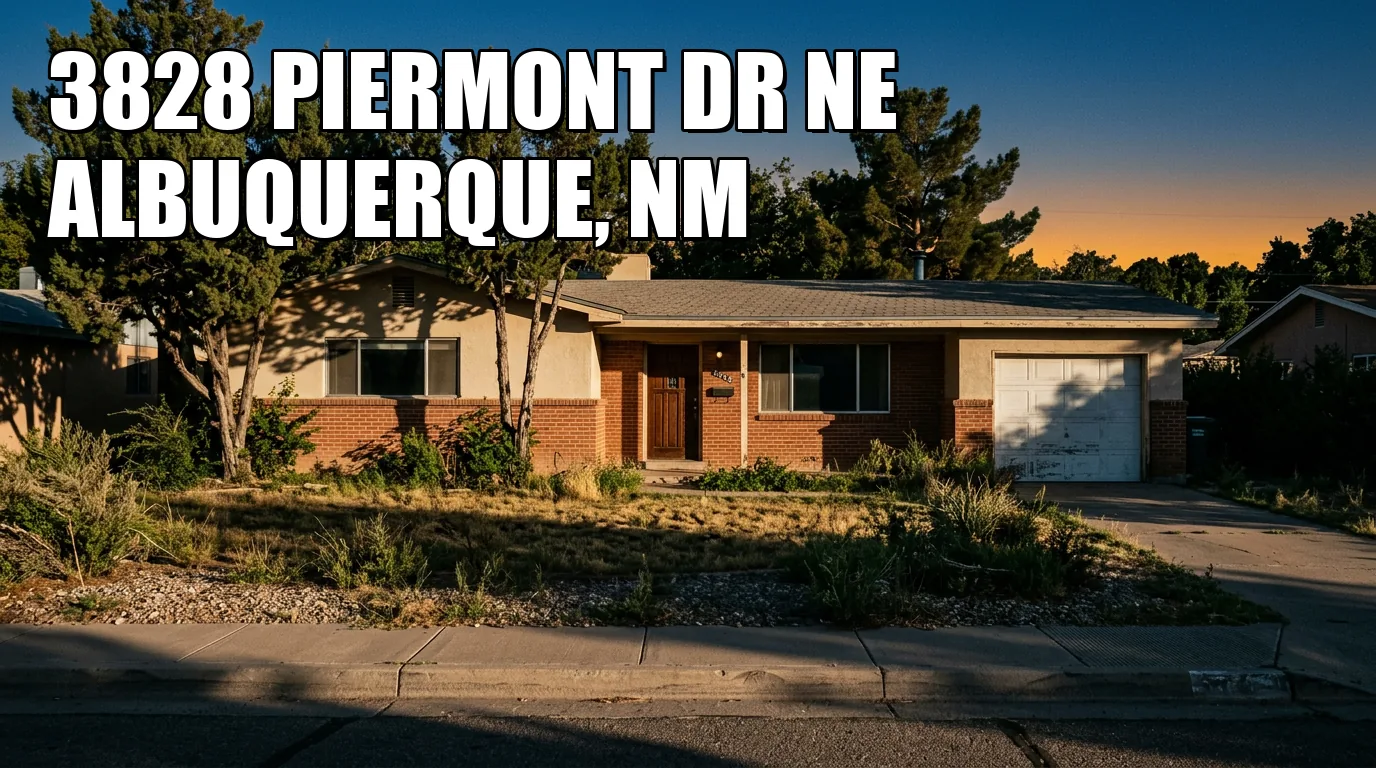
Before Breaking Bad filmed Walter White’s home, a location scout approached the real homeowner in 2006 and asked. She agreed; the production arrived with equipment months later and worked within a defined arrangement. That simple sequence—request, consent, limited use—is what later fan tourism forgot.
The Albuquerque house became one of television’s most recognizable facades, but recognition did not turn it into a public set. The production used the property as an exterior location and for preparation inside the house; Walter and Skyler’s interior scenes were shot in a studio. As of the Associated Press’s January 2025 report, the building was still a private residence being offered for sale after nearly 52 years in the same family. The selected official sources do not document a public conversion since then. This guide therefore does not turn the home into a navigation pin.
The television house has three physical layers
| Layer | What it actually is | What it does not provide |
|---|
| The recognizable exterior | A real single-story Albuquerque home used as Walt and Skyler’s on-screen residence with the owners’ production consent. | A museum entrance, an interior set tour or standing permission for fans to enter the property. |
| The White-family interior | A production environment filmed in a studio, separate from the rooms behind the recognizable facade. | A hidden television interior waiting inside the private house. |
| The fence and cameras | A six-foot wrought-iron fence begun in 2017, with security cameras reported by AP, after years of disruptive visits. | An original feature of the fictional home or a challenge to get closer. |
This map removes the usual excuse for approaching the door. Even during production, exterior recognition and interior access were different things. The crew’s permission was specific to the work being made; a viewer’s memory of that work carries no comparable invitation.
The pizza was a scene; the repetition changed the property
Walter’s roof throw worked because it was controlled fiction. Fans turned it into a recurring demand on somebody else’s house. In March 2015, Vince Gilligan used the Better Call Saul Insider podcast to tell viewers to stop throwing pizzas on the roof and harassing the homeowner. His point was not that the reenactment had become stale. It was that the people living there deserved to be treated well.
By October 2017, AP reported the owners building a six-foot front fence; a later AP retrospective noted the addition of security cameras. The conduct behind those interventions went beyond drive-by photographs: visitors wandered onto the property, tried to reach the backyard pool, climbed around the fence work and told residents to close their garage or move out of a shot. Family member Joanne Quintana told local news that hundreds of cars drove by in a single day during peak periods. The fence is therefore part of the site’s real provenance—not a Breaking Bad artifact, but a later layer produced by the audience.
Several dramatic details repeated in fan guides do not survive a stricter source test. The selected AP, official tourism and direct-business sources do not establish a bomb-squad response, graffiti, hose use or a complete roof replacement caused by pizza. They are unnecessary anyway. The documented fence, cameras and intrusions already explain why the house stopped functioning like an informal fan stop.
A real-estate listing was not an admission ticket
AP reported in January 2025 that the longtime family had listed the house. A representative floated possible future uses such as a museum or vacation rental, but a sales idea is not an operating venue. The selected official and major-news sources do not document a completed public conversion, commercial permission or interior visitor program.
That distinction protects readers from cached headlines. Ownership, asking prices and buyer rumors can change while an old article remains online. The safe access rule does not depend on solving that moving real-estate story: unless a verified operator announces public entry, the house remains outside the visitor itinerary. A guided route that mentions it proves a drive-by stop, not access to the lawn, driveway or interior.
Build the day around places that opted in
Albuquerque has no shortage of Breaking Bad connections that actively receive customers. Their value is not merely that they are easier stops. Each has a clear access contract: a tour, meal, car wash or retail purchase offered by the people operating the place.
| Visitor option | Documented connection | What the invitation covers |
|---|
| Breaking Bad RV Tours | An Albuquerque company operating since 2014, using themed vehicles for guided location routes; its fleet includes an RV featured in El Camino and Better Call Saul. | The booked tour and its scheduled stops. A house drive-by remains a street view, not property access. |
| The Candy Lady | The Old Town confectioner created the blue rock-candy prop for the production and continues to sell themed candy. | A retail visit to a business that explicitly welcomes fans. |
| Twisters | The operating restaurant served as the primary filming location for Los Pollos Hermanos. | A normal customer visit to the restaurant, not permission to treat staff or diners as set dressing. |
| Mister Car Wash | The active car wash appeared as Walter and Skyler’s A1A Car Wash. | The services and public customer areas of a working business. |
| Dog House Drive In | The long-running drive-in appeared in character scenes and remains a public restaurant. | A meal at an operating local business. |
Old itineraries also need a date check. ABQ Trolley historically ran a dedicated “BaD Tour,” but its current pages advertise broader Albuquerque sightseeing rather than that show-specific route. A familiar tour name in an old post is not proof of a current product.
Use the same consent test the production used
Four questions settle nearly every location decision:
- Is this a residence or an opt-in business? Screen time does not erase that difference.
- Who is inviting the visit now? Look for the current operator’s own page, not a fan map copied years ago.
- What does the invitation include? A tour route, restaurant table or shop purchase does not expand into neighboring private space.
- Can the stop happen without making a resident perform? If the photograph requires someone to close a garage, leave the frame or tolerate a reenactment, the visitor has crossed the useful boundary.
The Walter White house is not much of a moral quandary once its layers are separated. A homeowner agreed to a bounded production use; the show’s success did not renew that agreement for strangers. The better Albuquerque visit follows the same principle the crew followed in 2006: go where access has been offered, and let a private home remain a home after the camera leaves.
The Cornerstone Brief
One historic place, once a week — what it is, why it matters, whether it's worth going. No filler, no paid placements.
Coming soon. Unsubscribe any time.