There’s a certain magic to stepping into Colonial Williamsburg, but it’s easy to get lost in the sheer volume of perfectly recreated scenes, the smell of woodsmoke, and the earnestness of living history. Yet, for me, the true heartbeat of this remarkable place lies not in the reenactors, as compelling as they are, but in the brick and mortar itself. The buildings here aren't just pretty backdrops; they are primary sources, silent witnesses to revolution, governance, and daily life. They also represent one of the most ambitious and, at times, controversial preservation projects in American history. As someone who's spent years wandering historic districts from Charleston to Boston, I find Williamsburg’s architectural legacy uniquely profound, less about grand statements and more about ingenious adaptations and quiet dignity.
What sets Williamsburg apart from many other colonial towns, you might ask? It’s the depth of its restoration, yes, but also the particular blend of Georgian ideals and pragmatic colonial needs that defined its building styles. This isn't just about looking at old houses; it’s about understanding the societal structures, the political aspirations, and the technological limitations that shaped them. You’ll find insights others miss when you learn to read the buildings themselves—their brick patterns, window alignments, and rooflines all tell a story. Let’s peel back the layers on five pivotal structures that truly define Williamsburg Colonial architecture, revealing secrets even seasoned visitors might overlook.
Deciphering the Capitol’s H-Shaped Enigma
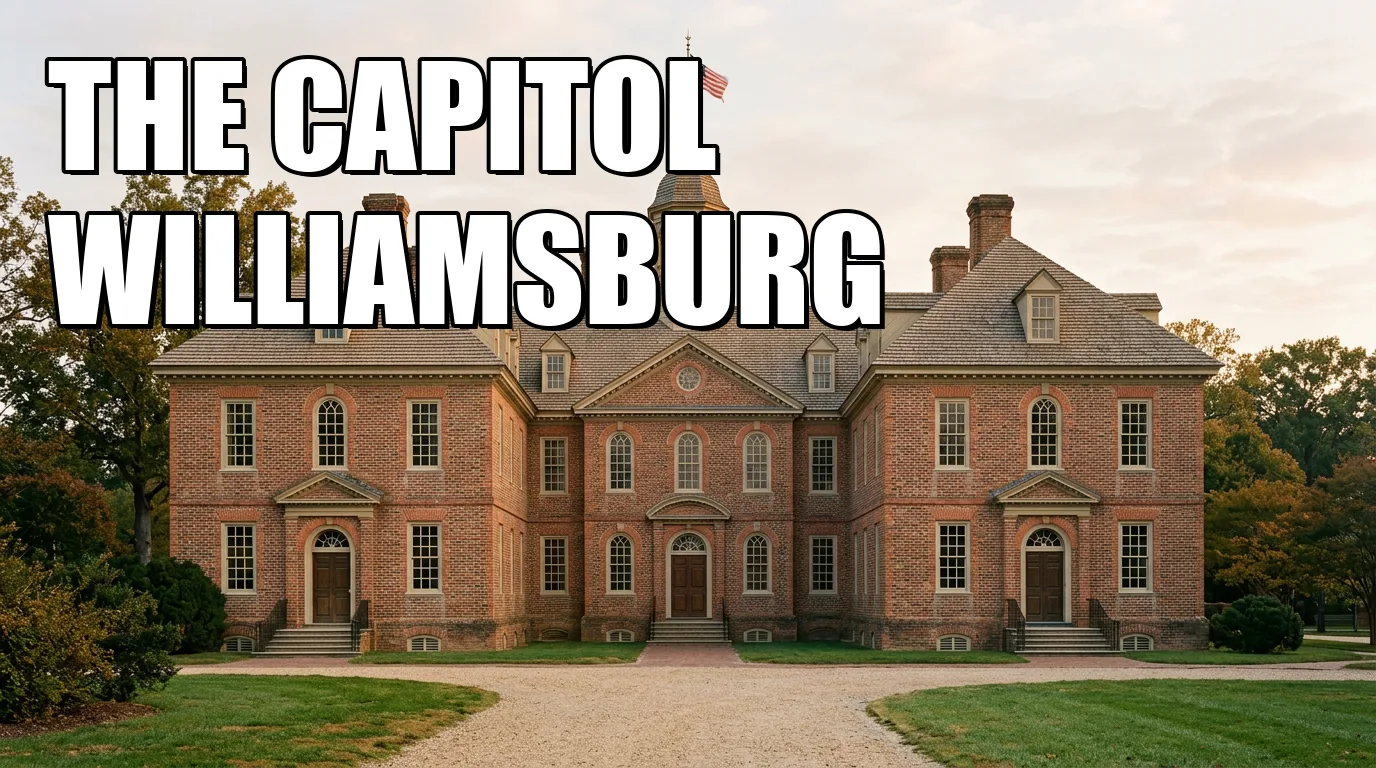
Imagine a time before America was America, when Virginia was the most populous and influential of the British colonies. At the very heart of its power stood the original Capitol building, begun in 1701 and completed in 1705. Its design alone was revolutionary for its era and geography: a distinctive H-shape, featuring two symmetrical wings connected by an open arcade. This wasn't merely an aesthetic choice; it was a functional marvel, allowing for the segregation of legislative and judicial powers—the General Court and the colony’s secretary in one wing, the House of Burgesses and its clerks in the other. It was, in essence, a physical manifestation of an emerging governmental structure.
Standing before the reconstructed Capitol today, one might not immediately grasp the audacity of its form. Yet, those semicircular apses terminating each wing, punctuated by three large round windows, were a bold statement, creating focal points of visual interest that broke from the more rectilinear norms of the time. This structure was much more than just a place where laws were debated; it was the very stage for the drama of American independence. It was here, on May 29, 1765, that Patrick Henry delivered his incendiary Caesar-Brutus speech against the Stamp Act, igniting the flames of rebellion. George Washington, George Mason, and Thomas Jefferson all walked these floors. The building burned in 1747, was rebuilt, and then served as the capital until 1779 when the government wisely moved to Richmond to avoid British naval attacks. The meticulous 1930s reconstruction, dedicated in 1934, allows us to stand in the very spot where a nascent nation found its voice, a profound experience if you let yourself feel it.
The Governor's Palace: Beyond Mere Grandeur
If the Capitol embodied colonial governance, the Governor's Palace, authorized in 1705, surely embodied its pomp and circumstance. Taking a staggering sixteen years and £3,000 to complete by 1722—a fortune at the time—this wasn't just a home; it was a statement of imperial authority. Nine royal governors resided here, presiding over elegant balls and critical assemblies, wielding power and influence over a vast colonial territory. It’s easy to dismiss it as a rich man’s house, but understanding its architectural style, Dutch Palladianism, reveals a deeper story.
This style, blending the classical ideals of Italian Renaissance symmetry with the steep-roofed practicalities of the Dutch Netherlands, gave the Palace a refined yet formidable presence. The elaborate sash windows, the cellar, the grand ornamental gardens, and that prominent cupola—often illuminated for celebrations—all contributed to an image of sophisticated power. What many visitors miss is the insight offered by Governor Robert Dinwiddie’s 1751-52 addition: a grand ballroom wing to the rear. This wasn't just for dancing; it was a deliberate move to make the Palace an "up-to-date project," signaling Virginia's growing prosperity and desire to rival European courts. This lavish spending and display of royal power, however, ultimately made it a symbol of the very authority the colonists would soon reject. Destroyed by fire in 1781 after serving briefly as a hospital for Revolutionary War soldiers, the Palace we see today is another triumph of archaeological reconstruction, faithfully re-emerging from its ashes thanks to the foresight of Rev. Dr. W.A.R. Goodwin and the financial backing of John D. Rockefeller Jr.
Bruton Parish Church: A Living Legacy of Faith and Form
Walking into Bruton Parish Church, you immediately sense a different kind of history. Unlike the Capitol or the Palace, which are reconstructions, this structure, built between 1711 and 1715, has stood continuously as a place of worship for over three centuries. This isn't a museum piece; it’s an active Episcopal parish, and that ongoing life lends it an unparalleled authenticity. It was the established Anglican place of worship and the official court church of colonial Virginia, making church attendance a mandated affair for those holding colonial office. The blend of religious and political life here was inextricable.
Look closely at its design. The church's cruciform layout—a cross-shaped floor plan with a central nave, transepts (the wings extending to the sides), and a chancel—was a rare and significant architectural choice for early colonial Virginia, likely the very first of its kind. This design, combined with a steeply pitched Gothic-style gable roof and distinctly Renaissance roundheaded windows, tells a story of architectural transition, where old-world traditions met new-world ingenuity. The tower added in 1769, and the 1752 enlargement that accompanied what is believed to be the American colonies' first church organ installation, further cemented its status. Dr. W.A.R. Goodwin, rector of this very church, wasn't just instrumental in its original success; he later became the visionary who spearheaded the entire Colonial Williamsburg restoration. His early 20th-century efforts to preserve Bruton Parish were a precursor to the massive undertaking that would follow, making this church a testament not only to colonial faith but also to the genesis of American architectural preservation itself. When you visit, attend a service if you can; feeling the echoes of history in a living context is a powerful experience.
The Powder Magazine: A Flashpoint, Not Just a Storehouse
If any single building encapsulates the volatile energies leading up to the American Revolution, it must be the unassuming, yet utterly pivotal, octagonal Powder Magazine. Commissioned by Governor Alexander Spotswood in 1714 and completed by early 1716, its function was purely practical: to securely store "all the arms, gun-powder, and ammunition... belonging to the king." Its distinctive octagonal form wasn't just quirky; it was an efficient design for storing and distributing munitions, while also symbolically asserting military authority in the young colony. Funded by taxes on liquor and the importation of enslaved people, it speaks volumes about the economic and social realities of the time.
This squat brick structure became a literal flashpoint on April 21, 1775, when Governor John Dunmore ordered royal marines to secretly remove 15 half-barrels of gunpowder. The outrage was immediate and fierce, igniting the "Gunpowder Incident"—a skirmish that saw Patrick Henry raise 150 volunteers and march on Williamsburg, demanding restitution. Dunmore's eventual payment of £350 defused the situation for the moment, but the incident dramatically accelerated tensions, pushing Virginia decisively toward revolution. What’s truly fascinating about the Magazine today are the ongoing archaeological investigations since 2021. New discoveries of diamond pane window glass and lead came—suggesting original casement and lunette windows, along with a clay tile roof—are challenging long-held assumptions about its original appearance. This isn't just a static relic; it’s a site of active discovery. Expect its appearance to continue evolving; a significant restoration to incorporate these findings is anticipated for completion by July 2026, just in time for America's 250th anniversary. This means your visit in the near future will offer a unique glimpse into history in the making, or rather, in the remaking.
The Wythe House: Elegant Restraint and Revolutionary Minds
Finally, we turn to the Wythe House, built between 1752 and 1754 by the esteemed architect Richard Taliaferro. This wasn't merely a private residence; it was a crucible of American jurisprudence and statesmanship. Taliaferro gifted it to his daughter Elizabeth upon her marriage to George Wythe, a signer of the Declaration of Independence and America's first law professor at the College of William and Mary. Wythe was a mentor to Thomas Jefferson, John Marshall, and Henry Clay, shaping the very legal framework of the nascent nation. The house also briefly served as General George Washington's headquarters during the lead-up to the Siege of Yorktown in 1781.
Architecturally, the Wythe House perfectly embodies refined Georgian residential style through its sophisticated Flemish bond brickwork—where alternating headers (the short end of the brick) and stretchers (the long side) create a distinctive pattern—and an understated elegance. What surprises many is a subtle optical illusion: the second-floor windows, while appearing shorter, actually contain the same number of panes as those below. This clever trick, alongside broad muntins (the strips of wood dividing the panes) and gauged brick arches (precisely cut bricks forming perfect arches), gave the two-story structure a heightened sense of grandeur than its modest size might suggest. It’s a testament to how Virginia’s colonial builders, though often working with limited resources, could achieve remarkable stateliness. When Colonial Williamsburg acquired the deteriorating property in 1938, its meticulous restoration aimed to recreate its appearance during the Wythe family's occupancy, ensuring that future generations could walk the floors where legal giants once deliberated. The house, with its handsome but unpretentious central staircase, offers a quiet intimacy that contrasts sharply with the public grandeur of the Capitol or Palace, inviting visitors to ponder the private lives of revolutionaries.
Beyond the Facades: A Legacy of Visionary Preservation
These five structures, each significant in its own right, collectively tell an even larger story: that of Colonial Williamsburg itself. The sheer ambition of Rev. Dr. W.A.R. Goodwin’s vision, combined with John D. Rockefeller Jr.’s unprecedented commitment beginning in 1926, transformed a derelict town into a comprehensive, living museum. This wasn't just about restoring a few old buildings; it involved the demolition of over 400 non-colonial structures that had encroached upon the original footprint, an undertaking almost unimaginable today. The project, publicly revealed in 1928, aimed to preserve or reconstruct 85 percent of the original eighteenth-century town.
Visiting Colonial Williamsburg requires a bit of planning to truly appreciate its architectural and historical depth. To avoid the thickest crowds, particularly during summer school holidays and major federal holidays, consider visiting in the shoulder seasons: April-May or September-October. Weekdays are generally less busy than weekends, especially for interior tours. Admission typically requires a ticket, which grants access to the exhibition buildings; purchasing a multi-day pass often provides the best value. Parking is usually available at the Visitors Center, from which shuttle buses transport guests into the historic area. Don't rush; allow yourself a full day, or even two, to truly wander, observe the details, and absorb the atmosphere. Pay attention to the smaller outbuildings as well—the kitchens, smokehouses, and slave quarters—which offer crucial context to the grander homes. While the perfection of the restoration can sometimes feel a bit antiseptic, remember that this pristine state is itself a deliberate historical statement, a tribute to an era and a concerted effort to prevent its complete erasure.
These buildings are more than just architectural marvels; they are tangible links to a pivotal period in American history. They stand as enduring testaments to the ingenuity of colonial builders, the fervent spirit of revolutionary leaders, and the extraordinary dedication of 20th-century preservationists. Each brick, each window, each carefully carved detail offers an opportunity for reflection, for understanding not just what happened here, but *why* it mattered. As you walk the streets of Williamsburg, let your gaze linger, and you might just find yourself conversing with history, one building at a time.