
Wright Home: Dayton's Lost Gem, Michigan's Treasure
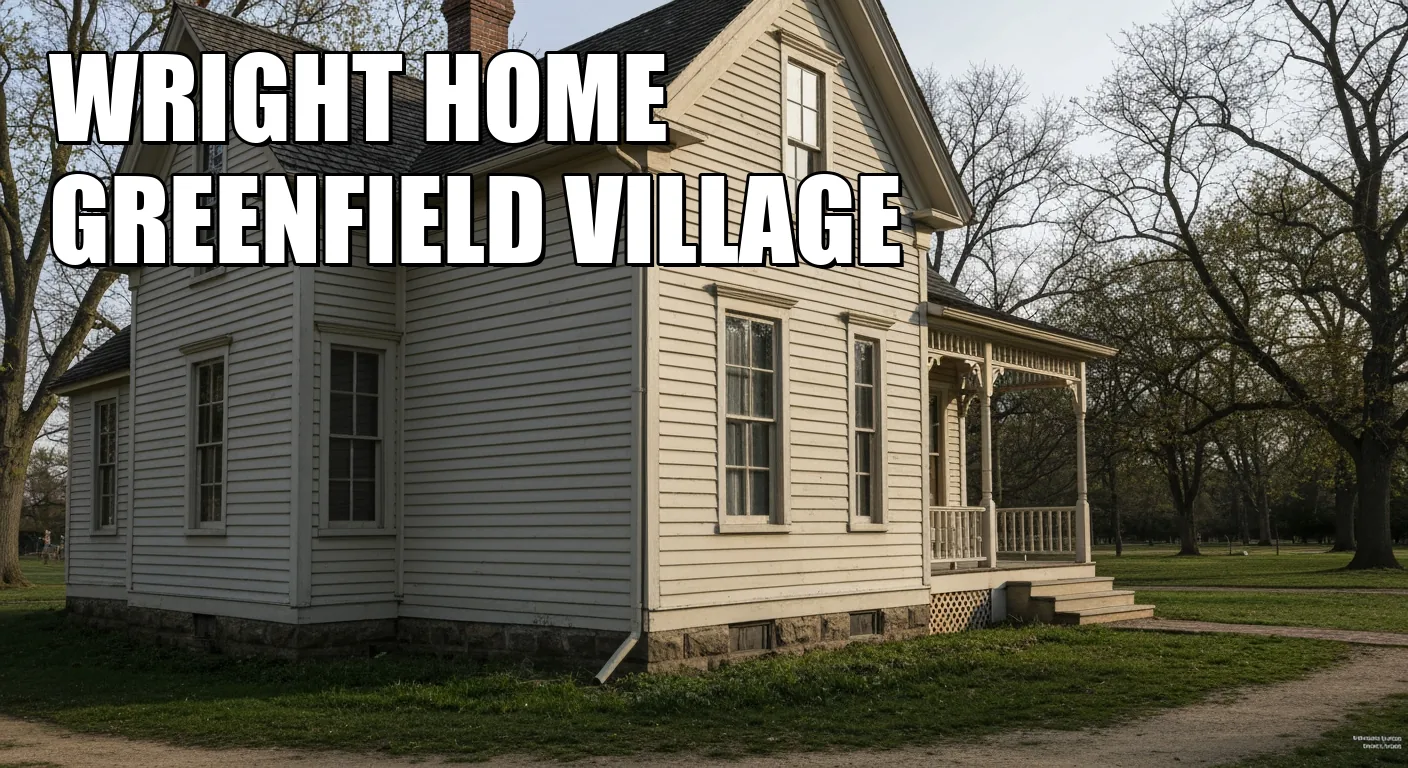
Where, exactly, does the story of human flight begin? For many, it’s Kitty Hawk, the sandy dunes etched into our collective memory. For others, it’s the bicycle shop in Dayton, Ohio, a place of grease and gears where two brothers tinkered. Yet, perhaps the truest genesis point, the crucible where ideas were forged, personalities shaped, and domestic life entwined with world-changing ambition, was a modest two-story Victorian on 7 Hawthorn Street in Dayton. It was here, from 1871 through 1914, that the Wright family lived, loved, and, in many ways, launched humanity into the skies.
But here’s the rub, the inconvenient truth for anyone planning a pilgrimage to Dayton: that original home isn’t there anymore. Like a displaced artifact, it was meticulously dismantled, crated, and reborn over 200 miles away in Dearborn, Michigan, at Henry Ford’s Greenfield Village. This fact alone sets the stage for a visit that asks more questions than it answers, challenging the very notion of historical authenticity and what it means to stand where history was made. Does a reconstructed home retain its soul, or does it merely offer a shadow of its former self?
The Great Relocation: What Happens When History Moves?
Most travel guides will tell you where to go, what to see. They rarely pause to ask if the journey itself is worth the destination, particularly when the destination has been physically uprooted. The Wright family home on Hawthorn Street, the very place Orville was born and Wilbur died, was purchased by Henry Ford in 1936. Ford, a man obsessed with preserving American ingenuity, saw its significance and moved it, brick by brick and beam by beam, to Greenfield Village. This act, while preserving the structure, undeniably severs its original contextual ties to Dayton’s West Side neighborhood—a vibrant, if modest, community that shaped the brothers. Visiting the home in Greenfield Village today, you’ll find it nestled among other reconstructed historical buildings, including the Wright Brothers’ bicycle shop. It’s an immersion, certainly, but one that feels curated, almost hyperreal. You walk through rooms that are meticulously furnished, many with original items collected by Orville himself, yet the air doesn't hum with the authentic, lived-in grit of a home that truly birthed revolution. Does this detract from the experience? For some purists, perhaps. For others, the accessibility and interpretive power of Greenfield Village’s setting make it an invaluable educational tool. Just be prepared for the fact that you’re experiencing a meticulously preserved *re-creation* of a moment, rather than the raw, unchanged original. Plan your trip for a weekday in the shoulder seasons (late spring or early fall) to avoid the peak summer crowds and school groups, allowing for a more contemplative experience. Admission to Greenfield Village is around $35 per adult, plus parking, so factor that into your budget.Beyond Bricks and Mortar: A Workshop, A Laboratory
This wasn't just a house; it was a living, breathing laboratory. It’s easy to romanticize the Wrights’ bicycle shop as their sole creative hub, but the Hawthorn Street dwelling was equally, if not more, central to their earliest, most fundamental aeronautical investigations. One pivotal moment, often overlooked in the grand narrative, unfolded right around the property: in 1899, Wilbur put his audacious theory of wing warping to the test. He fashioned a five-foot biplane kite with a curved wing, manipulating control lines to induce roll—a principle that would prove revolutionary for controlled flight. Imagine the scene: neighborhood children, wide-eyed, watching as this contraption would "swoop at them," diving for cover as the Wrights conducted their backyard aeronautical ballet. Yet, their mechanical prowess wasn't confined to grand experiments. The brothers applied their innate engineering skills to their domestic surroundings, too. Wilbur and Orville constructed a stylish front porch, replete with turned posts and “Carpenter Gothic” decoration, adding a touch of their precise craftsmanship to their daily lives. Wilbur, with an unexpected artistic flourish, hand-carved a handsome staircase from black cherry hardwood inside the home. This deep-seated inclination to build, to improve, to tinker, wasn't just for airplanes; it permeated every aspect of their world, transforming their home into a testament to their relentless ingenuity. They even built a darkroom in a shed out back, developing glass plate photographic negatives—a skill they would later deploy to meticulously document their glider and airplane experiments, providing invaluable visual records of their progress.Inside the Nexus: Intimate Spaces of Inventive Minds
Stepping inside the reconstructed home, certain architectural quirks immediately catch the eye, revealing surprising insights into their working relationship. Consider the brothers’ bedrooms upstairs. They shared an interesting architectural feature: to access one bedroom, you had to pass directly through the other. This isn't merely an quaint building detail; it’s a physical manifestation of their inseparable intellectual and working partnership, a constant, unavoidable proximity that fostered their unique synergy. Their home was also rich in intellectual resources, thanks to their parents who maintained two distinct libraries: one dedicated to theology, reflecting their father Milton's profession as a Bishop in the Church of the United Brethren in Christ, and another brimming with a diverse collection that actively encouraged the brothers’ boundless intellectual pursuits. The back room, evolving over time, became an informal yet increasingly sophisticated machine shop. Here, the brothers installed their equipment, slowly upgrading their tools. By 1901, they boasted a new metal lathe and a drill press, powered by a natural gas engine of their own design, built with assistance from their skilled mechanic, Charlie Taylor. This wasn't just a casual workshop; it was the precursor to the larger, more famous shops, and critically, that very engine would later power their revolutionary wind tunnel. It's a tangible link between the domestic sphere and the scientific breakthroughs that would follow, demonstrating how their home nurtured not only their intellectual growth but also their practical, hands-on mechanical development.The Human Element: Family, Friends, and the Fabric of Their Lives
To truly understand the Wright Brothers, one must look beyond their mechanical genius and delve into the vibrant, sometimes complex, tapestry of their family and social life within this home. The permanent residents included their father Milton, mother Susan Catherine Koerner Wright, and their five children: Reuchlin, Lorin, Wilbur, Orville, and Katharine. However, after Susan’s death from tuberculosis in 1889, the household dynamics shifted dramatically, placing significant responsibility on the youngest daughter. Katharine Wright, often overshadowed by her trailblazing brothers, took on the immense task of managing the household. Despite their father Milton’s frequent absences on church business—and his demanding, detailed instructions on household management sent from across the country—he also fostered Katharine’s intellectual development. She adeptly navigated these responsibilities, hiring a maid, Carrie Kayler, who would remain with the family for decades, a quiet pillar of support. Beyond the immediate family, the Hawthorn Street home was a hub of social activity. Edwin Sines, nicknamed "Jameez," lived just two doors down and was a particularly close childhood friend of Orville’s, their families deeply intertwined. Agnes Osborn, Katharine’s "comrade-in-arms," was another frequent visitor, making the home a launching pad for parties, bicycle outings, and even camping trips. Orville, despite his legendary shyness, found himself drawn into these social gatherings, even reportedly proposing marriage to Agnes at one point. These human connections, the shared laughter, the intellectual discourse, the simple act of living together, formed the essential backdrop against which the monumental work of flight would emerge.Authenticity in Exile: What You’ll Actually See and Touch
When you visit the Wright home at Greenfield Village, you're not just looking at a generic period house; you're engaging with history, albeit one that has been carefully curated. Orville himself played a significant role in collecting and verifying many of the original furnishings after Henry Ford purchased the home from Lottie Jones, the Wright family's former laundrywoman, for $4,100 in October 1936. This personal oversight by Orville adds an invaluable layer of authenticity to the experience. You'll find Katharine Wright's writing desk, a piece of furniture made famous as the very spot where Orville penned his renowned letter to the Smithsonian Institution, requesting scientific materials on flight. This unassuming desk, therefore, becomes a tangible link to the initial spark of their systematic research. Original rockers, a sofa, and other pieces of furniture, many crafted by Wilbur and Orville themselves, fill the rooms, offering a window into their domestic environment and their craftsmanship beyond aeronautics. The gas lights and chandeliers, period-appropriate and many original, serve as a subtle reminder of the technological infrastructure of Dayton in their era, illuminating the simple yet ambitious lives lived within these walls. Don't expect pristine, untouched relics; rather, appreciate the carefully assembled collection that aims to tell the most complete story possible. It’s a powerful testament to how humble beginnings, nourished by family, intellect, and relentless ingenuity, can quite literally change the world.The Wright Brothers Home: Your Complete Travel Guide
What is the history of the Wright brothers home?
The Wright brothers lived at 7 Hawthorn Street in Dayton, Ohio from 1885, where they conducted their early aviation experiments and lived when they achieved the first powered flight in 1903. Wilbur died in this home on May 30, 1912, and it was later moved to Greenfield Village in Dearborn, Michigan by Henry Ford in 1936.
Can you visit the Wright brothers house?
Yes, you can visit the original Wright brothers home at Greenfield Village in Dearborn, Michigan, and also tour Hawthorn Hill (Orville's later mansion) in Oakwood, Ohio, which offers guided tours departing from Carillon Historical Park on Wednesdays and Saturdays.
Where was the Wright brothers home located?
The original Wright brothers home was located at 7 Hawthorn Street in the Wright-Dunbar neighborhood of Dayton, Ohio; it is now preserved at Greenfield Village in Dearborn, Michigan. Their later mansion, Hawthorn Hill, is located in Oakwood, Ohio.
Is the Wright brothers Museum worth visiting?
Yes, the John W. Berry Sr. Wright Brothers National Museum at Carillon Historical Park in Dayton contains more Wright artifacts than any other place in the world, including the 1905 Wright Flyer III, and is highly recommended for aviation enthusiasts.
Is the Wright brothers home still standing?
The original home has been preserved and relocated to Greenfield Village in Dearborn, Michigan, where it remains open to visitors; Hawthorn Hill, Orville's later mansion, is also still standing in Oakwood, Ohio and available for tours.
Part of ⭐ Famous Residents

Famous Residents
Monticello Tickets, Tours, Mulberry Row, and What the Estate Actually Shows
Monticello is not just a house tour. Here is how the ticketed tours differ, what Mulberry Row adds, and why the slavery interpretation is central to understanding Jefferson’s estate.
Bed & Breakfast
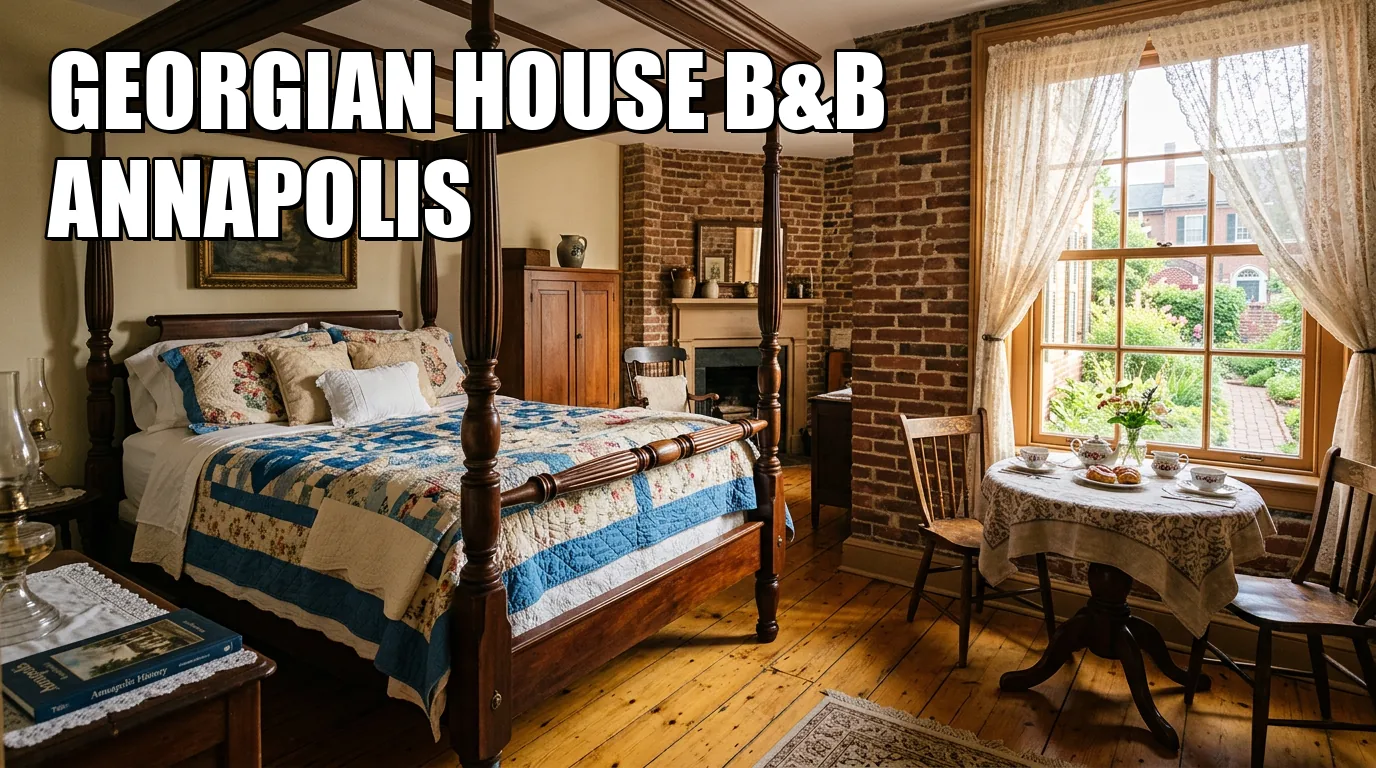
Annapolis Historic Inns and B&Bs: Downtown, Eastport, and Which Stay Fits?
A practical Annapolis inn guide for readers deciding between the Historic Inns cluster, Reynolds Tavern, Flag House Inn, 134 Prince, and the bigger question of whether the night belongs downtown or in a looser Chesapeake version of the trip.
Bed & Breakfast
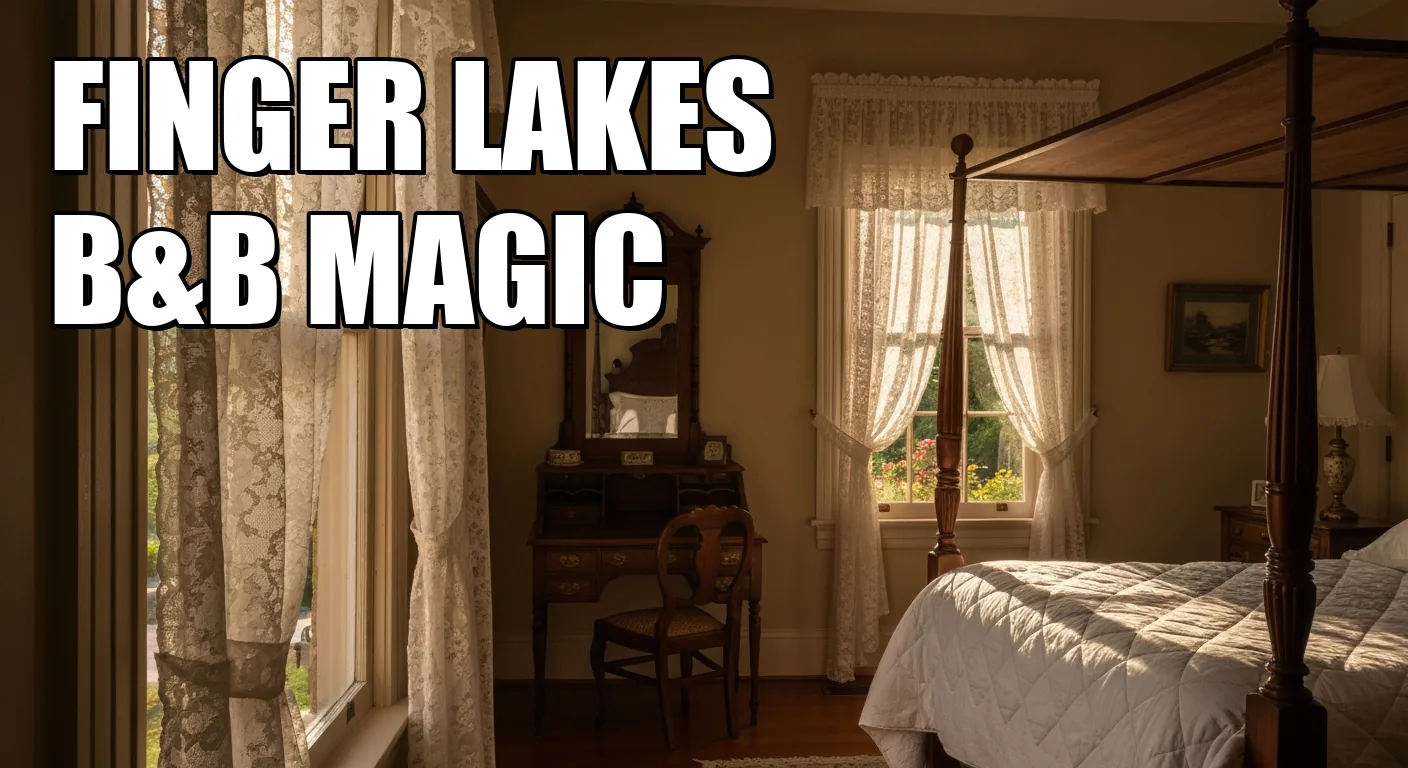
Finger Lakes B&Bs: Choose the Room, Not the Ranking
Compare historic main houses, carriage rooms, later wings, accessibility disclosures and the real base offered by four Finger Lakes B&Bs.

From the author of this guide
Check In After Dark
One writer checks into the rooms with the stories — Stanley 217, Banff Springs 873, the Del's 3327 — and reports what the night is actually like.