Direct answer: postcard-perfect colonial rooms from the sidewalk are free; the interiors cost a ticket. A serious 2026 day runs from low single-digit urban house museums (Van Cortlandt House has long been about $5 adult when open) through Historic Deerfield at $20, Strawbery Banke roughly $23 online (two consecutive days, $2 web discount common), Winterthur $27 through July 26 then $29 (Yuletide $33), Mount Vernon grounds from $28 plus $2 mansion add-on, Monticello first-floor house tour $24 or Behind the Scenes $42. Specialty Newport and private Christmas home tours push higher (Colonial Williamsburg private Christmas Homes Tour has been listed near $41).
What those tickets buy is not always an untouched time capsule. Real vs legend vs “museum-made” room is the useful 2026 frame—bright colonial paint, scholarly reproductions, and collector period rooms included.
Real rooms, real prices
Historic Deerfield (MA): $20 adult; main season Apr 18–Nov 29, 2026, Wed–Sun and Monday holidays 9:30–4:30. Personal photos OK without flash, selfie sticks, tripods, or in-tour video. Guided multi-house day + Flynt Center—arrive 5–10 minutes early; rooms are tight.
Winterthur (DE): $27 / $29 2026 ladder; Tue–Sun 10–5, house tours to 3:30. General admission includes self-guided fourth and fifth floors. Elevator upgrades can force stair-only specialty tours—check before booking Architecture of Independence–type programs. Photos allowed; don’t film other guests. Yuletide is the premium holiday product.
Mount Vernon: open 365 days 9–5; grounds from $28, mansion interior +$2. Photos allowed inside while the single-file line moves quickly. Upper floors are rare special-event territory. Enslaved People of Mount Vernon tour is typically included—use it. Expect school-group density.
Monticello: standard house ~$24 (first floor only, groups every few minutes, ~30 min unhurried); Behind the Scenes $42 at set times (~1 hour) climbs steep narrow stairs to second-floor bedrooms and the Dome Room—not wheelchair accessible. Personal photography now allowed inside under current protocols. Family-friendly options for ages 6–11 exist alongside slavery-focused interpretation.
Strawbery Banke (Portsmouth, NH): multi-century neighborhood (c. 1695–1950s interpretation layers); Wed–Mon self-guided 10–4 (summer weekends to 5); Tuesdays guided-only 10–2. Two-day ticket validity stretches value. Roleplayers and crafts fill the gaps between pure “period rooms.”
Colonial Williamsburg: streets can be free-feeling; paid tickets unlock deeper house interiors and special events. Treat early 20th-century paint choices as a research story, not gospel—modern Architectural Paint Research has rewritten the palette.
Beyond the white-walled myth
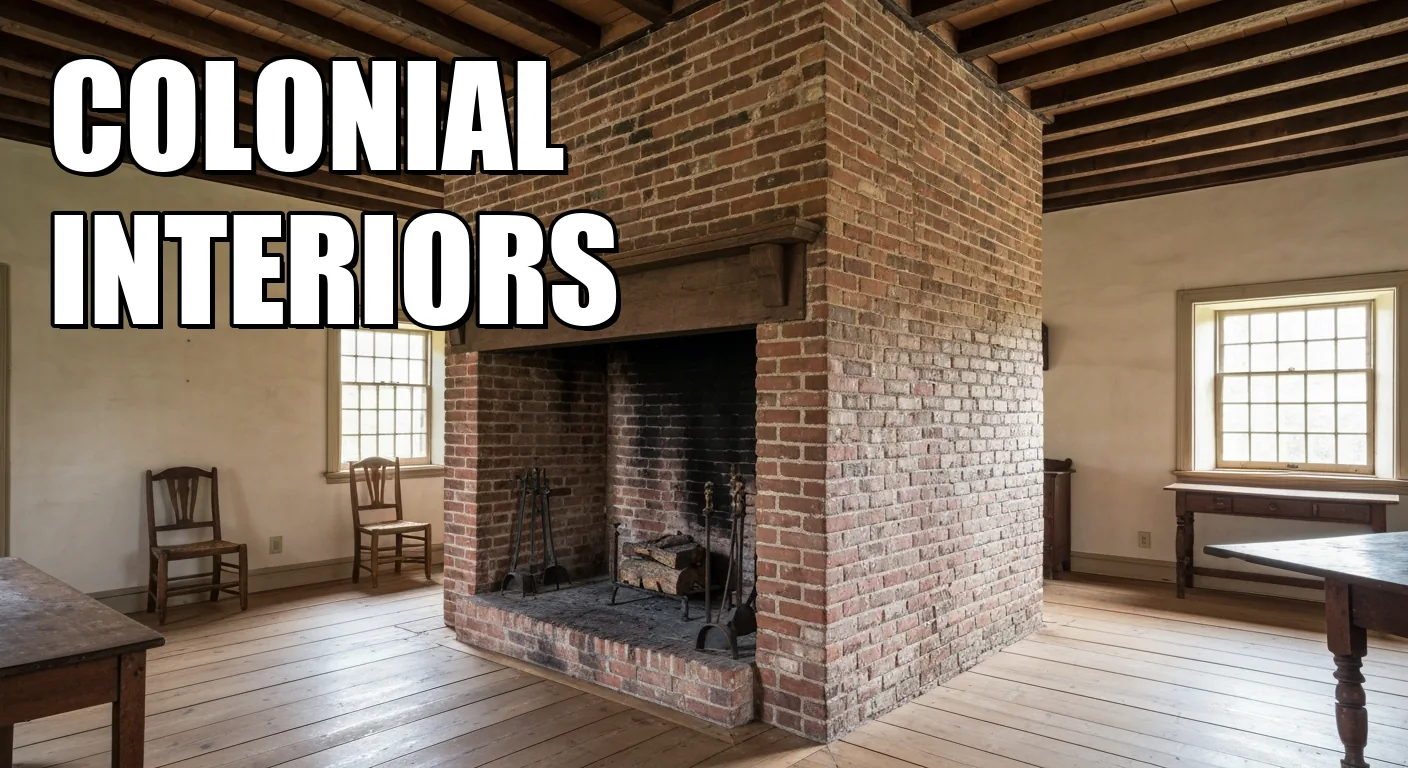
Paint: Georgian interiors (roughly 1725–1780) ran chocolates, oranges, ochers, greys, earthy reds—not sterile gallery white. Federal (1780–1830) favored pumpkins, sage, creams, muted blues against pale trim. Soft yellowed whites, not modern pure white. Colonial Williamsburg’s 1920s “scratch and match” under Susan Higginson Nash was pioneering and incomplete; microscopy and colorimetry now show richer, more nuanced finishes.
Paneling & floors: wainscoting, pattern-book mantels, classical proportion. Floor coverings may be protective fiber reproductions over original boards—honest conservation, not fraud, when labeled.
Furniture: mid-century museums sometimes filled rooms with anachronistic “heirloom” antiques. Sites like Plimoth corrected toward scholarly 17th-century reproductions that match documented poverty and simplicity. Accurate copies can teach better than wrong originals.
Winterthur period rooms: premier Federal/Georgian interior collection under one roof—and explicitly “museum-made”: paneling, mantels, and objects from many sources assembled into seamless illusions. Educational and tactile; also a record of du Pont / Colonial Revival taste. Longfellow-type houses left nearly as the family left them hit different emotional notes than stitched period rooms or pure reconstruction (e.g. Washington Birthplace Memorial House as idealized 1930s invention).
Aspect rating for 2026 planning
Authenticity of place: Monticello and Mount Vernon win as the actual presidential shells with contextual furnishings. Winterthur wins for density of architectural fabric samples, with the “assembled room” asterisk. Living-history villages win for process, not family china.
Ticket value: Deerfield $20 and Strawbery Banke two-day passes score high. Mount Vernon $30 all-in (grounds + mansion) packs gardens, museum, tomb, and slavery tour. Monticello $24 is solid; $42 is for upstairs addicts only.
Interpretation depth: best sites now pair architecture with enslaved labor and household economy, not only moldings. Winterthur specialty gardens/du Pont tours for design nerds.
Accessibility: historic stairs and narrow rooms still dominate. Monticello upstairs and some Winterthur tours are hard no without stairs. Prefer marked accessible paths at Mount Vernon; request advance accommodations at Philadelphia Revolutionary houses (Woodford, Cliveden, Wyck, Stenton).
Crowds: Mount Vernon high; Monticello managed small groups; Deerfield limited room capacity; Winterthur spikes at Yuletide—reserve.
Three spend scenarios
Budget (~$20 or less): Historic Deerfield full day or Strawbery Banke two-day stretch. Optional urban $5-class house when open.
Mid (~$30): Mount Vernon grounds + mansion; 3–4 hours including Enslaved People tour and outdoor sites.
Premium ($33–$42): Monticello Behind the Scenes for Dome Room access, or Winterthur Yuletide for holiday period-room spectacle. Book ahead.
Who yes: design travelers who can stomach “period room = curated collage”; families who want Monticello/Mount Vernon kid tracks; paint-history nerds who enjoy Williamsburg correction stories. Who no: visitors who need full elevator access through every floor; people who want only white-walled Instagram calm without slavery content; travelers who think every chair is the original family piece. Bottom line: pay the ticket for color, paneling, and honest labels—not for a myth of pure white colonial purity.