Bed & Breakfast

Unearthing America's Patriotic Inns: A Deeper Dive

Find Nearby Hotels

Book Flights

For years, I’ve chased the phantom scent of history through crumbling forts and preserved battlefields. But nothing quite captures the essence of a bygone era like an old inn, particularly those steeped in the patriotic struggles that forged this nation. These aren't mere buildings; they are silent witnesses, their walls absorbing the whispers of revolutionaries, the sighs of the wounded, and the clinking of glasses celebrating hard-won freedoms. Yet, discerning the genuinely profound from the merely old requires a certain skepticism, a willingness to peer past the glossy brochure and into the true narrative.

Stepping into the Past: What Truly Defines a "Patriotic" Inn?

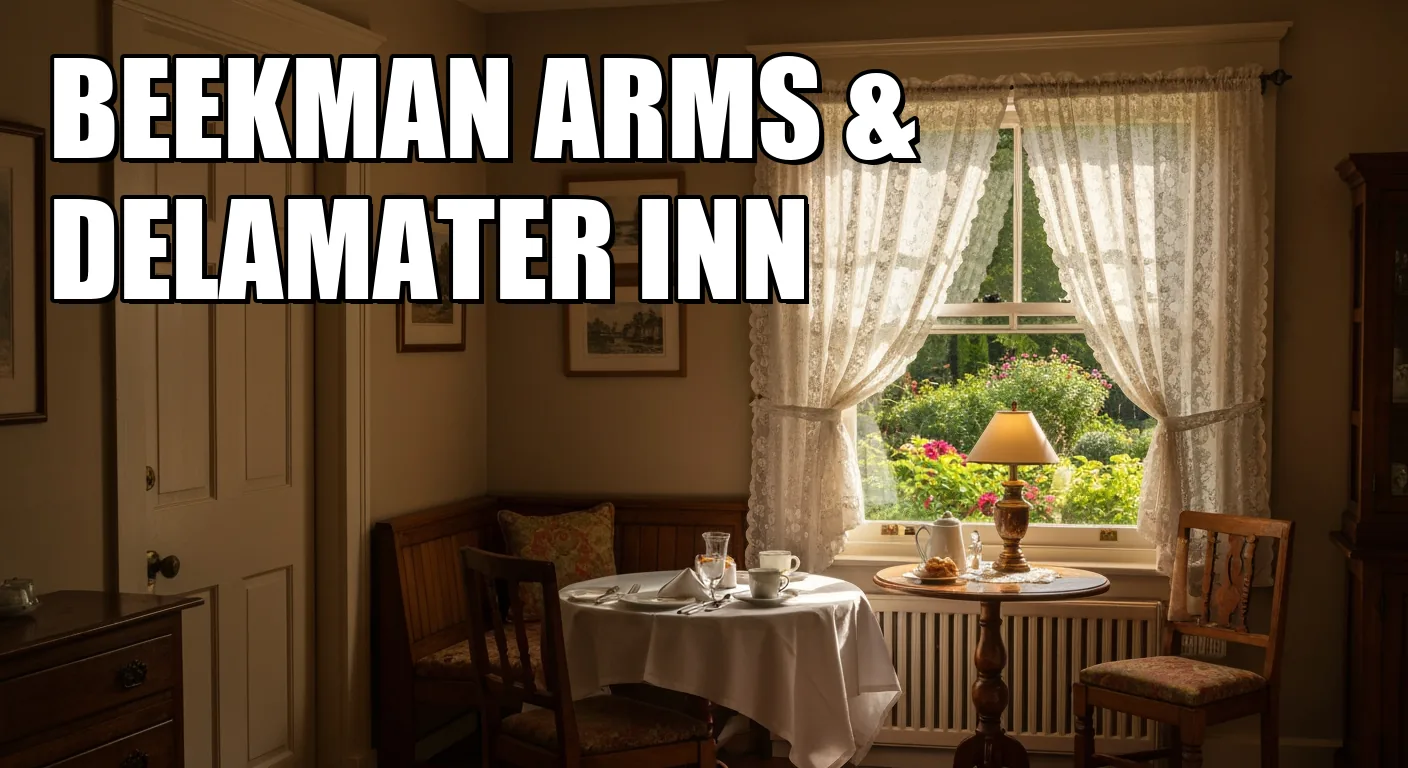
What exactly makes an inn "patriotic"? Is it simply age, or the presence of a framed portrait of George Washington? My travels suggest it's far more nuanced. A truly patriotic inn isn't just old; it's a place where pivotal moments intersected with the everyday lives of ordinary and extraordinary Americans. It’s where strategic conversations happened over a pint, where weary soldiers found respite, or where a community rallied in times of crisis. Often, these stories aren't neatly packaged; they require a bit of digging, a conversation with a local historian, or simply sitting quietly in a corner and letting the imagination fill the gaps. The key isn't always a specific room number, as enticing as that thought might be, but rather the documented *presence* of historical figures and events within the inn’s very fabric. Consider the Beekman Arms & Delamater Inn in Rhinebeck, New York, which proudly claims the title of America's oldest continuously operating inn, established way back in 1766. Can you imagine the conversations that took place here? During the American Revolution, it wasn't just a place to lay your head; it served as a vital gathering spot for military officers like George Washington, Alexander Hamilton – even Benedict Arnold, before his infamous betrayal. The 4th New York Continental Infantry drilled on the property, a tangible connection to the war effort. While the inn doesn't publicize which specific room Washington slept in (and honestly, they probably don't know for certain), simply knowing that these giants of history walked its floors, debated, and planned within its walls offers an unparalleled sense of connection. Expect to pay anywhere from $99-$203 per night, with rates fluctuating significantly with the season, so mid-week in the shoulder seasons (late spring, early fall) often yields the best value and fewer crowds.

Revolutionary Echoes: Where the Continentals Gathered and Bled

The narrative of American independence is often told through grand battles and sweeping declarations, but the grit of it was lived in places like inns. Few locations embody this more vividly than Concord's Colonial Inn in Massachusetts, dating back to 1716. Before the "shot heard 'round the world" at nearby Lexington and Concord on April 19, 1775, the central part of this inn served a critical function as a military storehouse and armory. The immediacy of the conflict crashed through its doors after the battle. A doctor commandeered the Liberty Room as a makeshift hospital, tending to the wounded. Can you fathom the urgency and desperation within those very walls? Even more poignantly, Room 24 became an operating room, and Room 27 was designated as a morgue. These aren't just stories; these are documented historical functions tied to specific spaces, a rarity among historic inns. This isn't a museum recreation; these are the rooms themselves. Beyond the battle, literary giant Henry David Thoreau resided here from 1835-1837, adding another layer of historical resonance. Prices start around $129 per night, but book well in advance, especially around Patriots' Day in April when the town explodes with reenactments and commemorations. Don't expect quiet on that particular weekend. Then there's the Sun Inn (Moravian Sun Inn) in Bethlehem, Pennsylvania, a truly significant site that opened its doors in 1760. This inn was a veritable who's who of the Continental Congress. On September 22, 1777, with the British occupying Philadelphia, John Adams, Samuel Adams, John Hancock, and other members of the Congress signed the register and found refuge here. George Washington, Benjamin Franklin, and even the Marquis de Lafayette were among its many distinguished guests. The sheer concentration of Founding Fathers who sought shelter and conducted business within its confines makes it historically unparalleled. However, here's where expectation meets reality: while profoundly significant, the Sun Inn no longer offers overnight accommodations. It operates as a museum, with a tavern restaurant on the second floor used for private events. So, you can walk its hallowed halls and perhaps enjoy a meal where history was made, but you won't be sleeping in John Hancock's imagined bed. This distinction is often lost in general guidebooks that simply list "historic inns." It's a vital piece of context for travelers planning their itinerary.

Beyond the Eastern Seaboard: Frontier History and Hidden Gems

Not all of America's patriotic narratives are confined to the East Coast's Revolutionary War battlegrounds. The expansion westward brought its own brand of patriots, pioneers, and conflicts. The Talbott Tavern in Bardstown, Kentucky, established in 1779, holds the distinction of being the oldest western stagecoach stop in America. A "stagecoach stop," for those unfamiliar with the term, was a vital nexus for travel, communication, and commerce in the nascent United States, providing fresh horses, food, and lodging for weary travelers traversing rough, often dangerous, roads. Imagine the tales told here around a crackling fire! Andrew Jackson, later President, was a documented guest, as was General George Rodgers Clark, a pivotal figure in expanding the American frontier, who reportedly used the tavern as a base for military operations. Even the infamous Jesse James gang is said to have graced its doors. While specific room incidents aren't detailed, the inn proudly names six of its rooms after famous guests, leaning into its rich history. Starting prices hover around $109 per night, making it a relatively accessible dive into frontier lore. Visiting mid-week in the spring or fall can offer a more intimate experience, away from weekend crowds drawn to Kentucky's bourbon trail. Another intriguing, though less widely recognized, New England gem is the General Stanton Inn in Charlestown, Rhode Island, established in 1740. This property has a compelling dual narrative: Revolutionary War intrigue and later, a role in the Underground Railroad. Joseph Stanton III, a committed member of the Sons of Liberty (a secret organization of American patriots that originated in the Thirteen Colonies during the American Revolution), purportedly used the tavern as a clandestine meeting place for George Washington's spy ring. His nephew, General Joseph Stanton IV, further cemented its patriotic ties, planning Revolutionary War strategies here before becoming Rhode Island's first U.S. Senator. Fast forward to the 1840s, and the inn discreetly served as a stop on the Underground Railroad, providing shelter for those escaping slavery. The current inn, completely renovated in 2022, blends modern comfort with historical respect. While specific pricing isn't always clearly published online, they offer unique rooms like "The 1740 King" on the first floor with an original fireplace, and Colonial Queen rooms, with Room 3 featuring original wood beams and Room 5 boasting another period fireplace. It’s a powerful illustration of how a single building can bear witness to multiple eras of American struggle and triumph.

The Civil War's Lingering Shadows: Stories of Sacrifice and Healing

The echoes of conflict don't stop with the Revolution. The bitter divisions of the Civil War also left an indelible mark on many historic properties. The Martha Washington Inn & Spa in Abingdon, Virginia, initially a private residence built in 1832, later became Martha Washington College for women. During the Civil War, its stately halls transformed into a makeshift hospital, tending to both Confederate and Union soldiers – a testament to shared suffering despite opposing loyalties. The Washington Mounted Rifles also used the grounds for training and barracks. What sets this inn apart is the specific, poignant lore surrounding Room 403. It's historically linked to a legendary Civil War story involving a mortally wounded Union captain. A nurse named Beth, with an extraordinary act of compassion, played her fiddle to occupy his mind during his final weeks, offering solace amidst the chaos of war. This isn't just a generic "hospital room"; it's a specific space tied to a deeply human story of empathy and tragedy. Current booking prices range from $175-$367 per night, reflecting a blend of history and modern spa amenities. For those seeking to connect with the Civil War's personal narratives, this room offers a particularly moving entry point. Visit outside of summer peak season to avoid higher rates and enjoy the beauty of the Appalachian foothills. Not far from Civil War battlefields, the Red Fox Inn & Tavern in Middleburg, Virginia, established in 1728, also pulses with the lore of both the Revolutionary and Civil Wars. The town itself was founded by Revolutionary War Lieutenant Colonel John Leven Powell, intertwining its very roots with the nation's birth. Beyond the wars, it became a favored retreat for President John F. Kennedy and Jacqueline Kennedy Onassis, who frequently visited during fall foxhunting holidays. While specific room numbers aren't tied to famous historical incidents from the wars, the sheer continuum of American history, from colonial skirmishes to presidential escapes, makes it compelling. The rooms are organized by historic building (Red Fox, Fox Den, Carriage House, Stray Fox), offering different atmospheres. Be prepared for a higher price point here, with rooms typically starting from $338-$448 per night, often averaging closer to the higher end. The inn’s reputation, impeccable service, and equestrian country charm contribute to its premium. If you're planning a visit, consider booking well in advance, especially during the vibrant fall season when the hunt country is at its most beautiful.

Navigating the Lore: Fact, Fiction, and Finding Your Own Connection

Many historic inns, understandably, embrace their legends. Some tales are firmly rooted in documented fact, while others have grown organically over generations, becoming part of the local fabric. As a traveler, it’s crucial to approach these stories with an open mind and a healthy dose of critical curiosity. Don't be afraid to ask innkeepers about the provenance of a story, or if they have archival material. Sometimes, the true magic isn't in knowing exactly which chair a famous person sat in, but in the general atmosphere that evokes their presence. The limitation I often encounter is the lack of public, granular documentation linking specific room numbers to particular dated historical incidents. While the Concord's Colonial Inn and Martha Washington Inn's Room 403 are notable exceptions, most properties can't provide that level of detail, and that's perfectly acceptable. The larger historical context, the *why* this inn matters, is often more powerful than a precise room number. It challenges the conventional wisdom that specific artifacts or rooms are the sole arbiters of authenticity.

Planning Your Pilgrimage: Practicalities for the Modern Patriot

If you're considering a stay at one of these historic bastions, some practical considerations will enhance your experience. First, book well in advance, particularly if your travel dates coincide with holidays, local festivals, or prime tourist seasons (like fall foliage in New England or spring in Virginia). Many of these inns have a limited number of unique rooms, and they fill up quickly. Second, expect varying levels of modernization. Some, like the General Stanton Inn, have undergone extensive renovations, offering contemporary amenities within historic shells. Others, while well-maintained, lean into their age, meaning quirks like uneven floors or smaller bathrooms might be part of the charm. This isn't a flaw; it's part of the authentic experience. Third, always inquire about parking costs and availability – historic town centers often have limited parking. For example, in towns like Concord or Rhinebeck, street parking might be available, but dedicated inn parking could be a premium, or limited. Finally, engage with the staff. Innkeepers and local historians are often treasure troves of information, eager to share stories that won't appear in any guide. A simple question can unlock a surprising insight, transforming a mere overnight stay into a genuine historical immersion.

Journey Through America's Patriotic Heritage Inns: Your Complete Visitor's Guide

What is the history of patriotic historic inns?
Patriotic historic inns are Colonial-era taverns and inns that played crucial roles in American independence and development, serving as gathering places for political meetings, military recruitment, and Revolutionary War activities. Many of these establishments hosted founding fathers, military officers, and patriots during pivotal moments in American history.
What is the history of inns?
Colonial American inns played a major role in the development of settlements and the nation, serving as hubs for social, civic, and political gatherings, post offices, militia centers, and temporary government quarters. These establishments were essential to daily life, functioning as the primary accommodations for travelers and as centers of community activity during the 1600s-1800s.
What is the oldest running inn in America?
The Beekman Arms & Delamater Inn in Rhinebeck, New York, established in 1766, is America's oldest continuously operating inn, having hosted George Washington, Alexander Hamilton, Benedict Arnold, and other Revolutionary War figures during the American Revolution.
What is the history of the Red Lion Inn?
The Red Lion Inn in Stockbridge, Massachusetts, was established in 1773 by Silas Pepoon as a tavern and became a prosperous stop for stagecoach travelers between Boston and Albany. The historic inn has been a charter member of Historic Hotels of America since 1989 and continues to operate as one of America's last great 18th-century hotels.
What is the Lord Calvert Inn known for?
The Lord Calvert Inn, part of Historic Inns of Annapolis, is known as one of three historic buildings comprising the collection near the Maryland State House, offering guests Victorian character with modern amenities in downtown Annapolis.
What is the oldest inn in the world?
Nishiyama Onsen Keiunkan in Japan, established in 705 AD with over 1,300 years of continuous operation, holds the Guinness World Record as the world's oldest hotel, though Gaststätte Röhrl in Bavaria has operated under the same family since 1658.
What was Marilyn Monroe's favorite hotel?
Marilyn Monroe's favorite hotel was the Beverly Hills Hotel in California, specifically Bungalow 1, which has been redesigned to capture the spirit of the screen goddess and remains available for guests today.
Why is George Calvert important?
George Calvert, the 1st Baron Baltimore (1580-1632), was an English statesman who envisioned the founding of Maryland as a sanctuary for persecuted Roman Catholics and a model of religious toleration in North America, establishing one of the first colonies promoting freedom of conscience.
Why did few Catholics move to Maryland despite Calvert support?
Most colonists were drawn to Maryland by economic opportunity rather than religious freedom, so despite the Calvert family's Catholic vision and welcoming policies, economic incentives were the primary motivator for immigration to the colony.
What is the history of the Governor Calvert House?
The Governor Calvert House in Annapolis, dating back to 1695-1727, was originally the residence of Charles Calvert (cousin to the fifth Lord Baltimore and Governor of Maryland from 1720-1727) and features a rare Roman hypocaust heating system beneath its lobby, the oldest example in North America. Now part of Historic Inns of Annapolis, it serves as a four-star hotel offering guests access to this significant colonial landmark.
Which patriotic historic inns can I visit today?
Notable patriotic historic inns open for visitors include the Beekman Arms in Rhinebeck, NY (1766), Red Lion Inn in Stockbridge, MA (1773), Historic Inns of Annapolis (Governor Calvert House, State House Inn, Lord Calvert Inn), the Willard InterContinental in Washington D.C. (1818), and Colonial Inn in Concord, Massachusetts.
What are the best locations for patriotic historic inns in America?
Top locations include Annapolis, Maryland (Historic Inns near the Maryland State House), Rhinebeck, New York (Beekman Arms in the Hudson Valley), Stockbridge, Massachusetts (Red Lion Inn in the Berkshires), Philadelphia, Pennsylvania (City Tavern reconstruction), and Washington, D.C. (Willard hotel).
When is the best time to visit historic inns?
Spring (April-May) and fall (September-October) offer pleasant weather and fewer crowds, while summer is peak tourist season; winter provides a quieter, more intimate experience though some inns may have limited activities.
How much does it cost to stay at patriotic historic inns?
Costs vary widely—budget options start around $99-150 per night (special promotions), while standard rates range $150-300+, with premium suites and specialty accommodations costing $300-500+ per night depending on location and season.
What can I see and do at historic inns?
Visitors can explore on-site museums, enjoy period dining and cocktails at historic taverns, participate in guided history tours, view original furnishings and artifacts, attend special events and demonstrations, and experience immersive colonial-era experiences that bring American history to life.
Are there any special requirements or dress codes for visiting historic inns?
Most historic inns have no special requirements for casual visits, though fine-dining restaurants may request business casual attire; some offer special colonial experiences that may suggest period costume participation, but this is entirely optional.