Bed & Breakfast

Unlocking America's Federal Style B&Bs: A Connoisseur's Guide

There's a quiet dignity to Federal architecture that speaks volumes about early American aspirations. Think symmetrical facades, understated ornamentation, and a sense of classical order—a deliberate departure from the ornate flourishes of earlier colonial styles, yet before the more imposing Victorian era. These aren't just old houses; they’re time capsules, each whispering tales of merchants, revolutionaries, and the everyday lives that shaped a nascent nation. But choosing the right Federal-style bed and breakfast from a sea of options? That requires an expert's eye, one that can discern genuine historical immersion from mere period-appropriate décor. I've spent countless nights in these venerable homes, and I'm here to tell you what's truly worth your time, your money, and your curiosity.

Far too many travel articles merely list amenities and repeat marketing copy. My goal is different: to give you the unvarnished truth, the surprising details, and the practical advice that only comes from firsthand experience. We're going beyond the surface to understand *why* these places matter, what makes them unique, and what you can genuinely expect when you walk through their historic front doors in 2025. Be prepared for a journey that might just challenge your preconceived notions of what a "historic stay" entails.

Newport's Smuggled Secrets: The Francis Malbone House

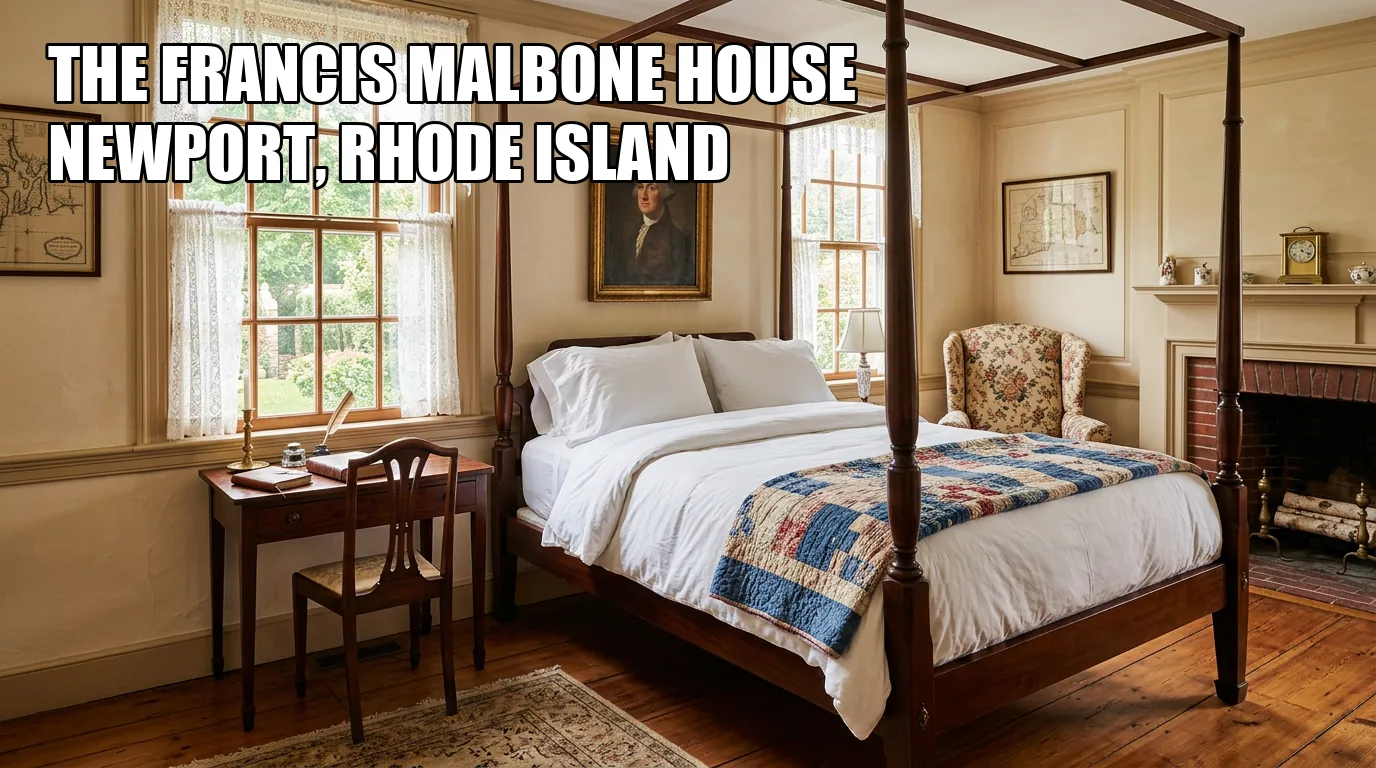
Stepping into The Francis Malbone House in Newport, Rhode Island, isn't just about experiencing Federal elegance; it's about stepping into a bygone era of maritime intrigue. Built in 1760 for Colonel Francis Malbone, a man who clearly knew how to blend business with a dash of illicit enterprise, this property practically hums with history. The official line tells you about Newport Harbor's peak as a global trading hub, but the more tantalizing whispers revolve around the colonel's ingenious smuggling operation—subterranean passages leading directly to his pier, designed to avoid those pesky colonial taxes. It’s a detail rarely highlighted in the glossy brochures, yet it speaks volumes about the cunning and ambition that built many of these early American fortunes. During the Revolution, the British seized it, filling it with looted gold, earning it the nickname "the treasure house." You can almost hear the clinking coins.

While every room exudes a quiet luxury, the King Harborside 6 consistently draws requests, and for good reason. It offers everything you'd expect from a top-tier historic stay: a working fireplace, meticulous soundproofing (a godsend in a busy tourist town), and furnishings that feel genuinely individual, not mass-produced reproductions. More importantly, its harborside vantage point directly connects you to Malbone’s original mercantile empire. You gaze out at the water, imagining his fleet coming in, perhaps loaded with goods that never saw the light of day—or the tax collector's ledger. The room’s 9.6 guest rating on Expedia isn't just for comfort; it’s for that immersive sense of place. Be prepared for the price tag, though; a weekend in 2025 will likely hover north of $500 a night, a reflection of Newport’s perennial desirability and the house’s exceptional pedigree. Is it worth it? If you value a palpable connection to a fascinating, somewhat illicit, past, absolutely.

Salem's Spooky Specter or Clever Marketing? The Salem Inn

Salem, Massachusetts, is a town that thrives on its past, particularly the dark shadow of the witch trials. So, it's no surprise that a historic inn here would lean into the paranormal. The Salem Inn, a collection of three distinct Federal-period houses (though spanning a broader historical range from 1834 to 1874), offers a different kind of historical immersion. The West House, built in 1834 for Captain Nathaniel West—the first Salem captain to circumnavigate the globe—is where the real Federal charm, and the chills, reside. It’s a genuine Federalist structure, replete with period-accurate furnishings that evoke Salem's maritime prosperity, not just its spectral legends. This is where you connect with the *other* Salem, the wealthy port town, before turning your attention to the more sensational aspects.

Everyone talks about Room 17 in the West House, and frankly, it's hard to avoid the hype. The inn staff and countless guests report unexplained noises, sudden temperature drops, and the occasional sighting of "Katherine," a ghostly woman in old-fashioned clothing. Is it real? Is it the power of suggestion in a town so steeped in supernatural lore? Honestly, it's probably a bit of both. But the persistent demand for Room 17 isn't just from amateur ghost hunters; history enthusiasts are drawn to the room’s classic Federal furnishings and working fireplace, seeking a connection to the past, whether corporeal or not. If you're coming for the history and find a ghost, consider it a bonus—or a well-orchestrated part of the Salem experience. Weekend rates here are more accessible than Newport, typically ranging from $200-$290, making it a surprisingly affordable way to delve into a truly unique blend of history and mystery. Just don't expect *every* guest to have a paranormal encounter; sometimes, a quiet night in a beautiful old room is all you get, and that's still pretty great.

When "John Adams" Isn't the President: The Federal House Inn's Quiet Charm

Driving through Plymouth, New Hampshire, on the border of the Lakes and White Mountains regions, you might stumble upon The Federal House Inn, a stately brick mansion dating back to 1835. The source material mentions it was "originally constructed by John Adams." Now, this is where a critical eye comes in. The immediate assumption is *President* John Adams, which would be an incredible pedigree. However, careful research reveals this isn't *that* John Adams. It’s an easy mistake to make, and one that gives the inn an accidental air of presidential grandeur it doesn't quite possess, at least not from its original owner. It's a charming detail that highlights how names can subtly influence perception without being explicitly misleading. Nevertheless, the house itself absolutely embodies the classical Federal architecture of New England's early prosperity, offering over 170 years of continuous hospitality.

Rather than a single standout room, the inn has cultivated a reputation for its overall commitment to comfort, particularly highlighted by guest reviews consistently praising the "exceptional quality of beds and luxurious linens." While the Bridal Suite and rooms boasting fireplaces and mountain views are popular, what truly sets this place apart is the tactile experience of a good night's sleep in a historically rich setting. Many guests specifically request rooms with those iconic four-poster period beds, which, combined with the white goose down comforters and premium toiletries, elevate the stay beyond mere accommodation. At an average weekend rate of $180-$220, including a gourmet breakfast and complimentary evening wine and port, it offers surprising value. It’s not flashy, nor is it haunted, but it provides a genuine taste of New England elegance where the simple pleasures of comfort and quietude reign supreme, often what you truly need after a day exploring the mountains.

From Ruin to Resplendence: The Hollinger House's Second Act

Lancaster County, Pennsylvania, is often synonymous with Amish Country, but just eight minutes from downtown Lancaster City sits The Hollinger House, a Federal-style mansion with a remarkable story of resurrection. Built in 1870, it’s a later interpretation of the Federal style, showcasing its enduring appeal even as architectural tastes began to shift. What truly sets this property apart isn't just its architecture, but its dramatic comeback. By 2013, it was a ghost of its former self—bank-owned, roof rotted away, the entire third floor gone. It was a ruin, a testament to neglect. Then, a "visionary team" led by Linda Beiler saw past the decay, undertaking a meticulous 14-month restoration that brought it back from the brink. This isn’t just preservation; it’s a heroic act of architectural CPR, transforming it into what the owners proudly call a "tribute to Federalist architecture."

The Michael Suite stands out as the property's crown jewel, and here’s where the historical narrative takes an interesting turn. The suite features a hand-painted king-sized bed and bedroom set from the 1920s. While exquisite, it reminds us that even meticulously restored historic homes are living entities, evolving through different eras. This isn't strictly Federal period furniture, but it speaks to a later chapter in the house's life, likely coinciding with a major renovation. It’s a subtle nod to the continuous story of the house, a layer of history added upon another. Weekend rates average $207-$261, including a continental breakfast and access to extensive grounds. This inn offers a particularly thoughtful experience, allowing you to witness firsthand the dedication required to salvage and celebrate such an important piece of American architectural heritage. It’s a powerful reminder that history isn't static; it's something we actively rebuild and reinterpret.

Jefferson's Legacy in a Healing Place: The Blackburn Inn

In the heart of downtown Staunton, Virginia, surrounded by presidential libraries and Shakespearean stages, stands The Blackburn Inn. Originally constructed in 1828, this isn't just another beautiful old building; it was designed by Thomas Blackburn, a protégé of none other than Thomas Jefferson. This connection imbues the inn with a profound architectural significance, reflecting Jefferson's classical ideals in its grand proportions and thoughtful details. But perhaps the most surprising aspect is its original purpose: it was part of the expansion of Western State Hospital, a place of healing. Imagine, a majestic building, designed with such aesthetic grace, intended as a sanctuary for those needing medical care. It challenges the conventional view of institutional architecture, proving that even a hospital could be an architectural masterpiece, creating a "place of healing as beautiful as it was useful."

While the history is compelling, the inn’s amenities truly make it a standout for visitors. Guests consistently seek out the Penthouse Suite and the Deluxe Queen Rooms with Soaking Tubs, drawn by their soaring 12-foot ceilings, vaulted features, and, crucially, access to views of the building's signature spiral staircase. This staircase leads to the rooftop cupola, offering 360-degree panoramas of the historic grounds and the surrounding Shenandoah Valley. It's an extraordinary architectural detail, and being able to appreciate it up close is a unique privilege. What’s more, at weekend rates ranging from $96-$160, it's arguably the most affordably priced among these distinguished Federal properties. This remarkable value, coupled with luxury amenities like complimentary continental breakfast, spa services, and an on-site bistro, makes The Blackburn Inn a truly exceptional find. It challenges the notion that historical grandeur must come with an exorbitant price tag, proving that some of the deepest historical insights can be found in places that prioritize both beauty and accessibility.

These Federal-style bed and breakfasts offer far more than just a place to sleep. They provide a tangible connection to America's formative years, revealing stories of ambition, ingenuity, and even a little bit of mystery. From Newport's mercantile secrets to Salem's spectral legends, from New Hampshire's quiet comforts to Lancaster's dramatic rebirth, and Staunton's Jeffersonian healing grounds, each property holds a unique narrative. They challenge us to look beyond the surface, to question what we think we know about history, and to appreciate the enduring beauty of early American architecture. Next time you plan a trip, consider one of these architectural gems. You might just discover that the real history isn't always found in textbooks, but within the very walls that once sheltered those who shaped a nation.

The Federal Period Traveler's Guide: Everything About Federal Style Bed and Breakfast Lodging

What is the history and origin of federal style bed and breakfast accommodations in America?
Federal style architecture emerged as a distinct movement following the American Revolution, flourishing from 1780-1830 and particularly from 1785-1815. These historic bed and breakfast properties preserve homes originally built during America's founding era, converting them into intimate guest accommodations that offer visitors a tangible connection to early American history and architectural heritage.
What are the key architectural features that define federal style buildings used as bed and breakfast inns?
Federal style structures are characterized by their square or rectangular shapes, symmetrical facades, Palladian windows (featuring a central arched window with smaller square windows), fanlights above doors, hipped roofs, elegant molding, and geometric decorations including elliptical and fan-shaped motifs. Interiors often feature curved lines, oval-shaped rooms, simple muted wall tones, and detailed cornices reflecting neoclassical design principles influenced by architect Robert Adam.
Where are the best locations to find federal style bed and breakfast accommodations?
Federal style B&Bs are concentrated throughout the Northeast, Mid-Atlantic, and Eastern regions, with notable properties in Lancaster County Pennsylvania, Gettysburg Pennsylvania, Virginia plantation country, New England states including Vermont and Massachusetts, and upstate New York regions. Many are located near historic sites, national parks, and in charming small towns with preserved colonial and federal-era architecture.
What is the typical cost range for staying at a federal style bed and breakfast in 2025?
Federal style B&Bs typically range from $97-$303 per night, with average rates between $192-$228 depending on season and amenities. Historic New England inns like The Wayside Inn charge $220-$240 per double-occupancy room including full breakfast, while luxury federal estates may command higher rates during peak seasons.
What breakfast amenities and services are typically included with a federal style bed and breakfast stay?
Most federal style B&Bs include full homemade breakfasts served in formal dining rooms or seasonal areas, featuring fresh local ingredients, home-baked breads, pastries, hot entrees, fresh fruit, and beverages. Innkeepers often tailor breakfast offerings to guest preferences, with options ranging from continental buffet-style service to plated gourmet presentations.
What modern amenities can guests expect at historic federal style bed and breakfast inns?
Contemporary federal style B&Bs feature modern conveniences including complimentary WiFi, flat-screen televisions, private en-suite bathrooms, air conditioning, heating, electric vehicle charging, swimming pools, hot tubs, and fine linens. Despite historical interiors, most accommodate modern expectations while maintaining period-appropriate aesthetics and authentic character.
What are the typical booking and reservation requirements for federal style bed and breakfast accommodations?
Most federal style inns require advance reservations with check-in between 3-6 PM and 11 AM checkout. A one-night deposit is typically required, due 7 days prior to arrival, with refunds available for cancellations made 7+ days in advance. Credit card information is required to secure reservations, which can be made online or by phone.
Are pets allowed at federal style bed and breakfast properties?
Pet policies vary significantly; many historic federal B&Bs do not accommodate pets due to preservation concerns and property age, though some maintain pet-friendly rooms with additional fees ($25-$50 per pet per night). It's essential to confirm pet policies directly with individual inns, as most specify limitations on the number of animals and designated rooms.
Do federal style bed and breakfast inns accommodate group bookings and special events?
Many federal style B&Bs accept group bookings through direct contact rather than online reservation systems, requiring phone or email inquiries for parties. Some historic inns offer wedding packages, vow renewal ceremonies, and anniversary packages with customized menus, accommodations for 6-300 guests, and dedicated event planning services.
What accessibility accommodations are available at historic federal style bed and breakfast properties?
Accessibility varies due to the historic nature of original federal structures; many older buildings are not fully ADA accessible with limited elevator access and narrow doorways. Some federally-designated bed and breakfasts work to provide accessible entry points and routes where feasible, while others have limited accessibility due to original construction. Contact properties directly regarding specific accessibility needs.
What is the best time of year to visit federal style bed and breakfast properties?
May through October offers optimal experiences, with September-October providing cooler weather and stunning fall foliage. July-August represents peak season with higher rates and crowded conditions, while spring months (May-June) offer pleasant weather with fewer guests. November-March presents lower prices but reduced amenities and shorter operating hours.
What should guests expect regarding amenities like WiFi, air conditioning, and television in federal style B&Bs?
Most restored federal style inns now provide complimentary WiFi throughout properties, air conditioning and heating in guest rooms, and flat-screen televisions with streaming capabilities. Bathrooms typically include modern showers, hair dryers, complimentary toiletries, and fine linens, blending historical charm with contemporary comfort expectations.
Are payment options flexible at federal style bed and breakfast accommodations?
Federal style B&Bs typically accept credit and debit card payments for both reservations and on-site transactions. Deposits are charged to the credit card on file, and guests can typically pay balances using cards at check-in. Some properties may offer alternative payment arrangements for group bookings or special packages when arranged in advance.
Can federal style bed and breakfast inns accommodate special occasions like anniversaries and renewals?
Many federal historic inns offer romance packages and special occasion amenities including champagne service, arrangement in parlor suites, candlelit dinners, and complimentary upgrades for anniversary and vow renewal guests. Some properties provide customized packages with spa services, fine dining, and personalized concierge arrangements for special celebrations.
What activities and attractions are typically available near federal style bed and breakfast properties?
Federal B&Bs are commonly located near historic sites such as Gettysburg National Military Park, Civil War battlefields, colonial estates, plantation gardens, Finger Lakes wineries, and charming village shops and restaurants. Many provide walking access to downtown areas with galleries, boutiques, and local dining, plus guidance for regional historical tours and recreational activities.