Haunted Hotels

Unlocking Cary House: Haunts, History, & Honest Insight

Find Nearby Hotels

Book Flights

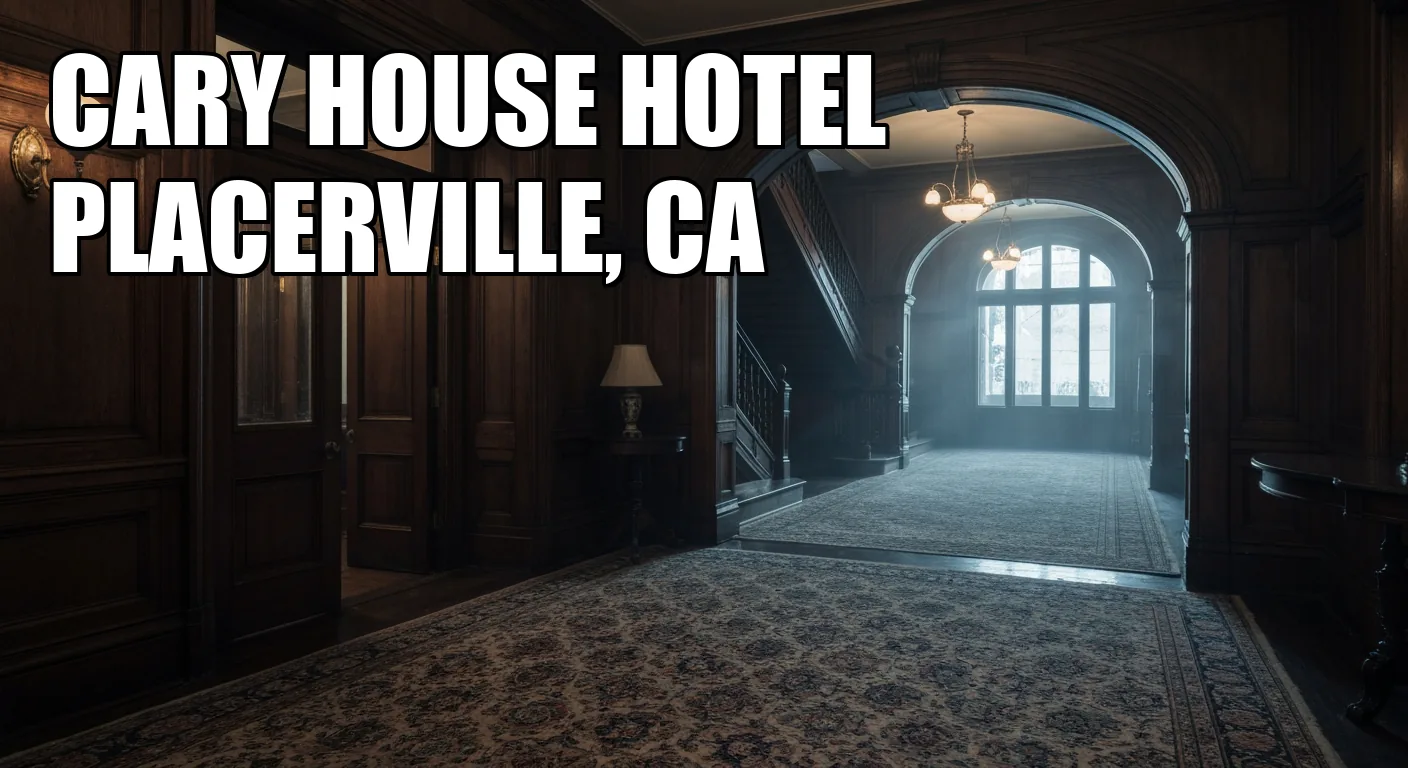
There are hotels, and then there are *places*. The Cary House Hotel in Placerville, California, decidedly falls into the latter category. For anyone who’s spent a significant chunk of their life chasing whispers in old buildings, the moment you walk through its grand entrance, a certain weight settles—a palpable sense that the past isn’t merely preserved here; it actively participates in the present. This isn't just a building; it's a living archive, where the spirits of the Gold Rush era seem to have forgotten to check out.

My journey through America’s historic lodgings has taught me one undeniable truth: the most potent hauntings are often found where history bleeds into personal tragedy. Placerville, once known as Hangtown for its rather swift frontier justice, is a town steeped in such narratives. The Cary House, established in 1857, has stood sentinel through it all, evolving from a glamorous hub for prospectors and stagecoach lines to a whispered-about destination for those seeking something beyond comfortable amenities. If you’re anything like me, you don’t just want a ghost story; you want to feel the chill, to question your own senses, and to understand *why* a particular location retains such a grip on its spectral residents.

What Lies Beneath the Gilded Façade: A Hotel Built on History and Heartache

Before we dive into the specific encounters, let’s consider the hotel's foundation. Built during the roaring height of the California Gold Rush, the Cary House was, for its time, a beacon of luxury and civility in a rugged, lawless land. Imagine the characters who passed through these doors: miners flush with gold dust, gamblers seeking fortune, merchants selling their wares, and ladies of every disposition. Each left an imprint, a fragment of their joy, sorrow, avarice, or despair. This isn't some arbitrary old building; it's a place where countless lives converged, where fortunes were made and lost, and where, inevitably, some souls found a reason to linger. The very air seems charged with these forgotten narratives, a hum beneath the surface of everyday life.

Many historic hotels claim to be haunted, yet few possess the kind of consistent, specific, and often quirky paranormal activity reported at the Cary House. It’s not just the occasional unexplained creak; it’s a distinct cast of characters, each with their own modus operandi. This specificity is what often separates a genuinely active location from one merely benefitting from a good story. For those of us who appreciate the nuanced dance between folklore and genuine anomaly, the Cary House presents a compelling stage.

Unpacking the Spectral Guest List: Who (or What) You Might Encounter

So, who are the permanent residents of the Cary House? You’ll hear tales, of course, but after years of sifting through urban legends and eyewitness accounts, I’ve found a few that consistently surface, each offering a unique flavor of the hotel’s enduring mystery. If you're looking for a truly immersive, potentially spine-tingling experience, booking one of these rooms is your surest bet for a direct line to the other side.

Perhaps the most endearing of the hotel's ethereal inhabitants is Simmy the Ghost Cat, a phantom feline said to inhabit

Room 220

. Guests frequently report a distinct sensation of a cat padding across the bed, or even curling up at their feet during the night. It's a subtle, almost comforting presence, often described as a gentle pressure or the soft sound of paws. Simmy, it seems, reserves her nocturnal visits for those actually staying in her room, a testament to her territorial, yet friendly, nature. For anyone who appreciates a quieter, more intimate encounter, this room offers a unique connection to a pet who simply decided to stay.

Then there’s the notorious Stan, a front-desk clerk whose story ends in tragedy and whose presence is anything but subtle. Stan, according to local lore, met his untimely end on the hotel’s grand staircase after a misjudged romantic advance. He was stabbed twice, tumbling down the mahogany banister, and it seems his spirit has been stuck in a perpetual state of mischief ever since. His stomping grounds include the lobby stairwell, where guests often report hearing phantom footsteps and soft, disembodied laughter. However, Stan truly makes his presence felt in

Room 208

and

Room 406

. Expect slamming doors, playful antics with electronics—like speakers turning on and off at random—and even the occasional whispered word. He's less about a chilling fright and more about a persistent, somewhat flirty, poltergeist energy. It's a reminder that not all spirits are mournful; some just want to mess with your stuff.

For those seeking something more overtly unnerving,

Room 205

offers a compelling, if slightly unsettling, proposition. Multiple investigations, including some rather compelling video documentation, have captured an unseen force manipulating the door lock. Guests have reported hearing a key being inserted and jiggled, followed by the doorknob turning—sometimes multiple times in a single night. This is often succeeded by the distinct sound of phantom footsteps circling the bed. This isn't a vague feeling; it's a direct, almost aggressive, interaction with the physical world, suggesting a more potent, perhaps even frustrated, entity. If you’re bringing your EMF meters and audio recorders, this is undoubtedly the room where you’ll want to set up shop.

Beyond the individual rooms, the hotel's magnificent main staircase acts as a conduit for more generalized residual phenomena. Imagine hearing the faint, distant strains of American ragtime or tin-pan-alley piano music near the top of the first flight, despite there being no instrument anywhere in sight. It's a fleeting auditory echo, a fragment of a bygone era. More visually striking is the occasional apparition of a Victorian lady, sometimes seen gliding gracefully down the stairs, only to vanish at the bottom rail. These aren't interactive spirits; they're echoes, imprints of past events replaying themselves, like a broken record of history. It’s a powerful reminder of how much life this building has witnessed, and how little of it has truly departed.

Is it Truly Haunted, or Just the Charm of an Old Building?

Any seasoned ghost hunter, or even a casual observer, knows that old buildings inherently make noises. Settling foundations, drafts whistling through ancient window frames, and the creaks of timber can easily be misinterpreted as spectral activity. This is where a critical eye, and a willingness to embrace ambiguity, becomes crucial when visiting a place like the Cary House. Is every shadow a ghost? Unlikely. Is every unexplained noise a poltergeist? Probably not. The true allure, and indeed the challenge, lies in discerning the genuine from the mundane. What separates the Cary House from many other 'haunted' claims is the consistency and specificity of its reports across multiple, unrelated guests. These aren't isolated incidents; they're recurring patterns tied to specific locations and identifiable 'personalities.' However, if you arrive expecting Hollywood-style theatrics, you might leave disappointed. Real hauntings are often subtle, a slow burn of unease rather than a jump scare.

Moreover, the sheer atmosphere of the Cary House is, in itself, haunting. The dimly lit hallways, the antique furnishings, the way the silence sometimes feels heavy and profound—it all contributes to an undeniable sense of being watched, of not being alone. This isn't to dismiss the specific paranormal claims; rather, it's to suggest that even if a full-blown apparition eludes you, the hotel's intrinsic character provides a deeply immersive, historically resonant experience that transcends simple ghost hunting. It’s the feeling that matters, that quiet shiver down your spine when you realize you’re walking in the footsteps of a century and a half of human drama.

Preparing for Your Paranormal Pilgrimage: Booking the Best Experience

If you're truly committed to a spectral encounter at the Cary House, a little foresight goes a long way. This isn't the kind of place you just drop into on a whim, particularly if you have specific ghostly targets in mind. Booking one of the highly active rooms is paramount. As I mentioned,

Room 220

is your best bet for an almost guaranteed interaction with Simmy the cat. For those eager to document the poltergeist door-lock phenomenon,

Room 205

is your prime candidate; consider bringing

EMF meters

or

audio recorders

to capture any anomalies. Should you wish to engage with Stan and his playful antics,

Rooms 208

or

406

are where he makes his presence most known, often delighting in electronic interference. Don’t just ask for "a haunted room"; specify which spirit you hope to engage with, as the staff are often quite knowledgeable and helpful in accommodating such requests.

Beyond the room selection, consider your timing. While the hotel is always active, a weekday stay might offer a quieter, more contemplative experience, allowing the subtle energies to surface more readily without the buzz of weekend crowds. If you're hoping to catch a glimpse of the Victorian lady or hear the phantom piano, request a room overlooking the grand stairwell. Arriving early allows you to explore the lobby and common areas when they're less populated, perhaps giving you a better chance to sense Stan's lingering presence. Remember, these are old buildings, so expect charming quirks rather than modern luxuries, and be open to the unexpected. The real cost here isn't just the room rate, but the mental preparation required to truly immerse yourself in the lingering history.

The Enduring Allure of the Unseen: Why We Keep Coming Back

Ultimately, a stay at the Cary House Hotel isn't solely about whether you definitively encounter a ghost. It's about connecting with a vibrant, often turbulent, chapter of American history. It's about the thrill of possibility, the frisson of the unknown, and the humbling realization that some stories, some personalities, simply refuse to fade away. The hotel, with its ornate architecture and palpable sense of antiquity, transports you to a time when Placerville was a raw, booming frontier town, a place where dreams were either gloriously realized or tragically shattered. This context is essential; it explains *why* the spirits might linger, why the energy feels so potent. It's the human drama, etched into the very fabric of the building, that provides the fuel for the paranormal.

So, go to the Cary House. Immerse yourself in the Gold Rush atmosphere, let the grandeur of the past envelop you. Listen to the creaks and groans of the old building, and pay attention to the subtle shifts in temperature, the fleeting peripheral movements, or the whispers that might just be a draft. Whether you leave with a definitive ghost story or simply a profound appreciation for history, one thing is certain: the Cary House will leave an impression. It’s a powerful reminder that some places, and some people, refuse to be forgotten, even long after their time has ostensibly passed. This isn't just a hotel; it's an experience, a journey into the heart of California's wild past, with a few spectral companions along for the ride.

Spirits, Hauntings & Mysteries: Your Complete Guide to America's Haunted Hotels

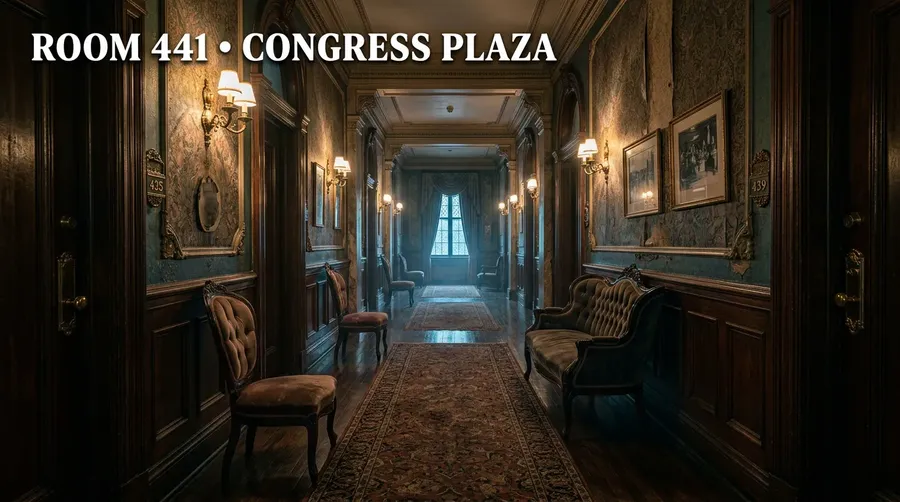
What happened in room 441 of Congress hotel?
Room 441 in the Congress Plaza Hotel (Chicago) is the most haunted room, with guests reporting a shadowy woman standing or hovering over beds, moving objects, flickering lights, and disembodied voices; no specific death is documented in this room, but it receives more complaints and calls to security than any other room in the hotel.
What is the #1 most haunted hotel in the world?
The Riccarton Racecourse Hotel in Christchurch, New Zealand ranks as #1 on current lists, with the unresolved 1933 murder of Donald Fraser; however, the Stanley Hotel in Colorado is America's most famous haunted hotel.
What happened in room 428 in the Stanley hotel?
Room 428 at the Stanley Hotel is haunted by the ghost of a friendly cowboy, with guests reporting heavy footsteps, furniture being rearranged during sleep, and apparitions of a cowboy appearing at the foot of beds or kissing guests' foreheads.
What happened in room 218 in the Crescent hotel?
Room 218 in the Crescent Hotel (Eureka Springs, Arkansas) is the most haunted room where an Irish stonemason named Michael fell to his death during the hotel's construction in the 1880s; he is known as a poltergeist that touches and moves objects.
What haunts the Crescent Hotel?
The Crescent Hotel is haunted by multiple spirits including Michael (the Irish stonemason in room 218), Theodora (a nurse who stayed during its hospital era), Breckie (a 4-year-old child who died there), Dr. John Freemont Ellis (the in-house doctor), and Morris (a hotel cat).
How accurate is the haunting in Connecticut?
The accuracy of 'The Haunting in Connecticut' is highly controversial; while the Snedeker family did move into a former funeral home, the book's author Ray Garton was told to fictionalize parts by the Warrens, and skeptics note that no other occupants before or after reported paranormal activity.
What is the most haunted house in Connecticut?
The Huguenot House in East Hartford (built in 1761) is one of the most renowned haunted houses in Connecticut, with reports of a ghost named 'Benny' making scratching and rapping sounds, and another apparition known as the 'Blue Lady'.
Are Ed and Lorraine Warren still alive?
No, Ed Warren died on August 23, 2006, at age 79, and Lorraine Warren died on April 19, 2019, at age 92; their organization is now directed by their daughter Judy Spera and son-in-law Tony Spera.
What is necromancy?
Necromancy is the magical practice of communicating with the dead by summoning their spirits as apparitions or visions for purposes of divination and foretelling the future; it comes from Greek words 'nekros' (dead body) and 'manteia' (divination).
Is the Cary House Hotel really haunted?
The Cary House Hotel in Placerville, California (built 1857) has a strong reputation for being haunted, with reports of the ghost of Stan, a former front desk clerk stabbed to death on the stairs, and four other spirits said to inhabit the hotel.
What rooms are most haunted at Cary House Hotel?
Rooms 208 and 406 at the Cary House Hotel are reported as having the highest odds of paranormal encounters, though spirits are said to roam throughout the lobby and entire building.
How can I visit haunted hotels for paranormal investigations?
Many haunted hotels like the Stanley Hotel and Crescent Hotel offer ghost tours, paranormal investigation packages, and overnight stays; visitors can book rooms, join guided tours, or rent paranormal investigation equipment for research.
What is the best time to visit haunted hotels?
October is peak paranormal activity season, with most haunted hotels offering special events, ghost tours, and paranormal investigation packages; many hotels report increased bookings for Halloween weekends and through October 31st.
What ghost hunting equipment do paranormal investigators use?
Common ghost hunting tools include EMF meters, spirit boxes, REM pods, thermal imaging cameras, digital voice recorders for EVP capture, dowsing rods, and motion detectors; professional kits combine multiple devices for comprehensive investigations.
How much does it cost to stay at the Cary House Hotel?
As of October 2025, rooms at the Cary House Hotel start from approximately $116-120 per night (before taxes and fees), with suites available at various price points.