Bed & Breakfast

Unlocking Gilded Age Secrets: Baronial B&Bs

The notion of America's Gilded Age often conjures images of industrial titans, extravagant parties, and sprawling estates that pushed the boundaries of architectural opulence. Yet, for all the grand narratives, few experiences truly immerse you in that era quite like spending a night within the very walls where these fortunes were built and sometimes, tragically, unravelled. Having explored countless historic sites across this nation, I’ve found that the best stories aren't always in museums, but in places that have adapted, transforming from private sanctuaries of power into public havens for curious travelers. What makes these particular bed and breakfasts stand out isn't just their antique charm; it's the raw, unfiltered history clinging to every carved banister and original fireplace. We're not talking about mere hotels; these are living documents, offering a chance to touch the past, albeit one meticulously restored for modern comfort. But before you book your grand escape, understand that "historic" doesn't always mean "perfectly preserved" or "without its quirks." It means character, sometimes in spades, and a narrative that often surprises even the most jaded history buff.

Behind the Grand Facade: Alton's Tale of Treachery

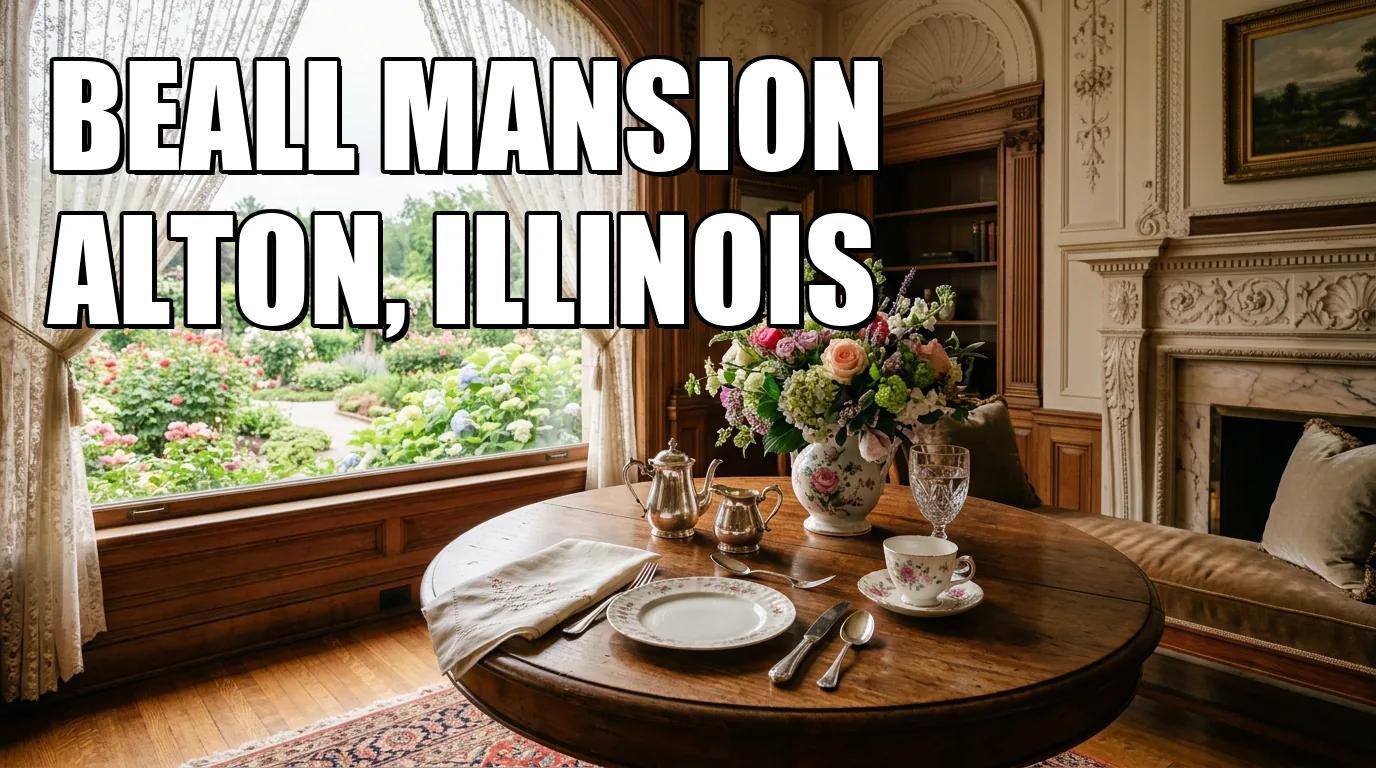
Ever wondered what kind of domestic drama unfolded behind those ornate, Gilded Age doors? Our first stop, the Beall Mansion in Alton, Illinois, offers a particularly juicy narrative that would put any reality TV show to shame. Built in 1903 as an extravagant wedding gift by railroad baron Z. B. Job for his son and new daughter-in-law, Mary Drummond—heiress to a tobacco fortune—this place began with a flourish of romance. Fast forward just five years, though, and the love story took a decidedly dark turn. Mary, with chilling efficiency, had her husband declared insane and committed to an asylum. A mere year later, in 1909, she sold the mansion for a modest $20,000 to Edmond Beall, an Alton industrialist. It makes you question how many more such unsettling stories are buried beneath the polished marble of other grand estates. The architectural details alone speak volumes about the era's dedication to luxury. World-renowned architect Lucas Pfeiffenberger designed a home where no two fireplaces are alike, each a unique period reflection, and 11.5-foot rounded coved ceilings soar above you. Beveled and polished glass windows catch the light, while marble and bronze statuary, Greco-Roman sculptural elements, and hand-sewn Oriental rugs complete an almost overwhelming sense of Gilded Age excess. If you're visiting, expect to spend time simply gazing upwards and taking in the intricate details. Prices for deluxe whirlpool rooms start around $209, climbing to $538 for luxury king rooms with fireplaces, a reflection of the mansion's detailed restoration and service. Be sure to explore Alton's riverfront history, as its strategic location made it a hotbed of commerce and, evidently, personal drama during the Gilded Age.

Where Agassiz Met Kelly: Coastal Grandeur and Hollywood Glamour

From Illinois's dramatic interiors, we sweep eastward to the windswept shores of Newport, Rhode Island, where the Castle Hill Inn offers a completely different, yet equally captivating, Gilded Age experience. This isn't just another baron's retreat; it was built in 1874 as the summer estate of Alexander Agassiz, a Harvard marine biologist and naturalist. His passion for science and nature is subtly woven into the fabric of the property, setting it apart from the purely industrialist origins of many other estates. The mansion, perched on a dramatic 40-acre peninsula overlooking Narragansett Bay, embodies classic New England shingle-style architecture, a stark contrast to the heavier European influences sometimes seen elsewhere. Yet, it's not just marine biology that put Castle Hill on the map for the modern visitor. In 1956, the legendary actress Grace Kelly famously stayed here while filming "High Society" with Frank Sinatra. Her preferred hideaways, the Harbor House rooms, remain a popular draw for guests hoping to channel a bit of old Hollywood glamour. Here, you'll find guest rooms appointed with gas-jet fireplaces, gleaming hardwood floors, and antique furnishings, many offering panoramic water views that Agassiz himself would have appreciated. Don't miss Agassiz's original collections of Chinese and Japanese art, bronzes, and porcelain still on display – a testament to a baron whose interests stretched beyond mere profit. Expect a premium for this iconic location and its history; accommodations generally range from $550 to over $2,500 per night, with the Rose Room and Lighthouse Suite commanding the highest rates for their unparalleled ocean vistas. Booking well in advance, especially for summer or fall foliage seasons, isn't just recommended, it's virtually mandatory.

An Unexpected Chateau in Michigan: Dempsey Manor's Architectural Charms

Moving westward again, this time to the tranquil shores of Manistee, Michigan, we uncover a surprisingly distinct architectural gem: Dempsey Manor. Built in 1894 for lumber baron James Dempsey, who also served as Manistee's mayor, this mansion stands as a rare example of French Neo-Renaissance Chateauesque style in the Midwest. Most people associate this grand style with the East Coast or Europe, making Dempsey Manor a delightful and unexpected find. The prestigious Chicago architects Holabird & Roche designed this 8,000-square-foot marvel, featuring two striking towers crowned with original polished copper finials, elaborate plasterwork, ten original fireplaces, and a soaring three-story atrium. An attached Victorian glass conservatory bathes a portion of the interior in natural light, a testament to the Gilded Age's fascination with horticulture and exotic plants. Perhaps one of its most charming modern footnotes: acclaimed actor James Earl Jones returned to Manistee in 1993, the town where he began his acting career, and chose to occupy all three floors of this stately mansion during his visit. It's a testament to the property's enduring grandeur that such a celebrated figure would make it his temporary home. What truly sets Dempsey Manor apart, however, especially for the budget-conscious traveler, is its remarkable accessibility. Deluxe rooms average a surprisingly modest $100-$150 per night, with deluxe suites ranging from $180-$230. This defies the usual expectation of Gilded Age opulence always commanding exorbitant rates, offering an exceptional value proposition for those seeking historical immersion without breaking the bank. It's a reminder that not all baron homes are created equal in their pricing, and sometimes, the best experiences are found in unexpected corners.

The Lumber Baron's Legacy: Denver's Highland District & Lakeside Michigan

Denver, Colorado's Highland district holds its own Gilded Age secret in the Lumber Baron Inn, a mansion built in 1890, representing the significant wealth accumulated by lumber industry magnates during Colorado's boom era. While its historical documentation may be less dramatically detailed than some counterparts, its architectural and design elements certainly speak volumes. Each of the five guest rooms boasts unique ceiling designs by Bradbury and Bradbury, a firm renowned for their period-appropriate artistic work, which adds a distinct layer of historical artistry often missed in more generically restored properties. The inn perfectly balances upscale antiques with modern amenities like private Jacuzzi baths and updated showers, ensuring a comfortable stay without sacrificing period charm. With its grand ballroom on the third floor and extensive original woodwork throughout, this inn clearly embodies the era's commitment to craftsmanship. Nightly rates here start from approximately $194, with pricing subject to availability and season, making it another accessible entry point into Gilded Age luxury. Just as captivating, but with a quintessential "summer retreat" vibe, is the Canfield House Bed and Breakfast in Onekama, Michigan. Built in 1900 as the summer home of lumber baron Charles Canfield, it preserves the legacy of his timber wealth in a refreshingly different context. Unlike the primary residences, a summer home often exudes a more relaxed, yet still utterly luxurious, atmosphere. This property, recently recognized as one of Michigan's top 10 B&Bs by Money, Inc. and the best in the region by MyNorth Magazine, exemplifies turn-of-the-century charm. Original features like a covered wrap-around porch, Dutch doors in the dining room opening onto the porch, and magnificent leaded glass windows invite you to slow down. Its true distinguishing feature, however, is its breathtaking natural setting: 2.5 acres with 215 feet of private beachfront on Portage Lake, offering views of both Portage Lake and Lake Michigan. The signature "Bluffs" suite, the original master bedroom, features striking bay-view windows with turret architecture—a truly prime spot for sunrise. While specific nightly rates aren't publicly available, its positioning as a luxury destination with unparalleled lakefront views means you should anticipate premium accommodations.

Your Blueprint for Baronial Bliss: Practicalities Beyond the Plush

So, you're ready to step back in time and experience the Gilded Age firsthand? Excellent. But before you pack your finest frocks, let's talk practicalities, because the glossy brochures rarely tell you everything. First, understand that booking these unique properties isn't like snagging a room at a chain hotel. Many have a limited number of rooms (the Beall Mansion, for instance, has just five guest rooms), meaning popular dates, especially weekends, holidays, or peak seasons like fall foliage in the Midwest or summer in Newport, sell out *months* in advance. Planning ahead is crucial. Consider a weekday visit if your schedule allows, as rates are often lower, and you'll encounter fewer crowds, allowing for a more intimate experience. Secondly, "bed and breakfast" means just that: a personalized breakfast is usually included, often a gourmet affair, but don't expect a full-service restaurant on site for other meals. Research local dining options beforehand, especially if you're in a more secluded area like Onekama, Michigan. Parking is usually available but confirm costs; some urban B&Bs might charge, while rural ones typically offer complimentary spots. Accessibility can also be an issue in these historic homes. Many lack elevators, and staircases can be grand but challenging for those with mobility concerns. Always call ahead if this is a factor for your travel party. Finally, calibrate your expectations: these are old homes. While impeccably restored, you might hear a floorboard creak, or a window might not be as perfectly sealed as in new construction. Embrace these minor imperfections; they're part of the authentic, living history experience, a small price to pay for sleeping under the same ornate ceilings as the titans of industry and, perhaps, a few Hollywood stars.

More Than Just a Room: The Enduring Legacy of America's Baronial B&Bs

Visiting these railroad and lumber baron mansions, now reimagined as bed and breakfasts, offers far more than just a comfortable night's sleep. It’s an immersive journey into a pivotal era of American history, allowing us to connect with the human stories—the ambitions, the triumphs, and the occasional scandalous downfalls—that shaped this nation. From the quiet scientific pursuits of a marine biologist in Newport to the cutthroat world of lumber in Michigan and Colorado, each mansion tells a unique story, etched into its very architecture and preserved for our discovery. These properties challenge the conventional wisdom that Gilded Age opulence is merely for observation behind velvet ropes. They invite you to inhabit it, to feel the weight of history in a way no museum plaque ever could. They remind us that true luxury often lies not just in gilded finishes, but in the enduring character and compelling narratives that resonate long after the original inhabitants have departed. They aren't just buildings; they are testaments to an audacious period, waiting to share their secrets with those willing to listen.

Gilded Getaways: Your Complete Guide to Historic Railroad Baron Mansion Bed & Breakfasts

What is the history of railroad baron mansion bed and breakfast in the United States?
Railroad baron mansions evolved into bed and breakfasts during the late 19th and early 20th centuries, with properties like the Beall Mansion in Alton, Illinois (built 1903 as a wedding gift for railroad baron Z.B. Job's son) and the Woodlands Mansion in Summerville, South Carolina (built 1906 as a winter home for Pennsylvania railroad executive Robert Parsons) now operating as luxury hospitality venues. These grand estates preserve historic architecture while offering guests authentic experiences within opulent settings.
What is the history of bed and breakfast accommodations?
Bed and breakfast lodging originated in Ireland and Britain, with the earliest recorded use appearing in The Times of London on May 31, 1819, advertising 'bedroom and breakfast' accommodations in small domestic families. The concept became popularized in America during the 1940s when local families offered rooms and breakfast to overseas travelers seeking alternatives to sterile chain lodgings.
Where are the best locations for railroad baron mansion bed and breakfasts?
Top railroad baron mansion B&Bs include the Beall Mansion in Alton, Illinois (St. Louis area), the Woodlands Mansion in Summerville, South Carolina, and the 1865 Bella Mansion B&B in Ridgway, Pennsylvania (a lumber baron's mansion). The Cartier Mansion in Ludington, Michigan won Newsweek's 2025 Readers' Choice for Best Historical B&B in America.
What is the typical cost of staying at a railroad baron mansion bed and breakfast?
Prices vary by location and season, ranging from approximately $117 to over $1,100 per night depending on the property and room type. The Buhl Mansion in Pennsylvania offers Castle Escape packages from $375-$475 per night, while luxury options at select properties can exceed $1,000 nightly.
What amenities are typically included at railroad baron mansion bed and breakfasts?
Amenities typically include gourmet or continental breakfast, luxurious bedding, period antiques, fireplaces, Jacuzzi or claw-foot tubs, spa services, Wi-Fi, afternoon tea, and welcoming receptions. Many properties offer bell service, welcome trays with fruit and champagne, and access to historic gardens.
How do I book a stay at a railroad baron mansion bed and breakfast?
Most railroad baron mansion B&Bs accept bookings through their official websites, Expedia, Booking.com, and TripAdvisor. Direct contact through the property's phone number or email often provides personalized service and access to special packages.
What is the best time of year to visit a railroad baron mansion bed and breakfast?
Spring and fall are ideal seasons for visiting historic mansion B&Bs due to pleasant weather and reduced crowds. Many properties feature seasonal décor and themed events, while winter visits offer a more intimate experience with holiday preparations and lower rates.
Who owns the Woodlands Mansion in Summerville, South Carolina?
Former South Carolina House member Tom Limehouse purchased the Woodlands Mansion in 2012 for $980,000 and has been operating it as an event venue and inn. The 11-acre Georgian Revival-style estate built in 1906 for Pennsylvania railroad executive Robert Parsons was previously the Woodlands Resort and Inn and is valued at approximately $7 million.
What is the Nemacolin controversy?
Nemacolin Woodlands Resort faced multiple lawsuits including disputes over misrepresented website images for wedding venues, wrongful termination of lifetime club memberships in the Nemacolin 400 Club, and claims that the resort's website did not accurately reflect conditions at the facility. The resort denied allegations of unfair trade practices and fraud.
Who owns The Woodlands Texas?
The Woodlands Texas is owned and operated by Howard Hughes Holdings, which acquired a majority stake from Morgan Stanley Real Estate Investing in 2011. The 28,000-acre master-planned community was originally founded by George Mitchell in 1974 and is now managed as a wholly owned subsidiary of Howard Hughes Holdings.
Who owns Beemok Hospitality Group?
Ben Navarro, a businessman and philanthropist, founded and serves as CEO of Beemok Capital, which oversees Beemok Hospitality Collection (BHC), a Charleston-based luxury hospitality company operating hotels, restaurants, and public spaces throughout the United States.
Who is the new owner of the Woodlands Country Club?
Arcis Golf, the second-largest owner and operator of golf facilities in the United States, acquired The Woodlands Country Club near Houston, Texas on May 13, 2025. Arcis Golf plans to invest more than $30 million in golf course enhancements and lifestyle amenities throughout the 99-hole private club.
When did Howard Hughes acquire The Woodlands?
Howard Hughes Holdings acquired The Woodlands in 2011, purchasing a 47.5% economic interest from Morgan Stanley Real Estate Investing for $117.5 million. The Woodlands was originally founded in 1974 by developer George Mitchell, not directly by Howard Hughes.
Who inherited Howard Hughes's fortune?
Howard Hughes's estate was distributed among multiple heirs after his 1976 death, with 16 cousins receiving 71.5% of the fortune settled in 2010. His uncle's stepdaughter Avis Hughes McIntyre, three granddaughters (Chris Roberts, Beth DePould, and Barbara Cameron), and other family members each received portions, with the total estate divided among over 1,000 claimants distributing approximately $1.5 billion.
What should I know about visiting railroad baron mansion bed and breakfasts?
When visiting, expect refined accommodations with period-appropriate décor, gourmet breakfasts, and authentic historical experiences in fully restored estates. Many properties offer guided tours, host weddings and corporate events, and provide access to Victorian gardens and historic neighborhoods with nearby attractions like museums and restaurants.