
America 250 will flood the internet with vague patriotic listicles, but that is not how you should plan a 2026 trip. The real split is simpler. A small number of sites will absorb the official anniversary crowds, timed-entry rules, and federal ceremonies. The better trip treats those places as anchors, then moves quickly into less crowded sites where the story of the Revolution includes backcountry warfare and the contradiction of slavery.
A trip focused only on Boston and Philadelphia delivers the most familiar version of the war but also the heaviest logistics. Building a route around one anchor city plus a Southern battlefield leg creates a more interesting trip with fewer bottlenecks. The goal is to know where the 2026 commemorative atmosphere will improve the visit and where it will just slow you down.
Best use case: this route works for travelers who want one official anniversary stop, one Philadelphia liberty-and-slavery stop, and one Southern Campaign leg that is still manageable without a week-long road trip.
Plan for 2026 Crowds and Logistics
The official anniversary framework matters mostly because it changes crowd patterns and booking pressure. The federal side of the commemoration is concentrated in Washington, where the National Archives and related Declaration 250 programming will draw school groups and ceremonial events. If you want that formal anniversary atmosphere, that is the place to be, but it doesn't need to be your whole trip.
The smarter move is to treat 2026 as a year of split priorities. Use one marquee site to satisfy the obvious checklist. Then spend the rest of your time at places that expose how uneven the Revolution really was: urban liberty rhetoric next to slavery in Philadelphia, or backcountry warfare in South Carolina that looks nothing like the schoolbook version of 1776.
The Philadelphia Pairing That Actually Works
Philadelphia is still the cleanest entry point for a 2026 Revolution trip, but only if you stop pretending it is a one-site visit. Independence Hall and the President's House Site should be planned together. One is the heavily managed ceremonial stop. The other is the site that corrects the story you just heard a few yards away.
| Philadelphia stop | What you need to know | Why it matters in 2026 |
|---|---|---|
| Independence Hall | Timed tickets are currently required from 10:00 a.m. to 4:00 p.m. and carry a $1 administrative fee. Visitors should arrive about 30 minutes early for security. | This is still the anchor stop, but it is the most rigid part of the itinerary. Build the rest of your day around its time slot instead of the other way around. |
| President's House Site | Free, outdoor, self-guided, and unticketed. It can be visited without the timed-entry choreography of the hall itself. | This is where Philadelphia stops being a ceremonial postcard and becomes a public-history correction. The site forces the liberty story back into contact with slavery. |
The mistake most travelers make is treating the President's House Site as a quick add-on, when it actually provides a necessary contrast to the official story told at Independence Hall. While Independence Hall formalizes the anniversary language, the President's House Site makes the contradictions of that story impossible to dodge. That pairing is what makes Philadelphia worth the effort in 2026.
For a deeper planning breakdown, see the full logistics guide for Independence Hall before you build your day.
Washington Is the Official Commemoration Stop, Not the Whole Trip
The National Archives is the most obvious place for a big federal-anniversary experience. In 2026, that is where the large-format symbolic programming will be: Declaration-centered exhibitions, ceremonial readings, and a heavily publicized public calendar.
Limit Washington to a specific role in your plan. It is the place for a dense museum day and one high-visibility anniversary moment, not the place to spend four or five days chasing a generic “America 250” mood. If you only do D.C. and Philadelphia, you get the official story very efficiently, but you miss the war's regional disorder and the less-rehearsed backcountry leg.
Add a Southern Leg for a More Complex Story
For an itinerary that other travelers won't all be copying, go south after Philadelphia or Washington. South Carolina gives you the sharpest contrast for the least complexity. Ninety Six and Cowpens are not just lower-crowd alternatives; they tell a different war. The terrain, alliances, and tactical stories are different, and that alone makes the route feel less canned.
| Southern Campaign stop | Current planning fact | Editorial reason to go |
|---|---|---|
| Cowpens National Battlefield | Fee-free. Grounds are open daily, but the visitor center is currently closed on Monday and Tuesday. | Cowpens is the cleanest tactical battlefield stop in this route. If you care about how the war was actually fought, this is where the trip becomes more than symbolism. |
| Ninety Six National Historic Site | Fee-free. Grounds are open daily from sunrise to sunset, and the visitor center is also currently closed on Monday and Tuesday. | Ninety Six gives you a messier borderland story involving settlers, Cherokee history, and a Southern war that does not fit the polished founding-myth frame. |
The Monday-Tuesday closure pattern matters. If you treat the South Carolina leg like a casual detour and arrive on the wrong day, you can still walk the grounds, but you lose the exhibits and films that explain the battlefield. These sites reward deliberate scheduling.
Choose Ninety Six for its complex narrative and political tension. Opt for Cowpens if you want battlefield clarity and a cleaner military story. If you have time for both, do both. If you only have time for one, choose based on whether your trip is more about public history or battlefield tactics.
For travelers who want one more battlefield-oriented stop after the South Carolina leg, our guide to Revolutionary War hidden gems is a better follow-on than another broad anniversary overview.
Sample Itineraries
Booking and Crowd Friction
| Trip shape | Best use | Watch-outs |
|---|---|---|
| 2 days / Philadelphia only | Best for travelers who want one essential 2026 stop without expanding into a bigger anniversary route. | You get the clearest founding-story pairing, but almost none of the regional complexity. |
| 3 days / D.C. plus Philadelphia | Best for readers who want formal anniversary programming and one historically corrective city stop. | This is still a high-crowd route and can feel overly scripted if you stop there. |
| 4 to 5 days / Philadelphia plus South Carolina | Best overall mix of access, variety, and interpretive range. | You have to avoid Monday-Tuesday visitor-center misses in the South Carolina leg. |
Where Mount Vernon Fits
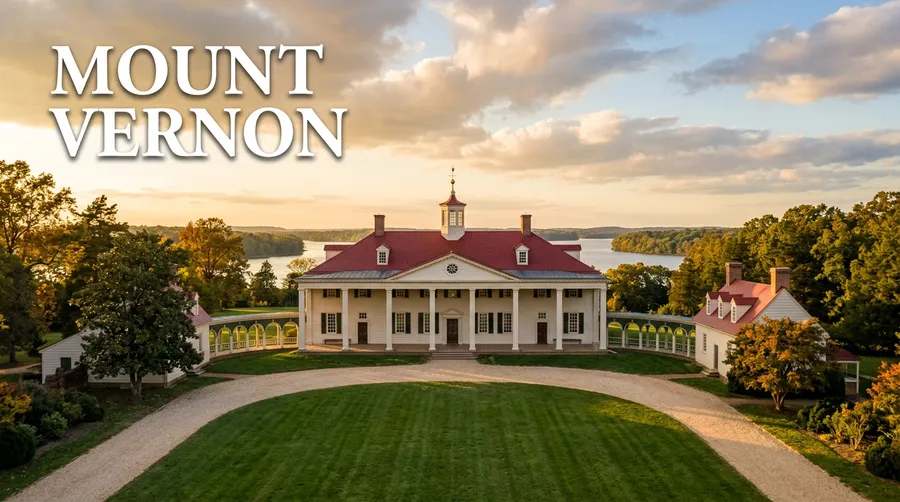
Mount Vernon is still one of the strongest companion stops for travelers who want a George Washington site after Philadelphia. It works better as a separate estate-and-slavery interpretation day than as a substitute for the Southern Campaign leg. If your route runs through northern Virginia, use our current Mount Vernon guide for tickets, mansion planning, and the estate's slavery interpretation rather than trying to force it into the same day as federal D.C. commemorations.
Focus on Site Quality, Not Anniversary Hype
Do not confuse anniversary branding with visitor value. Some sites will be louder in 2026 without becoming more interesting. The best sites are those where the anniversary adds context instead of just noise. Philadelphia works because the official ceremony at Independence Hall is challenged by the story of slavery next door. Cowpens and Ninety Six work because they show a war fought far from the familiar East Coast corridor.
If you plan around that distinction, America 250 becomes a better travel year, not just a noisier one.