For too long, our collective memory has been sculpted by dominant narratives, leaving vast swathes of human experience in shadow. What if we shifted our gaze from the celebrated to the challenged, from the monumental to the human-scaled? This selection of sites, amplified by thoughtful 2025-era technologies, doesn't just present history; it invites you to step into it, to question it, and to recognize its urgent relevance today. We’re moving beyond simplistic patriotic myths to embrace a richer, more complicated tapestry—one woven with threads of resilience, injustice, and relentless struggle for a more perfect union.
Manzanar's Echoes: When Liberty Became a Lie
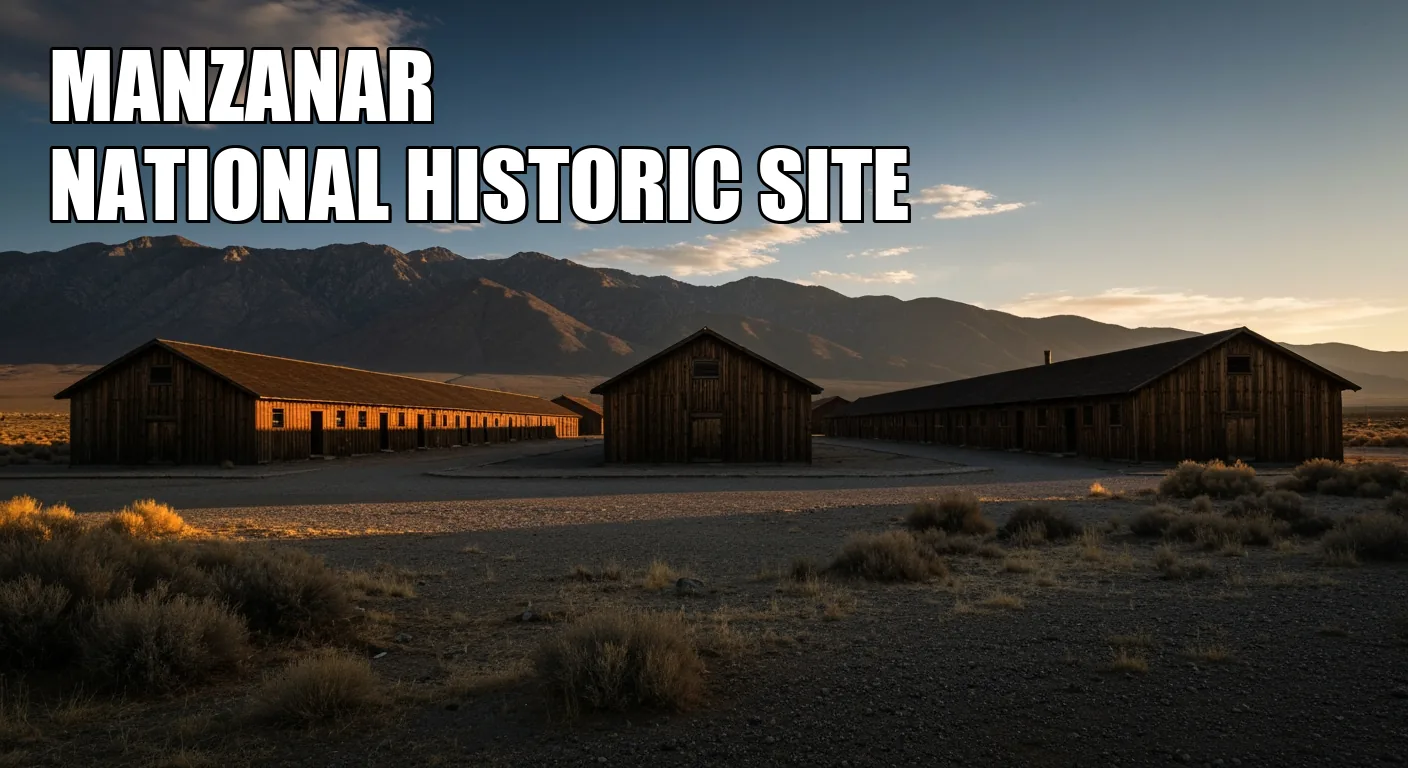
Standing on the windswept plains of the Owens Valley, beneath the towering Sierra Nevada, it's impossible not to feel the stark weight of Manzanar National Historic Site. Here, amidst what seems like an endless expanse of high desert, over 10,000 Japanese Americans—two-thirds of them U.S. citizens—were forcibly incarcerated during World War II. For years, I've heard the Statue of Liberty lauded as the ultimate symbol of American openness, but Manzanar forces a far more uncomfortable, essential conversation about when that promise was brutally withdrawn.
What makes Manzanar so profoundly impactful isn't just the visible remnants of barracks foundations or the carefully reconstructed guard tower. It’s the chilling silence that hangs heavy, broken only by the whispers of the wind, carrying the ghosts of lives upended. Imagine cultivating a vibrant community, complete with schools, farms, and cultural events, all while surrounded by barbed wire and armed guards. The resilience of the detainees who transformed this barren landscape into a semblance of home, growing gardens and sustaining families, is nothing short of miraculous, yet it never escapes the shadow of the grave injustice that brought them there.
In 2025, the experience is deepened by a powerful smartphone AR app. This isn't just a digital overlay; it brings back the actual barracks layouts, letting you visualize the cramped quarters, and overlays personal testimonies that seem to rise from the very dust. Walking past an empty concrete slab, you might suddenly see a vibrant 3D reconstruction of a family's meticulously tended garden, hearing an internee’s voice describe their longing for home. This technology ensures the stories aren’t just told, but *felt*—a necessary confrontation in an era where civil liberties and migration policies are constantly debated, often with little historical context.
Stonewall's Enduring Fire: A Spark Ignites a Movement
The Stonewall Inn, a modest bar in Greenwich Village, doesn't immediately strike one as the crucible of modern liberation movements. Yet, on a sweltering June night in 1969, a routine police raid erupted into a furious, days-long uprising that birthed the LGBTQ+ rights movement. I've always found it remarkable how often monumental shifts begin in the most unassuming of places, and Stonewall is perhaps the quintessential example of this. Unlike the grand proclamations echoing through Independence Hall, this was a spontaneous, visceral outcry from marginalized voices, declaring their right to exist, to love, and to simply *be* without fear.
One might expect a visit here to be a solemn historical lesson, but the energy of Christopher Street, even now, pulses with a defiant joy. It’s a living testament to progress, yes, but also a stark reminder of the battles still being fought. As legal protections for gender and sexual minorities face fresh challenges across the country, Stonewall's legacy is acutely felt. It teaches us that rights are rarely granted; they are hard-won, often in the streets, often against overwhelming odds.
The 2025 technology here is particularly immersive: VR re-walk experiences literally drop you into the chaos of those nights, making you a silent witness to the clash between oppression and nascent rebellion. Holographic projections of activists, like Marsha P. Johnson and Sylvia Rivera, guide self-paced tours, their defiant spirits animating the physical space. This isn't passive viewing; it’s an active engagement with the spirit of protest, ensuring that the fire ignited in 1969 continues to burn brightly for new generations facing their own struggles for equality. Be warned, though: the area can be quite crowded, especially during Pride Month in June. To truly connect, consider an early morning visit to soak in the quiet before the bustle, or a late-night stroll to feel the enduring spirit of the neighborhood.
Greenwood's Unvanquished Spirit: The Story of Black Wall Street
Tulsa, Oklahoma’s Greenwood district, once known as Black Wall Street, tells a story that should shake every American to their core. In 1921, this thriving, self-sufficient Black community was incinerated by a white mob, abetted by city officials, in one of the worst acts of racial violence in American history. My initial understanding of the massacre, like many, was largely confined to the tragedy of destruction. What I’ve come to appreciate, deeply, is the astonishing story of its *rebuilding*—a testament to unparalleled resilience that few conventional historical narratives bother to amplify.
Greenwood isn't merely a memorial to loss; it’s a monument to defiant entrepreneurship and communal strength. Visitors walking these rebuilt streets today, particularly with the 2025 AR walking tour, experience a profound sense of what was lost, yet also what was salvaged and recreated against impossible odds. The AR superimposes archival photographs onto the modern landscape, making the phantom buildings of the past eerily present. You see the barbershops, the theaters, the doctor’s offices, the homes – a vibrant, self-sustaining ecosystem obliterated, then meticulously, painfully reconstructed. AI-curated survivor-descendant narratives evolve with new research, ensuring that this history is never static, always deepening.
This is a story far more compelling than the static grandeur of Mount Rushmore, which simply monumentalizes presidents. Greenwood humanizes history, forcing us to confront the devastating consequences of systemic racism and the extraordinary capacity of a community to rise from ashes. It's a vital, localized lens on reparations, community wealth, and restorative justice—themes that couldn't be more pertinent today. If you plan a visit, aim for a weekday. The relative quiet allows for deeper contemplation, and parking around the cultural center is generally manageable then.
Wounded Knee's Sacred Ground: A Nation's Unfinished Apology
Journeying to the vast, windswept prairies of South Dakota brings one to Wounded Knee, a place that carries a weight of profound sorrow and enduring defiance. Here, in December 1890, the U.S. 7th Cavalry massacred hundreds of Lakota men, women, and children, marking a brutal end to the "Indian Wars." Many tourist guides gloss over this, but visiting the Oglala Lakota Cultural Center nearby and then the site itself forces a visceral confrontation with Indigenous perspectives on loss and survival, perspectives often omitted from our popular memory.
Unlike the Alamo, which valorizes a colonial stand, Wounded Knee demands a reckoning with the devastating consequences of manifest destiny and broken treaties. This isn't a place for casual sightseeing; it's sacred ground, a memorial to a genocide that refuses to be forgotten. The silence on the prairie is punctuated by the stories etched into the landscape, and the memorial itself, while humble, is profoundly powerful. It’s a place that asks you to listen, to feel, and to understand the deep scars that remain.
The 2025 technological enhancements provide a crucial bridge to understanding: drone-filmed 360° panoramas transport you across the site, making the vastness and isolation palpable. More powerfully, AR story stones scattered across the site trigger Indigenous storytellers’ voices, recounting pre- and post-massacre life, linking the past directly to the vibrant, enduring Lakota culture of today. This provides not just context for the 1890 tragedy, but celebrates a living heritage that persists despite immense suffering. Understanding the nuances of land rights, pipeline protests, and treaty enforcement becomes significantly clearer after experiencing Wounded Knee. Given its remote location, thorough planning for travel and respectful engagement with the local community are paramount.
The Pullman Experiment: Where Labor's Battles Were Forged
Just south of Chicago lies Pullman, a fascinating, almost utopian company town built by industrialist George M. Pullman for his railway car workers in the 1880s. It was designed as a model community, with beautiful architecture, manicured parks, and all amenities provided by the company—a seemingly benevolent vision that concealed a tyrannical paternalism. This place, now a national monument, became the flashpoint for the 1894 Pullman Strike, a landmark labor uprising that fundamentally reshaped federal labor policy and solidified union rights in America. It's a far more complex and revealing origin story for our economic nation than Independence National Historical Park, which focuses solely on colonial founding myths.
Walking through Pullman, you're struck by the architectural uniformity, the neatly arranged row houses, the grand administration building. It looks idyllic, but beneath the surface simmered intense resentment. Workers lived in company housing, shopped at company stores, and were paid in company script, creating a system of total control. When wages were slashed but rents weren't, the boiling point was reached. This isn't just a story about a strike; it’s a profound sociological experiment gone awry, illustrating the perilous tightrope between corporate welfare and worker exploitation.
The 2025 interactive worker tablet devices let visitors delve into the nitty-gritty: digitized strike telegrams, actual wage records, and blueprints for the tract housing, all illuminating the human cost of industrial growth. A "living digital twin" of the company town allows for day-in-the-life simulations, bringing the intricate web of daily existence and the sudden, explosive conflict to life. This site offers invaluable lessons for contemporary gig and warehouse labor movements, affirming the enduring power and importance of worker solidarity. A guided tour is highly recommended to fully grasp the nuances of this unique social and industrial landscape.
Tenement Stories: Unpacking the Immigrant Dream
The Lower East Side of New York City, particularly the Tenement Museum, isn't just a collection of old buildings; it's a living, breathing archive of the American immigrant experience. Forget the sanitized, often romanticized tales of Ellis Island, which primarily focuses on the moment of arrival. The Tenement Museum dives deep into the messy, complex, often heartbreaking reality of *settlement*—the daily grind of successive waves of immigrants, from Irish and Jewish to Italian and Puerto Rican, crammed into small urban apartments, forging new lives in a new land.
What truly sets this museum apart is its focus on individual families, painstakingly recreated through historical records. You don't just see a room; you meet the family who lived there, you understand their struggles, their triumphs, their cultural adaptations. It’s an intimate, sometimes overwhelming experience that eschews grand narratives for the personal, the tangible. The sheer ingenuity required to survive, to raise families, to maintain cultural identity within these confined spaces is both humbling and inspiring.
In 2025, immersive projection mapping reconstructs entire apartments in their historical eras, making the past feel incredibly present. Machine-learning-driven family simulators allow visitors to explore generational letters, jobs, and migration diaries, offering a multi-faceted view of assimilation versus multiculturalism. Against rising anti-immigrant sentiment, the Tenement Museum serves as a vital reminder of the human cost and immeasurable contributions of newcomers to the fabric of America. Practical tip: book tickets far in advance! Tours here consistently sell out, especially on weekends, due to the small group sizes that allow for such intimate storytelling.
Harriet Tubman's Freedom Roads: A Legacy of Active Liberation
Venturing into the serene, yet historically charged, landscapes of Maryland and Delaware brings you to the Harriet Tubman Underground Railroad National Historical Park. This isn't a site that merely remembers a historical figure; it embodies the spirit of active, dangerous, and incredibly courageous liberation. For too long, the narrative of slavery has focused on the grandeur of plantations or the passive suffering of the enslaved. This park, thankfully, shifts the lens entirely, centering the agency and fierce determination of those who fought for their own freedom.
Harriet Tubman wasn't just a "conductor"; she was a brilliant strategist, a fearless warrior, and a lifelong activist for both abolition and women's suffrage. Her journeys along the Underground Railroad weren't romanticized strolls; they were perilous nighttime odysseys through swamps and forests, often under the threat of recapture and certain death. The park helps visitors grasp the sheer physical and mental fortitude required for such an endeavor. It's a stark contrast to the narratives of figures like Thomas Jefferson at Monticello, shifting focus from the enslaver to the hero who dismantled the system.
The 2025 technology here is especially evocative: geo-tagged AR night journeys trace escape routes through modern landscapes, bringing the hidden pathways to life. AI-powered voice recreations of Tubman's speeches, responding to visitor questions, offer a direct, almost personal connection to her wisdom and resolve. Multisensory installations simulate the terrifying conditions of nighttime escapes, ensuring visitors understand the immense risks involved. This site powerfully resonates with contemporary discussions on anti-Black violence and gendered activism, presenting Tubman's multifaceted legacy as profoundly inspirational. Wear comfortable shoes, as the landscape is central to understanding her extraordinary efforts.
Standing Rock: A Living Protest, A Sacred Stand
Our journey concludes in North Dakota, at the Standing Rock Sioux Reservation, a site that isn't primarily about the distant past, but about a very recent, ongoing struggle. The 2016-2017 protests against the Dakota Access Pipeline brought global attention to Indigenous land rights and environmental justice, and Standing Rock remains emblematic of this powerful intersection. To compare this to the Grand Canyon National Park, which solely celebrates natural scenery, feels almost reductive; Standing Rock connects that landscape to urgent crossroads of sovereignty, ecology, and Indigenous resurgence.
This is not a traditional museum or a carefully curated exhibit; it's a living historical event, a place of profound significance to the Lakota and Dakota people, and to environmental activists worldwide. A visit here demands respect, understanding, and a willingness to engage with contemporary issues. It's where the past isn't just remembered, but actively informs the present, where treaty rights and ancestral lands become battlegrounds for future generations.
The 2025 immersive documentary pods deploy VR footage from the camps, placing you directly within the heart of the protests. Participatory AR maps detail treaty lands and projected climate-impact models, grounding the struggle in tangible data and ancestral claims. AI translation modules preserve and broadcast Lakota language narratives, ensuring the voices of the land's original stewards are heard authentically. Standing Rock underscores the critical importance of Indigenous-environmental solidarity in an era of escalating climate crises and resource extraction conflicts. It's a testament to the power of collective action and a reminder that history is not a closed book, but an unfolding story. Always check tribal guidelines and protocols before visiting, approaching with humility and a desire to learn.
This trail, far from offering simple answers, asks piercing questions. It challenges us to look beyond the convenient narratives, to embrace the difficult truths, and to acknowledge the vibrant, often contentious, tapestry that makes up the American story. By engaging with these sites, not as passive observers but as active participants in an ongoing dialogue, we can forge a deeper understanding of our shared past and, hopefully, inspire a more just and inclusive future.