Photo by Sarah Chen for Cornerstone Mansion · February 27, 2026
As someone whose passport looks less like a souvenir and more like a well-thumbed history textbook, I’ve learned that true discovery rarely happens where everyone else is looking. Forget the usual suspects for a moment. While the Colosseum’s grandeur is undeniable, and the Parthenon still stirs the soul, the coming years promise a different kind of historical immersion, one found in places that offer both profound insights and blessed solitude. My recent explorations have brought me to a handful of sites across the globe, each whispering tales that resonate deeply, often with surprising American threads, and each ready to challenge your notions of what constitutes a "must-see" historical journey.
Chasing Mesoamerican Whispers: Cholula's Subterranean Secrets and Sky-High Surprise
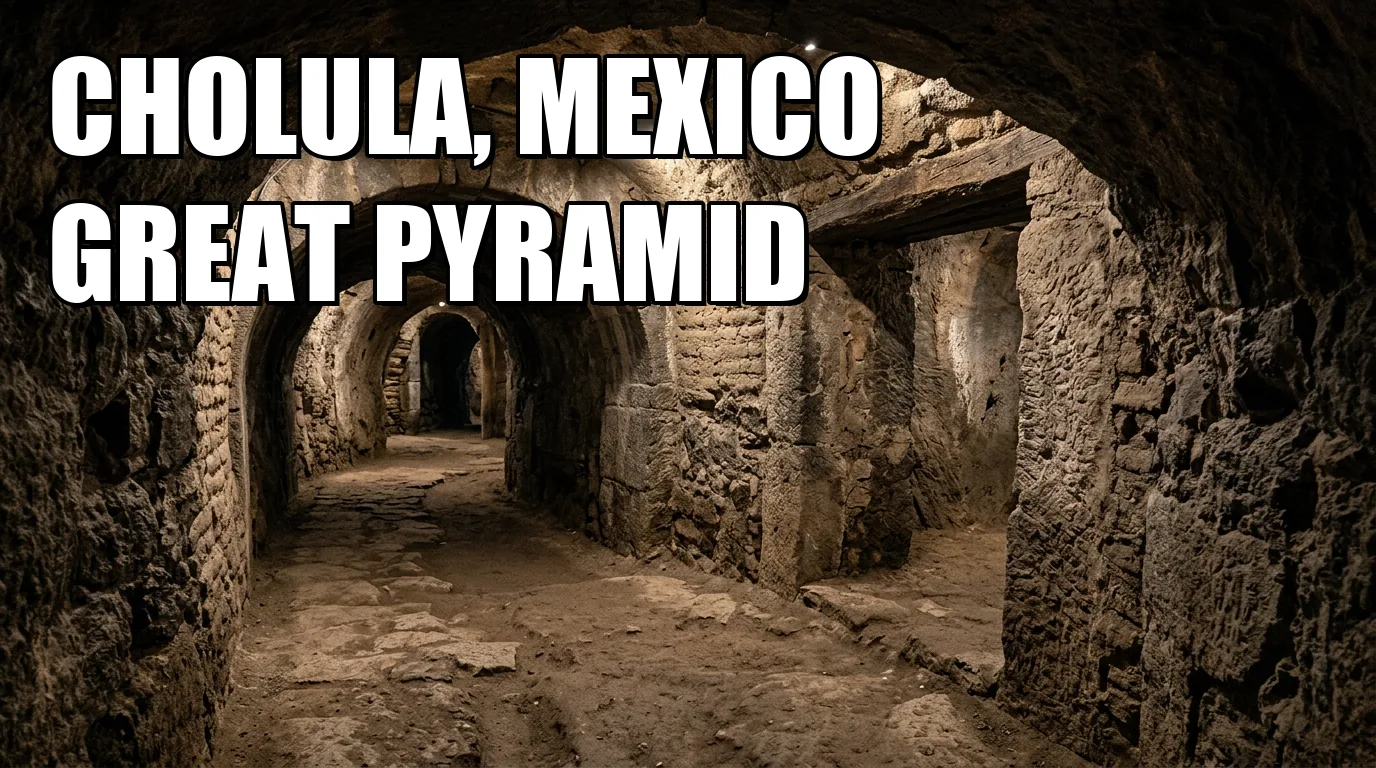
Imagine a pyramid so vast, it dwarves Egypt’s Great Pyramid of Giza in volume, yet it hides largely beneath a hill, topped by a vibrant Spanish colonial church. That's Cholula, Mexico, a place where layers of history aren't just metaphorical, they're physical. Many travelers rushing through Mexico for Aztec or Maya ruins miss this jewel, which is a genuine oversight; it offers an unparalleled lesson in cultural syncretism and the sheer persistence of human endeavor. You arrive expecting a grand, exposed structure, only to find a verdant mound with a church perched atop—a visual metaphor for conquest and adaptation.
What truly sets Cholula apart, particularly for 2025, is the newly refurbished network of subterranean tunnels stretching nearly half a mile beneath the pyramid itself. Previously, much of this labyrinthine passage was either closed or offered only limited access, leaving its most compelling secrets untold. Now, with enhanced lighting and safety measures, you can explore ritual chambers and ancient altars, feeling the weight of millennia of worship and ceremony just inches from your fingertips. It’s an incredibly intimate experience, far removed from the jostling crowds of more famous sites, allowing you to truly connect with the genius of the pre-Hispanic engineers who built this colossal monument layer by painstaking layer, each burying the last.
Getting there is surprisingly straightforward for U.S. travelers; nonstop flights into Mexico City from nearly any major American hub are plentiful and often quite reasonable. From there, it’s a mere 90-minute transfer by bus or hire car to Cholula's airport at Puebla. While the iconic Iglesia de Nuestra Señora de los Remedios provides a stunning visual from afar—and makes for an exceptionally Instagrammable shot against the lush Mesoamerican landscape—the real magic unfolds underground. Plan for an early morning visit to beat the slight midday uptick in visitors, and definitely opt for a guided small-group tunnel tour to gain the deepest understanding of this layered archaeological marvel.
Unearthing a Continent's Genesis: Why Peru's Caral Demands a Deeper Look
Peru, for most, immediately conjures images of Machu Picchu, and rightly so—it's a breathtaking wonder. But if you're seeking the genesis of Andean civilization, a site that predates the Inca by millennia, then Caral-Supe is where your compass should point. This isn't just an old city; it's the oldest known civilization in the Americas, a staggering 5,000-year-old testament to urban planning and complex society, existing concurrently with the ancient empires of Egypt and Mesopotamia. It challenges everything you thought you knew about the timeline of sophisticated human development in the Western Hemisphere.
In a significant development for 2025, the adjacent Peñico site, an 18-structure extension of the Caral complex, is reopening after an eight-year restoration. This means you’ll gain even more insight into the lives of these enigmatic people, exploring ceremonial halls and residential areas that reveal their advanced understanding of architecture and community organization. Unlike the bustling trails to Machu Picchu, Caral offers a profound sense of solitude; you're often left to wander among the sun-baked pyramids and plazas in a hushed reverence. The minimalist aesthetic of the stone walls and desert backdrop isn't for everyone, but for those who appreciate sweeping panoramas and a deep sense of historical perspective, it's profoundly rewarding.
Traveling to Caral requires a bit more intentionality, which honestly, adds to its appeal as an off-the-beaten-path destination. Nonstop flights from cities like New York, Miami, and Los Angeles will get you to Lima’s Jorge Chávez International Airport (LIM). From there, prepare for a scenic, roughly three-to-four-hour road transfer northward into the Supe Valley. Consider staying overnight in the nearby town of Caral to experience the tranquility and perhaps even participate in one of the on-site welcome ceremonies, which offer a unique connection to ancestral Andean rituals. It’s a journey into the deep past, demanding a different kind of patience, but delivering an unparalleled sense of discovery.
Petra Reimagined: When Ancient Stones Learn New Tricks
Petra, Jordan, with its iconic Treasury carved into rose-red cliffs, hardly needs an introduction. It’s one of the world's most recognizable historical sites, a Nabataean city literally sculpted from stone. Yet, even a place this celebrated can surprise you, especially when it embraces innovation with a thoughtful touch. The challenge with such a famous destination is often how to experience it authentically, away from the throngs. While Petra has always been awe-inspiring, its 2025 relaunch of "Petra by Night" promises to elevate the experience from merely beautiful to truly transformative, blending millennia-old marvels with cutting-edge technology.
Gone are the days of just a few hundred candles flickering through the Siq. The new "Petra by Night" integrates large-scale projection mapping directly onto the Treasury’s façade, transforming its ancient surface into a canvas for digital storytelling. Over 25 augmented reality (AR) modules, viewable through your mobile device, will layer Nabataean legends and historical context onto the physical ruins, offering a dynamic, personalized journey through time. This isn’t about replacing the magic of candlelight; it's about enhancing it, weaving together the ethereal glow with rich digital narratives that bring the city’s vibrant past to life in a way conventional guides simply cannot.
With regional tourism still finding its footing, now is an exceptional window to experience Petra with significantly fewer crowds than in pre-pandemic years. Nonstop flights from major U.S. hubs like New York (JFK), Chicago (ORD), and Washington, D.C. (IAD) make Amman (AMM) highly accessible, simplifying your arrival into Jordan. Golden hour shots through the Siq and the projection-mapped façades at night offer high-contrast visual drama, perfect for capturing those truly distinctive travel memories. By opting for small-group AR tours and supporting local evening performances, you're not just witnessing history, you're contributing directly to the communities that preserve it.
Hampi's Rocky Embrace: A Canvas of Cosmic Proportions and Digital Ghosts
India is a land of sensory overload, a kaleidoscope of colors, sounds, and history. Hampi, the sprawling ruins of the Vijayanagara Empire, stands out even amidst such grandeur. It’s a surreal landscape where colossal boulders are strewn across the earth as if by giants, providing a dramatic backdrop for incredibly ornate temples and palaces. When I first visited, I was struck by the sheer scale and the way nature and human ingenuity had intertwined, creating a truly unique aesthetic. It's not just a collection of buildings; it's an entire ancient city woven into a monumental, almost otherworldly, rock garden.
What makes Hampi particularly intriguing for the discerning traveler in 2025 is its embrace of immersive technology. Mobile AR applications now overlay detailed 3D reconstructions onto the extant ruins at key temples, such as the famous Vittala Temple with its stone chariot, and within the Zenana enclosure. Imagine holding up your tablet and seeing the vibrant frescoes and elaborate structures of the past digitally restored, guided by narrations that use AI-powered contour recognition to perfectly align with the physical ruins before you. It's like time-traveling with a personal historian, allowing you to envision the bustling life of this once-magnificent capital.
While India might feel like a distant journey, flight accessibility has improved considerably. Nonstop and one-stop flights connect major U.S. cities like San Francisco, Dallas, and Seattle to Bengaluru (BLR). From Bengaluru, it’s a seven-hour road trip or a short hop flight to Hampi, making it a manageable, albeit extensive, commitment. The interplay of those colossal boulders, the silhouettes of ornate stone chariots at sunrise, and the AR-enhanced interiors creates dream-like imagery, far removed from the typical tourist postcard. Seek out discrete heritage-walk groups and engage with the interactive AR tours; these opportunities foster a deeper cultural engagement, allowing you to sidestep the more generic tourist routes and truly feel the pulse of Vijayanagara.
Peleliu's Unvarnished Truth: Stepping Onto a Battle-Scarred Echo of American Grit
Sometimes, the most powerful historical sites aren't meticulously restored castles or ancient temples, but places where history's raw edges are still exposed. Peleliu, a small, unassuming island in Palau, is one such place. It holds a particularly grim yet utterly crucial piece of U.S. history: the site of a brutal 1944 battle during the Pacific Campaign of World War II. For many Americans, the names Iwo Jima or Okinawa are familiar, but Peleliu’s story, a prolonged and savage struggle against deeply entrenched Japanese forces, often goes untold in mainstream narratives. Visiting this island is a profoundly sobering experience, a direct confrontation with the costs of conflict.
What you'll find here isn’t a pristine memorial park, but the battlefield itself, largely reclaimed by the jungle. Rusted tanks, scattered bunkers, and intricate cave fortifications—these are the living relics, testaments to the fierce fighting that occurred. There’s a palpable sense of the past here, an eerie quiet broken only by the rustle of leaves, forcing you to reflect on the immense bravery and sacrifice of the U.S. Marine Corps. It’s a place that doesn't just tell history; it *shows* it, with unvarnished, poignant clarity.
Getting to Peleliu demands a dedicated itinerary, as there are no direct flights from the U.S. You'll connect through Manila (MNL) or Guam (GUM) to Koror (ROR) in Palau, followed by a roughly 90-minute boat ride to Peleliu itself. This relative isolation contributes to its singular atmosphere; you won't find bustling resorts here. Instead, expect small-group battlefield tours that offer a solemn, uncrowded historical exploration, a stark contrast to mass tourism. The visual narrative is powerful: jungle-reclaimed war debris, sunken aircraft fuselages, and poignant ridgeline memorials create images that linger long after you've departed, prompting a deep appreciation for the sacrifices made in this often-forgotten corner of the Pacific.
These five destinations, each unique in their historical narrative and visitor experience, collectively represent a compelling argument for broadening our travel horizons. They leverage freshly opened archaeological sections, cutting-edge immersive technologies, and profound, sometimes overlooked, U.S. historical ties. All are accessible via major American air hubs, offering not just high-impact visuals but also an authentic, uncrowded engagement with history. As we look to 2025, these sites perfectly align with a growing desire for genuine cultural immersion, moving us away from the well-trodden paths toward the truly unforgettable.
Historic Mansions Worth Building a Weekend Around
Start with the estates and mansion properties that still justify tickets, routing, and a real visit, not just a mood-board detour.
Timeless Trails: Your Ultimate Historical Destinations FAQ
best historical places to visit worldwide
Top spots include the Great Wall of China, Machu Picchu, the Pyramids of Giza, and the Taj Mahal.
What are the top 10 historical places to visit in the world?
Machu Picchu, Tikal, the Pyramids at Giza, Angkor Wat, Petra, Stonehenge, the Colosseum, the Parthenon, Easter Island, and the Taj Mahal.
Which country has the best historical places?
Italy leads the world with 59 UNESCO World Heritage Sites, showcasing its rich historical heritage.
Which is the best historical place to visit?
Machu Picchu is often considered the best due to its dramatic mountain setting and Inca heritage.
What is the most visited historical site in the world?
The Forbidden City in Beijing, China, draws over 17 million visitors annually.
What is the #1 most visited place in the world?
Times Square in New York City attracts roughly 50 million visitors each year.
Which country has the greatest history?
Italy’s record 59 UNESCO World Heritage Sites reflects its unparalleled historical legacy.
Which is the most famous site in the world?
The Eiffel Tower in Paris is universally recognized as the world’s most famous landmark.
What is the most visited website in the world of all time?
Google.com ranks as the most visited website globally, with over 97 billion visits per month.
Which place in the world has the most history?
Italy, with the highest number of UNESCO World Heritage Sites, is widely regarded as the place with the most history.
What is the best time of year to visit top historical destinations?
Spring (April–June) and autumn (September–October) offer mild weather and fewer crowds at major sites like the Great Wall of China.
Why This Page Exists
Maison builds place guides to help readers plan a real visit or understand a real site. When a page makes present-day access, booking, or visitor claims, those details are revised against public-facing source material and editorial review. For the wider standards behind that work, see methodology.
The Cornerstone Brief
One historic place, once a week — what it is, why it matters, whether it's worth going. No filler, no paid placements.
Coming soon. Unsubscribe any time.
We use cookies to enhance your experience. By continuing to visit this site you agree to our use of cookies.