Photo by Diana Kowalski for Cornerstone Mansion · April 7, 2026
As a travel writer who’s spent decades rummaging through America’s past, I’ve developed a keen sense for places that truly resonate, and those that simply… exist. Most of us imagine historic sites as grand old houses or battlefields dotted with static markers, perhaps a hushed museum gallery. And for a long time, that’s precisely what they were. Yet, the past few years have ushered in a quiet revolution, transforming how we engage with history, shifting from passive observation to active, often startling, participation.
What truly excites me today are the destinations that refuse to let history remain a neatly packaged narrative. They’re using cutting-edge technology and deeply human-centered approaches to peel back layers, challenge dominant voices, and even confront future threats. These aren’t just places to visit; they’re experiences designed to make you think, question, and perhaps even feel a little uncomfortable. They’re showing us that understanding history isn't about memorizing dates, but about grappling with complex, sometimes unfinished, stories.
Finding America's First Platted Black Town
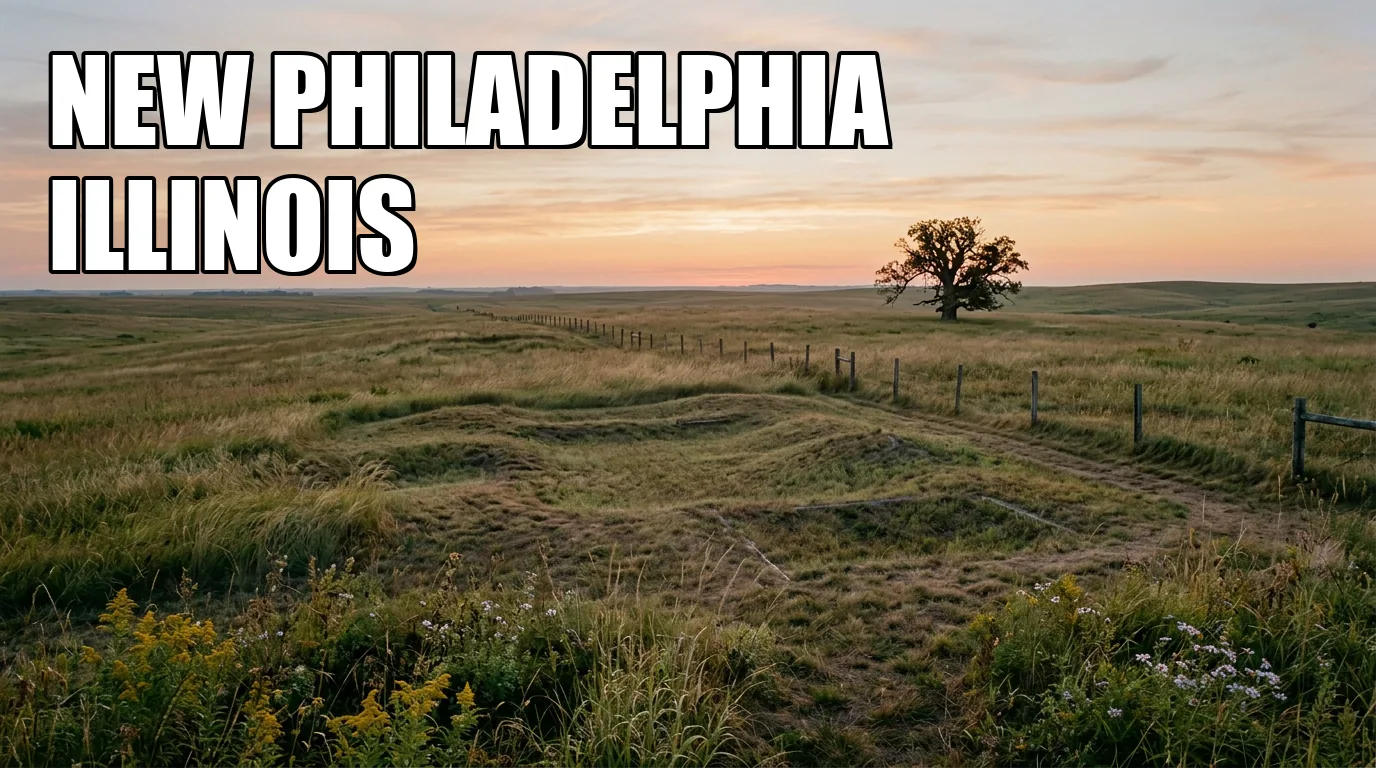
Imagine stepping onto a prairie in rural Illinois, where nothing but fields and subtle indentations in the earth hint at a once-thriving community. This is New Philadelphia, a National Historic Landmark that, until recently, offered very little visual evidence of its profound historical significance. It was here, in 1836, that Frank McWorter, an enslaved man who purchased his own freedom and that of his family, platted America's first town by an African American. What a radical act of self-determination, building a multiracial settlement where white and Black families lived side-by-side, long before the Civil War.
The challenge for visitors has always been: how do you interpret a site where the physical structures are gone, erased by time and the plow? Traditional methods might involve a few interpretive panels, perhaps a small visitor center miles away. New Philadelphia, however, has embraced an augmented reality (AR) tour application that truly recontextualizes the experience. As you walk the grassy grid, holding your phone, McWorter’s original 1836 plat map overlays onto the landscape, showing you where homes, businesses, and schools once stood. You don't just *read* about the schoolhouse; you see a virtual representation of it, complete with narratives that bring the daily lives and community dynamics—the intangible heritage—to life. This isn't just a fancy trick; it’s a deliberate choice to ensure that stories of Black agency in frontier life aren't relegated to a separate, isolated chapter, but woven intrinsically into the broader American narrative. You can sense the spirit of those early residents, their aspirations, and the quiet dignity of their daily struggle.
If you plan a trip, understand that New Philadelphia isn't a "destination" in the conventional sense, with gift shops and elaborate facilities. It's a contemplative, open-air experience. Go during the spring or fall when the weather is mild, avoiding the oppressive humidity of an Illinois summer. Download the AR app before you arrive, as cell service can be spotty, and bring comfortable walking shoes. Expect to spend a couple of hours walking the grid, allowing the virtual layers to reveal the profound history beneath your feet. It's an uncrowded, deeply personal exploration that truly defies the "tourist trap" label, offering instead a powerful encounter with an almost-forgotten, yet vital, piece of American history.
Beyond Redcoats and Minutemen: Unearthing the Revolution's True Cost
Minute Man National Historical Park in Massachusetts typically conjures images of Paul Revere's ride and the "shot heard 'round the world" at Lexington and Concord. For years, the interpretation largely focused on the heroic minutemen and the stoic British soldiers, a simplified narrative of colonial defiance. Yet, as the 250th anniversary of the American Revolution approaches, the park is undertaking a multi-year archaeological and preservation initiative, notably at the Elm Brook Hill Battlefield, that promises to deepen our understanding of this pivotal conflict.
Beginning in 2024 and culminating in 2025, geophysical surveys and systematic metal detecting are locating everything from musket balls to buckle fragments, each find meticulously GPS-documented. This isn't merely treasure hunting; it's a sophisticated forensic effort to reconstruct troop movements, identify skirmish lines, and understand the chaotic reality of 18th-century combat. What's surprising, and frankly refreshing, is that the interpretive exhibits will highlight both colonial militia *and* British soldier experiences. This move away from a simplistic "good guys vs. bad guys" binary is crucial. It acknowledges the human cost on all sides, revealing personal stories of combatants and noncombatants alike who were caught in the crossfire. You get a sense of the fear, the desperation, and the sheer unpredictability of that day, which a static monument could never convey.
To truly appreciate this evolving narrative, aim for a weekday visit, particularly in the shoulder seasons of May or October, when the fall foliage is beginning or just past its peak, minimizing the sheer number of visitors. While there's no admission fee for the park itself, parking can be tight at popular trailheads, so arriving before 10 AM is advisable. Expect to do a fair amount of walking, as the battle road stretches for miles. Don't rush; take time to imagine the landscape as it was, and consider how archaeological evidence, even a single musket ball, can reshape an entire historical understanding. This is a place that invites you to question the familiar, to look beyond the iconic images to the gritty, complex truth of how our nation began.
Where Ancient Refuge Meets Rising Tides: Hawai'i's Sacred Sanctuary
Heading thousands of miles west, to the Big Island of Hawai'i, Puuhonua o Hōnaunau National Historical Park presents an entirely different, yet equally profound, challenge in historical interpretation. This isn't just a beautiful coastal park; it is a sacred place, a *wahi pana*, where ancient Hawaiians, fleeing war or having broken a *kapu* (sacred law), could seek refuge and absolution. It was literally a "place of refuge," guarded by wooden *ki'i* (carved images) and a massive stone wall, offering a chance at life when death was the alternative. The cultural weight here is immense, palpable in the sea breeze and the rustling palms.
But Puuhonua o Hōnaunau faces a threat that few historic sites grapple with directly: the relentless march of climate change and sea-level rise. How do you honor the past while confronting an uncertain future? The park has deployed a remarkable tool: the Sea Level Rise AR Visualizer. Using high-resolution topobathymetric data—which maps the shape of the ocean floor and land above sea level—and NOAA sea-level projections, visitors can virtually pilot a helicopter view via AR. This isn't just a cool gadget; it dramatically illustrates how rising tides threaten the very temple platforms and fishponds that define this sacred refuge. You see, with chilling clarity, how much of this irreplaceable heritage could be inundated within decades.
This technology immerses you in both the profound cultural significance of the site and its terrifying vulnerability. It fosters a deep sense of stewardship, connecting the ancient stories of *kapu* and refuge to contemporary environmental challenges. You begin to understand that preserving the past isn't only about what's behind us, but what's *ahead* of us. If you visit, go in the morning to beat the heat and the crowds, and allow at least three hours to explore thoroughly. There's a small admission fee per vehicle, but it’s well worth it for the unique perspective. Take off your shoes and feel the earth, listen to the waves, and truly connect with the *mana* (spiritual power) of this place. This isn't a quick photo stop; it's an opportunity for profound reflection on human resilience, cultural survival, and our shared responsibility for the planet.
The Unseen Threads Weaving Our Past
What binds these disparate sites – a forgotten Illinois prairie town, a Revolutionary War battlefield in Massachusetts, and a sacred Hawaiian refuge – is their audacious departure from conventional historical interpretation. They're not content with merely presenting facts; they aim to *engage* visitors in the messy, multifaceted process of historical discovery. They decentralize dominant narratives, purposefully foregrounding Indigenous, Black, and minority histories as integral threads, rather than relegated add-ons. This is where the true insight lies: history isn't monolithic; it's a tapestry woven from countless, often overlooked, individual stories.
These innovations leverage technology not for spectacle, which is a common pitfall, but to illuminate underrepresented voices and environmental futures. The AR at New Philadelphia isn't just to make ruins "visible"; it’s to give voice to Frank McWorter's vision. The archaeology at Minute Man isn't just about finding old bullets; it’s about humanizing all combatants. And the climate visualization in Hawai'i isn't just a projection; it's a call to action rooted in ancient wisdom. This approach transforms visitors from passive observers into active participants—exploring AR reconstructions, analyzing archaeological maps, or experiencing simulated climate scenarios that make an abstract threat terrifyingly real.
Planning Your Journey to History's Cutting Edge
Visiting these types of innovative historic sites demands a slightly different mindset than your typical national park excursion. First, arrive prepared to engage. These aren't places where you simply stroll and absorb; they often require you to download an app, participate in a guided experience, or spend time reading and reflecting. They might not have the grand, obvious structures of Colonial Williamsburg or Gettysburg, but what they lack in immediate visual splendor, they more than make up for in intellectual and emotional depth.
Expect the unexpected. You might not find perfectly manicured lawns or a bustling visitor center right on site. Practical issues like limited restrooms or spotty cell service are real possibilities, especially at places like New Philadelphia, which are still evolving. This lack of polish, however, often contributes to a more authentic, less commercialized experience. The best times to visit most historical parks across the U.S. are during the spring (April-May) and fall (September-October), when the weather is pleasant and major holiday crowds are absent. Weekdays are almost always preferable to weekends, particularly at more popular destinations like Minute Man, where parking can become a genuine challenge after noon on a Saturday. Always check the park’s official website for current hours, conditions, and any specific requirements for their innovative programs, like downloading an app ahead of time. Fees vary; some, like New Philadelphia, are free, while others, like Puuhonua o Hōnaunau, have a per-vehicle entrance fee.
These sites are setting new standards for inclusion, interactivity, and environmental consciousness across the National Park System. They are not merely preserving the past; they are actively shaping how we understand our present and navigate our future. And that, to this seasoned traveler, is an adventure far more compelling than any postcard-perfect view.
Historic Mansions Worth Building a Weekend Around
Start with the estates and mansion properties that still justify tickets, routing, and a real visit, not just a mood-board detour.
Discovering America’s Historic Parks: Your Essential Guide
What makes a park historic?
A park is deemed historic if it preserves significant cultural, historical, architectural, or archaeological features that tell a story about the past.
What is considered a historic land?
Historic land includes sites where noteworthy events occurred, places associated with important figures, or landscapes that retain original historical integrity.
What are the 7 aspects of historic integrity?
The seven aspects are location, design, setting, materials, workmanship, feeling, and association.
What makes a place historical?
A place is historical when it has documented significance due to events, people, architecture, or archaeology that contribute to our understanding of the past.
What qualifies a historical landmark?
A historical landmark must meet criteria for age, integrity, and significance at the local, state, or national level, as assessed by preservation authorities.
How old does a house have to be to be considered a historical landmark?
Typically, a house must be at least 50 years old and retain its historic character to qualify as a landmark.
What are the four types of landmarks?
The four landmark types are national landmarks, state landmarks, local landmarks, and UNESCO World Heritage Sites.
Who decides if something is a landmark?
Designation is made by bodies such as the National Park Service, state historic preservation offices, or local landmark commissions.
How to make a historical landmark?
To designate a landmark, submit documentation of significance and integrity to the appropriate preservation authority for review and approval.
Whats the oldest landmark in the world?
Göbekli Tepe in modern-day Turkey, dating to around 9600 BCE, is widely considered the world’s oldest known monumental landmark.
Which historic parks offer guided tours?
Many historic parks, including Colonial National Historical Park and Gettysburg National Military Park, provide ranger-led and themed guided tours.
When is the best time to visit historic parks?
Spring and fall offer mild weather and fewer crowds, making them ideal seasons for visiting most historic parks.
Are there entrance fees for historic parks?
While some national historic parks charge entrance fees, many state and local historic parks offer free or donation-based entry.
What should I pack for a day at a historic park?
Bring water, snacks, sun protection, comfortable shoes, and any park maps or guides provided at visitor centers.
Do historic parks have accessibility accommodations?
Most historic parks offer accessible trails, shuttle services, and assistive programs; check individual park websites for details.
Why This Page Exists
Maison builds place guides to help readers plan a real visit or understand a real site. When a page makes present-day access, booking, or visitor claims, those details are revised against public-facing source material and editorial review. For the wider standards behind that work, see methodology.
The Cornerstone Brief
One historic place, once a week — what it is, why it matters, whether it's worth going. No filler, no paid placements.
Coming soon. Unsubscribe any time.
We use cookies to enhance your experience. By continuing to visit this site you agree to our use of cookies.