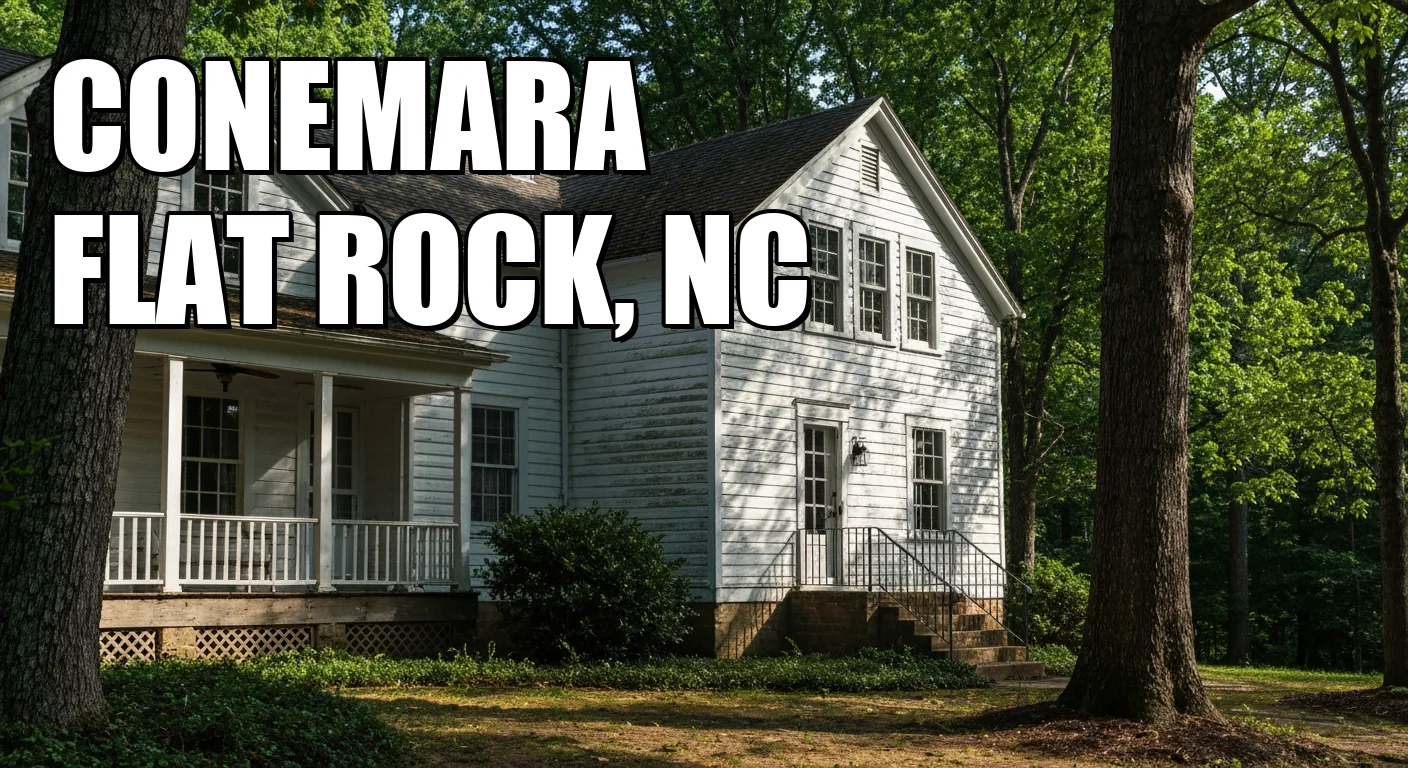
Yes—you can still walk Carl Sandburg’s Connemara farm in Flat Rock, North Carolina, and during Hurricane Helene recovery you can often do the house tour for free. Grounds, goat barn, and about five miles of trails stay free year-round. The catch is operational: house tours that normally cost $10 adult / $6 senior or pass holder / free under 15 on Recreation.gov are, while recovery continues, free and first-come, first-served, capped at 10 people, Wednesday–Sunday at 11 a.m., 12, 1, 2, and 3 p.m. Bring water; portable toilets replace main restrooms; the Front Lake bridge detour adds a steep climb before you ever see Sandburg’s books.
Can you tour Sandburg’s home free in 2026? Sometimes yes—confirm on the NPS Carl Sandburg Home National Historic Site page the week you go. This guide covers fees, Helene logistics, goats, Memminger history, and who should hike Glassy Mountain versus wait for a house slot.
Connemara in one afternoon: house, goats, trails
The main house dates to 1838. Carl and Lilian “Paula” Sandburg bought the 245-acre farm in 1945 for quiet writing space and pasture; he lived here 22 years until his death in 1967 at 89. Roughly a third of his life’s work came from this mountain desk, including the 1950 Pulitzer-winning Complete Poems. Congress authorized the site in 1968 as the first National Park unit dedicated to an American poet. Interiors still feel lived-in: about 11,000 of his 17,000 books line walls; visitors see his workroom, guitars, typewriters, and Lilian’s farm office. Guided house tours run 30–45 minutes through 11 furnished rooms on the upper floors of the three-story house—expect 52 steps, no air conditioning in summer, and third-floor access by stairs only (main-floor lift available).
Outside, the historic goat barn opens daily 10 a.m.–4 p.m. The park keeps a herd of roughly 10–15 Saanen, Nubian, and Toggenburg goats—descendants of Lilian’s prize dairy stock, not a prop petting zoo. Trails total about five miles. The signature climb is Glassy Mountain: about 1.5 miles one-way from the main lot with a 623-foot elevation gain (shorter if you start near the home). Easier options include the short Front Lake loop and the ~1-mile Memminger Trail east of the house. Apple orchards, pastures, and Blue Ridge views fill the gaps between tour times.
Helene recovery logistics that change your day
Hurricane Helene hit in September 2024. The park phased reopenings—goat barn back by January 22, 2025—but infrastructure still shows damage. The main sewer line failed, so restrooms are closed and portable toilets sit at the hikers’ lot, amphitheater, and near the home. No visitor drinking water is available on site right now—pack bottles. Front Lake dam damage (after earlier 2022 failure) closed the main pedestrian bridge: from the main parking lot plan a 0.4-mile detour around the lakebed, then a ~0.33-mile steep hill to house and barn. Strollers do better from the Hikers’ Lot at 1928 Little River Road (about 24 spaces, easier 0.4-mile gravel approach). Mobility limits: park in the main lot and call 828-707-8125 on arrival for the on-call accessible shuttle—waits can run ~20 minutes depending on staff.
Hours and free-tour status can shift as utilities return. When recovery ends, expect Recreation.gov reservations again at normal prices plus the usual online processing fee. Always treat “free house tour” as temporary and verify before you drive from Asheville or Charlotte.
Fact vs lore: poet only, hobby goats, pure history
Sandburg as “only” a poet. He won poetry Pulitzers, but he also took the 1940 Pulitzer in History for the four-volume Abraham Lincoln: The War Years (after the two-volume Prairie Years in 1926). The six-volume Lincoln set runs on the order of 1.5 million words. Scholars still debate it: critics flag missing footnotes, soft sources, and “moonlight” passages that read like democratic epic more than academic biography. Lore sells him as pure bard of Chicago; the Connemara bookshelves show a working historian-mythmaker as much as a poet.
Lilian’s goats as a quaint hobby. Wrong. Lilian “Paula” Sandburg was a serious dairy breeder who started the Chikaming herd in Michigan in 1935 and moved south for land and climate. She bred for milk yield, published methods, and influenced American Dairy Goat Association standards. Her Toggenburg Jennifer II was a world champion—about three gallons a day, roughly double typical Toggenburg output of the era. The barn you visit continues that bloodline on purpose.
Connemara as pure Sandburg pastoral. The house was built by Christopher Memminger, later Confederate Secretary of the Treasury (1861–1864). Documented history ties the estate’s early labor to slavery; the name “Connemara” came later, around 1900, when industrialist Ellison Adger Smyth renamed Rock Hill for Irish roots. Sandburg’s free-labor farm sits on that layered ground—NPS interpretation should name both the poet and the antebellum past. Ashes of Carl and Lilian rest at Remembrance Rock at the Carl Sandburg State Historic Site in Galesburg, Illinois (birthplace cottage), not under Flat Rock’s mountain.
Ratings and who should go
Value: exceptional—grounds free; recovery house tours free or, normally, a $10 adult ticket. Effort: moderate to high because of the lake detour and Glassy Mountain climb; house tour itself is moderate but stair-heavy. Kid appeal: high at the goat barn (10–4 daily). Literary depth: high if you score a house slot among 11 rooms of books and work tools. Access: shuttle helps, but third floor and steep approaches still filter visitors.
Who yes: poetry and Lincoln readers, families who will spend an hour with goats, hikers who want a free Blue Ridge walk with literary context, travelers stacking Flat Rock / Hendersonville overnight after Biltmore. Who no: anyone needing guaranteed wheelchair access to every floor without wait; visitors who refuse hills or who expect a polished, fully restored visitor campus during recovery; people who only want a five-minute photo stop without the walk from parking.
Three cost scenarios (recovery pricing—recheck). (1) Solo hiker: $0 grounds + free house slot if you arrive early Wed–Sun. (2) Couple wanting house + goats: $0 now / ~$20 normal adult pair without passes. (3) Family of four with kids under 15: $0 grounds; house free for kids even at normal rates, adults $10 each when paid tours return. Bottom line: Sandburg’s sanctuary is one of the cheapest deep literary house museums in the Southeast—if you budget legs and water for Helene’s detour, not dollars for a velvet-rope ticket.
The Cornerstone Brief
One historic place, once a week — what it is, why it matters, whether it's worth going. No filler, no paid placements.
Coming soon. Unsubscribe any time.