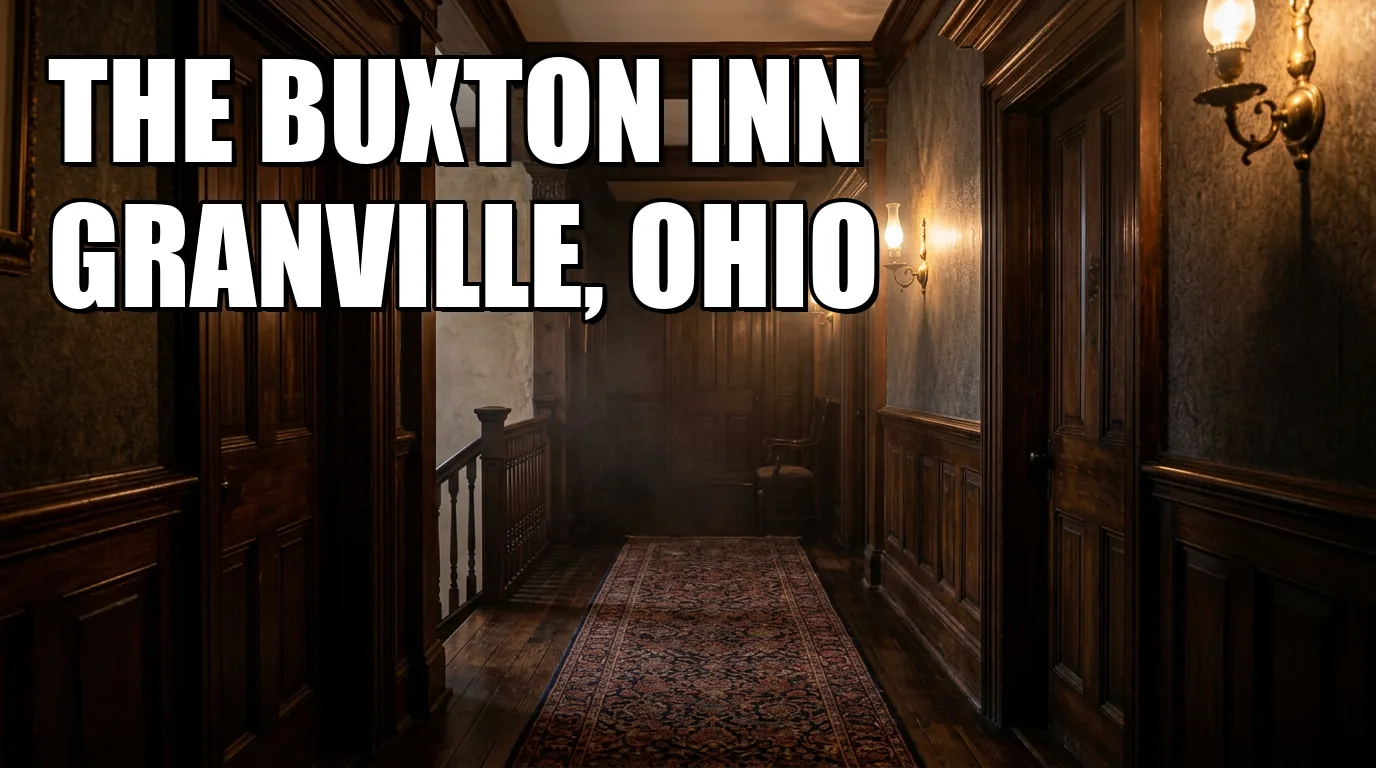
There are countless old buildings across the United States that lay claim to being "haunted." Many, frankly, trade on a flimsy anecdote or a creaky floorboard. But then you encounter a place like the Buxton Inn, tucked away in the charming village of Granville, Ohio, and your seasoned traveler's cynicism begins to fray at the edges. This isn't just an old inn; it’s a living, breathing testament to history, with whispers that seem to cling to its very foundation, dating back to 1812. It’s a compelling anomaly, less a manufactured scare and more a layered narrative of lives lived, and perhaps, not entirely left behind.
Why Does This 19th-Century Inn Still Captivate Paranormal Enthusiasts?
The Buxton Inn, originally built by Orrin Granger, holds the distinction of being Ohio’s oldest continuously operating inn. This isn't just a fun fact for history buffs; it's crucial to understanding its unique spectral allure. Two centuries of human experience—of joy, sorrow, daily routines, and significant events—have seeped into its walls. Unlike newer constructions where a haunting might feel tacked on, here, the alleged paranormal activity feels intrinsically woven into the fabric of the place. It's less about jump scares and more about a pervasive sense of past lives, a subtle hum beneath the surface of the present. This deep historical root gives the Buxton Inn an authenticity that many other "haunted" venues simply cannot replicate, drawing a particular kind of visitor who appreciates the interplay of history and mystery.
Most ghost stories often center on a single tragic figure or event, making them almost two-dimensional. What sets the Buxton Inn apart is its veritable ensemble cast of characters, each with their own distinct "performance," if you will. This isn't a one-trick pony. We're talking about multiple distinct presences, each tied to a specific area of the inn, often behaving in ways consistent with their historical persona. It’s this rich tapestry of spectral residents, from a playful former innkeeper to a dignified gentleman with a penchant for cigars, that transforms a mere "haunted hotel" into a living historical drama, making it genuinely intriguing even for those who might typically roll their eyes at such claims.
Unpacking the "Lady in Blue": Room 9's Enduring Mystery
If you're coming to the Buxton Inn for a genuine encounter, Room 9 is the primary destination. This isn't some vague, general haunting; it's a specific, consistent, and remarkably detailed phenomenon centered around Ethel Bonnie Bounell, a former opera singer who later became an innkeeper and passed away in this very room in 1960. Guests frequently report seeing a woman in a blue dress, her favorite color, often described as elegant and somewhat aloof. What makes these accounts particularly compelling isn't just the visual apparition, but the accompanying sensory details: sudden, localized cold spots that defy the room's thermostat, faint whispers heard when no one else is near, and even reports of furniture shifting when guests are out of the room. It’s a multi-sensory haunting that goes beyond a fleeting glimpse.
One anecdote, often recounted by staff, truly solidifies Room 9's reputation. During a fire marshal inspection following a minor incident, an assistant was sent to unlock Room 9 with a master key. The key reportedly failed multiple times, refusing to turn the lock. Then, without warning, the door swung open by itself, only to slam shut moments later, all with no visible cause. This kind of event, reported by a non-paranormal investigator in an official capacity, tends to lend a certain weight to the tales. Moreover, Room 9 is also believed to be home to Bonnie's beloved cat, Major Buxton, who guests claim to feel brush against their legs or jump onto the bed—a surprisingly domestic touch to a spectral presence that adds a layer of unexpected charm, distinguishing this particular haunting from the more generic "old lady" ghost tropes you often hear.
Beyond the Visible: Room 7's Shadowy Figures and Basement's Persistent Echoes
While Room 9 grabs the headlines, you'd be remiss to overlook the more subtle, yet equally unnerving, activities found in Room 7 and the inn’s original basement. Room 7, one of the original Granger-era rooms, seems to house a different kind of energy. Here, visitors speak of shadowy figures lurking in the corners, fleeting glimpses that vanish upon direct observation. It's less about a distinct personality and more about an ephemeral presence, accompanied by unexplained footsteps shuffling down the hallway directly outside and the occasional, jarring sound of a door slamming shut without any discernible breeze. This feels like a residual haunting, an imprint of past events rather than an intelligent interaction, offering a different flavor of paranormal experience.
Beneath Room 7 lies the inn's basement, a space that once served as quarters for 19th-century stagecoach drivers. This area, with its low ceilings and historic straw beds, is a hotspot for auditory phenomena. Staff and guests on tours frequently report strange knockings on the walls, footsteps treading across unoccupied straw beds, and doors opening and closing on their own—sounds that harken back to the routines of those long-ago travelers. What makes this particularly compelling is the direct link to its historical function; the sounds seem to be echoes of past daily life, grounding the alleged hauntings in the inn's deep operational history and providing a fascinating contrast to the more personal, intelligent haunting of Room 9.
The Innkeepers Who Never Departed: Orrin Granger and Major Horton Buxton
It’s not just the guests and the help who linger; the very founders and owners of the inn seem reluctant to leave. Orrin Granger, the original owner who opened the inn in 1812, is often described as an elderly gentleman in period breeches, occasionally accused—in jest—of pilfering pies from the pantry. His presence, if real, seems more playful, an affectionate attachment to his creation. This contrasts sharply with the more intense, almost melancholic presence attributed to Ethel in Room 9, showcasing the diverse range of spectral personalities that reportedly call the Buxton Inn home. It's a reminder that not all spirits are tragic or terrifying; some might simply be content to oversee their former domains.
Then there’s Major Horton Buxton, who purchased the inn in 1865 and passed away in 1902. His signature calling card? The unmistakable scent of cigar smoke that wafts through the dining room and kitchen, even when no one is smoking. Staff have become accustomed to this olfactory anomaly, often interpreting it as Major Buxton making his rounds. This particular haunting offers a more subtle, yet incredibly pervasive, experience. It’s a sensory haunting that bypasses visual confirmation, challenging visitors to open themselves to different forms of paranormal interaction. It also adds a layer of continuity, linking the inn’s two prominent historical owners through their enduring, albeit non-corporeal, presence.
Planning Your Paranormal Pursuit: Beyond the Ghost Stories
So, you’re convinced and ready to experience the Buxton Inn for yourself? This isn’t a destination you just stumble into for a quick scare; it demands a bit of planning to truly appreciate its historical weight and spectral whispers. If a direct encounter is what you seek, requesting Room 9 or Room 7 when reserving is absolutely essential. I cannot stress this enough: availability for these specific rooms varies wildly, especially during peak season, so advance notice (months, not weeks, for weekends) is strongly recommended. Don't just show up and expect a haunted room; call the inn directly at 740-587-0001 to inquire about specific room bookings and any special tour dates, perhaps mentioning your interest in the paranormal to the reservations staff.
For those looking for a more structured ghost-hunting experience, the Buxton Inn occasionally hosts special Paranormal Nights, such as those held in January. These often include guided ghost-hunting sessions with equipment like EVP recorders and history talks that delve deeper into the inn's past and its resident spirits. During October, naturally, the inn really leans into its reputation, offering Halloween Ghost Tours led by local paranormal investigators who focus on Rooms 7, 9, and the basement. These seasonal tours are immensely popular, so securing your spot well in advance is crucial, often by late summer. While admission fees for these tours are separate from room rates, the immersive experience they offer, providing behind-the-scenes access and expert guidance, is invaluable for true enthusiasts.
Visitors should manage their expectations: not every night is a poltergeist party. Even for non-believers, however, the inn exudes an undeniable eerie charm. You might experience an unexpected cold draft in a perfectly warm room or hear a faint, unidentifiable sound. Those seeking a genuine haunted-stay adventure should absolutely prioritize reserving Room 9, particularly during a weekday in the off-season (November to March, excluding holidays) when crowds are thinner and the atmosphere might feel more intimate. Arriving early for check-in on any day can allow you a moment of quiet exploration before the bustle, potentially enhancing your personal connection to the inn’s unique energy. Remember, the true thrill often lies not in seeing a full apparition, but in the lingering question mark, the palpable sense of a history that refuses to stay buried, making the Buxton Inn a truly unforgettable destination for those willing to listen closely to its ancient tales.
Ghostly Getaways: Your Complete Guide to America's Most Haunted Destinations
Where is the Buxton Inn located?
The Buxton Inn is located at 313 Broadway East in Granville, Ohio, a charming historic village near Denison University. The inn is easily accessible from Columbus, approximately 20 miles away.
What are the most active haunted rooms at the Buxton Inn?
Rooms 7 and 9 are the most notorious for paranormal activity, with Room 9 being particularly active—it's where innkeeper Ethel "Bonnie" Bounell died in 1960 and continues to appear as 'The Lady in Blue.' Room 9 is now called the 'Bonnie Room' for reservations.
Does the Buxton Inn offer ghost tours?
Yes, the Buxton Inn offers both history and ghost tours that take guests through areas not normally open to the public, including the historic basement and wine cellar speakeasy where paranormal investigations with EMF meters are available.
What are the current room rates and check-in times at the Buxton Inn?
Room rates typically start around $200-$329 per night depending on dates. Check-in time is 3:00 PM (no after-hours check-in available) and check-out is 11:00 AM. Free continental breakfast is included daily.
Who are the main ghosts haunting the Buxton Inn?
The primary spirits include Orrin Granger (the original builder), Major Horton Buxton (former owner), Ethel "Bonnie" Bounell (former innkeeper), and a phantom cat belonging to Bonnie. Other reported spirits include a young boy named Henry and various stagecoach drivers.
What is the #1 most haunted hotel in the world?
The Riccarton Racecourse Hotel in Christchurch, New Zealand, consistently ranks as the world's #1 most haunted hotel, featuring the unsolved 1933 murder of Donald Fraser and ongoing paranormal activity reported by guests.
What happened in room 428 in the Stanley Hotel?
Room 428 is reported to be haunted by the ghost of a friendly cowboy who died during the hotel's early years, with guests reporting seeing his shadowy figure at the foot of beds or in room corners and feeling cold kisses on their foreheads.
What happened in room 218 in the Crescent Hotel?
Room 218 is where Michael, an Irish stonemason, fell to his death during the hotel's construction in the 1880s. This room is classified as a poltergeist hotspot with reports of doors slamming, footsteps echoing, cold spots, and hands appearing from the bathroom mirror.
What is the spookiest town in Ohio?
Waynesville is considered the most haunted town in Ohio, earning its reputation as 'America's Most Haunted' with ghost tours that stop at nearly every historic building in the village due to extensive paranormal activity.
Where is Crybaby Bridge in Ohio?
The most infamous Crybaby Bridge in Ohio is located off Egypt Road near Salem, Ohio, on what used to be West Pine Lake Roads, now a dead-end street. According to legend, if you stop your car on the bridge, you will hear ghostly baby cries.
What is Ohio's scariest haunted house?
The Dent Schoolhouse in Cincinnati is ranked among America's top 13 scariest haunted attractions, featuring Hollywood-quality production and the chilling tale of alleged murders committed by janitor Charlie McFree in the 1940s-1950s, with 30,000 visitors annually.
What is the #1 crime city in Ohio?
Cleveland has the highest crime rate in Ohio at 63.94 crimes per 1,000 residents, with elevated violent assaults, robberies, and property crimes predominantly in downtown and east-side neighborhoods.
What happened in Room 502?
Room 502 at Waverly Hills Sanatorium in Louisville, Kentucky, is notorious for the 1928 suicide of head nurse Mary Hillenburg, who allegedly hanged herself after becoming pregnant out of wedlock. Witnesses report disembodied voices saying 'Get out' and full-body apparitions of a female nurse in white.
What does the Bible say about haunted houses?
The Bible does not support the concept of human spirits haunting homes; instead, it teaches that spirits of the deceased face judgment (Hebrews 9:27). Any paranormal phenomena are attributed to demonic spirits or fallen angels rather than departed humans, and Christians are warned against seeking contact with supposed spirits.
How can I book a stay at the Buxton Inn?
Book directly through the inn's website (www.buxtoninn.com) or call (740) 587-0001. You can also reserve through travel platforms like Expedia, TripAdvisor, or Hotels.com. Paranormal night packages are available seasonally.