Photo by Christopher Wren for Cornerstone Mansion · April 8, 2026
My travels across the United States have, over the years, revealed a quiet obsession: the enduring majesty of Victorian-era towers. These aren't just practical structures; they are audacious declarations of civic pride, industrial might, and burgeoning artistic ambition, often reaching skyward with a flourish that modern pragmatism rarely allows. What strikes me repeatedly is how each tower, whether a humble water utility or a grand church steeple, embodies a unique narrative of its time and place, often hiding surprising stories behind its weathered stone and intricate details.
You might envision Victorian architecture as all turrets and gingerbread, but the period's towers exhibit a remarkable diversity, ranging from the rugged power of Richardsonian Romanesque to the ornate delicacy of Gothic Revival. To truly appreciate them, one must look beyond the postcard view, understanding the historical context, the engineering challenges, and the artistic intent that shaped these formidable structures. We’re not simply admiring old buildings; we’re stepping into the minds of the architects and the communities that commissioned them, discovering what compelled them to reach so high.
Chicago's Resilient Sentinel: Beyond the Fire's Shadow
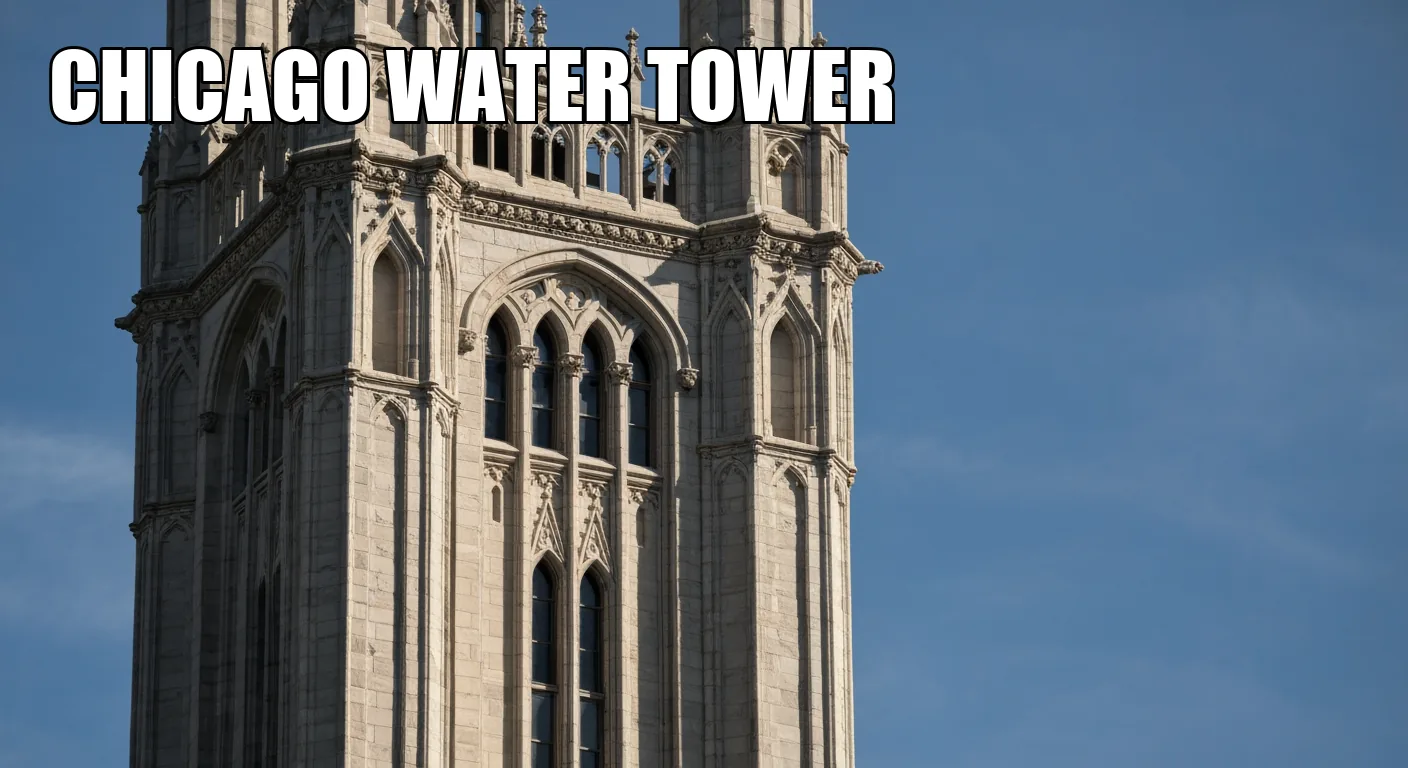
Perhaps no Victorian tower in America is more universally recognized than the Chicago Water Tower, standing proudly at 806 North Michigan Avenue. Constructed between 1866 and 1869 by architect William W. Boyington, its fame, almost exclusively, stems from its miraculous survival of the Great Chicago Fire of 1871. Most guides will tell you this story—how it stood amidst the ashes—but few delve into *why* its survival was so remarkable, or what it signifies architecturally beyond that single, dramatic event.
While its Gothic Revival style, characterized by the castellated octagonal design and pointed arches, might seem a bit whimsical for a utilitarian structure, Boyington deliberately imbued it with a sense of permanence and civic grandeur. The choice of yellowing Joliet limestone, a robust, buff-colored stone sourced from Lemont, Illinois, was crucial; its density and fire resistance were accidental heroes. Inside, the tower housed a 138-foot-high standpipe, a three-foot diameter column that regulated water pressure and smoothed out hydraulic surges—a vital piece of infrastructure for a booming city. This wasn't just a monument; it was the city's pulsing heart, and its exceptional masonry, featuring bullnosed contour patterns meticulously chiseled, speaks to a craft tradition we seldom see today.
When you visit, don't just snap a picture and move on; linger and appreciate the texture of the stone, the play of light and shadow that Boyington so carefully designed. Its survival, while legendary, has almost overshadowed its inherent architectural merit as a robust and elegant example of municipal infrastructure designed with a profound sense of civic pride. It’s best viewed in the late afternoon, when the low sun deepens the shadows and highlights the stone’s intricate carvings. There’s no admission fee, as it’s a public landmark, but parking in this bustling part of Chicago is often a challenge, so consider public transport.
A Vanished Colossus: Remembering Chicago's First Skyscraper
Venturing further into Chicago's architectural past brings us to another of William W. Boyington's ambitious projects: the original Board of Trade Building, completed in 1885. This isn't a structure you can physically visit today, which presents a fascinating challenge for an architectural enthusiast: how do you experience the ghost of a building? Its story, however, is crucial for understanding the trajectory of American tower architecture and Chicago's relentless pursuit of verticality.
At 320 feet, this was Chicago’s first building to exceed 300 feet, briefly claiming the title of the city’s tallest. Imagine the impact of this monumental granite and structural steel edifice, topped by a grand clock tower and a ship-shaped weather vane, dominating the nascent city skyline. It wasn't merely tall; it was technologically advanced, notably being the first commercial building in Chicago to feature electric lighting, a marvel in its day. The interior boasted mahogany and frescos, testament to the immense wealth and power concentrated within its walls.
The building’s formal dedication in 1885, attended by thousands, underscored its significance as a symbol of American commerce. However, its very success sealed its fate: within forty-four years, the insatiable demand for more space led to its demolition in 1929, making way for the current Art Deco masterpiece. Its legacy, though, is undeniable; it set a precedent for architectural ambition and established the Loop as a center of vertical growth. When I walk through the financial district today, I can’t help but feel its phantom presence, a reminder that progress often demands sacrifice, even of architectural giants. Its absence forces a reflection on how we value and preserve our built heritage, especially in a city so focused on the future.
St. Louis's Ornamental Standpipe: When Utility Met Artistry
Heading west to St. Louis, Missouri, one encounters a different kind of civic aspiration in the Compton Hill Water Tower, completed in 1898. Designed by Harvey Ellis for the firm of George R. Mann, this isn’t just a water tower; it’s a deliberate, soaring work of art, a prime example of Richardsonian Romanesque Revival architecture where utility is almost an afterthought. The city clearly didn't just need a standpipe; it wanted a monument.
Standing at a commanding 179 feet, its design is a masterclass in elegant massing, incorporating a rusticated stone foundation, two tangential shafts (one square, one circular), and a finely detailed terra cotta and buff brick terminus. Ellis was explicitly hired to create an ornamental facade that would mask the purely functional standpipe within, elevating a humble piece of municipal infrastructure to a public masterpiece. This distinction—designing for aesthetic impact above strict necessity—is what separates it from many of its contemporaries.
It immediately became a tourist attraction, even drawing crowds during the 1904 World's Fair. Its placement on the National Register of Historic Places in 1972 speaks volumes about its recognized cultural value, further cemented by a remarkable $19 million restoration project completed in 1999. This investment, largely driven by local residents and preservation groups, highlights a community’s deep respect for its architectural heritage, challenging any notion that only grand public buildings deserve such meticulous care. Visiting the park, particularly on a clear spring or autumn day, offers a superb opportunity to appreciate its detailed craftsmanship and the thoughtful way it integrates into the surrounding landscape. Climbing the tower, which is open during specific hours (check their website for updated schedules, usually weekends in warmer months), offers panoramic views of the city that truly put its context into perspective.
Boston's Brownstone Beacon: Richardson's Defining Moment
Shifting our gaze to the East Coast, Trinity Church in Boston, Massachusetts, stands as arguably the most definitive work of Henry Hobson Richardson, completed between 1872 and 1877. This isn't just another beautiful church; it's a foundational text in American architecture, the building that largely codified and popularized the Richardsonian Romanesque style. For anyone interested in how architectural movements take hold, Trinity Church is an essential pilgrimage.
Richardson faced immense engineering challenges, building this colossal structure—its central tower alone weighing approximately 90,000 pounds—on reclaimed marshland in Boston’s Back Bay. The solution was ingenious: 4,000 to 4,500 cedar piles driven underwater, topped with massive granite pyramids beneath the tower’s corners to distribute weight and account for the fluctuating water table. This hidden foundation is as impressive as the visible structure. The exterior's power comes from its contrasting materials—rough-faced Rockport granite and smooth Longmeadow brownstone—and the iconic round-headed Romanesque arches that give the style its name.
Inside, John La Farge's exquisite interior decorations, a riot of rich colors, murals, and stained glass, create an immersive, almost otherworldly experience. The church’s bold design was a stark departure from the prevailing Gothic Revival styles of its era, marking a decisive shift towards a uniquely American architectural idiom. It exerted an immense influence, shaping countless public buildings across the nation for decades. When you stand before it, especially across Copley Square, you're not just seeing a building; you're witnessing the birth of a style. While the exterior can be appreciated any time, visiting during a weekday morning often allows for a more contemplative experience of the interior, as Sunday services can draw large crowds. There’s a small suggested donation for entry, but the experience is invaluable.
Pittsburgh's Granite Masterpiece: A Legacy Cast in Stone and Legend
Finally, our journey takes us to Pittsburgh, Pennsylvania, and the monumental Allegheny County Courthouse and Jail Complex, another towering achievement by Henry Hobson Richardson, constructed from 1883 to 1888. Richardson himself, reportedly on his deathbed, considered this his "great achievement," a testament to its scale and the ambition he poured into its design. What made it so special to him? I suspect it was the masterful way he blended civic grandeur with practical function, all while defining an entire urban block.
The courthouse’s formidable 249-foot tower, rising over twenty stories, anchors a complex built from massive blocks of rusticated granite. Its Romanesque design, characterized by wide arches over entranceways and windows, conveys an undeniable sense of authority and permanence. The interior, built around an open-air courtyard, features grand marble staircases and ornate frescos that remind visitors of the dignity of the law. But it’s the jail, connected to the courthouse by the notorious "Bridge of Sighs"—an enclosed stone walkway spanning Ross Street, echoing Venice's famous bridge—that truly adds a layer of dramatic human history.
This bridge gained particular notoriety in 1902 with the daring escape of convicted murderer Ed Biddle, aided by the warden's wife, Kate Soffel—a story later immortalized in film. This narrative, woven into the very fabric of the building, elevates it beyond mere architecture; it becomes a stage for human drama and a keeper of local legend. The complex, designated a National Historic Landmark in 1976, remains a vibrant civic center. While you can appreciate the exterior at your leisure, considering a self-guided tour (available via brochures at the entrance) or checking for specific historical tours (often offered on weekdays) provides the richest experience of its interior and fascinating history. Parking downtown can be expensive, so utilizing Pittsburgh's public transit or rideshare services is often the most practical approach.
These five towers, diverse in purpose and locale, collectively tell a compelling story of Victorian America’s architectural prowess and its yearning for both utility and beauty. From Chicago’s resilient waterworks to Pittsburgh’s formidable seat of justice, they are more than just stone and mortar; they are enduring monuments to an era that dared to build big, to innovate, and to imbue even the most functional structures with profound artistic ambition. Each offers a unique lens through which to view American history, engineering, and the timeless human desire to leave a lasting mark upon the landscape. To truly appreciate them, one must approach not just as a tourist, but as a detective, searching for the untold stories etched into their very foundations.
Architecture Styles You Can Read From the Street
Use visible details like rooflines, columns, and ornament to identify building styles faster.
Discover American Victorian Tower Architecture: Your Complete Guide
What is the history of Victorian architecture?
Victorian architecture flourished during Queen Victoria's reign (1837-1901) and is characterized by elaborate ornamentation, revival of historical styles, and technological innovations that enabled intricate designs. The period encompassed multiple substyles including Gothic Revival, Italianate, Queen Anne, Second Empire, Romanesque Revival, and Stick/Eastlake, with mass production and improved building materials making ornate details affordable for residential properties.
What is the history of Victorian tower architecture?
Victorian towers evolved from medieval defensive tower houses into aesthetic architectural features, with towers and turrets becoming symbols of wealth and status during the Victorian era (1860-1900). The propensity for building towers on public buildings was copied onto residences, particularly in the Queen Anne style, where corner towers with conical or rounded roofs became distinctive design elements.
What are the towers in Victorian houses?
Victorian house towers typically appear as corner towers or turrets with varied shapes including round, square, and octagonal designs, often topped with conical or domed roofs. These towers served both practical functions (such as providing extra room or light) and decorative purposes, becoming iconic features of Queen Anne and other Victorian substyles.
Why did old houses have towers?
Historic towers originated from medieval tower houses designed for defense and strategic positioning, but Victorian towers evolved primarily into architectural statements of status and wealth rather than defensive structures. They also provided functional benefits like additional room space, improved natural light, and visual interest through their three-dimensional sculptural qualities.
How to identify different types of towers?
Victorian towers can be identified by their shape (round, square, or octagonal), roof style (conical, domed, or mansard), position (corner or central), and architectural detailing. Round towers often appear on Chateauesque style homes with high conical roofs, while Queen Anne styles feature octagonal corner towers; Romanesque Revival towers have pronounced round arches with massive stone construction; and Italianate buildings feature square or octagonal cupolas.
What are those metal towers called?
Metal towers commonly seen across America are water towers, elevated structures supporting steel or metal water tanks that were widely built during the late 19th and early 20th centuries to provide water pressure and fire protection to communities. These distinctive cylindrical or spherical metal structures on braced-steel legs became iconic features of American landscapes.
Did Victorian houses have beams?
Yes, Victorian homes built in the 1840s-1890s commonly featured timber frame beams constructed from materials like oak and pine, often now hidden beneath drywall but discoverable during renovations. Many historic Victorian homes retain these original structural beams which add significant character and historical value.
What is the purpose of a tower house?
Tower houses, which influenced Victorian tower design, were originally built in the Middle Ages for defensive purposes and to command strategic points with reduced forces while providing aristocratic residences. They combined defensive capabilities with habitation, storage, and protection of goods, serving as both fortified homes and territorial markers.
What is the architecture of the Victoria Tower?
The Victoria Tower at the Palace of Westminster in London was designed by Charles Barry and Augustus Pugin in Perpendicular Gothic style and completed in 1860, standing 98.5 metres tall as the palace's tallest structure. It houses the Parliamentary Archives and features 14 floors originally linked by a 553-step wrought-iron Victorian staircase.
Where can I see the best preserved Victorian tower architecture in the USA?
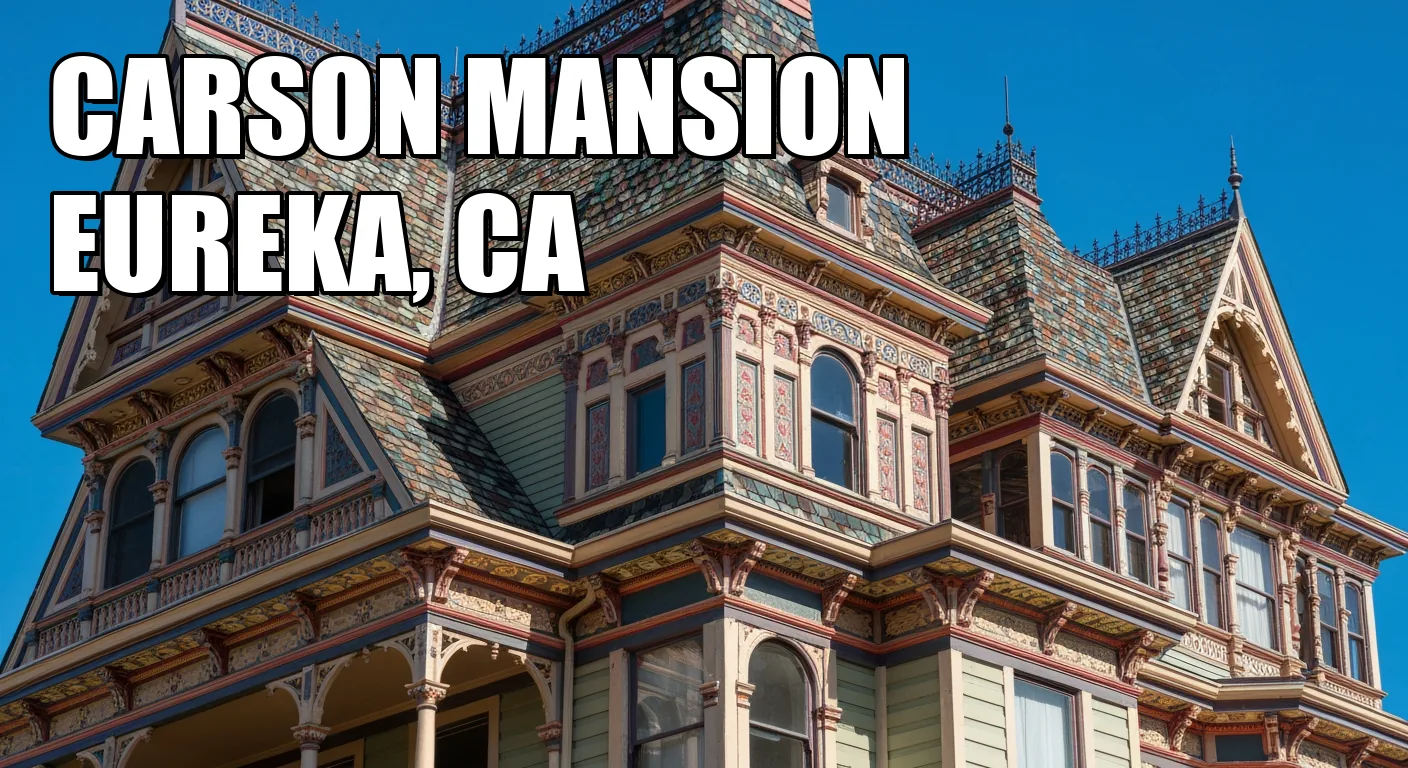
Port Townsend, Washington (one of only three American Victorian seaports on the National Registry) features extensive preserved Victorian architecture with walking tours available; Eureka, California home to the famous 1884 Carson Mansion with elaborate towers and turrets; and Cape May, New Jersey with over 600 Victorian buildings. San Francisco's Painted Ladies and Haas-Lilienthal House, plus Savannah's Victorian District also offer excellent examples.
What Victorian architecture styles feature towers?
Multiple Victorian substyles feature towers prominently: Queen Anne (corner towers with conical roofs), Chateauesque (round towers with high conical roofs), Romanesque Revival (round arches and squat towers), Second Empire (central or corner towers with mansard roofs), Italianate (square or octagonal cupolas), and Gothic Revival (pointed spires and vertical emphasis).
How can I tour Victorian tower homes?
Many Victorian sites offer guided walking tours (Port Townsend tours $10, approximately 90 minutes), house museum tours (admission fees typically $10-20), and self-guided walking tours through historic neighborhoods. Virtual tours are increasingly available through organizations like the Victorian Alliance of San Francisco, and many museums operate seasonal tours from May through October.
When is the best time to visit Victorian architecture sites?
Fall (especially October) and spring are optimal visiting seasons, offering pleasant weather and fewer crowds; September and Christmas time are also popular for Victorian home tours. Most seasonal tours and museum hours run from May 1 through October 31, though some sites operate year-round with adjusted schedules.
What are the key characteristics of Queen Anne Victorian towers?
Queen Anne style towers are typically octagonal or polygonal corner towers with conical or domed roofs, large windows including leaded glass, asymmetrical facades, and elaborate decorative detailing. These towers often extend multiple stories and feature rounded bay windows, creating the distinctive silhouettes visible in American Victorian neighborhoods.
How can I photograph Victorian tower architecture effectively?
Photograph Victorian architecture during early morning or late evening when light is more sympathetic and creates dramatic shadows highlighting the towers' dimensional qualities. Walk around the building to find the most interesting angles, keep composition simple by removing clutter, and allow the building to "breathe" in the frame by stepping back to capture the complete structure.
Why This Page Exists
Maison builds place guides to help readers plan a real visit or understand a real site. When a page makes present-day access, booking, or visitor claims, those details are revised against public-facing source material and editorial review. For the wider standards behind that work, see methodology.
The Cornerstone Brief
One historic place, once a week — what it is, why it matters, whether it's worth going. No filler, no paid placements.
Coming soon. Unsubscribe any time.
We use cookies to enhance your experience. By continuing to visit this site you agree to our use of cookies.