Photo by Thomas Ashworth for Cornerstone Mansion · February 23, 2026
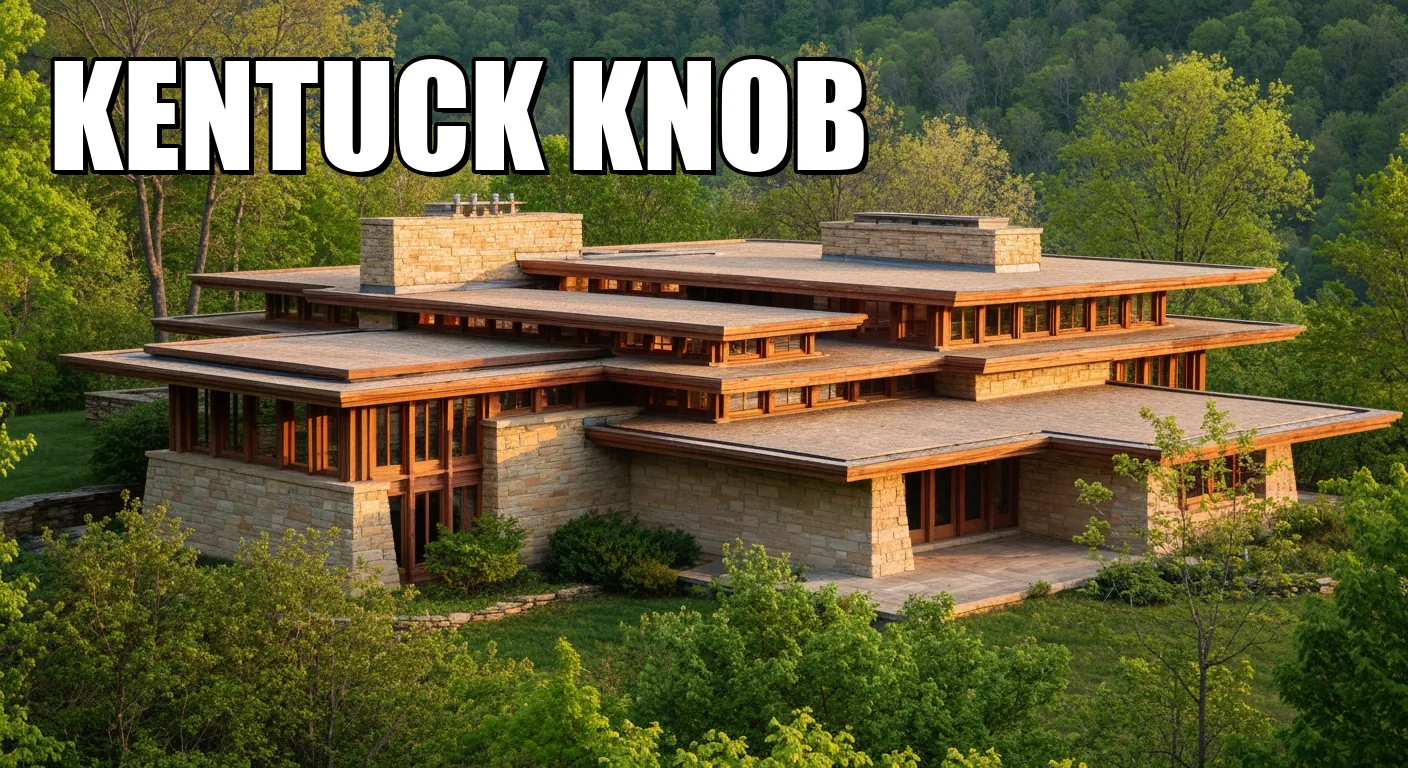
The first time you approach Kentuck Knob, nestled amidst the rolling hills of the Laurel Highlands, you might feel a profound sense of *rightness*. This isn't the grand, audacious statement of some of Frank Lloyd Wright's more famous works. Instead, it’s a house that seems to grow directly from the earth, a testament to his Usonian ideal – a distinct architectural style developed for the American middle class, characterized by natural materials, open living spaces, and integration with the landscape. Built for the Hagan family, owners of a prominent ice cream company, this 2,300-square-foot structure, completed in 1956, perfectly embodies Wright's philosophy of organic architecture, yet its story is far more complex and captivating than a mere blueprint would suggest.
An Unexpected Collaboration: The Hagans' Vision and Wright's Refinement
How does a renowned architect, already a living legend, come to design a home for an ice cream magnate in rural Pennsylvania? The connection was less direct than one might imagine. I.N. (Isaac Newton) Hagan and his wife, Bernardine, had fallen in love with Wright's work after seeing his iconic Fallingwater nearby. They had purchased 79 acres of pristine land in July 1953 and, after an initial inquiry, secured Wright's services. The Hagans, despite their admiration, weren't passive clients. Their initial request for a more modest design quickly evolved. They pressed Wright for significant modifications, particularly expanding the living and dining areas, pushing the boundaries of his initial vision. This wasn't a case of an architect dictating terms, but a dynamic push and pull that ultimately resulted in a home uniquely tailored to its owners' lifestyle and the stunning natural environment.
Ultimately, the final structure, sprawling across 2,300 square feet, cost $96,000, a substantial jump from the initial $60,000 budget. This overrun underscores a common thread in Wright's projects: his uncompromising artistic vision often clashed with practical financial limits. Yet, the outcome was undeniable. Construction began in the summer of 1954, and the Hagans moved into their extraordinary new home on July 29, 1956 – a wonderfully personal touch, as it marked their 26th wedding anniversary. The house itself is a masterclass in material harmony. Native sandstone, quarried directly from the property, forms its sturdy base. Tidewater red cypress wood, known for its durability and rich color, was shipped from North Carolina to craft its warm interiors. And a distinctive copper roof crowns the entire composition, destined to weather into a beautiful verdigris, further cementing its bond with the landscape.
From the Brink: How a Devastating Fire Shaped Kentuck Knob's Future
One might imagine a Frank Lloyd Wright house, once built, remains a static monument to its creator's genius. Kentuck Knob challenges this notion with a dramatic chapter in its history that many visitors, caught up in the architectural splendor, might never fully grasp. Just three months after Lord Peter Palumbo purchased Kentuck Knob in 1986 – a significant transition for the property from its original owners – tragedy struck. On May 26th, a fire erupted. Starting in the studio on the north side of the courtyard, the blaze quickly spread across the flat-roofed carport and reached the master bedroom. While much of the house thankfully suffered only smoke damage, the carport and a portion of the master bedroom roof were heavily damaged, leaving a raw, charred scar on the carefully curated structure.
This wasn't just a minor repair job; it was a crisis that demanded an extraordinary response. Thankfully, the restoration effort was placed in the most capable hands imaginable: Bob Taylor. Who was Bob Taylor? He was the original job architect who had worked directly with Frank Lloyd Wright during Kentuck Knob's construction decades earlier. His intimate knowledge of Wright's intentions, the structural intricacies, and even the specific quirks of the build proved invaluable. The meticulous two-year restoration process relied on an arsenal of historical documentation: Wright's original drawings from the Taliesin Fellowship, extensive photographs taken by the Hagan family over the years, and even detailed Historic American Buildings Survey photographs. This wasn't merely rebuilding; it was an act of architectural archeology, painstakingly replicating damaged areas with unwavering fidelity. New sandstone from comparable sources and tidewater cypress matching the original specifications were sourced, ensuring the house was reborn as authentically as possible. The restoration also wisely integrated modern improvements for safety, including drywall firestops for better fireproofing and significant ventilation improvements, quietly enhancing its longevity.
What a Kentuck Knob Tour *Really* Reveals
Stepping onto the Kentuck Knob property today, especially after understanding its challenging past, offers a richer experience than merely admiring the architecture. You're not just seeing a house; you're witnessing a triumph of preservation. Yet, like any popular historic site, visiting Kentuck Knob comes with its own set of realities, not all of them immediately apparent from glossy brochures. Expect a highly structured experience. The standard guided house tour lasts a concise 45 minutes, providing a solid overview of the property's design principles, the Hagan family's story, and details of the significant restoration. For those who truly want to immerse themselves, an in-depth house tour of 90 minutes is also available, albeit at a significantly higher price point. This extended option provides a deeper dive into the nuances of Wright’s design and the history of the property, which is often what serious architecture enthusiasts crave.
While the guides are knowledgeable, the pace of the standard tour can feel a little brisk, especially if you're inclined to linger and absorb every detail. The experience is, by necessity, a managed one, ensuring the preservation of the house while accommodating a steady stream of visitors. This is where the pragmatic traveler needs to adjust expectations: don't anticipate being able to wander freely or photograph interiors. It's a respectful pilgrimage through a living piece of history. What typical guides might not emphasize enough is the sheer dedication required to maintain such a property. The construction of a dedicated Visitor Center, completed in May 2003, wasn't just about convenience; it was a crucial strategic move to accommodate growing public interest and, more importantly, to generate the necessary revenue for the property's long-term preservation. This seemingly modern addition plays a vital, unsung role in keeping Wright's legacy alive here.
Planning Your Architectural Pilgrimage: Practical Advice for Kentuck Knob
So, you're ready to experience Kentuck Knob for yourself. Smart planning will significantly enhance your visit, especially given its popularity and the structured nature of the tours. Firstly, understand that this isn't a walk-up-and-go destination. Advanced booking is highly recommended. Tours, particularly during peak seasons, frequently sell out, leaving unprepared visitors disappointed. You can secure your spot by contacting Kentuck Knob directly at (724) 329-1901, or, more conveniently, through their online ShowClix ticketing platform. This online system handles all reservations and ticket sales, making it straightforward to plan ahead.
When it comes to timing, Kentuck Knob operates on seasonal hours. For spring visits, the property is open daily from March 15th to November 2nd, from 9:00 AM to 4:00 PM. Note that Wednesdays have a slightly altered schedule, opening from 12:00 PM to 4:00 PM. Arriving early in the day, especially on a weekday, can sometimes offer a slightly less crowded experience, though the Laurel Highlands draw a significant crowd year-round. Regarding cost, a standard 45-minute guided house tour is $30 per adult. Discounted rates are available for students (age 6 and older) at $18 and for military personnel and veterans with valid ID at $24. If you're considering the more extensive 90-minute tour, prepare for a higher investment, as it costs $78 per guest. While some might balk at the prices, consider it an investment in experiencing and preserving a significant piece of American architectural heritage. The value here lies not just in seeing the house, but in understanding the immense effort that has gone into its creation and survival.
Famous Homes, Estates, and Public Houses
Track preserved homes, estates, and place-based biographies tied to real addresses and public sites.
Complete Traveler's Guide to Frank Lloyd Wright Masterpieces & American Icons
Can you visit Kentuck Knob?
Yes, Kentuck Knob welcomes visitors through guided house tours operated daily (hours vary seasonally from March through December). Tours must be booked in advance, and visitors can explore both the Frank Lloyd Wright-designed Usonian house and the surrounding sculpture garden.
Is Kentuck Knob worth visiting?
Yes, Kentuck Knob is highly worth visiting for architecture enthusiasts and nature lovers, featuring Wright's iconic Usonian design seamlessly integrated into a hillside setting with over 30 sculptures and stunning views of the Laurel Highlands landscape.
How long does it take to tour Kentuck Knob?
Standard guided house tours last approximately 40-45 minutes, while extended in-depth tours last 90 minutes. Visitors typically spend at least 2 hours total including the Woodland Walk trail and sculpture garden exploration.
How much does it cost to visit Kentuck Knob?
Adult tours cost $30 per person, student tours (age 6+) are $18, and extended 90-minute tours are $75 per person. The Woodland Walk grounds pass is included with all tour tickets.
Can you tour the Hollyhock House?
Yes, Hollyhock House offers self-guided tours Thursday through Saturday, 11 am to 4 pm, with advance ticket reservations strongly recommended due to capacity limitations.
Is Hollyhock House worth visiting?
Yes, Hollyhock House is worth visiting as a UNESCO World Heritage Site and Frank Lloyd Wright's first Los Angeles commission, featuring distinctive Mayan Revival architecture and innovative theatrical community design in a historic 6,000 square-foot mansion.
How long does it take to tour the Hollyhock House?
Self-guided tours have no time limits, though most visitors spend 1-2 hours exploring the house, courtyard, pools, and architectural details at their own pace with available docents for questions.
How much does it cost to go to the Hollyhock House?
Admission is $12 for adults, $6 for seniors (62+) and students with valid ID, and free for youth under 18 with a paying adult.
Is Graceland Mansion worth it?
Graceland is worth visiting if you're an Elvis fan or interested in cultural history; ticket packages range from $80-$215 per adult depending on which attractions you want to include beyond the mansion tour.
Is it worth it to go to the Coca-Cola factory?
The World of Coca-Cola in Atlanta is worth a visit for families and beverage enthusiasts interested in 125+ years of brand history and artifacts, though some visitors find the $17-$28 admission pricey for the 1.5-3 hours typically spent there.
What is the best time to visit Kentuck Knob?
Visit Kentuck Knob during weekday afternoons from March to November for fewer crowds and a more intimate experience, though avoid the busy season (June-August and October) if possible; December offers limited weekend and holiday hours.
How do I get to Kentuck Knob from Pittsburgh?
Kentuck Knob is located 1.5 hours south of Pittsburgh (approximately 59 miles); drive south on Route 51 to Uniontown, then east on US Route 40 to Chalk Hill, then turn left on Kentuck Road to reach the property.
What can I see at Kentuck Knob besides the house?
Beyond the Usonian home, visitors can explore over 30 sculptures by renowned artists like Andy Goldsworthy and Anthony Caro, a nearly 1-mile woodland walking trail, and scenic hillside views overlooking the Youghiogheny River Gorge.
Is parking available at Hollyhock House?
Yes, Hollyhock House offers free but limited parking in Barnsdall Art Park with accessible spaces near the house entrance; metered street parking and public transit via Metro B Line (Vermont/Sunset stop) are also available options.
What are the World of Coca-Cola's hours and admission prices?
The World of Coca-Cola is open Monday-Thursday 10 am-5 pm, Friday 9 am-5 pm, Saturday 9 am-6 pm, and Sunday 10 am-5 pm, with admission at $17 for adults, $15 for seniors (65+), and $13 for youth ages 3-12.
Why This Page Exists
Maison builds place guides to help readers plan a real visit or understand a real site. When a page makes present-day access, booking, or visitor claims, those details are revised against public-facing source material and editorial review. For the wider standards behind that work, see methodology.
The Cornerstone Brief
One historic place, once a week — what it is, why it matters, whether it's worth going. No filler, no paid placements.
Coming soon. Unsubscribe any time.
We use cookies to enhance your experience. By continuing to visit this site you agree to our use of cookies.