Film & TV Locations

Maui's White Lotus: Unpacking the Illusion of Paradise

Find Nearby Hotels

Book Flights

There’s a unique allure to visiting places brought to life on screen, a phenomenon now widely dubbed "set-jetting." It’s a traveler’s impulse to step into the world of their favorite characters, to touch the same polished railings or gaze out from the same oceanfront balcony. For fans of *The White Lotus*, that impulse inevitably leads to the verdant shores of Wailea, Maui, and specifically, the opulent embrace of the Four Seasons Resort. But what happens when the glossy veneer of prestige television meets the stark realities of high-end travel and behind-the-scenes logistics?

Having traversed countless historic sites and overlooked corners of America, I’ve learned that the true story of a place rarely aligns perfectly with its curated image. The Four Seasons Maui, while undeniably gorgeous and luxurious, isn't just a backdrop; it's a testament to the intricate dance between media influence, aspirational tourism, and the surprising details that often go unnoticed by the casual observer. This isn't merely a guide to *what* you'll find there, but an exploration of *why* it matters, and what unexpected truths lurk beneath the surface of televised luxury.

The Four Seasons Maui: A Stage, Not Just a Sanctuary

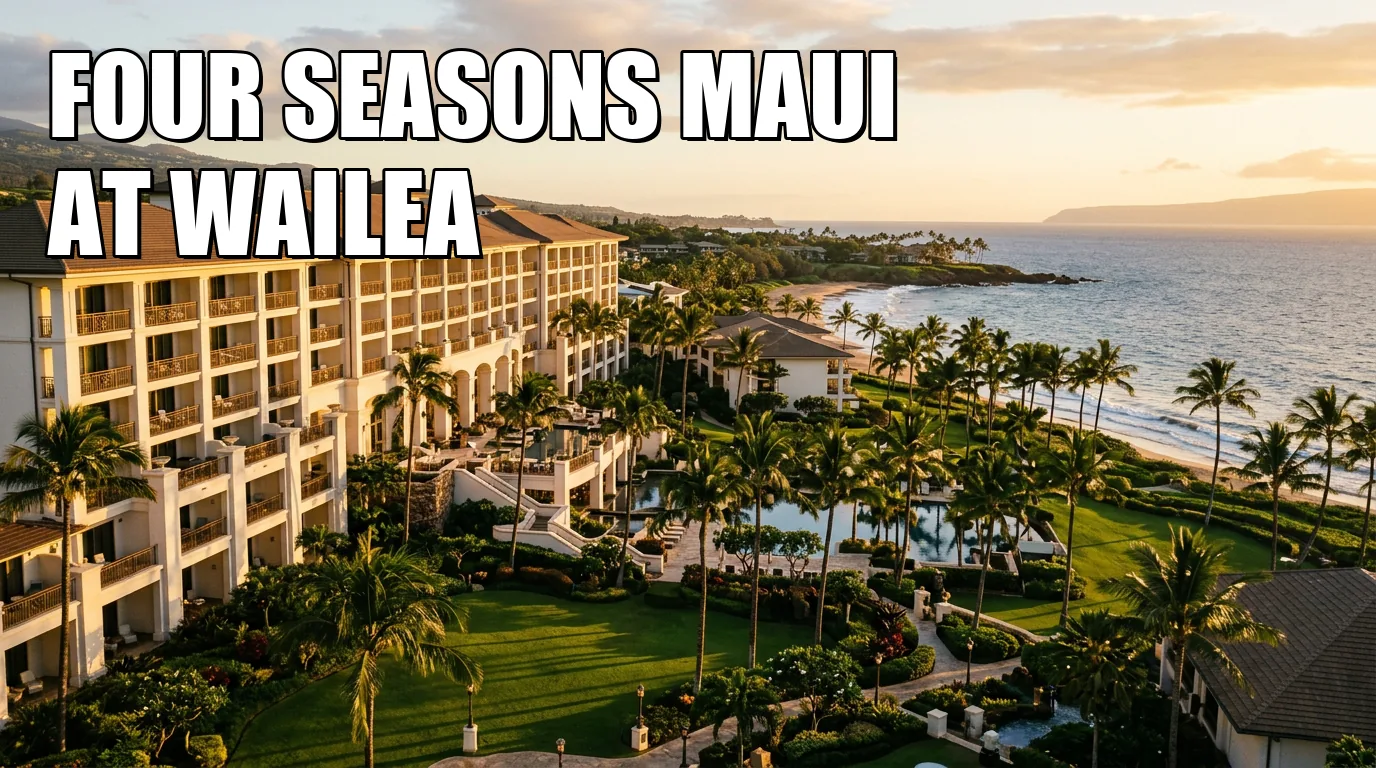
Remember the opulent, almost suffocatingly perfect setting of *The White Lotus* Season 1? That was no custom-built soundstage; it was the very real, very exclusive Four Seasons Resort Maui at Wailea. The show, with its razor-sharp commentary on wealth and privilege, couldn't have picked a more fitting canvas. Its choice underscored a certain kind of moneyed comfort, a bubble of perfection designed to keep the outside world at bay, which ironically mirrored the production's own unique circumstances.

What many might not realize, chasing the ghost of Shane Patton or the lingering scent of Tanya's grief, is that the resort wasn't operating as a typical hotel during filming. From late October through December 2020, the Four Seasons transformed into a tightly controlled COVID-19 production bubble. Cast and crew lived on the property, creating an isolated ecosystem. This meant few, if any, regular guest bookings were accepted. The on-screen interactions between the staff and "guests" were performances within a carefully managed vacuum, not organic encounters with genuine vacationers.

This behind-the-scenes detail fundamentally reshapes how one might perceive the show's depiction of the "guest experience." The satirical observations of tourist behavior and the dynamics between staff and clientele were filmed in a scenario where the "guests" were actors, and the "staff" were playing their roles, without the chaotic unpredictability of actual, diverse vacationers. It lends an almost meta-textual layer to the show's critique: the manufactured reality on screen was built upon a manufactured reality off screen, highlighting the artificiality that often underpins ultra-luxury.

Which Suites Held the Drama? Decoding the Presidential Quarters

For those intent on recreating the White Lotus vibe down to the very thread count, the pursuit often begins with the specific suites. Fans regularly scour forums and travel sites, desperate to pinpoint where the explosive arguments and whispered confessions truly happened. While the show referenced the "Tradewinds Suite" and the "Pineapple Suite," these were production names. In reality, the grandeur unfolded primarily within the resort's top-tier accommodations.

The infamous "Tradewinds Suite," the site of much of Shane and Rachel's marital woes, was actually the Maile Presidential Suite. Perched on the 7th floor, it offers sprawling views that are as breathtaking as they are expensive. Meanwhile, the more sprawling "Pineapple Suite" was the Lokelani Presidential Three-Bedroom Suite, located on the ground floor with direct access to the resort's lush grounds. These aren't just large rooms; they are self-contained worlds of luxury, designed for unparalleled privacy and indulgence.

However, an important detail often eludes public knowledge: the specific room numbers for these suites, or indeed any individual guest booking information, are never publicly disclosed. This isn't an arbitrary secrecy but a fundamental pillar of hospitality privacy. Resorts of this caliber fiercely protect their clients' anonymity, a policy that was naturally extended to the production. So, while you can book the *type* of suite, don't expect the front desk to confirm, "Ah yes, you're in the suite where Shane lost his temper."

The Price of Paradise: Can You Afford a Slice of White Lotus Luxury?

Let's talk brass tacks: acquiring a taste of this particular slice of paradise comes with a rather significant price tag. For those dreaming of a night in the actual presidential suites, prepare for a sticker shock that might make even the wealthiest guests of *The White Lotus* raise an eyebrow. As of October 2025, the Maile Presidential Suite begins at a staggering $31,000 per night. Its ground-floor counterpart, the Lokelani Presidential Suite, will set you back approximately $29,000 per night.

These aren't just room rates; they are an investment in an experience, a statement. Consider that the Maile Presidential Suite, freshly redesigned for 2025, now comes with an extraordinary perk: a Mercedes G-Wagon rental included with your stay. This isn't merely about transportation; it’s about maintaining an image, providing a seamless, high-status experience from the moment you land. While these suites represent the pinnacle of indulgence, standard rates for other rooms and suites at the Four Seasons Maui are considerably less, albeit still firmly in the luxury bracket, ranging from $700 to over $2,300 per night depending on the room type and season.

This massive cost disparity highlights a crucial point about aspirational travel fueled by television. While the show presents a world where such luxury is simply the default for its characters, for the vast majority of viewers, even affluent ones, these presidential suites remain an unattainable fantasy. You might visit the same resort, swim in the same pool, and dine at the same restaurants, but the specific, insular world of the presidential suite, as depicted on screen, exists within a financial stratosphere few will ever enter.

Is the "White Lotus Experience" Overhyped Without the Platinum Card?

There's a critical question here for any discerning traveler: is the pursuit of the "White Lotus experience" at the Four Seasons Maui an authentic aspiration or a high-end tourist trap? While the resort itself is a paragon of luxury, offering impeccable service, stunning pools, and a prime beachfront location, simply visiting it won't magically transport you into the HBO series. The show's power lies in its narrative and characters, not just its location.

Many typical travel guides might simply list the resort as "the filming location," encouraging direct emulation. However, the true value for a traveler lies not in replicating an actor's stay, but in understanding the broader context. Maui itself, with its diverse landscapes, vibrant culture, and world-class culinary scene, offers an incredible experience far beyond the confines of any single resort, no matter how famous. Focusing solely on the *White Lotus* aspect risks narrowing your perspective, potentially overlooking the rich tapestry of the island itself.

If your budget doesn't stretch to $30,000 a night (and whose does?), you can still enjoy the Four Seasons' public spaces, dine at its acclaimed restaurants, or simply appreciate its architectural beauty. The true "White Lotus experience" often feels more about the *feeling* of unchecked privilege and hidden anxieties, rather than the specific thread count of the sheets. You can find beautiful beaches and exceptional service elsewhere on Maui without breaking the bank, perhaps even gaining a more authentic sense of Hawaiian aloha.

Planning Your Pilgrimage: Practicalities Beyond the Silver Screen

Should you decide to make the pilgrimage to Maui, whether for a glimpse of the iconic resort or a more expansive island adventure, concrete planning is paramount. The best months to visit Maui generally span from April to May and September to November, offering pleasant weather and fewer crowds than the peak summer and holiday seasons. Expect higher prices and more competition for everything from rental cars to dinner reservations during those popular windows, especially in December and January.

When considering your stay, remember that even if you're not splurging on a presidential suite, a standard room at the Four Seasons remains a significant investment. Consider booking well in advance, particularly if you have specific dates in mind. Parking at luxury resorts like the Four Seasons Maui is typically valet-only and can incur daily fees, so factor that into your budget. Perhaps surprisingly, the most impactful trigger for a better experience isn't necessarily a specific day of the week, but rather your attitude towards what you expect. Arrive early for popular pool chairs, make dinner reservations weeks ahead, and embrace the fact that you are visiting a premium destination where others are also seeking their slice of paradise.

Ultimately, *The White Lotus* offers a fascinating lens through which to examine luxury travel. The Four Seasons Maui serves as a compelling character in its own right, a gilded cage for the show's privileged few. Visiting it is an exercise in discerning reality from fiction, understanding the true cost of exclusivity, and appreciating that while television can inspire dreams, the most rewarding travel experiences often lie in embracing the unexpected, the authentic, and the accessible, rather than merely chasing a screen-deep fantasy.

Ultimate Guide to The White Lotus Filming Locations: Hotels, Access & Travel Tips

What is a comprehensive white lotus filming locations guide?
The White Lotus filmed across three seasons at luxury resorts: Season 1 at Four Seasons Resort Maui at Wailea in Hawaii (2020), Season 2 at Four Seasons San Domenico Palace in Taormina, Sicily (2022), and Season 3 across multiple Thai properties including Four Seasons Resort Koh Samui, Anantara Mai Khao Phuket Villas, and Mandarin Oriental Bangkok (2024-2025).
Can I visit The White Lotus filming locations?
Yes, all filming locations are real operating luxury hotels open to the public for booking. Four Seasons Resort Maui offers complimentary behind-the-scenes White Lotus tours for resort guests only, and all properties welcome visitors to stay and experience the locations featured in the series.
Where in Thailand was White Lotus filmed?
Season 3 was filmed across multiple Thai locations including Koh Samui (primary location), Bangkok, and Phuket. The main resort was Four Seasons Resort Koh Samui on the northeastern coast, with additional scenes filmed at Mandarin Oriental Bangkok, Anantara properties, and Rosewood Phuket.
Where is the villa in White Lotus season 2?
Season 2 villa scenes and the main hotel sequences were filmed at Four Seasons San Domenico Palace in Taormina, Sicily, a reimagined 14th-century Dominican convent perched on a rocky promontory above the Ionian Sea overlooking Mount Etna.
Which hotel is White Lotus Thailand?
The primary White Lotus hotel in Thailand Season 3 is Four Seasons Resort Koh Samui, which served as the main White Lotus resort setting; however, three other Anantara properties and Mandarin Oriental Bangkok also provided filming locations for different scenes and storylines.
What Thai resort was used for White Lotus season 3?
Four Seasons Resort Koh Samui served as the primary fictional White Lotus hotel, while Anantara Mai Khao Phuket Villas (spa and wellness scenes), Anantara Bophut Koh Samui Resort (lobby and security scenes), and Rosewood Phuket (dining scenes) were also used as filming locations.
Where is the beach club in White Lotus season 2?
The beach club scenes in Season 2 were filmed at Sea Palace resort in Cefalú and Isola Bella beach in Taormina, Sicily, rather than at the Four Seasons San Domenico Palace which sits on rocky cliffs without a sandy beach.
Is The White Lotus Thailand a real hotel?
The fictional White Lotus hotel in Thailand Season 3 is portrayed by Four Seasons Resort Koh Samui, a real luxury resort; the show creatively combined interior and exterior shots from multiple real Thai hotels to create the fictional property's seamless appearance on screen.
What hotel is used in The White Lotus?
All three seasons feature real Four Seasons resorts: Season 1 used Four Seasons Resort Maui at Wailea in Hawaii, Season 2 featured Four Seasons San Domenico Palace in Taormina, Sicily, and Season 3 primarily used Four Seasons Resort Koh Samui in Thailand with additional scenes from other luxury properties.
How much to stay at White Lotus Thailand?
Four Seasons Resort Koh Samui rates range from $1,016 to $1,682+ per night depending on room type and season, with Serenity Pool Villas starting around $1,270 per night, while other Thai filming locations like Anantara properties and Mandarin Oriental Bangkok offer various price points.
What are the room types at Four Seasons Resort Koh Samui?
Accommodations include Serenity Pool Villas, Island Ocean Pool Villas, Premier Ocean-View Pool Villas, Oceanfront Pool Villas, Beach Villas with pools, and multi-bedroom residences ranging from two to four bedrooms with private infinity pools and personalized service.
How much does it cost to stay at Four Seasons Resort Maui (White Lotus Season 1 location)?
Four Seasons Resort Maui at Wailea rates typically start around $1,000 per night for standard ocean-view rooms, with premium suites ranging up to $25,000+ per night, though actual pricing varies by season and availability.
Are there White Lotus-guided tours available?
Yes, Four Seasons Resort Maui offers complimentary behind-the-scenes White Lotus tours for resort guests only, and several travel companies offer White Lotus-inspired guided tours and itineraries throughout Thailand visiting the filming locations and nearby attractions.
Do I need a visa to visit White Lotus Thailand filming locations?
Entry requirements to Thailand include a valid passport with at least 6 months validity and one blank visa page; U.S. citizens can enter visa-free for up to 30 days, and starting May 1, 2025, all foreign visitors must submit a digital arrival card online.
What dining options are available at Four Seasons Resort Koh Samui?
The resort features three on-site restaurants including Pla Pla and Cocorum, plus beach lounges and spa facilities with authentic Thai and international cuisine options for guests and visitors.