Film & TV Locations

New Zealand: Unearthing Middle-earth's True Heart

The enduring allure of J.R.R. Tolkien’s Middle-earth, brought to vivid life by Peter Jackson, owes an incalculable debt to New Zealand. While countless travel guides simply list locations, they often miss the profound synergy between Tolkien's vision and the archipelago's ancient, often violent, geological history. It's not just a collection of pretty backdrops; it's a testament to a land so dynamically formed it could genuinely embody an entire fantasy continent. I've walked many a film set, but few places so seamlessly merge the imagined with the deeply real as these islands do.

Hobbiton: More Than a Postcard, Less Than a Secret

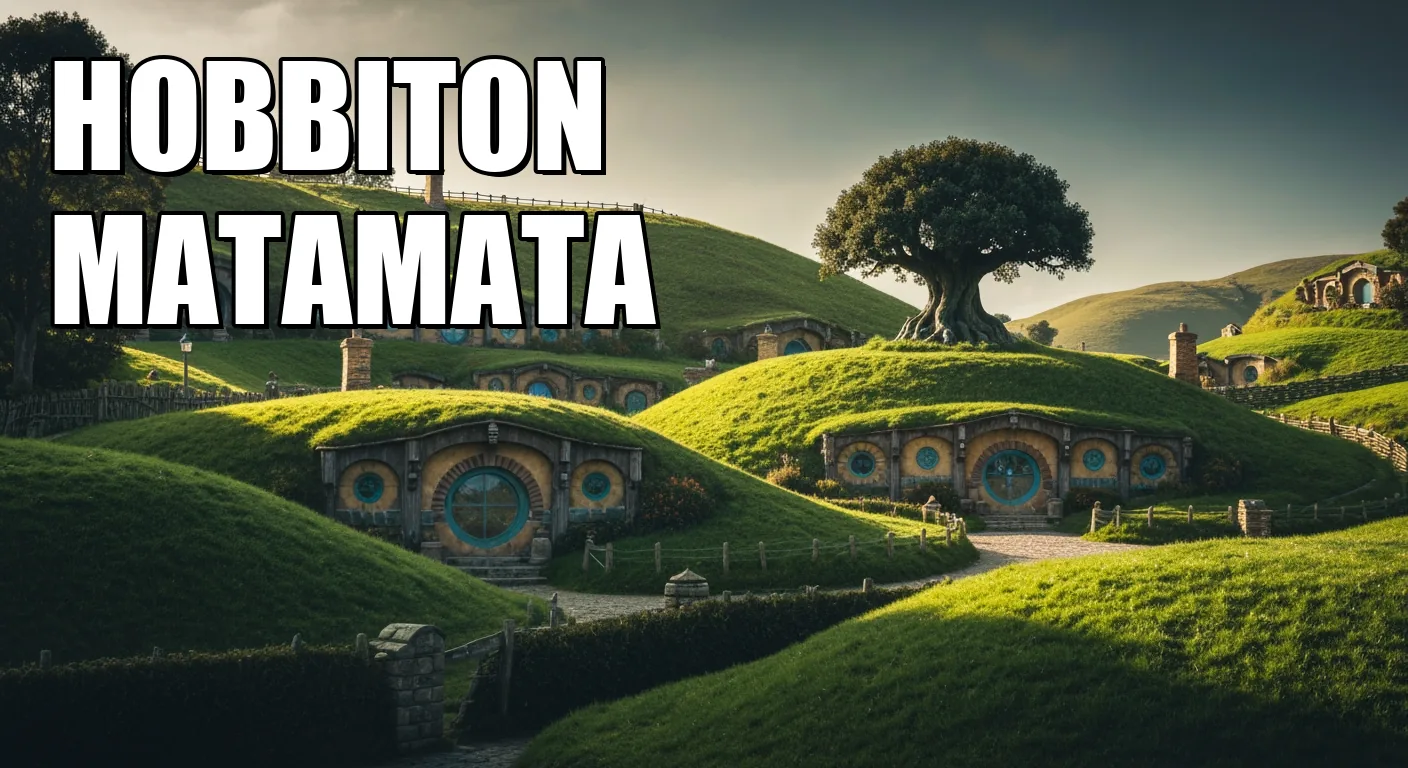
Stepping into Hobbiton, nestled in the rolling Waikato hills near Matamata, brings an immediate, almost childlike, sense of wonder. This isn't just a set; it's a meticulously crafted village, rebuilt in permanent materials after *The Hobbit* trilogy, complete with 44 hobbit holes, the Party Tree, and the Green Dragon Inn. What strikes you first, beyond the perfectly tended gardens and whimsical details, is the sheer *fit* of it all. Director Peter Jackson famously spotted the Alexander Farm from the air, noting how the hills "looked as though Hobbits had already begun excavations." He wasn't wrong; the gentle, verdant contours of this 1,250-acre dairy farm, shaped by fertile alluvial silts and sands from the Last Glacial Period, evoke an idealized, ancient English countryside—a landscape ready-made for Bilbo and Frodo. Yet, let's be honest: Hobbiton is now a fully fledged, impeccably managed theme park. While undeniably charming, it carries a hefty admission fee (expect around $90-120 NZD per adult, often including a drink at the Green Dragon), and you'll be on a guided tour, moving with a crowd. If you're seeking a solitary, reflective experience, this isn't it. Arrive early for the first tour of the day, typically around 9:00 AM, especially during peak season (December-February and Easter holidays), to snag slightly less crowded moments. The real magic isn't just the film set itself, but how brilliantly the set designers amplified the inherent pastoral beauty of this specific piece of farmland.

Mount Doom's Stark Reality: Ngauruhoe's Unreachable Majesty

From the bucolic Shire, our journey must inevitably lead to the desolate terror of Mordor, epitomized by Mount Doom. In the films, this menacing peak is undeniably Mount Ngauruhoe, a near-perfectly symmetrical volcanic cone dominating Tongariro National Park. Its barren slopes and perpetual association with volcanic menace made it an easy choice for Tolkien's fiery mountain. But here's where expectation meets hard reality: you cannot climb Ngauruhoe itself. The mountain holds profound spiritual significance for the local Māori iwi (tribes) and is considered sacred. Respect means admiring it from a distance. Instead, visitors typically embark on the Tongariro Alpine Crossing, one of New Zealand's most spectacular day hikes. This 19.4-kilometer trek takes you across volcanic terrain, offering breathtaking views of Ngauruhoe and its active neighbors, Mount Tongariro and Mount Ruapehu. The landscape itself, part of the notorious Pacific Ring of Fire where the Pacific Plate subducts beneath the Indian-Australian Plate, is a living geology lesson. Fumaroles still emit sulfurous gases from Ngauruhoe's crater rim, a stark reminder of its last eruption in 1977. The true insight here is recognizing the sheer, raw power of geological forces that created a landscape so utterly alien and menacing, it could only be Mordor. Pack layers for this hike, as weather changes rapidly, even in summer (December-February), and always check local conditions; shuttle services (approx. $40-60 NZD round trip) are essential as it's a one-way walk.

Edoras: Where Isolation Forged a Kingdom

Imagine a solitary, windswept hill rising dramatically from a vast, braided river plain, surrounded by the towering, snow-capped sentinels of the Southern Alps. That's Mount Sunday, the spectacular, albeit remote, location for Rohan's capital, Edoras. When you see it, you grasp *why* Jackson chose it. This isn't just a hill; it's a roche moutonnée, a distinctive glacial landform, sculpted by the slow, inexorable grind of ancient glaciers. Its elevated position—a natural citadel—perfectly conveyed the majesty and isolation of King Théoden’s realm. What you won't find there today, however, is the Golden Hall. Following strict contractual requirements, the entire set was meticulously dismantled and the land returned to its pristine natural state. This is an important distinction from Hobbiton. Visiting Mount Sunday, approximately 2.5 hours drive from Christchurch, is an exercise in appreciating pure, untouched grandeur. The drive itself, often on unsealed roads, is an adventure, and you'll often need to join a guided tour (costing upwards of $200-300 NZD from Christchurch or Methven) to access the private farmland. The real journey here is the pilgrimage, the slow unfolding of a landscape that feels utterly untouched by time, much less by film crews. Come in late spring (November) for the greenest pastures or autumn (April-May) for dramatic colours, but be prepared for unpredictable mountain weather any time of year.

Rivendell's Serene Embrace: Kaitoke Regional Park's Ancient Charm

The Elven sanctuary of Rivendell, a place of peace and profound wisdom, required a setting of ethereal beauty. Jackson found it in Kaitoke Regional Park, near Upper Hutt in the Wellington Region. Unlike the grand, open vistas of Rohan, Kaitoke offers a deep, lush, river-carved valley shrouded in ancient conifer-broadleaf rainforest. Here, centuries-old rātā, rimu, and hinau trees create a dense, verdant canopy, their gnarled branches and moss-draped trunks immediately evoking a sense of deep time and hidden magic. This isn't a theme park or a desolate peak; it's a primeval forest. The park’s geological story explains its unique charm: the Hutt River, rather than following the Wellington Fault line as one might expect, carved its own path through greywacke bedrock during the Pleistocene Ice Age. This independent carving, coupled with freeze-thaw cycles shattering exposed rock, created the secluded, fertile valley that felt so perfect for Elrond’s home. While the specific set pieces of Rivendell are gone, the underlying *feeling* of the place—its quiet majesty, the gurgling river, the towering trees—remains. You can walk the well-maintained paths, find the signs indicating filming spots, and easily imagine the Council of Elrond taking place here. Admission is free, and it’s a lovely spot for a picnic, especially on a sunny weekday when crowds are minimal.

The Putangirua Pinnacles: Where Earth Breathes Terror

Few locations in the trilogy inspire quite the same shiver as the Paths of the Dead. Aragorn, Legolas, and Gimli's eerie encounter with the Oathbreakers was filmed at the Putangirua Pinnacles, a spectacular badlands erosion formation near Cape Palliser. This isn't just a rocky outcrop; it's a landscape sculpted by millennia of wind and water, resulting in towering earth hoodoos—stone spires rising from a desiccated riverbed, many exhibiting prominent vertical fluting. The geology here is fascinating, telling a story that began 79 million years ago when the Aorangi Ranges were an island. Ancient alluvial deposits, laid down then, were later exposed to differential erosion. Conglomerate bedrock, protected by harder silt caps, resisted the elements more effectively, creating these pale, eerie formations that look utterly otherworldly. It’s a powerful illustration of how slow, persistent geological processes can create something terrifyingly beautiful. The drive to the Pinnacles, about two hours from Wellington, can be dusty and winding. There's a short (approx. 1-hour return) walk from the parking area to the pinnacles themselves. Go on a cloudy, atmospheric day for the full, haunting effect, and prepare for uneven terrain—good hiking shoes are a must.

Fiordland's Untamed Heart: Fangorn's Ancient Whispers

Venturing into Fiordland National Park, a massive 1.26 million-hectare expanse, is to enter a realm of untamed wilderness. This is where sections of Fangorn Forest, including Gandalf whistling for Shadowfax and the legendary meeting with Treebeard, found their cinematic home. Specifically, the Snowdon Forest area, within Fiordland, boasts towering native beech trees of immense antiquity, their dense, ancient canopies creating an almost oppressive atmosphere—perfect for the mythical Ents. Fiordland's grandeur is primarily glacially carved. During past ice ages, massive ice sheets scoured U-shaped valleys, leaving behind hanging waterfalls and steep mountain peaks that plunge dramatically towards sea level. This is a region of immense scale and profound remoteness, where the wilderness itself feels like a character. It's not one specific, easily accessible point; it's an entire *region* that breathes the spirit of Middle-earth's wilder parts, from the Anduin River to the forbidding Dead Marshes. To truly experience Fiordland, consider a multi-day hike on one of its renowned Great Walks, like the Milford Track, or take a scenic cruise through Milford or Doubtful Sound. Be prepared for rain—it's one of the wettest places on Earth—but the waterfalls are never more spectacular than after a downpour. Access to much of Fiordland is via the town of Te Anau.

Glenorchy & The Dart River: A Canvas of Contrasts

Just 45 minutes northwest of Queenstown lies Glenorchy and the Dart River Valley, a place of such breathtaking versatility that it doubled for landscapes as disparate as the approach to Isengard, the haunting Dead Marshes, and various sweeping vistas of Rohan. This area, nestled within Mount Aspiring National Park, epitomizes New Zealand's alpine grandeur. Towering, snow-capped mountains frame pristine, glacier-fed rivers like the Dart, which ceaselessly carries gravel eroded from alpine glaciers, building new deltas into the deep, ancient Lake Wakatipu. The geology here again speaks volumes: classic U-shaped glacial valleys, carved by colossal ice sheets that retreated around 12,000 years ago, are now filled with pristine waters, surrounded by vertical cliffs and ancient, forested slopes. It's a landscape that can feel simultaneously majestic and subtly menacing. One moment you're gazing at a vista worthy of Gondor, the next you're picturing Saruman's industrial blight. Horse trekking tours (starting from $150-250 NZD) are popular here, offering a unique way to explore the expansive floodplains and get closer to those iconic mountain backdrops. For film enthusiasts, several local tour operators run specific Lord of the Rings tours from Queenstown, which can point out the exact spots where Gandalf approached Isengard or where Frodo, Sam, and Gollum traversed the eerie marshes. New Zealand, in its raw, untamed beauty, wasn't just a backdrop for Peter Jackson's *Lord of the Rings* trilogy; it was a co-star. From the gentle undulations of its agricultural heartland to the stark, volcanic peaks and the profound quiet of its ancient forests, the islands offered a geological narrative perfectly aligned with Tolkien's own mythos. Visiting these locations isn't simply a pilgrimage for film buffs; it's an exploration into the very soul of a land shaped by immense natural forces, a place where the line between fantasy and reality delightfully blurs. These aren't just pretty pictures; they are living, breathing testaments to the power of a landscape to tell a story, whether on screen or simply underfoot.

Your Complete Guide to Lord of the Rings Immersive Experiences & Filming Locations

Where are Lord of the Rings filming locations?
All Lord of the Rings films were shot entirely in New Zealand across more than 150 locations. No scenes were filmed in the United States, though USA-based LOTR-inspired experiences exist, such as Ancient Lore Village in Tennessee and Forest Gully Farms in Santa Fe, Tennessee.
Can you visit the LOTR filming locations?
Yes, you can visit many LOTR filming locations in New Zealand. Hobbiton Movie Set in Matamata is the only permanent set still standing where you can see the original structures. Other locations like Tongariro National Park (Mount Doom) and various sites around Wellington are also accessible as self-guided visits or through organized tours.
Is there a Lord of the Rings experience?
Multiple LOTR experiences exist: Hobbiton Movie Set tours in New Zealand offer guided 2-4 hour walks, Weta Cave in Wellington provides behind-the-scenes movie prop tours, and in the USA, Ancient Lore Village (Knoxville, TN) offers fantasy-themed day passes and overnight stays with immersive activities like archery and axe-throwing.
Can I visit The Lord of the Rings set?
Yes, Hobbiton Movie Set in Matamata, New Zealand is the only original LOTR film set that remains intact and open to visitors. The set includes 44 hobbit holes, Bag End, the Party Tree, and the Green Dragon Inn, all available for touring year-round with guided experiences.
Are tours available for LOTR locations?
Yes, extensive tours are available. In New Zealand, day tours from Auckland/Wellington range from 2-8 hours, multi-day tours span 5-21 days covering both islands, and combinations with Hobbiton, Tongariro National Park, and Weta workshops are widely offered by numerous tour operators.
Are there any multi-day LOTR tours?
Yes, multi-day LOTR tours in New Zealand range from 5 to 21 days. Popular packages include 14-day comprehensive tours covering North and South Island filming locations with Hobbiton, Mount Doom, Edoras, and other iconic sites included.
Where is the LOTR tour?
The main LOTR tours operate from Auckland and Wellington in New Zealand. Tours range from day trips to multi-week expeditions, with several USA-based travel companies offering packaged tours that include airfare from the United States.
Can I visit Mordor in New Zealand?
Yes, Mordor was filmed in Tongariro National Park on the North Island. Mount Ngauruhoe (Mount Doom) is visible from the Desert Road and is hikeable via the Tongariro Alpine Crossing or as a separate climb, though locals respectfully request not climbing the peak as it is sacred to the local Maori people.
Are Hobbiton tours worth the money?
Yes, Hobbiton tours are highly regarded with excellent reviews. Adult tours cost $120 NZD (approximately $73 USD), include 2+ hours of guided exploration of authentically preserved hobbit homes, props, and the iconic Party Tree, making it the most immersive LOTR filming location experience available.
Lord of the Rings filming locations experience - what can I expect?
Visitors can expect guided walking tours through lush farmland and hill terrain, interactions with preserved movie sets and props, expert guides explaining filming techniques, optional meals at themed venues like the Green Dragon Inn, and photo opportunities at iconic locations like Bag End and Rivendell sites.
How much does it cost to visit Hobbiton?
Standard Hobbiton tours cost $120 NZD for adults ($60 NZD for youth), with family passes at $306 NZD. Children and infants are free. Tours can be extended with lunch combos, behind-the-scenes experiences, or evening banquets at higher price points.
What is the best time of year to visit LOTR filming locations?
October through April (spring to autumn in New Zealand) offers the best weather for visiting filming locations. However, Tongariro National Park has seasonal restrictions—summer (December-February) provides reliable access, while booking the Tongariro Crossing is required October-April.
Are LOTR-themed accommodations available in the USA?
Yes, Forest Gully Farms in Santa Fe, Tennessee offers hobbit-style earth huts with 2-night minimums starting at $325-375 per night. Ancient Lore Village in Knoxville, Tennessee provides fantasy-themed rooms with day pass options and overnight experiences.
Do I need a passport and visa to visit LOTR locations?
Yes, visiting New Zealand filming locations requires a valid passport and tourist visa (if applicable for your country). USA citizens can stay visa-free for up to 6 months in New Zealand with a valid Electronic Travel Authority (NZeTA).
How long should I plan for a comprehensive LOTR filming locations trip?
For a meaningful experience, 10-14 days in New Zealand is recommended to cover Hobbiton, Wellington's filming sites, Tongariro National Park, and other key locations. Shorter 3-5 day trips focusing on the North Island are also possible with proper planning.