An Index Of Historical Redaction For The 250th
This Maison-built 2026 audit tracks a specific problem: the visitor-facing risk that key parts of American history can be narrowed, delayed, relabeled, physically removed, or restored only after outside intervention as the country moves toward its 250th anniversary.
Most public arguments about the Semiquincentennial stay too abstract. They get stuck in speeches, slogans, and executive-order language. Visitors experience the argument differently. They experience it through what is still on the wall, what vanished from the wall, which labels remain in place, whether a permanent flag is still flying, and whether a site is still willing to place slavery, Indigenous dispossession, climate pressure, civil rights conflict, or queer public memory directly in front of the audience.
Maison reviewed a tight source base for this piece on May 18, 2026: current federal celebration pages, current National Archives anniversary framing, current museum-field guidance, and recent reporting on site-level removals and lawsuits. The goal is to score visible interpretive vulnerability, not ideology. When a visitor-facing narrative becomes subject to physical removal, legal challenge, or a rewrite driven from above, it belongs in a serious index.
Maison rule for this index
A site does not rise in the ranking because activists are angry or because a headline sounds dramatic. It rises only when there is public evidence of a real visitor-facing effect: a removed panel, a restored panel after litigation, a symbol taken down, a documented review order, or a named exhibit layer that no longer appears as it once did.
The Semiquincentennial argument gets easier to see once the focus shifts from rhetoric to physical public interpretation. If the exhibit text survives intact, the fight is still mostly theoretical. If the bolts come out of the wall, the fight has crossed into the visitor experience.
The Maison Redaction Model
The first version of the Maison Semiquincentennial Redaction Index uses a 10-point scale. It is not a moral ranking and it is not a measure of historical importance. It measures how directly a site's public interpretive layer has been exposed to rollback, narrowing, or state pressure during the run-up to July 4, 2026.
| Index Level | Score Range | What Maison Is Seeing |
|---|---|---|
| Low Exposure | 1-2 | The site sits inside the wider national argument, but there is no clear public evidence yet of a changed visitor-facing layer. |
| Language Pressure | 3-4 | Interpretive vocabulary, framing language, or adjacent symbolic context appears exposed to narrowing or review. |
| Active Review | 5-6 | Named exhibits, signs, or themed materials are publicly reported as flagged, ordered for review, or quietly thinned out. |
| Visible Retraction | 7-8 | A visitor can point to a concrete change in public presentation: a removed symbol, a missing interpretive layer, or a formal rollback with obvious audience impact. |
| Physical Removal / Court Stage | 9-10 | The dispute has advanced to literal removal, reinstallation orders, or high-profile litigation over what the public is allowed to see on site. |
The scale is deliberately practical. It privileges visible public evidence over ideological heat. In other words, an exhibit that disappears matters more to this index than a thousand angry statements about what history should mean.
The Maison Semiquincentennial Redaction Index 2026
The first Maison pass is not a national census. It is a pilot built from the clearest public cases where the fight over America's 250th can already be seen in the physical interpretive layer. Scores are Maison's interpretation of current public evidence as of May 18, 2026.
Maison Semiquincentennial Redaction Index 2026: first-pass scores
| Site | Maison Score | Why It Scores Here | Current Public Status |
|---|---|---|---|
| President's House Site Philadelphia, Pennsylvania | 10/10 | Panels naming the nine people enslaved by George and Martha Washington were physically removed in January 2026, leaving the clearest public example of literal historical subtraction. | A federal judge ordered full restoration in February 2026 while the legal fight continued. |
| Stonewall National Monument New York, New York | 8/10 | The conflict reached monument symbolism itself, with the permanently flown Pride flag removed under the new historical guidance climate. | The flag was later restored through settlement, but only after the dispute became national news. |
| Selma to Montgomery National Historic Trail Alabama | 7/10 | Litigation and reporting identified about 80 trail items or interpretive elements as flagged for review, making Selma one of the largest-volume civil rights flashpoints in the federal system. | The case became part of the broader challenge to exhibit changes at Park Service sites. |
| Glacier National Park Montana | 6/10 | Climate interpretation became directly exposed, showing that the current pressure is not limited to founding or civil-rights history. | Public reporting tied climate-change materials to the widening review-and-removal fight. |
| Brown v. Board of Education National Historical Park Kansas | 5/10 | The site illustrates language-level vulnerability: even the presence of terms such as "equity" can trigger pressure on permanent exhibit framing. | The controversy centered on interpretive vocabulary and how civil-rights history is publicly described. |
| Grand Canyon National Park Arizona | 5/10 | The current fight extends westward into materials on Indigenous displacement and environmental interpretation, widening the map beyond East Coast founding sites. | Public reporting and legal filings pointed to missing or altered visitor-facing materials. |
The table matters because it reveals the real shape of the current dispute. This is not one Philadelphia story and it is not only about the founding era. It reaches slavery, civil rights, LGBTQ public memory, Indigenous history, and climate interpretation. That breadth is what turns an anniversary argument into a systems story.
The Philadelphia Rule: Once The Panels Come Off, The Debate Changes
The President's House Site deserves the top score because it is the cleanest case for understanding what a redaction index is supposed to capture. For years, visitors to the site encountered a blunt physical explanation of the paradox at the core of the republic: George Washington presided over a young nation built on liberty while enslaving human beings in the very city where that liberty was being codified. The site named Austin, Paris, Hercules, Christopher Sheels, Richmond, Giles, Oney Judge, Moll, and Joe. That choice matters. Naming turns abstraction into accountability.
In January 2026, those panels did not merely become controversial. They were taken down. Reporting from Philadelphia described the aftermath in almost architectural terms: empty bolt holes, shadows, and absence. That image is why this case rises above the rest. It gives the 250th debate a physical grammar. The loss is measurable because visitors can see it.
Judge Cynthia Rufe's February intervention mattered for the same reason. Her order did not resolve a seminar-room disagreement. It forced a question back into public view: what exactly is a visitor entitled to encounter at a national historic site when the government says it wants history to align with "shared national values"? A court order to reinstall interpretive material is the most literal proof possible that the fight is now about visitor-facing reality.
This is the Philadelphia rule. Once the panels come off the wall, everything else gets easier to classify. You can still have a public argument over tone, emphasis, or curatorial philosophy. But you can no longer pretend the conflict is happening only in language. It has entered the built environment.
The Five Histories Under Pressure Before July 4, 2026
The current public record points to five recurring narrative domains. The pattern shows which kinds of history have become interpretive stress points inside the federal anniversary landscape.
Narrative domains showing up in the current federal interpretive fights
That distribution helps explain why the 250th story will travel well beyond Independence Hall. The pressure points are not random. They cluster around the exact subjects that force visitors to see the nation as a project with winners and losers, ideals and contradictions, celebration and cost.
Civil-rights sites force the republic's promises to be measured against enforcement, violence, and unfinished repair. Slavery interpretation breaks the simple founding tableau. Indigenous history asks who was displaced by the making of the United States. Climate interpretation drags the national story into the present tense rather than leaving it safely behind glass. Stonewall proves that modern public memory can be swept into the same narrowing logic as early American history.
Put differently, the current redaction fight is not really about whether America should celebrate its 250th birthday. Of course it will. The real question is whether celebration can survive contact with histories that complicate the national self-portrait. The sites in this index are where that question stops sounding theoretical.
Celebration Script Versus Whole-History Script
Official 250th framing is not hard to find. Federal celebration pages describe a year of national commemoration, patriotic programming, and a shared civic milestone. That surface is real, and there is nothing unusual about a state preparing a major anniversary with uplift, ceremony, and symbolic unity.
The conflict begins when that commemorative script starts to collide with the daily operating logic of public interpretation. Historians, site staff, and museum professionals are not just being asked to celebrate. They are being asked to decide what remains visible while celebration is taking place. The museum field's answer has been notably different from the federal anniversary mood. In 2025, AASLH's major historic-house summit pushed institutions to be direct, to hold difficult conversations, and to treat contradiction as part of the work rather than as a branding problem.
| Visitor Question | Celebratory Anniversary Script | Whole-History Script | What The Visitor Actually Notices |
|---|---|---|---|
| How should founding sites frame liberty? | As a unifying national achievement. | As a national achievement built alongside coercion, exclusion, and slavery. | Whether slavery remains named, visible, and spatially present. |
| How should civil-rights sites speak? | As proof that the country eventually corrects itself. | As places where state power, protest, violence, and unfinished equality remain central. | Whether conflict language is softened or preserved. |
| How should contemporary public memory appear? | As a broad patriotic umbrella with minimal friction. | As a space where excluded groups still need visible recognition. | Whether symbolic markers such as a permanent Pride flag remain in place. |
| How should environmental interpretation function? | As secondary to the scenic or commemorative experience. | As evidence that the American story is still unfolding and still contested. | Whether climate and displacement signage survives as part of the main visit. |
This split-screen clarifies where the real leverage sits. The most consequential fights are not about whether a presidential statement sounds upbeat. They are about which script reaches the wall text, the tour, the permanent symbol, and the school group.
What Whole-History Interpretation Looks Like Outside Federal Control
The cleanest way to understand the federal conflict is to compare it with sites that are not waiting to be forced into complexity. Independent institutions such as Mount Vernon and Monticello now present slavery not as a sidebar but as core visitor infrastructure. That difference is crucial. At these sites, difficult history is not merely tolerated. It is scheduled, housed, staffed, and folded into the basic ticketed experience.
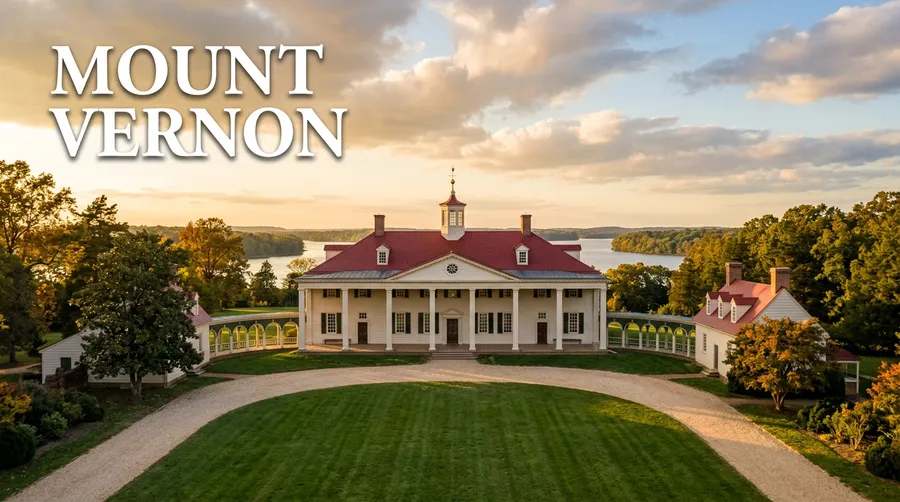
Mount Vernon currently includes a reimagined Lives Bound Together exhibition focused on the people enslaved at George Washington's estate, and the estate continues to foreground slavery in its public interpretation of the mansion and grounds. Monticello, for its part, runs a dedicated Slavery at Monticello tour multiple times daily and continues its descendant-centered Getting Word work. Whatever one thinks of either institution's broader politics, both have chosen to build visitor pathways that make contradiction unavoidable.
That is the sharper benchmark for 2026. A whole-history institution does not wait for a lawsuit to decide whether the hard material belongs. It already knows that it does. It treats the painful part of the story as a normal expectation of competent public interpretation.
Mount Vernon is one of the clearest current examples of an estate presenting the founding era together with slavery as part of the standard visitor path, not as a hidden appendix. For the place-first version, see Maison's Mount Vernon guide.
Monticello has moved even farther into explicit interpretive structure, with a named slavery tour and descendant storytelling work that make Jefferson's contradictions impossible to ignore. Readers who want the site-specific version can continue to Maison's Monticello guide.
The point is not that independent sites are perfect. The point is that some of them have already normalized the exact kind of complexity now under pressure in parts of the federal system. That makes the 250th fight look less like an unavoidable national consensus problem and more like a governance and control problem.
The Timeline That Turned A Commemoration Story Into A Litigation Story
Semiquincentennial coverage often drifts toward pageantry because pageantry is easy to package. The actual turning points in early 2026 were procedural and legal. They were the moments when disputes about historical tone hardened into actions that could be documented, challenged, and reversed.
| Date | What Happened | Why It Matters For Visitors |
|---|---|---|
| January 2026 | Panels at the President's House Site in Philadelphia were removed. | The anniversary fight became physically visible. |
| Late January 2026 | Federal lawyers defended the government's authority to choose its message. | The conflict shifted from local outrage to a broad question about state control over public history. |
| February 2026 | A wider coalition challenged removals and exhibit pressure across Park Service sites. | The story expanded beyond Philadelphia into a system-wide interpretive fight. |
| February 2026 | Judge Cynthia Rufe ordered the President's House material restored. | A court treated the interpretive loss as serious enough to require immediate correction. |
| April 2026 | The Stonewall flag dispute ended in a settlement restoring the permanent Pride flag. | One of the clearest symbolic rollbacks became one of the clearest symbolic reversals. |
The timeline shows why the 250th is now a citation-worthy media story rather than just a commentary genre. It has documents, court orders, named sites, visible removals, and a real map of consequences. That gives reporters, editors, and readers something sturdier than opinion.
A Field Guide To Reading A 250th Site In Ten Minutes
One reason this subject is so likely to spread across media is that it gives visitors a practical lens they can use almost immediately. You do not need a law degree or a PhD in public history to notice whether a site is leaning into whole-history interpretation or backing away from it. You need to know what signals matter.
| What To Check First | What A Strong Site Usually Does | What A Narrowing Site Often Looks Like |
|---|---|---|
| Entrance framing | The opening panel or ranger framing states contradiction plainly and early. | The opening language turns quickly to uplift and pushes conflict deeper into the visit. |
| Named people | Enslaved people, displaced groups, organizers, and opponents are named individually. | People become anonymous categories or vanish into passive phrasing. |
| Physical permanence | The hard material appears integrated into permanent panels, tours, and exhibits. | The hardest material looks temporary, absent, or easily removable. |
| Symbolic layer | The site's symbols match its stated commitment to full public memory. | The symbolic layer is stripped back to avoid friction. |
| Gift shop and take-home layer | The difficult history continues into books, interpretation guides, or descendant work. | The retail layer offers celebration without much evidence of the harder story. |
Independent sites often outperform weaker federal examples here too. Once hard history reaches the shop, the formal tour, the family guide, and the permanent exhibition path, it stops behaving like a reluctant add-on. It becomes part of the institution's public operating system.
Why This Story Will Keep Spreading
It will spread because the most quotable conflict in public history is no longer over interpretation in principle. It is over interpretive infrastructure in practice. That is a much stronger media engine. A removed panel photographs well. A restored flag photographs well. A school group standing in front of a narrowed label raises immediate questions about what changed and who changed it.
It will also spread because the category boundaries have broken down. Founding history, civil-rights interpretation, Indigenous memory, climate explanation, and LGBTQ symbolism now appear in the same national argument. That means culture desks, travel desks, museum reporters, legal reporters, education reporters, and local metro desks can all touch the story from different angles without inventing relevance.
For journalists, the next smart move is not to ask which side is winning rhetorically. It is to ask where the next visitor-facing subtraction occurs, which anniversary sites quietly soften their language before the crowds arrive, and which independent institutions keep investing in harder history even as federal sites wobble. For readers planning 2026 travel, the practical question is even simpler: when you arrive at a landmark billed as part of the national celebration, what parts of the country's past are you still allowed to see intact?
What The 250th Fight Looks Like On The Ground
One version of the 250th stages a grand birthday and trusts patriotic atmosphere to carry the story. The other remains honest only if the hard material survives the celebration. The gap between those versions is measured in missing panels, restored panels, removed symbols, altered labels, and the willingness of institutions to let contradiction occupy real space.
The Semiquincentennial Redaction Index gives the anniversary a measurable layer. Public history in 2026 will not be defined only by what the nation declares about itself. It will also be defined by what stays visible long enough for a visitor to learn from it.